Foram encontradas 434 questões.
As questões de número 21 até 40 referem-se à configuração padrão de software e hardware do fabricante. Quando aplicável, todos os softwares devem ser considerados em sua versão em português, exceto quando houver especificação em contrário.
Provas

Considere um computador com os seguintes elementos e seus respectivos consumos de energia (expressos em termos de voltagem, corrente ou potência):
I. placa-mãe – (5V,10A)
II. processador – (7A, 35W)
III. unidade acionadora de disco rígido (HD) – (5V, 2A) e (12V, 3A)
IV. periféricos em geral (outras interfaces e placas) – (5V, 55W)
A potência total consumida pelos itens descritos acima é (em unidade de potência):
Provas
As questões de número 21 até 40 referem-se à configuração padrão de software e hardware do fabricante. Quando aplicável, todos os softwares devem ser considerados em sua versão em português, exceto quando houver especificação em contrário.
Considere um computador compatível com o IBM/PC rodando o sistema operacional Windows 2000. A opção a seguir que permite mudar a configuração do número de bits reservados para a cor de cada pixel da tela do computador é a janela de diálogo de:
Provas
- Equipamentos de Rede
- Transmissão de DadosMeios de TransmissãoCabeamento FìsicoCabeamento Estruturado
As questões de número 21 até 40 referem-se à configuração padrão de software e hardware do fabricante. Quando aplicável, todos os softwares devem ser considerados em sua versão em português, exceto quando houver especificação em contrário.
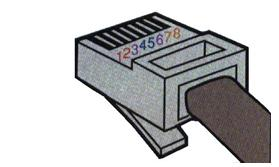
A figura a seguir representa um conector RJ45.
Provas
Disciplina: TI - Organização e Arquitetura dos Computadores
Banca: NCE-UFRJ
Orgão: JBRJ
As questões de número 21 até 40 referem-se à configuração padrão de software e hardware do fabricante. Quando aplicável, todos os softwares devem ser considerados em sua versão em português, exceto quando houver especificação em contrário.
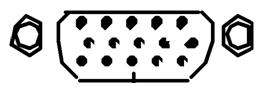
A figura a seguir representa um conector fêmea de 15 pinos.
Provas
As questões de número 21 até 40 referem-se à configuração padrão de software e hardware do fabricante. Quando aplicável, todos os softwares devem ser considerados em sua versão em português, exceto quando houver especificação em contrário.
O item a seguir que melhor define um conector PCI em um computador do tipo IBM PC é:
Provas
READ TEXT II AND ANSWER QUESTIONS 14 TO 20:
TEXT II
THE CEREALS
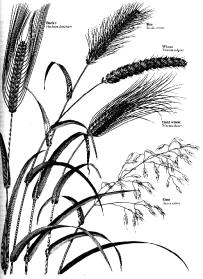
Cereals are the staff of life for most of mankind.
Even our milk and our meat derive largely from them.
They are grasses nurtured and bred by man so that their
grain is large and nourishing. Except in parts of the
5tropics where such roots as tapioca and yams are the
staple carbohydrate, and in wet cold places where the
potato plugs the gap, wheat, barley, oats, rye, rice,
maize and sorghum are what keeps us all alive and
kicking.
The cereals have all been bred from wild grasses,
and bred so far away from their parent stocks that they
are now distinct species. In fact it is sometimes difficult
to guess which wild grass a particular cereal is derived
from, and, in some cases, maize for example, the wild
15species is now probably extinct.
(from Seymour, John. The Complete Book of Self-Sufficiency,London: Faber & Faber, 1980: 56)
The opposite of wet in "in wet cold places" (l.6) is:
Provas
READ TEXT II AND ANSWER QUESTIONS 14 TO 20:
TEXT II
THE CEREALS
Cereals are the staff of life for most of mankind.
Even our milk and our meat derive largely from them.
They are grasses nurtured and bred by man so that their
grain is large and nourishing. Except in parts of the
5tropics where such roots as tapioca and yams are the
staple carbohydrate, and in wet cold places where the
potato plugs the gap, wheat, barley, oats, rye, rice,
maize and sorghum are what keeps us all alive and
kicking.
The cereals have all been bred from wild grasses,
and bred so far away from their parent stocks that they
are now distinct species. In fact it is sometimes difficult
to guess which wild grass a particular cereal is derived
from, and, in some cases, maize for example, the wild
15species is now probably extinct.
(from Seymour, John. The Complete Book of Self-Sufficiency,London: Faber & Faber, 1980: 56)
The plural of life (l.1) is:
Provas
READ TEXT II AND ANSWER QUESTIONS 14 TO 20:
TEXT II
THE CEREALS
Cereals are the staff of life for most of mankind.
Even our milk and our meat derive largely from them.
They are grasses nurtured and bred by man so that their
grain is large and nourishing. Except in parts of the
5tropics where such roots as tapioca and yams are the
staple carbohydrate, and in wet cold places where the
potato plugs the gap, wheat, barley, oats, rye, rice,
maize and sorghum are what keeps us all alive and
kicking.
The cereals have all been bred from wild grasses,
and bred so far away from their parent stocks that they
are now distinct species. In fact it is sometimes difficult
to guess which wild grass a particular cereal is derived
from, and, in some cases, maize for example, the wild
15species is now probably extinct.
(from Seymour, John. The Complete Book of Self-Sufficiency,London: Faber & Faber, 1980: 56)
The author says that cereals initially came from:
Provas
READ TEXT II AND ANSWER QUESTIONS 14 TO 20:
TEXT II
THE CEREALS
Cereals are the staff of life for most of mankind.
Even our milk and our meat derive largely from them.
They are grasses nurtured and bred by man so that their
grain is large and nourishing. Except in parts of the
5tropics where such roots as tapioca and yams are the
staple carbohydrate, and in wet cold places where the
potato plugs the gap, wheat, barley, oats, rye, rice,
maize and sorghum are what keeps us all alive and
kicking.
The cereals have all been bred from wild grasses,
and bred so far away from their parent stocks that they
are now distinct species. In fact it is sometimes difficult
to guess which wild grass a particular cereal is derived
from, and, in some cases, maize for example, the wild
15species is now probably extinct.
(from Seymour, John. The Complete Book of Self-Sufficiency,London: Faber & Faber, 1980: 56)
The function of the text is to:
Provas
Caderno Container