Foram encontradas 100 questões.
INSTRUCTION – Read the following text carefully and then choose the correct alternative that answer the question.
SOUTHERN HUMPBACK WHALE
INTRODUCTION
During the Australian winter, these ocean leviathans journey 3,100 miles north from their Antarctic feeding grounds to the warm tropical waters near Australia´s Whitsunday Islands. At the southern edge of the Great Barrier Reef, the 40-ton female humpbacks give birth to calves measuring 14 feet long and weighing over one ton. The Whitsundays´ sheltered bays keep the calves warm and safe from predators. During the next few months, the whales rest, sing, play and mate. The calves nurse, but the one thing the adult whales don´t do while in the tropical seas is eat. By winter´s end, adults are famished, and they head south. This life cycle is repeated throughout the Southern Hemisphere: one group migrates along the western coast of Australia, others to southern Africa and South America.
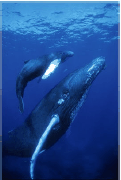
SIGHT UNSEEN
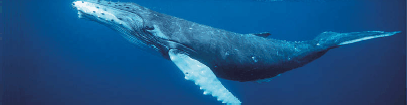
Underneath the blue Australian ocean, film crews captured the elegant rituals of southern humpbacks as they swim, sing, nurse, and play. A
mother humpback whale supported her young calf from underneath, so it could breathe easier near the surface. Calves drink 130 gallons of milk a day! While baby grows fat, the mother starves for five months, her blubber stores depleting daily. Unlike the cold Antarctic waters, the seas here don´t grow rich with krill that humpbacks filer through their baleen plates. But she provides her calf with rich milk that contains some of the highest fat content of any mammal´s milk – 45 percent.
UNIQUE BEHAVIOR
Humpback males sing a unique melody, full of high-pitched chirps and whistles interspersed with deeper gurgles and moans. Each male repeats his song for hours, which likely plays a role in courtship. The song may change over time, with males singing a modified melody in consecutive years.
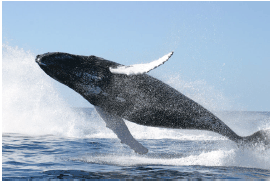
Whale-watching tours take advantage of the humpback´s playful and curious nature. They often approach boats and put on quite a show. As whales journey south along the eastern coast of Australia, many stop in sheltered Platypus Bay around Fraser Island – a World Heritage Site – where they display the charismatic behaviors loved by whale-watchers. The crystal blue waters give a perfect window to watch the whales twist, roll and swim upside down, emerging to breathe, slap their tails or pectoral fins on the water´s surface. Breaching whales jump nearly all the way out of the water. “Spyhopping” means their head emerges, and they peer at the surroundings with their large eyes.
STATUS/CONSERVATION
Commercial hunting in the 19th and 20th centuries decimated most whale species. Because they migrate close to shore and swim slowly, humpbacks became a popular whalers´ target, and were hunted down to a few hundred animals in the Southern Hemisphere. The International Whaling Commission (IWC) implemented a moratorium on harvesting all species starting in 1986, and in 1994, declared Antarctica´s Southern Ocean a whale sanctuary. Now numbering over 10,000 in the Southern Hemisphere, humpbacks have shown incredible resilience, but their numbers still remain a fraction of their historic abundance. Recovery of regional populations varies, and the World Conservation Union (IUCN) lists the humpback as vulnerable.
Humpbacks also have two Northern Hemisphere populations that number around 11,500 in the North Atlantic and 6,000 in the North Pacific. Northern humpbacks are genetically differentiated from the Southern Hemisphere population, and have dark bellies, while the southern humpbacks have all-white bellies. They don´t interbreed, because while the southern populations are mating and calving in the warm tropical seas, northern populations are near the polar Arctic.
OUTLOOK
The International Whaling Commission (IWC) allows hunting by indigenous cultures but bans hunting of humpback whales. Japan has long engaged in IWCsanctioned “scientific whaling” of minke and other whales, and plans to start hunting humpbacks in 2007. “We are all concerned about Japan´s plans to add this species to the scientific whaling quota”, says Dr. Scott Baker, a renowned cetacean conservation biologist. Iceland also just started commercial whaling in 2006.
Some Asian countries allow the sale of whale meat from incidental bycatch, and a whale´s value of $100,000 provides incentive for illegal harvest. Baker and colleagues used DNA to show that the whale meat being sold in South Korean shops did not match that reported to the IWC. Illegal harvest and sale of whale meat is occurring.
Australia and New Zealand have petitioned the IWC to create a South Pacific Sanctuary adjoining the Southern Ocean Sanctuary where whaling would be illegal. Thus far, it has not been approved by IWC.
http://dsc.discovery.com/convergence/planet-earth/animals/animals.html
One of the animals listed below DOESN´T belong to the same category as the humpback whale:
Provas
Questão presente nas seguintes provas

Dada a matriz !$ A=(a_{ij})_{2\times2} !$ tal que !$ a_{ij}=2i-j !$ é correto afirmar que:
Provas
Questão presente nas seguintes provas
Leia o texto a seguir:
“A mudança da corte para o Brasil era um plano muito antigo em Portugal, mas em 1807 o príncipe regente não tinha escolha: ou fugia ou muito provavelmente seria preso e deposto por Napoleão Bonaparte, como aconteceu alguns meses mais tarde com a monarquia espanhola. Se não havia alternativa, também não se justifica o uso de malabarismo semânticos para amenizar ou disfarçar o que de fato ocorreu: uma fuga pura e simples, apressada, atabalhoada, sujeita a erros e improvisações. A pressa foi tanta que, na confusão da partida, centenas de caixas repletas de prata das igrejas e milhares de volumes da preciosa Biblioteca Real, entre outras coisas, ficaram esquecidos no cais de Belém, em Lisboa”.
(GOMES, Laurentino. 1808: como uma rainha louca, um príncipe medroso e uma corte corrupta enganaram Napoleão e mudaram a história de Portugal e do Brasil. 2.ed. São Paulo: Editora Planeta do Brasil, 2007. p.23.)
Com base no texto e nos conhecimentos sobre os antecedentes da vinda da Família Real Portuguesa para o Brasil e as transformações posteriores que decorreram deste ato, considere as afirmativas a seguir:
I - Nesta época Portugal era governado pelo príncipe regente D. João, em lugar de sua mãe D. Maria I, doente mental. D. João tentou contemporizar, lançando mão de um expediente: propôs à Inglaterra que apenas fingiria atender às exigências francesas, ou seja, declararia guerra, fecharia os portos e expulsaria os ingleses apenas aparentemente. Chegou mesmo a propor o casamento de seu filho de nove anos, D. Pedro, com uma sobrinha de Napoleão.
II - Uma das pretensões de D. João ao vir para o Brasil era trazer consigo o acervo da Biblioteca Real, pois temia que ele fosse destruído pelo exército napoleônico. Este zelo com o acervo da Biblioteca Real deve-se ao fato de um terremoto que a destruiu no ano de 1755. Juntamente com a reconstrução da cidade, iniciou-se a restauração do acervo. Posteriormente a acervo foi mandado para o Brasil e ano de 1810, por decisão de D. João, foi fundada, na cidade do Rio de Janeiro, a Biblioteca Real, hoje chamada de Biblioteca Nacional.
III - O Rio de Janeiro passou a contar com estruturas típicas de capital. Foi estabelecida a Biblioteca Real, surgiu a Gazeta do Rio de Janeiro, primeiro jornal a funcionar no Brasil, foram instaladas gráficas e diversos setores de prestação de serviços antes inexistentes.
IV - Em represália pela invasão de Portugal, D. João declarou guerra à França e invadiu a Guiana Francesa, em 1809, devolvendo-a em 1817, após um acordo de paz realizado com Napoleão Bonaparte.
Assinale a alternativa correta:
Provas
Questão presente nas seguintes provas
ANO NOVO, VIDA NOVA
Moacyr Scliar
Vida é dor, e acordo com dor de dentes. O dia é belíssimo, um sol de verão invade o barraco; quanto a mim, choro de dor. Choro também por outras razões, mas principalmente de dor.
Vida é combate. De nada me adianta ficar deitado. Levanto-me e começo a fazer ginástica. Ao fletir o tronco, dou com o bilhete da Francisca, em cima da cadeira.
Escrever é uma conquista recente de Francisca, que frequenta, com muito sacrifício, um curso noturno de alfabetização. A caligrafia melhora dia a dia, constato, desdobrando a mensagem que, infelizmente, não me dá outros motivos de satisfação: Francisca acaba de me deixar, optando por um estivador – o que afinal de contas está bem de acordo com a falta de sensibilidade dela, mas me cria problemas: quem vai cozinhar? Quem vai arrumar o barraco? Quem vai me arranjar dinheiro para o cinema? Ai, vida é preocupação.
Mas a vida também é alegria. O Sol brilha, a ginástica me faz bem, e, se Francisca me deixou, mulheres não me faltarão. Aliás, não guardo nenhum rancor a Francisca. Ela nunca esteve à minha altura. Porque, se hoje moro em barraco, é por opção: fui criado por um tio rico, e nada me faltou a não ser o tédio. Por causa deste me tornei hippie. Depois resolvi profissionalizar-me e me tornei pobre de verdade. Foi assim que vim morar neste barraco, a princípio sozinho; mais tarde trouxe a Francisca, então uma simples empregada doméstica, uma analfabeta. Agora ela me deixou. Mas não tem nada, vamos em frente, amanhã será outro dia.
A dor de dentes, momentaneamente aliviada, retorna feroz. Preciso ir a um dentista, concluo. Cachaça com fumo não vai me adiantar, principalmente se a gente não tem – como é o meu caso – nem cachaça nem fumo. Nestas horas me arrependo um pouco de ter deixado o lar do meu tio. Pelo menos, não deveria ter jogado fora o cartão de crédito que ele me deu.
Decido ir ao dentista da associação beneficente da vila, que trata os pobres de graça. O dentista é uma bela pessoa, gordinho e simpático; examina-me rapidamente e decide que o caso é de extração. Posso escolher, informa-me; extração com anestesia (o que me custará uma módica quantia), ou sem. Escolho sem, e berro quando o dente é arrancado. O dentista pensa que eu grito de dor, mas se engana; berro de satisfação pelo dinheiro poupado. Gastar só para me tornar insensível? Absurdo. Vida é sofrimento; sofrer é tragar a vida a grandes goles, conforme explico ao dentista ao me despedir, com a boca cheia de sangue.
Cuspindo glóbulos pelos caminhos empoeirados da vila, desço à cidade, com o propósito de arranjar um café, senão o da manhã, pelo menos o da tarde: são quase três horas.
O movimento nas ruas do centro me surpreende. Uma quantidade enorme de pessoas, nas ruas, nas lojas. E aí me dou conta: é 31 de dezembro. O último dia do ano!
Vida é emoção. Lembro-me de como eu e o tio comemorávamos a passagem do ano: muito doce, muita champanha. Meu tio, esqueci-me de dizer, era importador de vinhos finos, de modo que o champanha era sempre do melhor, embora eu custasse um pouco a me embebedar com ele. A noite de 31 de dezembro era de sonhos e esperanças. Lembrando-me disso sento na sarjeta e choro, choro...
“...e nada me faltou a não ser o tédio”. Assinale a alternativa que não expressa o mesmo sentido do período acima:
Provas
Questão presente nas seguintes provas
INSTRUCTION – Read the following text carefully and then choose the correct alternative that answer the question.
SOUTHERN HUMPBACK WHALE
INTRODUCTION
During the Australian winter, these ocean leviathans journey 3,100 miles north from their Antarctic feeding grounds to the warm tropical waters near Australia´s Whitsunday Islands. At the southern edge of the Great Barrier Reef, the 40-ton female humpbacks give birth to calves measuring 14 feet long and weighing over one ton. The Whitsundays´ sheltered bays keep the calves warm and safe from predators. During the next few months, the whales rest, sing, play and mate. The calves nurse, but the one thing the adult whales don´t do while in the tropical seas is eat. By winter´s end, adults are famished, and they head south. This life cycle is repeated throughout the Southern Hemisphere: one group migrates along the western coast of Australia, others to southern Africa and South America.
SIGHT UNSEEN
Underneath the blue Australian ocean, film crews captured the elegant rituals of southern humpbacks as they swim, sing, nurse, and play. A
mother humpback whale supported her young calf from underneath, so it could breathe easier near the surface. Calves drink 130 gallons of milk a day! While baby grows fat, the mother starves for five months, her blubber stores depleting daily. Unlike the cold Antarctic waters, the seas here don´t grow rich with krill that humpbacks filer through their baleen plates. But she provides her calf with rich milk that contains some of the highest fat content of any mammal´s milk – 45 percent.
UNIQUE BEHAVIOR
Humpback males sing a unique melody, full of high-pitched chirps and whistles interspersed with deeper gurgles and moans. Each male repeats his song for hours, which likely plays a role in courtship. The song may change over time, with males singing a modified melody in consecutive years.
Whale-watching tours take advantage of the humpback´s playful and curious nature. They often approach boats and put on quite a show. As whales journey south along the eastern coast of Australia, many stop in sheltered Platypus Bay around Fraser Island – a World Heritage Site – where they display the charismatic behaviors loved by whale-watchers. The crystal blue waters give a perfect window to watch the whales twist, roll and swim upside down, emerging to breathe, slap their tails or pectoral fins on the water´s surface. Breaching whales jump nearly all the way out of the water. “Spyhopping” means their head emerges, and they peer at the surroundings with their large eyes.
STATUS/CONSERVATION
Commercial hunting in the 19th and 20th centuries decimated most whale species. Because they migrate close to shore and swim slowly, humpbacks became a popular whalers´ target, and were hunted down to a few hundred animals in the Southern Hemisphere. The International Whaling Commission (IWC) implemented a moratorium on harvesting all species starting in 1986, and in 1994, declared Antarctica´s Southern Ocean a whale sanctuary. Now numbering over 10,000 in the Southern Hemisphere, humpbacks have shown incredible resilience, but their numbers still remain a fraction of their historic abundance. Recovery of regional populations varies, and the World Conservation Union (IUCN) lists the humpback as vulnerable.
Humpbacks also have two Northern Hemisphere populations that number around 11,500 in the North Atlantic and 6,000 in the North Pacific. Northern humpbacks are genetically differentiated from the Southern Hemisphere population, and have dark bellies, while the southern humpbacks have all-white bellies. They don´t interbreed, because while the southern populations are mating and calving in the warm tropical seas, northern populations are near the polar Arctic.
OUTLOOK
The International Whaling Commission (IWC) allows hunting by indigenous cultures but bans hunting of humpback whales. Japan has long engaged in IWCsanctioned “scientific whaling” of minke and other whales, and plans to start hunting humpbacks in 2007. “We are all concerned about Japan´s plans to add this species to the scientific whaling quota”, says Dr. Scott Baker, a renowned cetacean conservation biologist. Iceland also just started commercial whaling in 2006.
Some Asian countries allow the sale of whale meat from incidental bycatch, and a whale´s value of $100,000 provides incentive for illegal harvest. Baker and colleagues used DNA to show that the whale meat being sold in South Korean shops did not match that reported to the IWC. Illegal harvest and sale of whale meat is occurring.
Australia and New Zealand have petitioned the IWC to create a South Pacific Sanctuary adjoining the Southern Ocean Sanctuary where whaling would be illegal. Thus far, it has not been approved by IWC.
http://dsc.discovery.com/convergence/planet-earth/animals/animals.html
Dr. Scott Baker is concerned that:
Provas
Questão presente nas seguintes provas
Sobre o conceito de cidadania é correto afirmar:
Provas
Questão presente nas seguintes provas
Assinale a alternativa que melhor define a Sociologia:
Provas
Questão presente nas seguintes provas
Leia atentamente os dois textos seguintes e responda a questão proposta assinalando a alternativa correta:
TEXTO I
LA COOPÉRATION SCIENTIFIQUE ENTRE LA FRANCE ET LE BRÉSIL
Jean-Pierre Briot
L’émergence du Brésil sur la scène scientifique internationale
Le Brésil pèse de plus en plus sur la scène scientifique. En nombre de publications il détient une des plus fortes croissances dans le monde. En vingt ans le nombre de publications signées par au moins un chercheur brésilien a été multiplié par dix. De plus l’investissement dans la recherche ne cesse de grimper : environ 1,1 % du PIB en 2010, chiffre qui devrait passer à 1,5 % en 2013. Le Brésil, qui compte près de 200 000 chercheurs (dont les trois quarts sont des enseignants chercheurs dans les universités) est ainsi devenu une puissance scientifique et technologique incontournable dans des domaines tels que l’agronomie, l’écologie et la physique.
Le Brésil est de plus, du fait de ses caractéristiques géographiques exceptionnelles (taille du pays, ressources naturelles et humaines), un laboratoire scientifique de premier ordre. Parmi les défis présents nous mentionnerons la gestion de la biodiversité – un tiers de la biodiversité planétaire se trouve au Brésil – et l’élaboration de nouveaux modèles de développement.
L’organisation de la recherche scientifique au Brésil Le type d’organisation administrative du pays entraîne deux niveaux de décision et d’action : le niveau fédéral et le niveau des États fédérés. Ces deux niveaux possèdent à la fois une indépendance et une Complémentarité comme nous allons le voir.
Le niveau fédéral. Au niveau fédéral le Ministère de la Science et de la Technologie (MCT) est l’acteur principal de la promotion de la recherche et de la technologie du pays. Il est responsable du Plan d’action de la science, de la technologie et de l’innovation pour le développement national (Pact), lancé en 2007. Le budget total du Pact pour 2007-2010 était de 41 milliards de Reais (environ 18 milliards d’Euro). Ce Plan a été élaboré en coordination avec d’autres ministères (Éducation, Industrie, Santé…). Les deux principales agences d’appui à la recherche dépendantes du ministère sont le CNPq et la FINEP.
Le CNPq est le premier organisme de soutien à la recherche scientifique au Brésil. Il lance différents appels d’offre pour le financement de projets de recherche, pour des bourses et des projets de coopération internationale (dont notamment avec le Centre National de la Recherche Scientifique – CNRS de la France,). Le CNPq gère la Plate-forme électronique Lattes, sur laquelle les chercheurs déposent et mettent à jour leur CV scientifique. Cette uniformisation de l’accès et du format s’avère très pratique et la Plate-forme est utilisée comme base d’évaluation par différents organismes. Nous noterons que, bien qu’étant le premier partenaire du CNRS au Brésil, le CNPq, à la différence du CNRS, n’est pas un opérateur de recherche mais une agence de financement. Il ne possède donc pas lui-même directement de laboratoires ni de chercheurs. La FINEP est plus axée sur les projets à visée technologique en partenariat avec les entreprises.
BRIOT, Jean-Pierre. La coopération scientifique entre la France et le Brésil. Rayonnement du CNRS n° 56. Disponible in: <http://www.cnrsbrasil. org/presentation/coop-sc-briot-a3-bresil.pdf>. Accès in: 11 avril 2014.
Selon le texte, quelles sont respectivement les fonctions du MCT et du CNPQ au Brésil?
Provas
Questão presente nas seguintes provas
INSTRUCTION – Read the following text carefully and then choose the correct alternative that answer the question.
SOUTHERN HUMPBACK WHALE
INTRODUCTION
During the Australian winter, these ocean leviathans journey 3,100 miles north from their Antarctic feeding grounds to the warm tropical waters near Australia´s Whitsunday Islands. At the southern edge of the Great Barrier Reef, the 40-ton female humpbacks give birth to calves measuring 14 feet long and weighing over one ton. The Whitsundays´ sheltered bays keep the calves warm and safe from predators. During the next few months, the whales rest, sing, play and mate. The calves nurse, but the one thing the adult whales don´t do while in the tropical seas is eat. By winter´s end, adults are famished, and they head south. This life cycle is repeated throughout the Southern Hemisphere: one group migrates along the western coast of Australia, others to southern Africa and South America.
SIGHT UNSEEN
Underneath the blue Australian ocean, film crews captured the elegant rituals of southern humpbacks as they swim, sing, nurse, and play. A
mother humpback whale supported her young calf from underneath, so it could breathe easier near the surface. Calves drink 130 gallons of milk a day! While baby grows fat, the mother starves for five months, her blubber stores depleting daily. Unlike the cold Antarctic waters, the seas here don´t grow rich with krill that humpbacks filer through their baleen plates. But she provides her calf with rich milk that contains some of the highest fat content of any mammal´s milk – 45 percent.
UNIQUE BEHAVIOR
Humpback males sing a unique melody, full of high-pitched chirps and whistles interspersed with deeper gurgles and moans. Each male repeats his song for hours, which likely plays a role in courtship. The song may change over time, with males singing a modified melody in consecutive years.
Whale-watching tours take advantage of the humpback´s playful and curious nature. They often approach boats and put on quite a show. As whales journey south along the eastern coast of Australia, many stop in sheltered Platypus Bay around Fraser Island – a World Heritage Site – where they display the charismatic behaviors loved by whale-watchers. The crystal blue waters give a perfect window to watch the whales twist, roll and swim upside down, emerging to breathe, slap their tails or pectoral fins on the water´s surface. Breaching whales jump nearly all the way out of the water. “Spyhopping” means their head emerges, and they peer at the surroundings with their large eyes.
STATUS/CONSERVATION
Commercial hunting in the 19th and 20th centuries decimated most whale species. Because they migrate close to shore and swim slowly, humpbacks became a popular whalers´ target, and were hunted down to a few hundred animals in the Southern Hemisphere. The International Whaling Commission (IWC) implemented a moratorium on harvesting all species starting in 1986, and in 1994, declared Antarctica´s Southern Ocean a whale sanctuary. Now numbering over 10,000 in the Southern Hemisphere, humpbacks have shown incredible resilience, but their numbers still remain a fraction of their historic abundance. Recovery of regional populations varies, and the World Conservation Union (IUCN) lists the humpback as vulnerable.
Humpbacks also have two Northern Hemisphere populations that number around 11,500 in the North Atlantic and 6,000 in the North Pacific. Northern humpbacks are genetically differentiated from the Southern Hemisphere population, and have dark bellies, while the southern humpbacks have all-white bellies. They don´t interbreed, because while the southern populations are mating and calving in the warm tropical seas, northern populations are near the polar Arctic.
OUTLOOK
The International Whaling Commission (IWC) allows hunting by indigenous cultures but bans hunting of humpback whales. Japan has long engaged in IWCsanctioned “scientific whaling” of minke and other whales, and plans to start hunting humpbacks in 2007. “We are all concerned about Japan´s plans to add this species to the scientific whaling quota”, says Dr. Scott Baker, a renowned cetacean conservation biologist. Iceland also just started commercial whaling in 2006.
Some Asian countries allow the sale of whale meat from incidental bycatch, and a whale´s value of $100,000 provides incentive for illegal harvest. Baker and colleagues used DNA to show that the whale meat being sold in South Korean shops did not match that reported to the IWC. Illegal harvest and sale of whale meat is occurring.
Australia and New Zealand have petitioned the IWC to create a South Pacific Sanctuary adjoining the Southern Ocean Sanctuary where whaling would be illegal. Thus far, it has not been approved by IWC.
http://dsc.discovery.com/convergence/planet-earth/animals/animals.html
At the southern edge of the Great Barrier Reef, adult humpbacks whales do all this, EXCEPT:
Provas
Questão presente nas seguintes provas
Sobre retas, planos e suas relações posicionais, Adriana escreveu em seu caderno as seguintes afirmações:
I - Se duas retas distintas são paralelas a um plano, então elas são paralelas entre si.
II - Se uma reta r está contida em um plano !$ \alpha !$, então existem retas paralelas a r fora de !$ \alpha !$.
III - Duas retas concorrentes podem ser ortogonais.
IV - Dada uma reta r paralela a um plano !$ \alpha !$, então r não é paralela a todas as retas de !$ \alpha !$.
Está correto apenas o que se afirma em:
Provas
Questão presente nas seguintes provas
Cadernos
Caderno Container