Foram encontradas 100 questões.
TEXT III
How energy companies can adjust their business models to a period of recovery
The character of Chuck Noland, played by Tom Hanks, says near the end of the film Cast Away, “...because tomorrow the sun will rise. Who knows what the tide could bring?” He makes this observation after having survived on a desert island for four years before being rescued and returned to civilization. If you’re a top executive in an oil and gas company, more than likely you’re feeling the same way right about now — optimistic but extremely cautious.
Much of the oil and gas industry has survived an especially tough few years with weak demand and low prices. It has been difficult to make strategic decisions and plan for the future. Only now is the sector beginning to emerge from its upheaval. If there is hope on the horizon, we must, like Noland in Cast Away, remain mindful of the risk. […]
So if you are an oil and gas executive peering out over 2017 and beyond, you will face structural and cultural issues internally; many companies do not have the talent, organizational framework, systems, processes, or attitudes to be sufficiently flexible and innovative in an evolving and uncertain marketplace. You should be prepared to pursue new drilling and extraction technologies and to increase your research into sustainability and clean energy. To start planning for the future, oil and gas leaders in all segments might consider some fundamental questions: Do I have the right business models in place? How can my company develop new capabilities and in what areas? How should asset portfolios evolve? What type of technology plays should I invest in?
As companies address these challenges, we see a number of business models and strategic responses emerging between now and 2020.
(From https://www.strategyand.pwc.com/trend/2017-oil-and-gas-trends. Accessed July 19th, 2017)
The word “likely” in “more than likely you’re feeling” indicates:
Provas

TEXT III
How energy companies can adjust their business models to a period of recovery
The character of Chuck Noland, played by Tom Hanks, says near the end of the film Cast Away, “...because tomorrow the sun will rise. Who knows what the tide could bring?” He makes this observation after having survived on a desert island for four years before being rescued and returned to civilization. If you’re a top executive in an oil and gas company, more than likely you’re feeling the same way right about now — optimistic but extremely cautious.
Much of the oil and gas industry has survived an especially tough few years with weak demand and low prices. It has been difficult to make strategic decisions and plan for the future. Only now is the sector beginning to emerge from its upheaval. If there is hope on the horizon, we must, like Noland in Cast Away, remain mindful of the risk. […]
So if you are an oil and gas executive peering out over 2017 and beyond, you will face structural and cultural issues internally; many companies do not have the talent, organizational framework, systems, processes, or attitudes to be sufficiently flexible and innovative in an evolving and uncertain marketplace. You should be prepared to pursue new drilling and extraction technologies and to increase your research into sustainability and clean energy. To start planning for the future, oil and gas leaders in all segments might consider some fundamental questions: Do I have the right business models in place? How can my company develop new capabilities and in what areas? How should asset portfolios evolve? What type of technology plays should I invest in?
As companies address these challenges, we see a number of business models and strategic responses emerging between now and 2020.
(From https://www.strategyand.pwc.com/trend/2017-oil-and-gas-trends. Accessed July 19th, 2017)
The wording of the question “Who knows what the tide could bring?” is based on an awareness of the:
Provas
TEXT III
How energy companies can adjust their business models to a period of recovery
The character of Chuck Noland, played by Tom Hanks, says near the end of the film Cast Away, “...because tomorrow the sun will rise. Who knows what the tide could bring?” He makes this observation after having survived on a desert island for four years before being rescued and returned to civilization. If you’re a top executive in an oil and gas company, more than likely you’re feeling the same way right about now — optimistic but extremely cautious.
Much of the oil and gas industry has survived an especially tough few years with weak demand and low prices. It has been difficult to make strategic decisions and plan for the future. Only now is the sector beginning to emerge from its upheaval. If there is hope on the horizon, we must, like Noland in Cast Away, remain mindful of the risk. […]
So if you are an oil and gas executive peering out over 2017 and beyond, you will face structural and cultural issues internally; many companies do not have the talent, organizational framework, systems, processes, or attitudes to be sufficiently flexible and innovative in an evolving and uncertain marketplace. You should be prepared to pursue new drilling and extraction technologies and to increase your research into sustainability and clean energy. To start planning for the future, oil and gas leaders in all segments might consider some fundamental questions: Do I have the right business models in place? How can my company develop new capabilities and in what areas? How should asset portfolios evolve? What type of technology plays should I invest in?
As companies address these challenges, we see a number of business models and strategic responses emerging between now and 2020.
(From https://www.strategyand.pwc.com/trend/2017-oil-and-gas-trends. Accessed July 19th, 2017)
The author of Text III positions himself. He concludes the text with:
Provas
TEXT II
Like Castles In An Aquarium, Offshore Drilling Platforms Are Sprawling With Residents
Just beneath the ocean’s surface, there’s an unseen world that most people will never have the opportunity to witness firsthand. A place where nature and mankind have struck a balance – a mutual respect, a friendship of sorts.
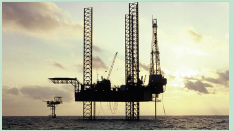
Offshore drilling platforms have become home to vast communities of sea life. Florid carpets of coral encrust their massive pylons, along with sponge, sea urchins, crabs, and snails. Swimming in the sanctuary of their enormous risers are schools of rockfish, bright orange garibaldi and angel fish. And splashing about on the surface is the occasional sea lion.
Now scientists have confirmed what some had suspected all along. Most of the sea life was actually created at the rig rather than having come from other parts of the ocean and settled there, according to the National Academy of Sciences. And fish that would otherwise perish in vast expanses of open ocean, settle within the safety of the structures.
Like castles in an aquarium, offshore platforms are sprawling with underwater residents. Scientists say these are the richest marine ecosystems on the entire planet. They are even more productive than coral reefs and estuaries, according to marine biologists.
The first thing anyone – trained scientist or casual recreational diver – notices around a rig is the big fish -- lots of them, say marine researchers and divers, alike.
For a decade and a half, researchers used submersibles to survey fish at 16 different platforms. When the researchers tabulated the data, they were surprised to discover that, by one standard, California’s oil rigs are among the most productive marine habitats ever recorded.
At the end of their production, however, the offshore rigs must be decommissioned. Scientific insight is adding momentum to efforts to convert some of these rigs into artificial reefs […].
(From http://thesurge.com/stories/like-castles-aquarium-offshore-drilling-platformssprawling- residents. Accessed July 18th, 2017)
In “the offshore rigs must be decommissioned”, the underlined verb is a synonym of:
Provas
TEXT II
Like Castles In An Aquarium, Offshore Drilling Platforms Are Sprawling With Residents
Just beneath the ocean’s surface, there’s an unseen world that most people will never have the opportunity to witness firsthand. A place where nature and mankind have struck a balance – a mutual respect, a friendship of sorts.
Offshore drilling platforms have become home to vast communities of sea life. Florid carpets of coral encrust their massive pylons, along with sponge, sea urchins, crabs, and snails. Swimming in the sanctuary of their enormous risers are schools of rockfish, bright orange garibaldi and angel fish. And splashing about on the surface is the occasional sea lion.
Now scientists have confirmed what some had suspected all along. Most of the sea life was actually created at the rig rather than having come from other parts of the ocean and settled there, according to the National Academy of Sciences. And fish that would otherwise perish in vast expanses of open ocean, settle within the safety of the structures.
Like castles in an aquarium, offshore platforms are sprawling with underwater residents. Scientists say these are the richest marine ecosystems on the entire planet. They are even more productive than coral reefs and estuaries, according to marine biologists.
The first thing anyone – trained scientist or casual recreational diver – notices around a rig is the big fish -- lots of them, say marine researchers and divers, alike.
For a decade and a half, researchers used submersibles to survey fish at 16 different platforms. When the researchers tabulated the data, they were surprised to discover that, by one standard, California’s oil rigs are among the most productive marine habitats ever recorded.
At the end of their production, however, the offshore rigs must be decommissioned. Scientific insight is adding momentum to efforts to convert some of these rigs into artificial reefs […].
(From http://thesurge.com/stories/like-castles-aquarium-offshore-drilling-platformssprawling- residents. Accessed July 18th, 2017)
The pronoun “them” in “The first thing anyone – trained scientist or casual recreational diver – notices around a rig is the big fish -- lots of them, say marine researchers and divers, alike” refers to:
Provas
TEXT II
Like Castles In An Aquarium, Offshore Drilling Platforms Are Sprawling With Residents
Just beneath the ocean’s surface, there’s an unseen world that most people will never have the opportunity to witness firsthand. A place where nature and mankind have struck a balance – a mutual respect, a friendship of sorts.
Offshore drilling platforms have become home to vast communities of sea life. Florid carpets of coral encrust their massive pylons, along with sponge, sea urchins, crabs, and snails. Swimming in the sanctuary of their enormous risers are schools of rockfish, bright orange garibaldi and angel fish. And splashing about on the surface is the occasional sea lion.
Now scientists have confirmed what some had suspected all along. Most of the sea life was actually created at the rig rather than having come from other parts of the ocean and settled there, according to the National Academy of Sciences. And fish that would otherwise perish in vast expanses of open ocean, settle within the safety of the structures.
Like castles in an aquarium, offshore platforms are sprawling with underwater residents. Scientists say these are the richest marine ecosystems on the entire planet. They are even more productive than coral reefs and estuaries, according to marine biologists.
The first thing anyone – trained scientist or casual recreational diver – notices around a rig is the big fish -- lots of them, say marine researchers and divers, alike.
For a decade and a half, researchers used submersibles to survey fish at 16 different platforms. When the researchers tabulated the data, they were surprised to discover that, by one standard, California’s oil rigs are among the most productive marine habitats ever recorded.
At the end of their production, however, the offshore rigs must be decommissioned. Scientific insight is adding momentum to efforts to convert some of these rigs into artificial reefs […].
(From http://thesurge.com/stories/like-castles-aquarium-offshore-drilling-platformssprawling- residents. Accessed July 18th, 2017)
The extract that presents a superlative is:
Provas
TEXT II
Like Castles In An Aquarium, Offshore Drilling Platforms Are Sprawling With Residents
Just beneath the ocean’s surface, there’s an unseen world that most people will never have the opportunity to witness firsthand. A place where nature and mankind have struck a balance – a mutual respect, a friendship of sorts.
Offshore drilling platforms have become home to vast communities of sea life. Florid carpets of coral encrust their massive pylons, along with sponge, sea urchins, crabs, and snails. Swimming in the sanctuary of their enormous risers are schools of rockfish, bright orange garibaldi and angel fish. And splashing about on the surface is the occasional sea lion.
Now scientists have confirmed what some had suspected all along. Most of the sea life was actually created at the rig rather than having come from other parts of the ocean and settled there, according to the National Academy of Sciences. And fish that would otherwise perish in vast expanses of open ocean, settle within the safety of the structures.
Like castles in an aquarium, offshore platforms are sprawling with underwater residents. Scientists say these are the richest marine ecosystems on the entire planet. They are even more productive than coral reefs and estuaries, according to marine biologists.
The first thing anyone – trained scientist or casual recreational diver – notices around a rig is the big fish -- lots of them, say marine researchers and divers, alike.
For a decade and a half, researchers used submersibles to survey fish at 16 different platforms. When the researchers tabulated the data, they were surprised to discover that, by one standard, California’s oil rigs are among the most productive marine habitats ever recorded.
At the end of their production, however, the offshore rigs must be decommissioned. Scientific insight is adding momentum to efforts to convert some of these rigs into artificial reefs […].
(From http://thesurge.com/stories/like-castles-aquarium-offshore-drilling-platformssprawling- residents. Accessed July 18th, 2017)
From the sentence “offshore platforms are sprawling with underwater residents” one can infer that:
Provas
TEXT II
Like Castles In An Aquarium, Offshore Drilling Platforms Are Sprawling With Residents
Just beneath the ocean’s surface, there’s an unseen world that most people will never have the opportunity to witness firsthand. A place where nature and mankind have struck a balance – a mutual respect, a friendship of sorts.
Offshore drilling platforms have become home to vast communities of sea life. Florid carpets of coral encrust their massive pylons, along with sponge, sea urchins, crabs, and snails. Swimming in the sanctuary of their enormous risers are schools of rockfish, bright orange garibaldi and angel fish. And splashing about on the surface is the occasional sea lion.
Now scientists have confirmed what some had suspected all along. Most of the sea life was actually created at the rig rather than having come from other parts of the ocean and settled there, according to the National Academy of Sciences. And fish that would otherwise perish in vast expanses of open ocean, settle within the safety of the structures.
Like castles in an aquarium, offshore platforms are sprawling with underwater residents. Scientists say these are the richest marine ecosystems on the entire planet. They are even more productive than coral reefs and estuaries, according to marine biologists.
The first thing anyone – trained scientist or casual recreational diver – notices around a rig is the big fish -- lots of them, say marine researchers and divers, alike.
For a decade and a half, researchers used submersibles to survey fish at 16 different platforms. When the researchers tabulated the data, they were surprised to discover that, by one standard, California’s oil rigs are among the most productive marine habitats ever recorded.
At the end of their production, however, the offshore rigs must be decommissioned. Scientific insight is adding momentum to efforts to convert some of these rigs into artificial reefs […].
(From http://thesurge.com/stories/like-castles-aquarium-offshore-drilling-platformssprawling- residents. Accessed July 18th, 2017)
The opposite of “beneath” in “Just beneath the ocean’s surface” is:
Provas
TEXT II
Like Castles In An Aquarium, Offshore Drilling Platforms Are Sprawling With Residents
Just beneath the ocean’s surface, there’s an unseen world that most people will never have the opportunity to witness firsthand. A place where nature and mankind have struck a balance – a mutual respect, a friendship of sorts.
Offshore drilling platforms have become home to vast communities of sea life. Florid carpets of coral encrust their massive pylons, along with sponge, sea urchins, crabs, and snails. Swimming in the sanctuary of their enormous risers are schools of rockfish, bright orange garibaldi and angel fish. And splashing about on the surface is the occasional sea lion.
Now scientists have confirmed what some had suspected all along. Most of the sea life was actually created at the rig rather than having come from other parts of the ocean and settled there, according to the National Academy of Sciences. And fish that would otherwise perish in vast expanses of open ocean, settle within the safety of the structures.
Like castles in an aquarium, offshore platforms are sprawling with underwater residents. Scientists say these are the richest marine ecosystems on the entire planet. They are even more productive than coral reefs and estuaries, according to marine biologists.
The first thing anyone – trained scientist or casual recreational diver – notices around a rig is the big fish -- lots of them, say marine researchers and divers, alike.
For a decade and a half, researchers used submersibles to survey fish at 16 different platforms. When the researchers tabulated the data, they were surprised to discover that, by one standard, California’s oil rigs are among the most productive marine habitats ever recorded.
At the end of their production, however, the offshore rigs must be decommissioned. Scientific insight is adding momentum to efforts to convert some of these rigs into artificial reefs […].
(From http://thesurge.com/stories/like-castles-aquarium-offshore-drilling-platformssprawling- residents. Accessed July 18th, 2017)
Read the statements below:
I – Most communities of sea life which cover the drilling platforms have come from the open sea;
II – California’s oil rigs are posing a threat to the most productive marine habitats;
III – Researchers plan to transform the rigs into artificial reefs when they become inactive.
Provas
TEXT I
Breaking the habit: From oiloholics to e-totallers
What changes in driving habits and improved batteries might do to oil demand

It has been a bad couple of years for those hoping for the death of driving. In America, where cars are an important part of the national psyche, a decade ago people had suddenly started to drive less, which had not happened since the oil shocks of the 1970s. Academics started to talk excitedly about “peak driving”, offering explanations such as urbanisation, ageing baby-boomers, car-shy millennials, ride-sharing apps such as Uber and even the distraction of Facebook.
Yet the causes may have been more prosaic: a combination of higher petrol prices and lower incomes in the wake of the 2008-09 financial crisis. Since the drop in oil prices in 2014, and a recovery in employment, the number of vehicle-miles travelled has rebounded, and sales of trucks and SUVs, which are less fuel-efficient than cars, have hit record highs.
This sensitivity to prices and incomes is important for global oil demand. More than half the world’s oil is used for transport, and of that, 46% goes into passenger cars. But the response to lower prices has been partially offset by dramatic improvements in fuel efficiency in America and elsewhere, thanks to standards like America’s Corporate Average Fuel Economy (CAFE.), the EU’s rules on CO2 emissions and those in place in China since 2012.
The IEA says that such measures cut oil consumption in 2015 by a whopping 2.3m b/d. This is particularly impressive because interest in fuel efficiency usually wanes when prices are low. If best practice were applied to all the world’s vehicles, the savings would be 4.3m b/d, roughly equivalent to the crude output of Canada. This helps explain why some forecasters think demand for petrol may peak within the next 10-15 years even if the world’s vehicle fleet keeps growing.
Occo Roelofsen of McKinsey, a consultancy, goes further. Hereckons that thanks to the decline in the use of oil in light vehicles, total consumption of liquid fuels will begin to fall within a decade, and that in the next few decades driving will be shaken up by electric vehicles (EVs), self-driving cars and car-sharing. […]
(Dated Nov 24th, 2016. From https://www.economist.com/news/
specialreport/ 21710635-what-changes-driving-habits-and-improved-batteries-might-dooil- demand-coming. Accessed July 18th, 2017)
The verb phrase in “such measures cut oil consumption” is in the:
Provas
Caderno Container