Foram encontradas 50 questões.
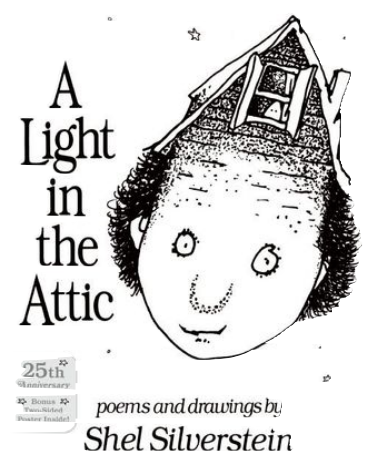
The poem 'Whatif' by Shel Silverstein was first published in his poetry collection entitled “A Light in the Attic”. Read it to answer questions 49 and 50.
Whatif
By Shel Silverstein
Last night, while I lay thinking here,
Some Whatifs crawled inside my ear
And pranced and partied all night long
And sang their same old Whatif song:
Whatif I'm dumb in school?
Whatif they've closed the swimming pool?
Whatif I get beat up?
Whatif there's poison in my cup?
Whatif I start to cry?
Whatif I get sick and die?
Whatif I flunk that test?
Whatif green hair grows on my chest?
Whatif nobody likes me?
Whatif a bolt of lightning strikes me?
Whatif I don't grow taller?
Whatif my head starts getting smaller?
Whatif the fish won't bite?
Whatif the wind tears up my kite?
Whatif they start a war?
Whatif my parents get divorced?
Whatif the bus is late?
Whatif my teeth don't grow in straight?
Whatif I tear my pants?
Whatif I never learn to dance?
Everything seems well, and then
The nighttime Whatifs strike again!
Disponível em: <https://genius.com/Shel-silverstein-whatif-annotated> Acesso em: 04 mar. 2020.
In terms of the linguistic aspects and text comprehension, which alternative corresponds to the text?
Provas

The poem 'Whatif' by Shel Silverstein was first published in his poetry collection entitled “A Light in the Attic”. Read it to answer questions 49 and 50.
Whatif
By Shel Silverstein
Last night, while I lay thinking here,
Some Whatifs crawled inside my ear
And pranced and partied all night long
And sang their same old Whatif song:
Whatif I'm dumb in school?
Whatif they've closed the swimming pool?
Whatif I get beat up?
Whatif there's poison in my cup?
Whatif I start to cry?
Whatif I get sick and die?
Whatif I flunk that test?
Whatif green hair grows on my chest?
Whatif nobody likes me?
Whatif a bolt of lightning strikes me?
Whatif I don't grow taller?
Whatif my head starts getting smaller?
Whatif the fish won't bite?
Whatif the wind tears up my kite?
Whatif they start a war?
Whatif my parents get divorced?
Whatif the bus is late?
Whatif my teeth don't grow in straight?
Whatif I tear my pants?
Whatif I never learn to dance?
Everything seems well, and then
The nighttime Whatifs strike again!
Disponível em: <https://genius.com/Shel-silverstein-whatif-annotated> Acesso em: 04 mar. 2020.
Em relação aos aspectos semânticos e lexicais, qual é a alternativa que corresponde ao texto?
Provas
Leia o texto para responder à questão a seguir.
According to Collie and Slater in Cruz (2010) literature can be regarded as a rich source of ‘authentic material’ because it conveys two features in its written text: one is ‘language in use,’ that is, the employment of linguistics by those who have mastered it into a fashion intended for native speakers; the second is an aesthetic representation of the spoken language which is meant to recover or represent language within a certain cultural context. . (…) Literature as aesthetic recreation (that is, as something artificial) can be considered a much more “authentic” source and can inspire more authority in the use and enrichment of language than English textbooks or even than direct samples of language, more so if learners develop an “aesthetic reading” of the text (Langer, 1991, 1998; Many, Gerla, Wiseman, & Ellis, 1995). Through this personal and social experience students can develop a closer relationship with language, since they are reconstructing the target language on their own for their own learning process. There are some genres in literature including poetry, short fiction, drama and novel. (…) Poetry offers wonderful opportunities for reading, writing, speaking, and listening practice for English language learners. Poetry also gives students a chance to expand vocabulary knowledge, to play with language, and to work with different rhythms and rhyme patterns. (…) There are three principles to consider in material selection; 1) readability, it means that the poem is able to be read. It has to be clear to read, listen, or watch it on video. 2) suitability, the children are going to read, hear, learn the words, and words convey information and content that are appropriate to their age, maturity, and culture. 3) exploitability, it may simply be for fun and motivation, for social enjoyment within the classroom and worthy purpose.
FAUZIAH. The Approaches to Teaching Literature for Young Learners. Journal of English Language Teaching and Linguistics (JELTL) e-ISSN: 2502- 6062, 2016, Vol. 1 (2) www.jeltl.org p. 145-158. Disponível em: . Acesso em: 4 mar. 2020.
Baseando-se na leitura do texto,
Provas
Read the text below. Questions 45, 46 and 47 are based on it.

Disponível em: <http://phdcomics.com/comics/archive.php? comicid=1795&xid=17259,15700021,15700186,15700191,15700248,1570025 3>. Acesso em: 6 mar. 2020.
Os elementos linguísticos do texto do cartum revelam que
Provas
Read the text below. Questions 45, 46 and 47 are based on it.
Disponível em: <http://phdcomics.com/comics/archive.php? comicid=1795&xid=17259,15700021,15700186,15700191,15700248,1570025 3>. Acesso em: 6 mar. 2020.
Based on the instructor’s comments, the title of the cartoon can be re-written as
Provas
Read the text below. Questions 45, 46 and 47 are based on it.
Disponível em: <http://phdcomics.com/comics/archive.php? comicid=1795&xid=17259,15700021,15700186,15700191,15700248,1570025 3>. Acesso em: 6 mar. 2020.
From the instructor’s comments on the student’s e-mail, he is
Provas
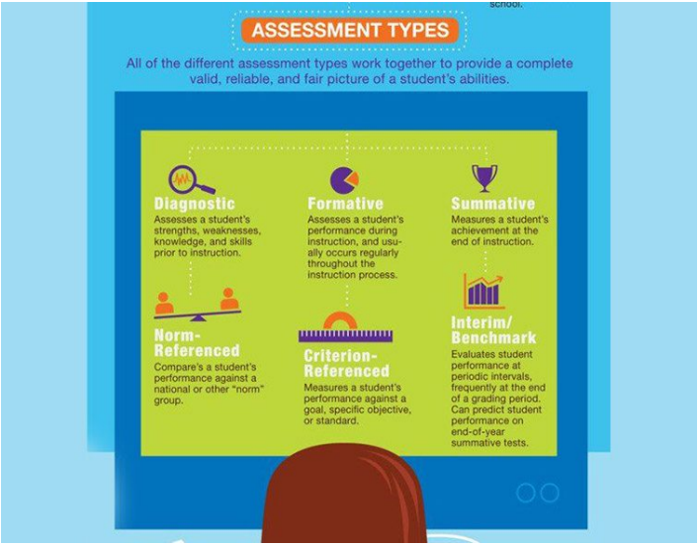
Observe o infográfico a seguir para responder à questão 44.
Disponível em:<https://www.teachthought.com/pedagogy/6-types-assessment-learning/>. Acesso em: 4 mar. 2020.
Os tipos de avaliação de aprendizagem apresentados no infográfico mostram que
Provas
In the excerpt which follows, the teacher is describing activities he/she can conduct with his/her students. Read it to answer question 43.
Describing pictures
One simple activity that we can do with our students is to ask them to look for a photo that they enjoy, in their Photo Gallery and describe it to their speaking partner (who is in the photo, where it was taken, when it was taken, etc.). This activity generates a lot of speaking and it can even work in a lowresource class. Students can also use pictures to talk to their partners about what they did the previous weekend, in summer, etc.
Taking pictures
We can encourage our learners to take photos of menus, street signs, advertisements or posters in English and read them carefully. Students can also try to spot spelling errors or incorrect use of apostrophe (‘s).
Recording conversations/words
The voice recorder is now a substitute for the portable cassette recorder. An idea for a simple activity that we can do is get the students record themselves speaking, whether it is for short dialogues with their partners or words. Students can then listen to themselves and become more aware of their mistakes.
Using QR codes for reading activities
QR codes are becoming increasingly popular. What a QR code does is bring up a website link that it is connected to or a text for students to read. In order to use QR codes, the phone needs to have a QR code reader and a camera. The teacher can simply display the QR code in the classroom and the learners can scan it and be directed to the text or grammar exercise. Another way to use QR codes is to hide pieces of paper with QR codes in the school and have students search for them, scan them and read the text they are directed to.
Disponível em: <https://rate.org.ro/blog2.php>. Acesso em: 9 mar. 2020. (Adaptado).
By analyzing the descriptions, the teacher uses principles based on
Provas
Leia o texto a seguir para responder às questões 41 e 42.
One of the objectives of the project, Re-imagining Multilingualisms, was to reimagine. The term ‘reimagining’ is something extremely important because imagining and being creative are not things we are used to doing in the academy, not in Linguistics at least! We believe that we are empiricists, that we only look at facts and we make conclusions. We are pseudo-scientists. We make conclusions about what we observe, and we think that what we observe has got nothing to do with what we imagine. On the contrary, it has everything to do with what we imagine.
So, when we analyse things ideologically, what is ideology? It’s exactly an imagination which has been naturalised and institutionalised. And so, whenever we look at the world, we’re looking at it from the eyes of a particular learned knowledge, an ideology. When we are asked to be able to imagine things, it’s a point of being able to break out of our established learning and looking for something new. Imagining is extremely important in the learning process. If it doesn’t happen, there is no learning. This is one of the important things of Freirean pedagogy. For example, he made the distinction between what he called ‘banking pedagogies’ or ‘transmission pedagogies’ where there’s just reproduction and repetition, and ‘transformative pedagogies’, what he called ‘liberatory pedagogies’, which is where creativity is involved, where you break the simple linearity of repetition and transmission. So how does this work? How do you promote creativity? It is by breaking what previously seemed natural and normal. (MENEZES DE SOUZA, 2019, p. 9, ênfase no original)
MENEZES DE SOUZA, L. M. Decolonial pedagogies, multilingualism and literacies. Multilingual Margins, vol. 6 (1), 2019. p. 9-13.
According to the text,
Provas
Leia o texto a seguir para responder às questões 41 e 42.
One of the objectives of the project, Re-imagining Multilingualisms, was to reimagine. The term ‘reimagining’ is something extremely important because imagining and being creative are not things we are used to doing in the academy, not in Linguistics at least! We believe that we are empiricists, that we only look at facts and we make conclusions. We are pseudo-scientists. We make conclusions about what we observe, and we think that what we observe has got nothing to do with what we imagine. On the contrary, it has everything to do with what we imagine.
So, when we analyse things ideologically, what is ideology? It’s exactly an imagination which has been naturalised and institutionalised. And so, whenever we look at the world, we’re looking at it from the eyes of a particular learned knowledge, an ideology. When we are asked to be able to imagine things, it’s a point of being able to break out of our established learning and looking for something new. Imagining is extremely important in the learning process. If it doesn’t happen, there is no learning. This is one of the important things of Freirean pedagogy. For example, he made the distinction between what he called ‘banking pedagogies’ or ‘transmission pedagogies’ where there’s just reproduction and repetition, and ‘transformative pedagogies’, what he called ‘liberatory pedagogies’, which is where creativity is involved, where you break the simple linearity of repetition and transmission. So how does this work? How do you promote creativity? It is by breaking what previously seemed natural and normal. (MENEZES DE SOUZA, 2019, p. 9, ênfase no original)
MENEZES DE SOUZA, L. M. Decolonial pedagogies, multilingualism and literacies. Multilingual Margins, vol. 6 (1), 2019. p. 9-13.
Considering the linguistic elements in the text,
Provas
Caderno Container