Foram encontradas 470 questões.
Choose the alternative that fills in the gaps from the paragraph below:
“___________________ the United Nations, at least 800 species worldwide are affected by marine debris, and as much as 80 percent of that litter is plastic. It is estimated that _______ 13 million metric tons of plastic ends up in the ocean each year the equivalent of a rubbish or garbage truck load’s _______________ every minute. Fish, seabirds, sea turtles, and marine mammals can become entangled in or ingest plastic debris, causing suffocation, starvation, and drowning. Humans are not immune to this threat: While plastics are estimated to take up to hundreds of years to fully decompose, some of them break down much quicker into tiny particles, ______________ in turn end up in the seafood we eat.”
Provas

What's the meaning conveyed by the word 'worshippers'?
Provas
What's the correct reported speech transcription for the following tweet from former U.S. President Barack Obama?

Mr. Obama uploaded a tweet saying (that) _____________________________________________.
Provas
Read the article to answer questions numbers 37 and 38:
“THE DATA BEHIND NOBEL PRIZES”
Since 1901, the Nobel foundation has awarded its annual prizes for chemistry, physics and medicine/physiology to up to three scientists. 604 different scientists have won the prize (some of them twice, like Marie Sk?odowska Curie, John Bardeen and Fred Sanger). We’ve taken a look at some of the data behind those 604 people and their prize winning work how long do laureates wait between publishing their work and winning the prize? How many citations do those papers gather? And where did the laureates live and work?
Country by country
It’s no surprise that the US leads the way as the country with most chemistry laureates (in terms of where they were working when they received the award), with 76. Germany (in its various guises) is second with 31, and the UK third with 28 laureates. Individual institutions
When it comes to institutions, the picture is a little more complicated. Taking the University of California system as a single institution takes it to the top with 13. The various Max Planck institutes in Germany can claim 11 laureates. If you count the UK’s Medical Research Council Laboratory of Molecular Biology as part of the University of Cambridge, then the university can also claim 11 chemistry laureates. If not, the MRC is equal with Stanford University on seven laureates. So it all depends how you define an institution!
source: https://www.chemistryworld.com/nobel-prize/the-data-behind-the-nobel-prizes/4010453.article#/
As a lexical category the word 'claim' appears in the text as:
Provas
Read the article to answer questions numbers 37 and 38:
“THE DATA BEHIND NOBEL PRIZES”
Since 1901, the Nobel foundation has awarded its annual prizes for chemistry, physics and medicine/physiology to up to three scientists. 604 different scientists have won the prize (some of them twice, like Marie Sk?odowska Curie, John Bardeen and Fred Sanger). We’ve taken a look at some of the data behind those 604 people and their prize winning work how long do laureates wait between publishing their work and winning the prize? How many citations do those papers gather? And where did the laureates live and work?
Country by country
It’s no surprise that the US leads the way as the country with most chemistry laureates (in terms of where they were working when they received the award), with 76. Germany (in its various guises) is second with 31, and the UK third with 28 laureates. Individual institutions
When it comes to institutions, the picture is a little more complicated. Taking the University of California system as a single institution takes it to the top with 13. The various Max Planck institutes in Germany can claim 11 laureates. If you count the UK’s Medical Research Council Laboratory of Molecular Biology as part of the University of Cambridge, then the university can also claim 11 chemistry laureates. If not, the MRC is equal with Stanford University on seven laureates. So it all depends how you define an institution!
source: https://www.chemistryworld.com/nobel-prize/the-data-behind-the-nobel-prizes/4010453.article#/
Choose only statements that are truthful:
I A laureate is a person awarded with the Nobel Prize.
II Most prizes have been given to scientists from the United Kingdom.
III German scientist Max Planck was the scholar who the committee acknowledge the most, for his works in the field of Chemistry and Physics.
Provas
Read the dialogue featuring in the comic strip below and choose the right alternative:
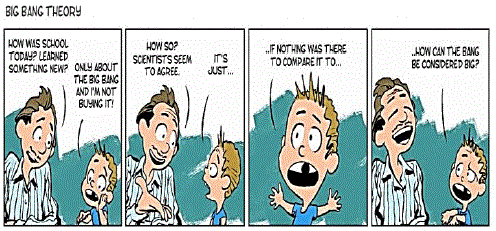
The child who's having a conversation with his father is complaining about a school subject he doesn't quit understand. What is his enquire based on?
Provas
Qual o tipo de backup é executado após o primeiro backup, serão copiados todos os dados alterados desde o backup completo anterior?
Provas
- Gestão da QualidadeMelhoria Contínua e Qualidade TotalCiclo PDCA (Ciclo de Deming)
- Gestão de ProcessosGestor de Processos
A Melhoria de Serviço Continuada utiliza uma série de modelos para atingir os seus objetivos. Um dos mais populares é o Ciclo de Deming, ou também conhecido como PDCA. Em qual fase do PDCA são definidas as metas?
Provas
Qual tipo de servidor permite acesso de outros usuários a um disco rígido ou servidor e esse tipo de servidor armazena arquivos para dar acesso a eles pela internet?
Provas
Qual das camadas do modelo OSI é responsável por estabelecer, gerenciar e encerrar sessões entre entidades da camada de apresentação. Esta camada também fornece controle de conversação entre dispositivos e nós. Ela coordena comunicação entre sistemas e serve para organizar sua comunicação.
Provas
Caderno Container