Foram encontradas 485 questões.
Uma sociedade apresentou, no período anterior, uma variação negativa no saldo de caixa e equivalentes de caixa no valor de R$3.000,00. Sabendo-se que o caixa gerado pelas atividades operacionais foi de R$10.000,00 e o caixa consumido pelas atividades de investimento foi de R$6.000,00. De acordo com a Análise do Fluxos de Caixa, as atividades de financiamento
Provas

Uma determinada loja vende a vista com 10% de desconto. Maria gostou do produto e quer levá-lo, porém não tem todo o dinheiro disponível para a compra. O Vendedor concorda em receber a metade a vista e o restante 30 dias após a compra, porém ele não pode conceder o desconto neste caso. Se Maria fechar a compra, pagando a metade a vista e o restante a prazo, quanto ela pagaria de juros?
Provas
Uma indústria adquiriu uma máquina, para utilizar na produção, que custou R$100.000,00, mais o IPI de R$8.000,00. Havia um ICMS incluso de R$13.200,00 e PIS/COFINS de R$9.250,00. O frete de 5.000,00 foi pago pelo vendedor. O comprador incorreu em um gasto de R$1.000,00 de armazenagem durante o transporte, em função das fortes chuvas na região. Para instalar, ainda foram gastos mais R$ 7.000,00. O Registro do Ativo Imobilizado será realizado por
Provas
Uma empresa comprou uma mercadoria dia 30/01/12. A Nota Fiscal foi emitida no dia 31/01/12, porém a transportadora só iniciou o transporte no dia 02/02/12 e chegou ao estabelecimento do comprador em 10/02/12. O pagamento da Nota Fiscal será realizado no dia 05/03/12. Sabendo-se que o frete foi pago pelo vendedor, em que data será realizado o registro contábil da compra?
Provas
In the Future, We Will All Talk to Computers
inShare47
Posted By Ben Bajarin on October 17, 2011
When Apple showed the world Siri, I believe they showed us the next major man-to-machine user interface.
The idea of talking to computers is nothing new. It has, of course, been featured in sci-fi novels, movies and TV shows for years now. The challenge had always been bringing it to the mass market. This is what Apple plans to do with Siri on the iPhone 4S.
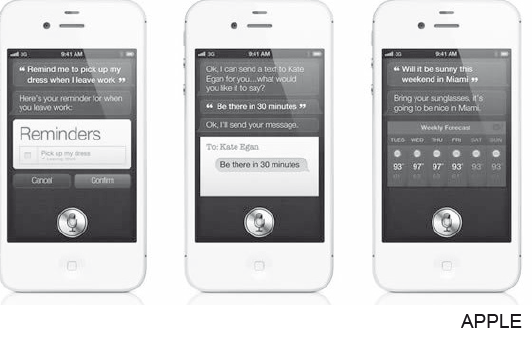
This technology has been in development for quite a while and is getting progressively better. One of the most impressive elements of Siri is not just the ability to do voice-to-text dictation, but its ability to turn natural-language directives into action. What I mean by that is that I can use my voice to say, “Remind me to feed my goats when I get home.” Because Siri is trained to know where my house is and the iPhone 4S has GPS”. I live on a farm and this is quite handy for me.
It’s a valuable proposition to be able to use voice commands to create calendar items, search the web, get abstract information like how many feet are ina mile, search local information, set alarms, check the weather, and much more. This can be done because Siri is tied to some very powerful databases.
What is fascinating is that as I have been using Siri, the experience actually feels more like an conversation than me ordering my iPhone to do things. This is because when you use your voice to create a action, Siri asks you relevant questions in order to make sure it takes the correct action.
For example, the first time I told it to call my dad, Siri asked, “What is your father’s name?” I responded “Tim” and Siri said, “Do you want me to remember that Tim Bajarin is your father?” I answered yes and Siri acknowledged that it would remember that Tim Bajarin is my father.
Experiences like this cause you to realize that we are only just starting to scratch the surface of using our voices to interact with personal computers.
Adapted from: http://techland.time.com/2011/10/17/in-the-future-we-will-all-talk-to-computers/#ixzz1jxHsxtDv Acessed on 2012/02/01 at 6:00 pm
I. “It’s ___________ valuable proposition to be able to use voice commands to create calendar items…”
II. “get abstract information like how many feet are in _________ mile…”
III. “This is because when you use your voice to create ________ action…”
IV. “the experience actually feels more like __________ conversation than me ordering my iPhone…”
Choose the alternative that completes each sentence above correctly:
Provas
In the Future, We Will All Talk to Computers
inShare47
Posted By Ben Bajarin on October 17, 2011
When Apple showed the world Siri, I believe they showed us the next major man-to-machine user interface.
The idea of talking to computers is nothing new. It has, of course, been featured in sci-fi novels, movies and TV shows for years now. The challenge had always been bringing it to the mass market. This is what Apple plans to do with Siri on the iPhone 4S.
This technology has been in development for quite a while and is getting progressively better. One of the most impressive elements of Siri is not just the ability to do voice-to-text dictation, but its ability to turn natural-language directives into action. What I mean by that is that I can use my voice to say, “Remind me to feed my goats when I get home.” Because Siri is trained to know where my house is and the iPhone 4S has GPS”. I live on a farm and this is quite handy for me.
It’s a valuable proposition to be able to use voice commands to create calendar items, search the web, get abstract information like how many feet are ina mile, search local information, set alarms, check the weather, and much more. This can be done because Siri is tied to some very powerful databases.
What is fascinating is that as I have been using Siri, the experience actually feels more like an conversation than me ordering my iPhone to do things. This is because when you use your voice to create a action, Siri asks you relevant questions in order to make sure it takes the correct action.
For example, the first time I told it to call my dad, Siri asked, “What is your father’s name?” I responded “Tim” and Siri said, “Do you want me to remember that Tim Bajarin is your father?” I answered yes and Siri acknowledged that it would remember that Tim Bajarin is my father.
Experiences like this cause you to realize that we are only just starting to scratch the surface of using our voices to interact with personal computers.
Adapted from: http://techland.time.com/2011/10/17/in-the-future-we-will-all-talk-to-computers/#ixzz1jxHsxtDv Acessed on 2012/02/01 at 6:00 pm
According to Ben Bajarin:
Provas
In the Future, We Will All Talk to Computers
inShare47
Posted By Ben Bajarin on October 17, 2011
When Apple showed the world Siri, I believe they showed us the next major man-to-machine user interface.
The idea of talking to computers is nothing new. It has, of course, been featured in sci-fi novels, movies and TV shows for years now. The challenge had always been bringing it to the mass market. This is what Apple plans to do with Siri on the iPhone 4S.
This technology has been in development for quite a while and is getting progressively better. One of the most impressive elements of Siri is not just the ability to do voice-to-text dictation, but its ability to turn natural-language directives into action. What I mean by that is that I can use my voice to say, “Remind me to feed my goats when I get home.” Because Siri is trained to know where my house is and the iPhone 4S has GPS”. I live on a farm and this is quite handy for me.
It’s a valuable proposition to be able to use voice commands to create calendar items, search the web, get abstract information like how many feet are ina mile, search local information, set alarms, check the weather, and much more. This can be done because Siri is tied to some very powerful databases.
What is fascinating is that as I have been using Siri, the experience actually feels more like an conversation than me ordering my iPhone to do things. This is because when you use your voice to create a action, Siri asks you relevant questions in order to make sure it takes the correct action.
For example, the first time I told it to call my dad, Siri asked, “What is your father’s name?” I responded “Tim” and Siri said, “Do you want me to remember that Tim Bajarin is your father?” I answered yes and Siri acknowledged that it would remember that Tim Bajarin is my father.
Experiences like this cause you to realize that we are only just starting to scratch the surface of using our voices to interact with personal computers.
Adapted from: http://techland.time.com/2011/10/17/in-the-future-we-will-all-talk-to-computers/#ixzz1jxHsxtDv Acessed on 2012/02/01 at 6:00 pm
The pronoun “they” in: “When Apple showed the world Siri, I believe they showed us the next major man-to-machine user interface.” refers to:
Provas
In the Future, We Will All Talk to Computers
inShare47
Posted By Ben Bajarin on October 17, 2011
When Apple showed the world Siri, I believe they showed us the next major man-to-machine user interface.
The idea of talking to computers is nothing new. It has, of course, been featured in sci-fi novels, movies and TV shows for years now. The challenge had always been bringing it to the mass market. This is what Apple plans to do with Siri on the iPhone 4S.
This technology has been in development for quite a while and is getting progressively better. One of the most impressive elements of Siri is not just the ability to do voice-to-text dictation, but its ability to turn natural-language directives into action. What I mean by that is that I can use my voice to say, “Remind me to feed my goats when I get home.” Because Siri is trained to know where my house is and the iPhone 4S has GPS”. I live on a farm and this is quite handy for me.
It’s a valuable proposition to be able to use voice commands to create calendar items, search the web, get abstract information like how many feet are ina mile, search local information, set alarms, check the weather, and much more. This can be done because Siri is tied to some very powerful databases.
What is fascinating is that as I have been using Siri, the experience actually feels more like an conversation than me ordering my iPhone to do things. This is because when you use your voice to create a action, Siri asks you relevant questions in order to make sure it takes the correct action.
For example, the first time I told it to call my dad, Siri asked, “What is your father’s name?” I responded “Tim” and Siri said, “Do you want me to remember that Tim Bajarin is your father?” I answered yes and Siri acknowledged that it would remember that Tim Bajarin is my father.
Experiences like this cause you to realize that we are only just starting to scratch the surface of using our voices to interact with personal computers.
Adapted from: http://techland.time.com/2011/10/17/in-the-future-we-will-all-talk-to-computers/#ixzz1jxHsxtDv Acessed on 2012/02/01 at 6:00 pm
The “plural form” is correct in all the alternatives below, except:
Provas
In the Future, We Will All Talk to Computers
inShare47
Posted By Ben Bajarin on October 17, 2011
When Apple showed the world Siri, I believe they showed us the next major man-to-machine user interface.
The idea of talking to computers is nothing new. It has, of course, been featured in sci-fi novels, movies and TV shows for years now. The challenge had always been bringing it to the mass market. This is what Apple plans to do with Siri on the iPhone 4S.
This technology has been in development for quite a while and is getting progressively better. One of the most impressive elements of Siri is not just the ability to do voice-to-text dictation, but its ability to turn natural-language directives into action. What I mean by that is that I can use my voice to say, “Remind me to feed my goats when I get home.” Because Siri is trained to know where my house is and the iPhone 4S has GPS”. I live on a farm and this is quite handy for me.
It’s a valuable proposition to be able to use voice commands to create calendar items, search the web, get abstract information like how many feet are ina mile, search local information, set alarms, check the weather, and much more. This can be done because Siri is tied to some very powerful databases.
What is fascinating is that as I have been using Siri, the experience actually feels more like an conversation than me ordering my iPhone to do things. This is because when you use your voice to create a action, Siri asks you relevant questions in order to make sure it takes the correct action.
For example, the first time I told it to call my dad, Siri asked, “What is your father’s name?” I responded “Tim” and Siri said, “Do you want me to remember that Tim Bajarin is your father?” I answered yes and Siri acknowledged that it would remember that Tim Bajarin is my father.
Experiences like this cause you to realize that we are only just starting to scratch the surface of using our voices to interact with personal computers.
Adapted from: http://techland.time.com/2011/10/17/in-the-future-we-will-all-talk-to-computers/#ixzz1jxHsxtDv Acessed on 2012/02/01 at 6:00 pm
Mark the alternative in which the use of “Question Tags” is incorrect:
Provas
In the Future, We Will All Talk to Computers
inShare47
Posted By Ben Bajarin on October 17, 2011
When Apple showed the world Siri, I believe they showed us the next major man-to-machine user interface.
The idea of talking to computers is nothing new. It has, of course, been featured in sci-fi novels, movies and TV shows for years now. The challenge had always been bringing it to the mass market. This is what Apple plans to do with Siri on the iPhone 4S.
This technology has been in development for quite a while and is getting progressively better. One of the most impressive elements of Siri is not just the ability to do voice-to-text dictation, but its ability to turn natural-language directives into action. What I mean by that is that I can use my voice to say, “Remind me to feed my goats when I get home.” Because Siri is trained to know where my house is and the iPhone 4S has GPS”. I live on a farm and this is quite handy for me.
It’s a valuable proposition to be able to use voice commands to create calendar items, search the web, get abstract information like how many feet are ina mile, search local information, set alarms, check the weather, and much more. This can be done because Siri is tied to some very powerful databases.
What is fascinating is that as I have been using Siri, the experience actually feels more like an conversation than me ordering my iPhone to do things. This is because when you use your voice to create a action, Siri asks you relevant questions in order to make sure it takes the correct action.
For example, the first time I told it to call my dad, Siri asked, “What is your father’s name?” I responded “Tim” and Siri said, “Do you want me to remember that Tim Bajarin is your father?” I answered yes and Siri acknowledged that it would remember that Tim Bajarin is my father.
Experiences like this cause you to realize that we are only just starting to scratch the surface of using our voices to interact with personal computers.
Adapted from: http://techland.time.com/2011/10/17/in-the-future-we-will-all-talk-to-computers/#ixzz1jxHsxtDv Acessed on 2012/02/01 at 6:00 pm
In the third paragraph the expression ”for quite a while” means:
Provas
Caderno Container