Foram encontradas 198 questões.
A auditoria interna na empresa Mel Doce do Brasil S. A., para obter razoável segurança de que os controles internos estabelecidos pela administração estão em efetivo funcionamento, inclusive quanto ao seu cumprimento pelos funcionários e administradores da entidade, aplicará procedimentos de auditoria relativamente a
Provas
Questão presente nas seguintes provas

O gerente financeiro da rede de loja Mais Clara do Brasil S. A., com o objetivo de pagar menos ICMS, adulterou o valor e o registro de duas notas fiscais de vendas. De acordo com a NBC TI - Auditoria Interna, o ato praticado pelo gerente configura
Provas
Questão presente nas seguintes provas
2012 Federal Individual Income Tax Rates
These are the tax rates for the 2012 tax year, if your filing status is “single”.
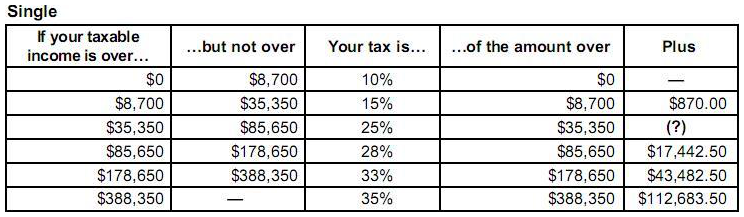
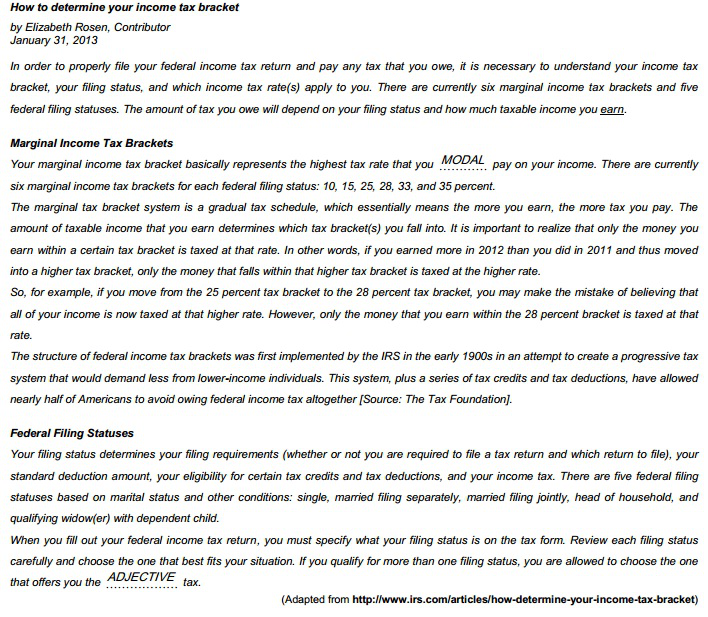
De acordo com o que é explicado no texto a respeito da tabela progressiva, o valor correto que preenche a célula (?) é
These are the tax rates for the 2012 tax year, if your filing status is “single”.
De acordo com o que é explicado no texto a respeito da tabela progressiva, o valor correto que preenche a célula (?) é
Provas
Questão presente nas seguintes provas
Provas
Questão presente nas seguintes provas
Provas
Questão presente nas seguintes provas
Provas
Questão presente nas seguintes provas
- Gramática - Língua InglesaAdjetivos | AdjectivesComparativo e superlativo de adjetivos | Comparative and superlative
Provas
Questão presente nas seguintes provas
Provas
Questão presente nas seguintes provas
Why Is Spain Really Taking Lionel Messi to Tax Court?
By Jonathan Mahler Sep 27, 2013
So Spain has decided to haul Lionel Messi into court for tax evasion, which strikes me as completely insane on pretty much every level.
You may remember the story from a few months back: The greatest soccer player in the world and his father were accused of setting up
a bunch of shell companies in Belize and Uruguay to avoid paying taxes on royalties and other licensing income.
Messi - who makes an estimated $41 million a year, about half from sponsors - reached a settlement with Spain’s tax authorities earlier
this summer, agreeing to pay the amount he apparently owed, plus interest. The matter was settled, or so it seemed. Messi could go
back to dazzling the world with his athleticism and creativity.
Only it turns out that Spain wasn’t quite done with Messi. His adopted country - Messi is Argentine but became a Spanish citizen in 2005
- is now considering pressing criminal charges against him.
Cracking down on tax-evading footballers has become something of a trend in Europe, where players and clubs have been known to
launder money through “image-rights companies” often set up in tax havens. When you need money - and Europe needs money - go to
the people who have it, or something like that. Over the summer, dozens of Italian soccer clubs were raided as part of an investigation
into a tax-fraud conspiracy. A number of English Premier League clubs were forced last year to pay millions of pounds in back taxes.
No one likes a tax cheat, and there’s little doubt that widespread tax fraud has helped eat away at the social safety net in Spain and
elsewhere, depriving schools, hospitals and other institutions of badly needed funds. But Europe is not going to find the answers to its
financial problems in the pockets of some professional soccer players and clubs.
Messi’s defense, delivered by his father, seems credible enough to me. “He is a footballer and that’s it,” Messi’s father Jorge said of his
soccer-prodigy son. “If there was an error, it was by our financial adviser. He created the company. My mistake was to have trusted the
adviser.” Even if Messi is legally responsible for the intricate tax dodge he is accused of having participated in, it’s pretty hard to believe
that he knew much about it.
More to the point, Lionel Messi is probably Spain’s most valuable global asset. What could possibly motivate the Spanish government to
want to tarnish his reputation, especially after he’s paid off his alleged debt? After four years of Great-Depression level unemployment,
have anxiety and despair curdled into vindictiveness?
Here’s another explanation: Maybe this whole case has less to do with money than it does with history. Maybe it’s no coincidence that
the target of the Spanish government’s weird wrath happens to play for FC Barcelona, which is, after all, "mes que un club." It's a symbol
of Catalan nationalism - and a bitter, longtime rival of Spain’s establishment team, Real Madrid.
Too conspiratorial? Prove it, Spain. Release Cristiano Ronaldo’s tax return.
(Adapted form http://www.bloomberg.com/news/2013-09-27/why-is-spain-really-taking-lionel-messi-to-tax-court-.html)
Which of the following alternatives is the “odd man out”?By Jonathan Mahler Sep 27, 2013
So Spain has decided to haul Lionel Messi into court for tax evasion, which strikes me as completely insane on pretty much every level.
You may remember the story from a few months back: The greatest soccer player in the world and his father were accused of setting up
a bunch of shell companies in Belize and Uruguay to avoid paying taxes on royalties and other licensing income.
Messi - who makes an estimated $41 million a year, about half from sponsors - reached a settlement with Spain’s tax authorities earlier
this summer, agreeing to pay the amount he apparently owed, plus interest. The matter was settled, or so it seemed. Messi could go
back to dazzling the world with his athleticism and creativity.
Only it turns out that Spain wasn’t quite done with Messi. His adopted country - Messi is Argentine but became a Spanish citizen in 2005
- is now considering pressing criminal charges against him.
Cracking down on tax-evading footballers has become something of a trend in Europe, where players and clubs have been known to
launder money through “image-rights companies” often set up in tax havens. When you need money - and Europe needs money - go to
the people who have it, or something like that. Over the summer, dozens of Italian soccer clubs were raided as part of an investigation
into a tax-fraud conspiracy. A number of English Premier League clubs were forced last year to pay millions of pounds in back taxes.
No one likes a tax cheat, and there’s little doubt that widespread tax fraud has helped eat away at the social safety net in Spain and
elsewhere, depriving schools, hospitals and other institutions of badly needed funds. But Europe is not going to find the answers to its
financial problems in the pockets of some professional soccer players and clubs.
Messi’s defense, delivered by his father, seems credible enough to me. “He is a footballer and that’s it,” Messi’s father Jorge said of his
soccer-prodigy son. “If there was an error, it was by our financial adviser. He created the company. My mistake was to have trusted the
adviser.” Even if Messi is legally responsible for the intricate tax dodge he is accused of having participated in, it’s pretty hard to believe
that he knew much about it.
More to the point, Lionel Messi is probably Spain’s most valuable global asset. What could possibly motivate the Spanish government to
want to tarnish his reputation, especially after he’s paid off his alleged debt? After four years of Great-Depression level unemployment,
have anxiety and despair curdled into vindictiveness?
Here’s another explanation: Maybe this whole case has less to do with money than it does with history. Maybe it’s no coincidence that
the target of the Spanish government’s weird wrath happens to play for FC Barcelona, which is, after all, "mes que un club." It's a symbol
of Catalan nationalism - and a bitter, longtime rival of Spain’s establishment team, Real Madrid.
Too conspiratorial? Prove it, Spain. Release Cristiano Ronaldo’s tax return.
(Adapted form http://www.bloomberg.com/news/2013-09-27/why-is-spain-really-taking-lionel-messi-to-tax-court-.html)
Provas
Questão presente nas seguintes provas
Why Is Spain Really Taking Lionel Messi to Tax Court?
By Jonathan Mahler Sep 27, 2013
So Spain has decided to haul Lionel Messi into court for tax evasion, which strikes me as completely insane on pretty much every level.
You may remember the story from a few months back: The greatest soccer player in the world and his father were accused of setting up
a bunch of shell companies in Belize and Uruguay to avoid paying taxes on royalties and other licensing income.
Messi - who makes an estimated $41 million a year, about half from sponsors - reached a settlement with Spain’s tax authorities earlier
this summer, agreeing to pay the amount he apparently owed, plus interest. The matter was settled, or so it seemed. Messi could go
back to dazzling the world with his athleticism and creativity.
Only it turns out that Spain wasn’t quite done with Messi. His adopted country - Messi is Argentine but became a Spanish citizen in 2005
- is now considering pressing criminal charges against him.
Cracking down on tax-evading footballers has become something of a trend in Europe, where players and clubs have been known to
launder money through “image-rights companies” often set up in tax havens. When you need money - and Europe needs money - go to
the people who have it, or something like that. Over the summer, dozens of Italian soccer clubs were raided as part of an investigation
into a tax-fraud conspiracy. A number of English Premier League clubs were forced last year to pay millions of pounds in back taxes.
No one likes a tax cheat, and there’s little doubt that widespread tax fraud has helped eat away at the social safety net in Spain and
elsewhere, depriving schools, hospitals and other institutions of badly needed funds. But Europe is not going to find the answers to its
financial problems in the pockets of some professional soccer players and clubs.
Messi’s defense, delivered by his father, seems credible enough to me. “He is a footballer and that’s it,” Messi’s father Jorge said of his
soccer-prodigy son. “If there was an error, it was by our financial adviser. He created the company. My mistake was to have trusted the
adviser.” Even if Messi is legally responsible for the intricate tax dodge he is accused of having participated in, it’s pretty hard to believe
that he knew much about it.
More to the point, Lionel Messi is probably Spain’s most valuable global asset. What could possibly motivate the Spanish government to
want to tarnish his reputation, especially after he’s paid off his alleged debt? After four years of Great-Depression level unemployment,
have anxiety and despair curdled into vindictiveness?
Here’s another explanation: Maybe this whole case has less to do with money than it does with history. Maybe it’s no coincidence that
the target of the Spanish government’s weird wrath happens to play for FC Barcelona, which is, after all, "mes que un club." It's a symbol
of Catalan nationalism - and a bitter, longtime rival of Spain’s establishment team, Real Madrid.
Too conspiratorial? Prove it, Spain. Release Cristiano Ronaldo’s tax return.
(Adapted form http://www.bloomberg.com/news/2013-09-27/why-is-spain-really-taking-lionel-messi-to-tax-court-.html)
Segundo o texto,By Jonathan Mahler Sep 27, 2013
So Spain has decided to haul Lionel Messi into court for tax evasion, which strikes me as completely insane on pretty much every level.
You may remember the story from a few months back: The greatest soccer player in the world and his father were accused of setting up
a bunch of shell companies in Belize and Uruguay to avoid paying taxes on royalties and other licensing income.
Messi - who makes an estimated $41 million a year, about half from sponsors - reached a settlement with Spain’s tax authorities earlier
this summer, agreeing to pay the amount he apparently owed, plus interest. The matter was settled, or so it seemed. Messi could go
back to dazzling the world with his athleticism and creativity.
Only it turns out that Spain wasn’t quite done with Messi. His adopted country - Messi is Argentine but became a Spanish citizen in 2005
- is now considering pressing criminal charges against him.
Cracking down on tax-evading footballers has become something of a trend in Europe, where players and clubs have been known to
launder money through “image-rights companies” often set up in tax havens. When you need money - and Europe needs money - go to
the people who have it, or something like that. Over the summer, dozens of Italian soccer clubs were raided as part of an investigation
into a tax-fraud conspiracy. A number of English Premier League clubs were forced last year to pay millions of pounds in back taxes.
No one likes a tax cheat, and there’s little doubt that widespread tax fraud has helped eat away at the social safety net in Spain and
elsewhere, depriving schools, hospitals and other institutions of badly needed funds. But Europe is not going to find the answers to its
financial problems in the pockets of some professional soccer players and clubs.
Messi’s defense, delivered by his father, seems credible enough to me. “He is a footballer and that’s it,” Messi’s father Jorge said of his
soccer-prodigy son. “If there was an error, it was by our financial adviser. He created the company. My mistake was to have trusted the
adviser.” Even if Messi is legally responsible for the intricate tax dodge he is accused of having participated in, it’s pretty hard to believe
that he knew much about it.
More to the point, Lionel Messi is probably Spain’s most valuable global asset. What could possibly motivate the Spanish government to
want to tarnish his reputation, especially after he’s paid off his alleged debt? After four years of Great-Depression level unemployment,
have anxiety and despair curdled into vindictiveness?
Here’s another explanation: Maybe this whole case has less to do with money than it does with history. Maybe it’s no coincidence that
the target of the Spanish government’s weird wrath happens to play for FC Barcelona, which is, after all, "mes que un club." It's a symbol
of Catalan nationalism - and a bitter, longtime rival of Spain’s establishment team, Real Madrid.
Too conspiratorial? Prove it, Spain. Release Cristiano Ronaldo’s tax return.
(Adapted form http://www.bloomberg.com/news/2013-09-27/why-is-spain-really-taking-lionel-messi-to-tax-court-.html)
Provas
Questão presente nas seguintes provas
Cadernos
Caderno Container