Foram encontradas 74 questões.
O romance Animal Farm (“A revolução dos bichos”), de George Orwell, se passa numa fazenda onde animais, liderados pelo porco Old Major, decidem fazer uma revolução. São apresentados abaixo dois trechos do romance: o primeiro, de sua parte inicial, quando a fazenda ainda é administrada por Mr. Jones; o segundo, de sua parte final, quando passa a ser controlada pelos animais.
PART 1
Word had gone round during the day that Old Major (…) had had a strange dream on the previous night and wished to communicate it to the other animals. It had been agreed that they should all meet in the big barn as soon as Mr. Jones was safely out of the way.
(…) When Major saw that they had all made themselves comfortable and were waiting attentively, he cleared his throat and began: “Now comrades, what is the nature of this life of ours? Let us face it: our lives are miserable, laborious, and short. (…) Why then do we continue in this miserable condition? Because nearly the whole of the produce of our labour is stolen from us by human beings. There, comrades, is the answer to all our problems. It is summed up in a single word: Man. Man is the only real enemy we have. Remove Man from the scene, and the root cause of hunger and overwork is abolished forever. Man is the only creature that consumes without producing. He does not give milk, he does not lay eggs (…), yet he is lord of all the animals. (…) Is it not crystal clear, then, comrades, that all the evils of this life of ours spring from the tyranny of human beings? Only get rid of Man, and the produce of our labour would be our own. (…) That is my message to you, comrades: Rebellion!”
PART 2
Years passed. The seasons came and went, the short animal lives fled by. A time came when there was no one who remembered the old days before the Rebellion (...).
Somehow it seemed as though the farm had grown richer without making the animals themselves any richer − except, of course, for the pigs and the dogs. (...) It was not that these creatures did not work, after their fashion. There was, as Squealer* was never tired of explaining, endless work in the supervision and organization of the farm. Much of this work was of a kind that the other animals were too ignorant to understand. For example, Squealer told them that the pigs had to expend enormous labours every day upon mysterious things called “files”, “reports”, “minutes” and “memoranda”. These were large sheets of paper which had to be closely covered with writing, and as soon as they were so covered, they were burnt in the furnace. This was of the highest importance for the welfare of the farm, Squealer said. But still, neither pigs nor dogs produced any food by their own labour; and there were very many of them, and their appetites were always good. As for the others, their life, so far as they knew, was as it had always been. They were generally hungry, they slept on straw, they drank from the pool, they laboured in the fields. (…)
And yet the animals never gave up hope. More, they never lost, even for an instant, their sense of honour and privilege in being members of Animal Farm. They were still the only farm in the whole county — in all England! — owned and operated by animals. (…)
* Squealer is the name of a pig.
George Orwell Animal Farm. Londres: Longman, 1945.
It is summed up in a single word: Man.
The underlined word refers to the following idea:
Provas

O romance Animal Farm (“A revolução dos bichos”), de George Orwell, se passa numa fazenda onde animais, liderados pelo porco Old Major, decidem fazer uma revolução. São apresentados abaixo dois trechos do romance: o primeiro, de sua parte inicial, quando a fazenda ainda é administrada por Mr. Jones; o segundo, de sua parte final, quando passa a ser controlada pelos animais.
PART 1
Word had gone round during the day that Old Major (…) had had a strange dream on the previous night and wished to communicate it to the other animals. It had been agreed that they should all meet in the big barn as soon as Mr. Jones was safely out of the way.
(…) When Major saw that they had all made themselves comfortable and were waiting attentively, he cleared his throat and began: “Now comrades, what is the nature of this life of ours? Let us face it: our lives are miserable, laborious, and short. (…) Why then do we continue in this miserable condition? Because nearly the whole of the produce of our labour is stolen from us by human beings. There, comrades, is the answer to all our problems. It is summed up in a single word: Man. Man is the only real enemy we have. Remove Man from the scene, and the root cause of hunger and overwork is abolished forever. Man is the only creature that consumes without producing. He does not give milk, he does not lay eggs (…), yet he is lord of all the animals. (…) Is it not crystal clear, then, comrades, that all the evils of this life of ours spring from the tyranny of human beings? Only get rid of Man, and the produce of our labour would be our own. (…) That is my message to you, comrades: Rebellion!”
PART 2
Years passed. The seasons came and went, the short animal lives fled by. A time came when there was no one who remembered the old days before the Rebellion (...).
Somehow it seemed as though the farm had grown richer without making the animals themselves any richer − except, of course, for the pigs and the dogs. (...) It was not that these creatures did not work, after their fashion. There was, as Squealer* was never tired of explaining, endless work in the supervision and organization of the farm. Much of this work was of a kind that the other animals were too ignorant to understand. For example, Squealer told them that the pigs had to expend enormous labours every day upon mysterious things called “files”, “reports”, “minutes” and “memoranda”. These were large sheets of paper which had to be closely covered with writing, and as soon as they were so covered, they were burnt in the furnace. This was of the highest importance for the welfare of the farm, Squealer said. But still, neither pigs nor dogs produced any food by their own labour; and there were very many of them, and their appetites were always good. As for the others, their life, so far as they knew, was as it had always been. They were generally hungry, they slept on straw, they drank from the pool, they laboured in the fields. (…)
And yet the animals never gave up hope. More, they never lost, even for an instant, their sense of honour and privilege in being members of Animal Farm. They were still the only farm in the whole county — in all England! — owned and operated by animals. (…)
* Squealer is the name of a pig.
George Orwell Animal Farm. Londres: Longman, 1945.
The first paragraph contains three clauses in the Past Perfect.
In these clauses, this verb tense refers to actions that can be described as:
Provas
O romance Animal Farm (“A revolução dos bichos”), de George Orwell, se passa numa fazenda onde animais, liderados pelo porco Old Major, decidem fazer uma revolução. São apresentados abaixo dois trechos do romance: o primeiro, de sua parte inicial, quando a fazenda ainda é administrada por Mr. Jones; o segundo, de sua parte final, quando passa a ser controlada pelos animais.
PART 1
Word had gone round during the day that Old Major (…) had had a strange dream on the previous night and wished to communicate it to the other animals. It had been agreed that they should all meet in the big barn as soon as Mr. Jones was safely out of the way.
(…) When Major saw that they had all made themselves comfortable and were waiting attentively, he cleared his throat and began: “Now comrades, what is the nature of this life of ours? Let us face it: our lives are miserable, laborious, and short. (…) Why then do we continue in this miserable condition? Because nearly the whole of the produce of our labour is stolen from us by human beings. There, comrades, is the answer to all our problems. It is summed up in a single word: Man. Man is the only real enemy we have. Remove Man from the scene, and the root cause of hunger and overwork is abolished forever. Man is the only creature that consumes without producing. He does not give milk, he does not lay eggs (…), yet he is lord of all the animals. (…) Is it not crystal clear, then, comrades, that all the evils of this life of ours spring from the tyranny of human beings? Only get rid of Man, and the produce of our labour would be our own. (…) That is my message to you, comrades: Rebellion!”
PART 2
Years passed. The seasons came and went, the short animal lives fled by. A time came when there was no one who remembered the old days before the Rebellion (...).
Somehow it seemed as though the farm had grown richer without making the animals themselves any richer − except, of course, for the pigs and the dogs. (...) It was not that these creatures did not work, after their fashion. There was, as Squealer* was never tired of explaining, endless work in the supervision and organization of the farm. Much of this work was of a kind that the other animals were too ignorant to understand. For example, Squealer told them that the pigs had to expend enormous labours every day upon mysterious things called “files”, “reports”, “minutes” and “memoranda”. These were large sheets of paper which had to be closely covered with writing, and as soon as they were so covered, they were burnt in the furnace. This was of the highest importance for the welfare of the farm, Squealer said. But still, neither pigs nor dogs produced any food by their own labour; and there were very many of them, and their appetites were always good. As for the others, their life, so far as they knew, was as it had always been. They were generally hungry, they slept on straw, they drank from the pool, they laboured in the fields. (…)
And yet the animals never gave up hope. More, they never lost, even for an instant, their sense of honour and privilege in being members of Animal Farm. They were still the only farm in the whole county — in all England! — owned and operated by animals. (…)
* Squealer is the name of a pig.
George Orwell Animal Farm. Londres: Longman, 1945.
Animal Farm opens with a clandestine meeting of the animals, motivated by Old Major’s dream. The aim of this meeting is to pass on the following message:
Provas
Admita que uma pessoa na posição P avista o ponto A mais alto de um morro sob um ângulo de 40°. Ao caminhar 100 m sobre a reta horizontal PB, até a posição Q, ela avista o mesmo ponto sob o ângulo de 50°. O esquema a seguir representa essa situação, sendo AB a altura do morro em relação à reta horizontal PB.
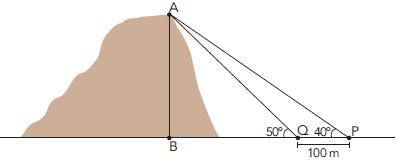
Considere os seguintes valores das razões trigonométricas:
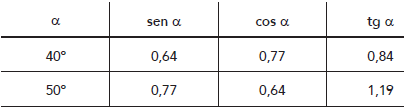
A altura \( \overline{AB} \), em metros, é igual a:
Provas
A figura a seguir representa um quadrado ABCD de lado igual a 5 cm. Nele, observa-se o quadrado AEFG, cujo lado mede x cm, sendo 0 < x < 5.
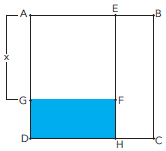
A área máxima que o retângulo DGFH pode assumir, em cm2, é igual a:
Provas
A Wiphala é uma bandeira com sete cores, símbolo não só dos povos originários da região da Cordilheira dos Andes, como também de sua filosofia. A simetria observada na bandeira representa a igualdade dentro do sistema comunitário andino.

Considere uma bandeira retangular, com 272 cm de altura e 416 cm de largura, que também foi confeccionada com pequenos quadrados congruentes, de modo que não ocorre sobreposição ou espaço entre eles.
O número inteiro que representa a medida do maior lado que esses pequenos quadrados podem ter, em centímetros, é:
Provas
SONETO III
Sete anos de pastor Jacob servia
Labão, pai de Raquel, serrana bela;
Mas não servia ao pai, servia a ela,
E a ela só por prêmio pretendia.
Os dias na esperança de um só dia
Passava, contentando-se com vê-la;
Porém o pai, usando de cautela,
Em lugar de Raquel, lhe dava Lia.
Vendo o triste pastor que com enganos
Lhe fora assim negada sua pastora,
Como se a não tivera merecida,
Começa de servir outros sete anos,
Dizendo: — Mais servira, se não fora
Para tão longo amor tão curta a vida.
Os sonetos I, II e III destacam um sentimento de impotência diante da passagem do tempo. Na última estrofe de cada poema, porém, o poeta revela sentimentos que se confrontam com essa impotência.
Esses sentimentos podem ser definidos, respectivamente, como:
Provas
SONETO III
Sete anos de pastor Jacob servia
Labão, pai de Raquel, serrana bela;
Mas não servia ao pai, servia a ela,
E a ela só por prêmio pretendia.
Os dias na esperança de um só dia
Passava, contentando-se com vê-la;
Porém o pai, usando de cautela,
Em lugar de Raquel, lhe dava Lia.
Vendo o triste pastor que com enganos
Lhe fora assim negada sua pastora,
Como se a não tivera merecida,
Começa de servir outros sete anos,
Dizendo: — Mais servira, se não fora
Para tão longo amor tão curta a vida.
Como se a não tivera merecida, (3ª estrofe)
O verso acima estabelece determinada relação de sentido com os dois versos que o antecedem.
Essa relação expressa sentido de:
Provas
SONETO III
Sete anos de pastor Jacob servia
Labão, pai de Raquel, serrana bela;
Mas não servia ao pai, servia a ela,
E a ela só por prêmio pretendia.
Os dias na esperança de um só dia
Passava, contentando-se com vê-la;
Porém o pai, usando de cautela,
Em lugar de Raquel, lhe dava Lia.
Vendo o triste pastor que com enganos
Lhe fora assim negada sua pastora,
Como se a não tivera merecida,
Começa de servir outros sete anos,
Dizendo: — Mais servira, se não fora
Para tão longo amor tão curta a vida.
No soneto III, o poeta aborda a frustração amorosa, empregando construções de um tipo textual não usual no gênero lírico. Esse tipo textual é denominado:
Provas
SONETO II
O tempo acaba o ano, o mês e a hora,
A força, a arte, a manha, a fortaleza;
O tempo acaba a fama e a riqueza,
O tempo o mesmo tempo de si chora.
O tempo busca e acaba o onde mora
Qualquer ingratidão, qualquer dureza,
Mas não pode acabar minha tristeza,
Enquanto não quiserdes vós, Senhora.
O tempo o claro dia torna escuro,
E o mais ledo1 prazer em choro triste;
O tempo a tempestade em grã2 bonança.
Mas de abrandar o tempo estou seguro
O peito de diamante, onde consiste
A pena e o prazer desta esperança.
1 ledo − alegre
2 grã − grande
No soneto II, o poeta descreve o impacto da ação do tempo, destacando sua capacidade de transformar algo em seu oposto. Essa capacidade está exemplificada no seguinte verso:
Provas
Caderno Container