Foram encontradas 74 questões.
Experimentos controlados em laboratório demonstraram que peixes criados em aquários com temperaturas mais elevadas apresentam, quando adultos, tamanhos menores que outros da mesma espécie submetidos a temperaturas mais baixas. Isso alerta para um dos potenciais efeitos do aquecimento global sobre o metabolismo de animais marinhos.
O menor tamanho dos peixes em temperaturas mais altas resulta da seguinte alteração fisiológica:
Provas

Considere a união entre um homem portador de doença de Leber, neuropatia causada pela mutação em um gene do DNA mitocondrial, e uma mulher normal.
A proporção de descendentes desse casal que apresentará a doença do pai corresponde a:
Provas
A tatuagem do corpo, que já era realizada no Egito entre 4000 e 2000 anos a.C., é feita por meio de pigmentos introduzidos na pele por agulhas. Como uma boa cicatrização é fundamental para a aparência de uma tatuagem, pessoas com predisposição à formação de cicatrizes aparentes, chamadas queloides, podem não apreciar o resultado do procedimento.
No processo de cicatrização, a formação de queloides deve-se à ação de células denominadas:
Provas
O porco-do-mato é um grande predador de cactos. Apesar de sua boca resistente, quando há muitas opções de alimento, esses animais naturalmente optam por consumir os cactos com menos espinhos, antes de passar a atacar as plantas mais espinhosas.
Considere uma população de cactos que, na presença de porcos-do-mato, passou pelas mudanças indicadas no gráfico abaixo. A curva I representa o impacto da ação desses predadores nessa população de cactos, em um período inicial. A curva II representa esse impacto após longo período de tempo.
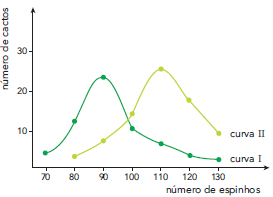
Com base nas informações do gráfico, a população de cactos passou por um processo de seleção natural do seguinte tipo:
Provas
O tecido adiposo marrom, abundante em recém-nascidos e em mamíferos que hibernam, é rico em mitocôndrias, que possuem em sua membrana interna uma proteína desacopladora da fosforilação oxidativa. Essa proteína, ao desfazer o gradiente de prótons, permite o fluxo desses íons do espaço intermembranas para a matriz mitocondrial, o que assegura a sobrevivência dos organismos.
Desse modo, os adipócitos da gordura marrom apresentam redução do seguinte processo:
Provas
A ciência em si
Se toda coincidência
Tende a que se entenda
E toda lenda
Quer chegar aqui
A ciência não se aprende
A ciência apreende
A ciência em si
Se toda estrela cadente
Cai pra fazer sentido
E todo mito
Quer ter carne aqui
A ciência não se ensina
A ciência insemina
A ciência em si
Se o que se pode ver, ouvir, pegar, medir, pesar
Do avião a jato ao jabuti
Desperta o que ainda não, não se pôde pensar
Do sono eterno ao eterno devir
Como a órbita da Terra abraça o vácuo devagar
Para alcançar o que já estava aqui
Se a crença quer se materializar
Tanto quanto a experiência quer se abstrair
A ciência não avança
A ciência alcança
A ciência em si
ARNALDO ANTUNES e GILBERTO GIL Adaptado de fiocruz.br.
A letra da música aborda a ciência como uma forma de compreensão do mundo. Um dos campos de investigação conhecidos é a biologia, que, antes dispersa em diferentes áreas, unifica-se a partir do século XX.
Nessa trajetória histórica, as ideias de Darwin, as leis da hereditariedade de Mendel e as descobertas da genética consolidaram um conjunto de explicações que, no domínio da biologia, são caracterizadas como:
Provas
O romance Animal Farm (“A revolução dos bichos”), de George Orwell, se passa numa fazenda onde animais, liderados pelo porco Old Major, decidem fazer uma revolução. São apresentados abaixo dois trechos do romance: o primeiro, de sua parte inicial, quando a fazenda ainda é administrada por Mr. Jones; o segundo, de sua parte final, quando passa a ser controlada pelos animais.
PART 1
Word had gone round during the day that Old Major (…) had had a strange dream on the previous night and wished to communicate it to the other animals. It had been agreed that they should all meet in the big barn as soon as Mr. Jones was safely out of the way.
(…) When Major saw that they had all made themselves comfortable and were waiting attentively, he cleared his throat and began: “Now comrades, what is the nature of this life of ours? Let us face it: our lives are miserable, laborious, and short. (…) Why then do we continue in this miserable condition? Because nearly the whole of the produce of our labour is stolen from us by human beings. There, comrades, is the answer to all our problems. It is summed up in a single word: Man. Man is the only real enemy we have. Remove Man from the scene, and the root cause of hunger and overwork is abolished forever. Man is the only creature that consumes without producing. He does not give milk, he does not lay eggs (…), yet he is lord of all the animals. (…) Is it not crystal clear, then, comrades, that all the evils of this life of ours spring from the tyranny of human beings? Only get rid of Man, and the produce of our labour would be our own. (…) That is my message to you, comrades: Rebellion!”
PART 2
Years passed. The seasons came and went, the short animal lives fled by. A time came when there was no one who remembered the old days before the Rebellion (...).
Somehow it seemed as though the farm had grown richer without making the animals themselves any richer − except, of course, for the pigs and the dogs. (...) It was not that these creatures did not work, after their fashion. There was, as Squealer* was never tired of explaining, endless work in the supervision and organization of the farm. Much of this work was of a kind that the other animals were too ignorant to understand. For example, Squealer told them that the pigs had to expend enormous labours every day upon mysterious things called “files”, “reports”, “minutes” and “memoranda”. These were large sheets of paper which had to be closely covered with writing, and as soon as they were so covered, they were burnt in the furnace. This was of the highest importance for the welfare of the farm, Squealer said. But still, neither pigs nor dogs produced any food by their own labour; and there were very many of them, and their appetites were always good. As for the others, their life, so far as they knew, was as it had always been. They were generally hungry, they slept on straw, they drank from the pool, they laboured in the fields. (…)
And yet the animals never gave up hope. More, they never lost, even for an instant, their sense of honour and privilege in being members of Animal Farm. They were still the only farm in the whole county — in all England! — owned and operated by animals. (…)
* Squealer is the name of a pig.
George Orwell Animal Farm. Londres: Longman, 1945.
The two parts of the story teach a lesson, which may be summarized in the sentence below:
Provas
O romance Animal Farm (“A revolução dos bichos”), de George Orwell, se passa numa fazenda onde animais, liderados pelo porco Old Major, decidem fazer uma revolução. São apresentados abaixo dois trechos do romance: o primeiro, de sua parte inicial, quando a fazenda ainda é administrada por Mr. Jones; o segundo, de sua parte final, quando passa a ser controlada pelos animais.
PART 1
Word had gone round during the day that Old Major (…) had had a strange dream on the previous night and wished to communicate it to the other animals. It had been agreed that they should all meet in the big barn as soon as Mr. Jones was safely out of the way.
(…) When Major saw that they had all made themselves comfortable and were waiting attentively, he cleared his throat and began: “Now comrades, what is the nature of this life of ours? Let us face it: our lives are miserable, laborious, and short. (…) Why then do we continue in this miserable condition? Because nearly the whole of the produce of our labour is stolen from us by human beings. There, comrades, is the answer to all our problems. It is summed up in a single word: Man. Man is the only real enemy we have. Remove Man from the scene, and the root cause of hunger and overwork is abolished forever. Man is the only creature that consumes without producing. He does not give milk, he does not lay eggs (…), yet he is lord of all the animals. (…) Is it not crystal clear, then, comrades, that all the evils of this life of ours spring from the tyranny of human beings? Only get rid of Man, and the produce of our labour would be our own. (…) That is my message to you, comrades: Rebellion!”
PART 2
Years passed. The seasons came and went, the short animal lives fled by. A time came when there was no one who remembered the old days before the Rebellion (...).
Somehow it seemed as though the farm had grown richer without making the animals themselves any richer − except, of course, for the pigs and the dogs. (...) It was not that these creatures did not work, after their fashion. There was, as Squealer* was never tired of explaining, endless work in the supervision and organization of the farm. Much of this work was of a kind that the other animals were too ignorant to understand. For example, Squealer told them that the pigs had to expend enormous labours every day upon mysterious things called “files”, “reports”, “minutes” and “memoranda”. These were large sheets of paper which had to be closely covered with writing, and as soon as they were so covered, they were burnt in the furnace. This was of the highest importance for the welfare of the farm, Squealer said. But still, neither pigs nor dogs produced any food by their own labour; and there were very many of them, and their appetites were always good. As for the others, their life, so far as they knew, was as it had always been. They were generally hungry, they slept on straw, they drank from the pool, they laboured in the fields. (…)
And yet the animals never gave up hope. More, they never lost, even for an instant, their sense of honour and privilege in being members of Animal Farm. They were still the only farm in the whole county — in all England! — owned and operated by animals. (…)
* Squealer is the name of a pig.
George Orwell Animal Farm. Londres: Longman, 1945.
they never lost, even for an instant, their sense of honour and privilege in being members of Animal Farm.
The fragment above implies that the animals, except for the pigs and dogs, lack the following value:
Provas
O romance Animal Farm (“A revolução dos bichos”), de George Orwell, se passa numa fazenda onde animais, liderados pelo porco Old Major, decidem fazer uma revolução. São apresentados abaixo dois trechos do romance: o primeiro, de sua parte inicial, quando a fazenda ainda é administrada por Mr. Jones; o segundo, de sua parte final, quando passa a ser controlada pelos animais.
PART 1
Word had gone round during the day that Old Major (…) had had a strange dream on the previous night and wished to communicate it to the other animals. It had been agreed that they should all meet in the big barn as soon as Mr. Jones was safely out of the way.
(…) When Major saw that they had all made themselves comfortable and were waiting attentively, he cleared his throat and began: “Now comrades, what is the nature of this life of ours? Let us face it: our lives are miserable, laborious, and short. (…) Why then do we continue in this miserable condition? Because nearly the whole of the produce of our labour is stolen from us by human beings. There, comrades, is the answer to all our problems. It is summed up in a single word: Man. Man is the only real enemy we have. Remove Man from the scene, and the root cause of hunger and overwork is abolished forever. Man is the only creature that consumes without producing. He does not give milk, he does not lay eggs (…), yet he is lord of all the animals. (…) Is it not crystal clear, then, comrades, that all the evils of this life of ours spring from the tyranny of human beings? Only get rid of Man, and the produce of our labour would be our own. (…) That is my message to you, comrades: Rebellion!”
PART 2
Years passed. The seasons came and went, the short animal lives fled by. A time came when there was no one who remembered the old days before the Rebellion (...).
Somehow it seemed as though the farm had grown richer without making the animals themselves any richer − except, of course, for the pigs and the dogs. (...) It was not that these creatures did not work, after their fashion. There was, as Squealer* was never tired of explaining, endless work in the supervision and organization of the farm. Much of this work was of a kind that the other animals were too ignorant to understand. For example, Squealer told them that the pigs had to expend enormous labours every day upon mysterious things called “files”, “reports”, “minutes” and “memoranda”. These were large sheets of paper which had to be closely covered with writing, and as soon as they were so covered, they were burnt in the furnace. This was of the highest importance for the welfare of the farm, Squealer said. But still, neither pigs nor dogs produced any food by their own labour; and there were very many of them, and their appetites were always good. As for the others, their life, so far as they knew, was as it had always been. They were generally hungry, they slept on straw, they drank from the pool, they laboured in the fields. (…)
And yet the animals never gave up hope. More, they never lost, even for an instant, their sense of honour and privilege in being members of Animal Farm. They were still the only farm in the whole county — in all England! — owned and operated by animals. (…)
* Squealer is the name of a pig.
George Orwell Animal Farm. Londres: Longman, 1945.
There was, as Squealer was never tired of explaining, endless work in the supervision and organization of the farm.
The main purpose of Squealer’s explanation is described below:
Provas
O romance Animal Farm (“A revolução dos bichos”), de George Orwell, se passa numa fazenda onde animais, liderados pelo porco Old Major, decidem fazer uma revolução. São apresentados abaixo dois trechos do romance: o primeiro, de sua parte inicial, quando a fazenda ainda é administrada por Mr. Jones; o segundo, de sua parte final, quando passa a ser controlada pelos animais.
PART 1
Word had gone round during the day that Old Major (…) had had a strange dream on the previous night and wished to communicate it to the other animals. It had been agreed that they should all meet in the big barn as soon as Mr. Jones was safely out of the way.
(…) When Major saw that they had all made themselves comfortable and were waiting attentively, he cleared his throat and began: “Now comrades, what is the nature of this life of ours? Let us face it: our lives are miserable, laborious, and short. (…) Why then do we continue in this miserable condition? Because nearly the whole of the produce of our labour is stolen from us by human beings. There, comrades, is the answer to all our problems. It is summed up in a single word: Man. Man is the only real enemy we have. Remove Man from the scene, and the root cause of hunger and overwork is abolished forever. Man is the only creature that consumes without producing. He does not give milk, he does not lay eggs (…), yet he is lord of all the animals. (…) Is it not crystal clear, then, comrades, that all the evils of this life of ours spring from the tyranny of human beings? Only get rid of Man, and the produce of our labour would be our own. (…) That is my message to you, comrades: Rebellion!”
PART 2
Years passed. The seasons came and went, the short animal lives fled by. A time came when there was no one who remembered the old days before the Rebellion (...).
Somehow it seemed as though the farm had grown richer without making the animals themselves any richer − except, of course, for the pigs and the dogs. (...) It was not that these creatures did not work, after their fashion. There was, as Squealer* was never tired of explaining, endless work in the supervision and organization of the farm. Much of this work was of a kind that the other animals were too ignorant to understand. For example, Squealer told them that the pigs had to expend enormous labours every day upon mysterious things called “files”, “reports”, “minutes” and “memoranda”. These were large sheets of paper which had to be closely covered with writing, and as soon as they were so covered, they were burnt in the furnace. This was of the highest importance for the welfare of the farm, Squealer said. But still, neither pigs nor dogs produced any food by their own labour; and there were very many of them, and their appetites were always good. As for the others, their life, so far as they knew, was as it had always been. They were generally hungry, they slept on straw, they drank from the pool, they laboured in the fields. (…)
And yet the animals never gave up hope. More, they never lost, even for an instant, their sense of honour and privilege in being members of Animal Farm. They were still the only farm in the whole county — in all England! — owned and operated by animals. (…)
* Squealer is the name of a pig.
George Orwell Animal Farm. Londres: Longman, 1945.
He does not give milk, he does not lay eggs (...), yet he is lord of all the animals.
The underlined word expresses the following meaning:
Provas
Caderno Container