Foram encontradas 352 questões.
Disciplina: Espanhol (Língua Espanhola)
Banca: CESPE / CEBRASPE
Orgão: UnB
Descifran las palabras de un pergamino calcinado por la erupción del Monte Vesubio, en Nápoles, Italia.
Científicos del Instituto de Microelectrónica y Microsistemas en Nápoles (Italia) han conseguido leer un antiguo pergamino carbonizado por la erupción del Vesubio hace casi 2.000 años. Los científicos pudieron escanear el papiro usando una versión de la tomografía computarizada de rayos X. Esta técnica es muy usada en medicina para ver las estructuras de tejidos blandos, como el cerebro, los pulmones o el pecho, y funciona mediante la detección del contraste de cómo los materiales refractan, en lugar de absorber los rayos X.
Los investigadores fueron capaces de descifrar un alfabeto de letras griegas, y palabras ocasionales. Creen probable que el texto sea una copia del escrito por el filósofo y poeta Filodemo (110 aC-40 aC), que se veía a sí mismo como el defensor de las enseñanzas de Epicuro, filósofo que vivió dos siglos antes y construyó un sistema de ética basado en una visión materialista del mundo.
“Los textos son muy importantes para nuestra comprensión de la filosofía helenística”, dice David Blank, un clasicista de la Universidad de California, Los Ángeles, y uno de los responsables del proyecto. Los investigadores esperan hacer nuevos progresos y creen posible que más papiros sigan ocultos en Herculano, por lo que animan a que continúen las excavaciones.
Internet: <www.abc.es> (con adaptaciones).
En relación a las estructuras e ideas del texto anterior, juzgue el siguiente ítem.
Para los científicos, el antiguo pergamino quizás sea copia del escrito de Filodemo.
Provas

Ebooks don’t spell the end of literature
E-readers pose no threat to books — quite the opposite, they may just re-kindle a generation’s love for the written word
The other day I was on a train, reading a book. The young woman seated next to me was also reading a book. We were both enjoying classics of English literature — hers was a Charlotte Brontë novel. The only difference was that my book was made of paper, and hers of light on the screen of an e-reader.
Books are changing; but are the fundamentals of reading and writing? Seeing a reader gripped by digital Brontë made me aware that electronic books are giving literacy a new dimension. Many people like this new way of enjoying a book, and some may prefer it. Look at it this way: since the 1960s when transistor radios and — by the end of the decade — colour televisions transformed popular culture, every new technological advance has strengthened the appeal of the sort of media that rivals the book. Music and film, TV and video games: all have outshone books in technological glamour. Now, suddenly, here is a technological way to read a book. It’s kind of cool.
I don’t believe this technology will destroy the printed object; real books will never lose their charm. But people who see today’s new ways of reading as a threat are fantasising. Literacy has been under attack for decades, from all directions. Reading suffered its worst assault, perhaps, from television. My grandmother used to read all the time — in fact she was the village librarian — but you wouldn’t find many people in that same village today with the TV off, their heads in books. It is therefore surely arguable that e-readers are not the destroyers but the saviours of the book. A generation may return to the written word because of this technology.
Internet: <http://www.theguardian.com> (adapted).
Based on the text above, judge the following item.
The writer’s grandmother worked in a book store.
Provas
Ebooks don’t spell the end of literature
E-readers pose no threat to books — quite the opposite, they may just re-kindle a generation’s love for the written word
The other day I was on a train, reading a book. The young woman seated next to me was also reading a book. We were both enjoying classics of English literature — hers was a Charlotte Brontë novel. The only difference was that my book was made of paper, and hers of light on the screen of an e-reader.
Books are changing; but are the fundamentals of reading and writing? Seeing a reader gripped by digital Brontë made me aware that electronic books are giving literacy a new dimension. Many people like this new way of enjoying a book, and some may prefer it. Look at it this way: since the 1960s when transistor radios and — by the end of the decade — colour televisions transformed popular culture, every new technological advance has strengthened the appeal of the sort of media that rivals the book. Music and film, TV and video games: all have outshone books in technological glamour. Now, suddenly, here is a technological way to read a book. It’s kind of cool.
I don’t believe this technology will destroy the printed object; real books will never lose their charm. But people who see today’s new ways of reading as a threat are fantasising. Literacy has been under attack for decades, from all directions. Reading suffered its worst assault, perhaps, from television. My grandmother used to read all the time — in fact she was the village librarian — but you wouldn’t find many people in that same village today with the TV off, their heads in books. It is therefore surely arguable that e-readers are not the destroyers but the saviours of the book. A generation may return to the written word because of this technology.
Internet: <http://www.theguardian.com> (adapted).
Based on the text above, judge the following item.
The author believes the TV was harmless to reading.
Provas
Disciplina: Espanhol (Língua Espanhola)
Banca: CESPE / CEBRASPE
Orgão: UnB
Descifran las palabras de un pergamino calcinado por la erupción del Monte Vesubio, en Nápoles, Italia.
Científicos del Instituto de Microelectrónica y Microsistemas en Nápoles (Italia) han conseguido leer un antiguo pergamino carbonizado por la erupción del Vesubio hace casi 2.000 años. Los científicos pudieron escanear el papiro usando una versión de la tomografía computarizada de rayos X. Esta técnica es muy usada en medicina para ver las estructuras de tejidos blandos, como el cerebro, los pulmones o el pecho, y funciona mediante la detección del contraste de cómo los materiales refractan, en lugar de absorber los rayos X.
Los investigadores fueron capaces de descifrar un alfabeto de letras griegas, y palabras ocasionales. Creen probable que el texto sea una copia del escrito por el filósofo y poeta Filodemo (110 aC-40 aC), que se veía a sí mismo como el defensor de las enseñanzas de Epicuro, filósofo que vivió dos siglos antes y construyó un sistema de ética basado en una visión materialista del mundo.
“Los textos son muy importantes para nuestra comprensión de la filosofía helenística”, dice David Blank, un clasicista de la Universidad de California, Los Ángeles, y uno de los responsables del proyecto. Los investigadores esperan hacer nuevos progresos y creen posible que más papiros sigan ocultos en Herculano, por lo que animan a que continúen las excavaciones.
Internet: <www.abc.es> (con adaptaciones).
En relación a las estructuras e ideas del texto anterior, juzgue el siguiente ítem.
La forma verbal “Creen” se refiere a “Los investigadores”.
Provas
Poésie visuelle-cinétique
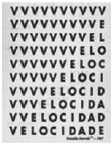
On peut appeler poésie visuelle l’ensemble des oeuvres fondées sur un principe d’interaction entre écriture et image, dans l’art et la littérature. L’informatique a certainement influencé la poésie visuelle-cinétique, un des sous-genres de la poésie visuelle, dès les années 1980. En effet, l’ordinateur s’est avéré être un outil particulièrement efficace pour créer des poèmes visuels-cinétiques. Mais, très souvent, les poèmes cinétiques numériques ne permettent pas au lecteur une vraie participation à l’oeuvre, car ils se déroulent dans un espace-temps qui n’est plus celui de la lecture, car notre participation interactive avec l’oeuvre est faible et on se retrouve souvent dans une position qui est plus celle d’un spectateur, que d’un lecteur. Mais on doit quand même attribuer à ces oeuvres toute leur importance, surtout à celles conçues spécifiquement pour et par l’ordinateur et, en 16 particulier, aux oeuvres interactives. Il faut reconnaître cependant que, d’une façon générale, l’ordinateur n’est pas un instrument indispensable pour permettre aux lettres, aux mots et aux vers de se mouvoir. En effet, le mouvement virtuel imaginé par le lecteur, au moment de la lecture d’une succession de lettres placées opportunément, peut être parfois 22 plus efficace que le mouvement réel produit par l’ordinateur, sauf qu’avec l’ordinateur le lecteur est appelé à jouer le rôle d’« activeur» d’une dimension temporelle qu’il peut contrôler. À ce propos, on peut citer en exemple le poème visuel Velocidade (1957), du brésilien Ronaldo Azeredo.
Alessio Liberati. Internet: <www.archee.qc.ca> (texte adapté).
Internet:<www.concretismo.arteblog.com.br>.
Sur la base du texte et de l’image montrés ci-dessus, jugez l’élément suivant.
Azeredo joue avec le mot “velocidade” pour suggérer un mouvement sur la page.
Provas
Enchanted bike path inspired by van Gogh’s ‘Starry Night’
“I can’t change the fact that my paintings don’t sell,” Vincent van Gogh once said. “But the time will come when people will recognize that they are worth more than the value of the paints used in the picture.” It is, of course, a terrible shame van Gogh never lived to see the profound impact his art had on the world, forever transforming the way so many of us gaze upon the night sky.
Vincent van Gogh’s wildest dreams probably couldn’t prepare him, for example, for the van Gogh-Roosegaarde Bicycle Path, an enchanting living artwork newly unveiled by Studio Roosegaarde. The kilometer-long path is adorned with a special paint that charges during the day and glows after dark. It runs through the Dutch province of Noord Brabant, where van Gogh was born and raised.
The amazing novelty, at the intersection of art and technology, mimics the ecstatic energy and swirling movement of van Gogh’s original. Each illuminated fleck operates like a brushstroke, adding a small yet crucial element to the whirling, unfathomable whole. “It’s a new system that is self-sufficient and practical, and just incredibly poetic,” says designer Daan Roosegaarde.
A solar panel close by generates power to illuminate the painted surface. Some LED lights are embedded in the path as well, casting extra light especially in the case of foggy weather. The fairy tale bike path is the second of Roosegaarde’s five-part Smart Highways project, which aims to create safe and environmentally friendly road networks. The first manifestation, “Glowing Lines,” employed photo-luminescent paint to brighten the edges of the road.
Internet: <http://www.huffingtonpost.com> (adapted).
Based on the text above, judge the following item.
Vincent van Gogh was confident that one day people would value his art.
Provas
Poésie visuelle-cinétique
On peut appeler poésie visuelle l’ensemble des oeuvres fondées sur un principe d’interaction entre écriture et image, dans l’art et la littérature. L’informatique a certainement influencé la poésie visuelle-cinétique, un des sous-genres de la poésie visuelle, dès les années 1980. En effet, l’ordinateur s’est avéré être un outil particulièrement efficace pour créer des poèmes visuels-cinétiques. Mais, très souvent, les poèmes cinétiques numériques ne permettent pas au lecteur une vraie participation à l’oeuvre, car ils se déroulent dans un espace-temps qui n’est plus celui de la lecture, car notre participation interactive avec l’oeuvre est faible et on se retrouve souvent dans une position qui est plus celle d’un spectateur, que d’un lecteur. Mais on doit quand même attribuer à ces oeuvres toute leur importance, surtout à celles conçues spécifiquement pour et par l’ordinateur et, en 16 particulier, aux oeuvres interactives. Il faut reconnaître cependant que, d’une façon générale, l’ordinateur n’est pas un instrument indispensable pour permettre aux lettres, aux mots et aux vers de se mouvoir. En effet, le mouvement virtuel imaginé par le lecteur, au moment de la lecture d’une succession de lettres placées opportunément, peut être parfois 22 plus efficace que le mouvement réel produit par l’ordinateur, sauf qu’avec l’ordinateur le lecteur est appelé à jouer le rôle d’« activeur» d’une dimension temporelle qu’il peut contrôler. À ce propos, on peut citer en exemple le poème visuel Velocidade (1957), du brésilien Ronaldo Azeredo.
Alessio Liberati. Internet: <www.archee.qc.ca> (texte adapté).
Internet:<www.concretismo.arteblog.com.br>.
Sur la base du texte et de l’image montrés ci-dessus, jugez l’élément suivant.
Le poème de Ronaldo Azeredo, présenté ci-dessus, est un exemple de poésie cinétique faite à l’aide d’un ordinateur.
Provas
Disciplina: Espanhol (Língua Espanhola)
Banca: CESPE / CEBRASPE
Orgão: UnB
Reconstruyen la oreja de van Gogh con el ADN de un descendiente
Una artista holandesa ha usado tejido vivo del descendiente de van Gogh, para hacer una réplica de la oreja izquierda que se supone se cortó el pintor en diciembre de 1888 después de una fuerte discusión con el artista francés Paul Gauguin.
La pieza, titulada Sugababe, fue construida con tejido modificado de cartílago, combinado con las células vivas extraídas del bisnieto de Theo van Gogh y de un sello que el pintor chupeteó en 1883, dejando una pequeña sección de ADN mitocondrial (“ADN histórico”, lo llaman) que el Centro Universitario Romand de Médecine Légale en Lausanne ha secuenciado, clonado in vitro y añadido a la receta.
La forma — aseguran — es idéntica y ha sido recreada con una impresora 3D. La oreja — emparedada en un biorreactor de cristal y regada con una solución nutritiva — es uno de los grandes éxitos de la exposición del Centro para el Arte y los Medios (ZKM) de Karlsruhe, en el suroeste de Alemania. La madre de la criatura es Diemut Strebe, una artista holandesa que vive en Boston y que trabaja con especialistas del campo de la biología y la ingeniería genética. Así su trabajo mezcla la ciencia, la tecnología y el arte, por la que es calificado de bioarte. “El biorreactor es como el cuerpo humano — explicó Strebe en una entrevista — el acrílico es como piel, el fluido nutritivo es como plasma. Y el aire que entra se filtra a través de una cámara de procesamiento de oxígeno”. La instalación del ZKM es la primera de una serie, en la que Strebe producirá varias réplicas del órgano auditivo. Todas serán idénticas en apariencia, pero tendrán en su origen distintos materiales.
Internet: <www.eldiario.es> (con adaptaciones).
Con respecto a las estructuras e ideas del texto anterior, juzgue la proximo articulo.
El vocablo “añadido” puede ser reemplazado por agregado, sin que se produzan alteraciones semánticas o gramaticales en el texto.
Provas
Disciplina: Espanhol (Língua Espanhola)
Banca: CESPE / CEBRASPE
Orgão: UnB
Reconstruyen la oreja de van Gogh con el ADN de un descendiente
Una artista holandesa ha usado tejido vivo del descendiente de van Gogh, para hacer una réplica de la oreja izquierda que se supone se cortó el pintor en diciembre de 1888 después de una fuerte discusión con el artista francés Paul Gauguin.
La pieza, titulada Sugababe, fue construida con tejido modificado de cartílago, combinado con las células vivas extraídas del bisnieto de Theo van Gogh y de un sello que el pintor chupeteó en 1883, dejando una pequeña sección de ADN mitocondrial (“ADN histórico”, lo llaman) que el Centro Universitario Romand de Médecine Légale en Lausanne ha secuenciado, clonado in vitro y añadido a la receta.
La forma — aseguran — es idéntica y ha sido recreada con una impresora 3D. La oreja — emparedada en un biorreactor de cristal y regada con una solución nutritiva — es uno de los grandes éxitos de la exposición del Centro para el Arte y los Medios (ZKM) de Karlsruhe, en el suroeste de Alemania. La madre de la criatura es Diemut Strebe, una artista holandesa que vive en Boston y que trabaja con especialistas del campo de la biología y la ingeniería genética. Así su trabajo mezcla la ciencia, la tecnología y el arte, por la que es calificado de bioarte. “El biorreactor es como el cuerpo humano — explicó Strebe en una entrevista — el acrílico es como piel, el fluido nutritivo es como plasma. Y el aire que entra se filtra a través de una cámara de procesamiento de oxígeno”. La instalación del ZKM es la primera de una serie, en la que Strebe producirá varias réplicas del órgano auditivo. Todas serán idénticas en apariencia, pero tendrán en su origen distintos materiales.
Internet: <www.eldiario.es> (con adaptaciones).
Con respecto a las estructuras e ideas del texto anterior, juzgue la proximo articulo.
Es correcto inferir del texto que la oreja fue construida con tejido modificado de cartílago y células extraídas a un descendiente del pintor, por lo que el órgano tendría una forma idéntica a la de van Gogh.
Provas
Enchanted bike path inspired by van Gogh’s ‘Starry Night’
“I can’t change the fact that my paintings don’t sell,” Vincent van Gogh once said. “But the time will come when people will recognize that they are worth more than the value of the paints used in the picture.” It is, of course, a terrible shame van Gogh never lived to see the profound impact his art had on the world, forever transforming the way so many of us gaze upon the night sky.
Vincent van Gogh’s wildest dreams probably couldn’t prepare him, for example, for the van Gogh-Roosegaarde Bicycle Path, an enchanting living artwork newly unveiled by Studio Roosegaarde. The kilometer-long path is adorned with a special paint that charges during the day and glows after dark. It runs through the Dutch province of Noord Brabant, where van Gogh was born and raised.
The amazing novelty, at the intersection of art and technology, mimics the ecstatic energy and swirling movement of van Gogh’s original. Each illuminated fleck operates like a brushstroke, adding a small yet crucial element to the whirling, unfathomable whole. “It’s a new system that is self-sufficient and practical, and just incredibly poetic,” says designer Daan Roosegaarde.
A solar panel close by generates power to illuminate the painted surface. Some LED lights are embedded in the path as well, casting extra light especially in the case of foggy weather. The fairy tale bike path is the second of Roosegaarde’s five-part Smart Highways project, which aims to create safe and environmentally friendly road networks. The first manifestation, “Glowing Lines,” employed photo-luminescent paint to brighten the edges of the road.
Internet: <http://www.huffingtonpost.com> (adapted).
Based on the text above, judge the following item.
The bike path is part of a Roosegaarde’s larger project to illuminate the edges of roads.
Provas
Caderno Container