Foram encontradas 352 questões.

Just minutes east of Toronto lies Durham Region, a place with rolling hills, farms and small towns. Durham Region has something for everyone.
Renowned for its pleasant mix of rural charm and urban sophistication, Durham Region offers a variety of equally unique culinary tourism experiences.
Durham has a busy agriculture sector that includes the province’s top apple producer, the largest commercial blueberry grower east of Toronto and award-winning wineries.
Durham Region is home to incredible farms, chefs, and retailers producing and using fresh, local produce. Durham region farmers harvest an abundance of different fruits and vegetables mere kilometers from the big city.
Start your day with a stop at one of the many roadside farm markets for some fresh fruits and vegetables to snack on throughout the day. Why not drop into one of the local ‘Pick-your-own’ apple or berry farms and select some sweet and juicy fruit to savour while on your journey?
Want even more? Don’t forget to make reservations for Savour the Season – Durham’s annual culinary festival showcasing Durham’s local harvest. Local chefs are paired with local farmers and producers to transform fresh local fare into mouth-watering dishes offered at a fixed price.
To learn more about Savour Durham and other culinary tourism experiences in the region, please contact tourism@durham.ca.
Internet: <http://ontarioculinary.com/ontario-regions/durham> (adapted).
Based on the text above, judge the item below.
The information taken from this website is directed to tourists and other people interested in enjoying the food from the region of Durham.
Provas

Just minutes east of Toronto lies Durham Region, a place with rolling hills, farms and small towns. Durham Region has something for everyone.
Renowned for its pleasant mix of rural charm and urban sophistication, Durham Region offers a variety of equally unique culinary tourism experiences.
Durham has a busy agriculture sector that includes the province’s top apple producer, the largest commercial blueberry grower east of Toronto and award-winning wineries.
Durham Region is home to incredible farms, chefs, and retailers producing and using fresh, local produce. Durham region farmers harvest an abundance of different fruits and vegetables mere kilometers from the big city.
Start your day with a stop at one of the many roadside farm markets for some fresh fruits and vegetables to snack on throughout the day. Why not drop into one of the local ‘Pick-your-own’ apple or berry farms and select some sweet and juicy fruit to savour while on your journey?
Want even more? Don’t forget to make reservations for Savour the Season – Durham’s annual culinary festival showcasing Durham’s local harvest. Local chefs are paired with local farmers and producers to transform fresh local fare into mouth-watering dishes offered at a fixed price.
To learn more about Savour Durham and other culinary tourism experiences in the region, please contact tourism@durham.ca.
Internet: <http://ontarioculinary.com/ontario-regions/durham> (adapted).
Based on the text above, judge the item below.
During the Durham festival, there is a competition among chefs and farmers for the best dishes in the region.
Provas
Just minutes east of Toronto lies Durham Region, a place with rolling hills, farms and small towns. Durham Region has something for everyone.
Renowned for its pleasant mix of rural charm and urban sophistication, Durham Region offers a variety of equally unique culinary tourism experiences.
Durham has a busy agriculture sector that includes the province’s top apple producer, the largest commercial blueberry grower east of Toronto and award-winning wineries.
Durham Region is home to incredible farms, chefs, and retailers producing and using fresh, local produce. Durham region farmers harvest an abundance of different fruits and vegetables mere kilometers from the big city.
Start your day with a stop at one of the many roadside farm markets for some fresh fruits and vegetables to snack on throughout the day. Why not drop into one of the local ‘Pick-your-own’ apple or berry farms and select some sweet and juicy fruit to savour while on your journey?
Want even more? Don’t forget to make reservations for Savour the Season – Durham’s annual culinary festival showcasing Durham’s local harvest. Local chefs are paired with local farmers and producers to transform fresh local fare into mouth-watering dishes offered at a fixed price.
To learn more about Savour Durham and other culinary tourism experiences in the region, please contact tourism@durham.ca.
Internet: <http://ontarioculinary.com/ontario-regions/durham> (adapted).
Based on the text above, judge the item below.
The culinary festival with the region’s production happens twice a year.
Provas
Just minutes east of Toronto lies Durham Region, a place with rolling hills, farms and small towns. Durham Region has something for everyone.
Renowned for its pleasant mix of rural charm and urban sophistication, Durham Region offers a variety of equally unique culinary tourism experiences.
Durham has a busy agriculture sector that includes the province’s top apple producer, the largest commercial blueberry grower east of Toronto and award-winning wineries.
Durham Region is home to incredible farms, chefs, and retailers producing and using fresh, local produce. Durham region farmers harvest an abundance of different fruits and vegetables mere kilometers from the big city.
Start your day with a stop at one of the many roadside farm markets for some fresh fruits and vegetables to snack on throughout the day. Why not drop into one of the local ‘Pick-your-own’ apple or berry farms and select some sweet and juicy fruit to savour while on your journey?
Want even more? Don’t forget to make reservations for Savour the Season – Durham’s annual culinary festival showcasing Durham’s local harvest. Local chefs are paired with local farmers and producers to transform fresh local fare into mouth-watering dishes offered at a fixed price.
To learn more about Savour Durham and other culinary tourism experiences in the region, please contact tourism@durham.ca.
Internet: <http://ontarioculinary.com/ontario-regions/durham> (adapted).
Based on the text above, judge the item below.
It is possible for tourists to visit farms and collect the fruits they want directly from the trees.
Provas
Just minutes east of Toronto lies Durham Region, a place with rolling hills, farms and small towns. Durham Region has something for everyone.
Renowned for its pleasant mix of rural charm and urban sophistication, Durham Region offers a variety of equally unique culinary tourism experiences.
Durham has a busy agriculture sector that includes the province’s top apple producer, the largest commercial blueberry grower east of Toronto and award-winning wineries.
Durham Region is home to incredible farms, chefs, and retailers producing and using fresh, local produce. Durham region farmers harvest an abundance of different fruits and vegetables mere kilometers from the big city.
Start your day with a stop at one of the many roadside farm markets for some fresh fruits and vegetables to snack on throughout the day. Why not drop into one of the local ‘Pick-your-own’ apple or berry farms and select some sweet and juicy fruit to savour while on your journey?
Want even more? Don’t forget to make reservations for Savour the Season – Durham’s annual culinary festival showcasing Durham’s local harvest. Local chefs are paired with local farmers and producers to transform fresh local fare into mouth-watering dishes offered at a fixed price.
To learn more about Savour Durham and other culinary tourism experiences in the region, please contact tourism@durham.ca.
Internet: <http://ontarioculinary.com/ontario-regions/durham> (adapted).
Based on the text above, judge the item below.
Durham Region has the most important producer of apples in Canada.
Provas
Just minutes east of Toronto lies Durham Region, a place with rolling hills, farms and small towns. Durham Region has something for everyone.
Renowned for its pleasant mix of rural charm and urban sophistication, Durham Region offers a variety of equally unique culinary tourism experiences.
Durham has a busy agriculture sector that includes the province’s top apple producer, the largest commercial blueberry grower east of Toronto and award-winning wineries.
Durham Region is home to incredible farms, chefs, and retailers producing and using fresh, local produce. Durham region farmers harvest an abundance of different fruits and vegetables mere kilometers from the big city.
Start your day with a stop at one of the many roadside farm markets for some fresh fruits and vegetables to snack on throughout the day. Why not drop into one of the local ‘Pick-your-own’ apple or berry farms and select some sweet and juicy fruit to savour while on your journey?
Want even more? Don’t forget to make reservations for Savour the Season – Durham’s annual culinary festival showcasing Durham’s local harvest. Local chefs are paired with local farmers and producers to transform fresh local fare into mouth-watering dishes offered at a fixed price.
To learn more about Savour Durham and other culinary tourism experiences in the region, please contact tourism@durham.ca.
Internet: <http://ontarioculinary.com/ontario-regions/durham> (adapted).
Based on the text above, judge the item below.
Durham Region includes only rural businesses.
Provas
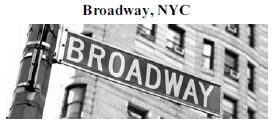
In an era of 3-D movies and IMAX films, it’s a wonder that Broadway theater entertainment remains one of the most popular attractions in NYC. Few NYC attractions match the excitement and spectacle of a Broadway musical. Featuring 40 Broadway theaters, high-profile stage actors, and world-class sets and costumes, New York Broadway shows are must-see entertainment for travelers in NYC.
Broadway refers to the famous street in Manhattan that has become the worldwide leader in stage entertainment. The history of Broadway dates all the way back to the 1700s, when the first NYC stage was built on Nassau Street. This NYC theater held less than 300 people, and mostly presented Shakespeare plays. It wasn't until after the American Revolution — in 1798 — that the first great NYC theater was built.
New York Broadway in the 1800s
Built on Chatham St in Downtown Manhattan, the Park Theater NYC started a new era of theater in New York. Several more NYC theaters opened up between 1800-1850. After the Civil War, the center of New York theater moved from Downtown to Midtown Manhattan, because of their cheaper rates on NY real estate.
In the late-1800s and early 1900s, the dramatic rise in train transportation — as well as the NYC subway — led to a drop in poverty and a higher demand for evening New York entertainment. Soon, the NYC theater district was bustling, leading to more expensive and ambitious Broadway productions.
“The Great White Way”
Originally coined by the New York Evening Telegram, “The Great White Way” refers to the Theater District area of Broadway, in Midtown. Beginning in the early-1900s, Broadway theaters used bright electric signs made up of white lights to advertise shows. Soon, the bright lights of Broadway NYC would become known as “The Great White Way”, giving birth to a new NYC landmark. It was also around this time that Broadway theaters finally made their way to Times Square NY.
In the 1920s a great number of classic Broadway shows premiered, but the business was faced with the uncertainty of the Great Depression. The number of Broadway shows fell in the 1930s, as famous Broadway producers found themselves out of money and out on the street like so many other Americans. However, much like New York City has again and again, Broadway would soon recover.
Internet: <http://www.nyctourist.com> (adapted).
Based on the article above, judge the item.
The first theater of New York City was built in Times Square.
Provas
In an era of 3-D movies and IMAX films, it’s a wonder that Broadway theater entertainment remains one of the most popular attractions in NYC. Few NYC attractions match the excitement and spectacle of a Broadway musical. Featuring 40 Broadway theaters, high-profile stage actors, and world-class sets and costumes, New York Broadway shows are must-see entertainment for travelers in NYC.
Broadway refers to the famous street in Manhattan that has become the worldwide leader in stage entertainment. The history of Broadway dates all the way back to the 1700s, when the first NYC stage was built on Nassau Street. This NYC theater held less than 300 people, and mostly presented Shakespeare plays. It wasn't until after the American Revolution — in 1798 — that the first great NYC theater was built.
New York Broadway in the 1800s
Built on Chatham St in Downtown Manhattan, the Park Theater NYC started a new era of theater in New York. Several more NYC theaters opened up between 1800-1850. After the Civil War, the center of New York theater moved from Downtown to Midtown Manhattan, because of their cheaper rates on NY real estate.
In the late-1800s and early 1900s, the dramatic rise in train transportation — as well as the NYC subway — led to a drop in poverty and a higher demand for evening New York entertainment. Soon, the NYC theater district was bustling, leading to more expensive and ambitious Broadway productions.
“The Great White Way”
Originally coined by the New York Evening Telegram, “The Great White Way” refers to the Theater District area of Broadway, in Midtown. Beginning in the early-1900s, Broadway theaters used bright electric signs made up of white lights to advertise shows. Soon, the bright lights of Broadway NYC would become known as “The Great White Way”, giving birth to a new NYC landmark. It was also around this time that Broadway theaters finally made their way to Times Square NY.
In the 1920s a great number of classic Broadway shows premiered, but the business was faced with the uncertainty of the Great Depression. The number of Broadway shows fell in the 1930s, as famous Broadway producers found themselves out of money and out on the street like so many other Americans. However, much like New York City has again and again, Broadway would soon recover.
Internet: <http://www.nyctourist.com> (adapted).
Based on the article above, judge the item.
Because of the superior quality of its classic plays, Broadway was not much harmed by the Great Depression period.
Provas
In an era of 3-D movies and IMAX films, it’s a wonder that Broadway theater entertainment remains one of the most popular attractions in NYC. Few NYC attractions match the excitement and spectacle of a Broadway musical. Featuring 40 Broadway theaters, high-profile stage actors, and world-class sets and costumes, New York Broadway shows are must-see entertainment for travelers in NYC.
Broadway refers to the famous street in Manhattan that has become the worldwide leader in stage entertainment. The history of Broadway dates all the way back to the 1700s, when the first NYC stage was built on Nassau Street. This NYC theater held less than 300 people, and mostly presented Shakespeare plays. It wasn't until after the American Revolution — in 1798 — that the first great NYC theater was built.
New York Broadway in the 1800s
Built on Chatham St in Downtown Manhattan, the Park Theater NYC started a new era of theater in New York. Several more NYC theaters opened up between 1800-1850. After the Civil War, the center of New York theater moved from Downtown to Midtown Manhattan, because of their cheaper rates on NY real estate.
In the late-1800s and early 1900s, the dramatic rise in train transportation — as well as the NYC subway — led to a drop in poverty and a higher demand for evening New York entertainment. Soon, the NYC theater district was bustling, leading to more expensive and ambitious Broadway productions.
“The Great White Way”
Originally coined by the New York Evening Telegram, “The Great White Way” refers to the Theater District area of Broadway, in Midtown. Beginning in the early-1900s, Broadway theaters used bright electric signs made up of white lights to advertise shows. Soon, the bright lights of Broadway NYC would become known as “The Great White Way”, giving birth to a new NYC landmark. It was also around this time that Broadway theaters finally made their way to Times Square NY.
In the 1920s a great number of classic Broadway shows premiered, but the business was faced with the uncertainty of the Great Depression. The number of Broadway shows fell in the 1930s, as famous Broadway producers found themselves out of money and out on the street like so many other Americans. However, much like New York City has again and again, Broadway would soon recover.
Internet: <http://www.nyctourist.com> (adapted).
Based on the article above, judge the item.
The theater district was called “The Great White Way” because of the bright lights which promoted the shows.
Provas
In an era of 3-D movies and IMAX films, it’s a wonder that Broadway theater entertainment remains one of the most popular attractions in NYC. Few NYC attractions match the excitement and spectacle of a Broadway musical. Featuring 40 Broadway theaters, high-profile stage actors, and world-class sets and costumes, New York Broadway shows are must-see entertainment for travelers in NYC.
Broadway refers to the famous street in Manhattan that has become the worldwide leader in stage entertainment. The history of Broadway dates all the way back to the 1700s, when the first NYC stage was built on Nassau Street. This NYC theater held less than 300 people, and mostly presented Shakespeare plays. It wasn't until after the American Revolution — in 1798 — that the first great NYC theater was built.
New York Broadway in the 1800s
Built on Chatham St in Downtown Manhattan, the Park Theater NYC started a new era of theater in New York. Several more NYC theaters opened up between 1800-1850. After the Civil War, the center of New York theater moved from Downtown to Midtown Manhattan, because of their cheaper rates on NY real estate.
In the late-1800s and early 1900s, the dramatic rise in train transportation — as well as the NYC subway — led to a drop in poverty and a higher demand for evening New York entertainment. Soon, the NYC theater district was bustling, leading to more expensive and ambitious Broadway productions.
“The Great White Way”
Originally coined by the New York Evening Telegram, “The Great White Way” refers to the Theater District area of Broadway, in Midtown. Beginning in the early-1900s, Broadway theaters used bright electric signs made up of white lights to advertise shows. Soon, the bright lights of Broadway NYC would become known as “The Great White Way”, giving birth to a new NYC landmark. It was also around this time that Broadway theaters finally made their way to Times Square NY.
In the 1920s a great number of classic Broadway shows premiered, but the business was faced with the uncertainty of the Great Depression. The number of Broadway shows fell in the 1930s, as famous Broadway producers found themselves out of money and out on the street like so many other Americans. However, much like New York City has again and again, Broadway would soon recover.
Internet: <http://www.nyctourist.com> (adapted).
Based on the article above, judge the item.
At the turn of the 20th century, the rise in prices of transportation increased the poverty in the USA, and the Broadway entertainment industry was significantly affected.
Provas
Caderno Container