Foram encontradas 135 questões.
O processo de produção de vacinas tornou-se um assunto recorrente desde o início da pandemia de COVID-19. Uma das primeiras vacinas contra o SARS-CoV-2 foi produzida a partir do fragmento de ácido ribonucleico mensageiro (mRNA) do vírus, resultando na produção de uma das proteínas envolvidas na entrada da partícula viral nas células. Este processo tem sido suficiente pra desenvolver imunidade à infecção pelo novo coronavírus. Assim como o mRNA existem outros tipos de RNA que desempenham diversas funções nas células.
Sobre as atribuições do mRNA é correto afirmar que:
Provas

Leia atentamente o trecho a seguir e responda o que se pede:
"Os nossos melhores romancistas viviam na província, miúdos e isentos de ambições. Contaram o que viram, o que ouviram, para imaginar êxitos excessivos. Subiram muito - e devem sentir-se vexados por terem sido tão sinceros. Não voltarão a tratar daquelas coisas simples. Não poderiam recordá-las. Estão longe delas, constrangidos, limitados por numerosas conveniências. Para bem dizer estão amarrados. (...) Transformaram-se. Foram transformados. Sabem que a linguagem que adotaram não convém. Calam-se. Não tinham nenhuma disciplina, nem na gramática nem na política. Diziam às vezes coisas absurdas - e excelentes. Já não fazem isso. Pensam no que é necessário dizer. No que é vantajoso dizer. No que é possível dizer."
(RAMOS, Graciliano. O fator econômico no romance brasileiro. In: Linhas tortas
A crítica de Graciliano Ramos é dirigida, principalmente,
Provas
Texto 6:
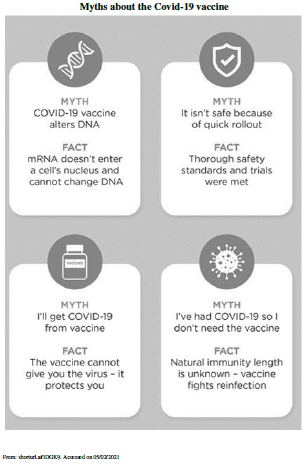
Sobre as informações contidas no post, é correto afirmar que:
Provas
Texto 5:
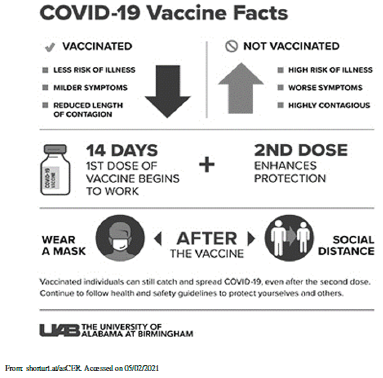
O objetivo desse post da Universidade do Alabama é:
Provas
Texto 5:
O post da Universidade do Alabama informa que após tomarem a segunda dose da vacina contra a COVID - 19 as pessoas:
Provas
Brazil is brilliant at vaccinations. So what went wrong this time?
When it comes to Covid-19 vaccination programs, there are some countries that have exceeded expectations and others that have fallen surprisingly short. And then there is Brazil. Vaccinating over 210 million people may sound daunting, but for Brazil it really shouldn’t be. With one of the largest universal, free-of-charge public health systems in the world, the country has a distinguished track record of vaccinations and disease control. The National Immunization Program, founded in 1973, helped to eradicate polio and rubella in the country and currently offers more than 20 vaccines free in every municipality.
Along with the infrastructure to distribute vaccines, there’s also the expertise to do so: in 1980, the country vaccinated 17.5 million children against polio in a single day. In 2010, over 89 million doses of the swine flu vaccine were administered in under four months. And last year, more than 70 million Brazilians received their annual shot against influenza.
But despite these advantages, Brazil’s vaccine rollout has been painfully slow, inconsistent and marred by shortages. The nationwide program began on Jan. 18, later than over 50 countries, and its current rate will take more than four years to complete. Several major cities, such as Rio de Janeiro and Salvador, have already had to stop their campaigns because of problems in supply. In a country where the pandemic has wrought terrible damage, the failure amounts to a disaster. So what went wrong? Perhaps we should look to "Zé Gotinha", Joe Droplet: He seems to know exactly who to blame.
From the beginning, Mr. Bolsonaro’s government downplayed the seriousness of the pandemic. The president fought against masks and social distancing measures, comparing the coronavirus to rain that would fall on most people while drowning just some of them. ("It’s no use staying home crying," he recently said, after the country registered 1,452 deaths on a single day.) In the middle of the outbreak, he managed to get rid of two health ministers - both doctors - who threatened to contradict him, replacing them with an army general.
From: shorturl.at/vwEMQ. Accessed on 04/17/2021
Depois de ler o texto, é possível concluir que:
Provas
Brazil is brilliant at vaccinations. So what went wrong this time?
When it comes to Covid-19 vaccination programs, there are some countries that have exceeded expectations and others that have fallen surprisingly short. And then there is Brazil. Vaccinating over 210 million people may sound daunting, but for Brazil it really shouldn’t be. With one of the largest universal, free-of-charge public health systems in the world, the country has a distinguished track record of vaccinations and disease control. The National Immunization Program, founded in 1973, helped to eradicate polio and rubella in the country and currently offers more than 20 vaccines free in every municipality.
Along with the infrastructure to distribute vaccines, there’s also the expertise to do so: in 1980, the country vaccinated 17.5 million children against polio in a single day. In 2010, over 89 million doses of the swine flu vaccine were administered in under four months. And last year, more than 70 million Brazilians received their annual shot against influenza.
But despite these advantages, Brazil’s vaccine rollout has been painfully slow, inconsistent and marred by shortages. The nationwide program began on Jan. 18, later than over 50 countries, and its current rate will take more than four years to complete. Several major cities, such as Rio de Janeiro and Salvador, have already had to stop their campaigns because of problems in supply. In a country where the pandemic has wrought terrible damage, the failure amounts to a disaster. So what went wrong? Perhaps we should look to "Zé Gotinha", Joe Droplet: He seems to know exactly who to blame.
From the beginning, Mr. Bolsonaro’s government downplayed the seriousness of the pandemic. The president fought against masks and social distancing measures, comparing the coronavirus to rain that would fall on most people while drowning just some of them. ("It’s no use staying home crying," he recently said, after the country registered 1,452 deaths on a single day.) In the middle of the outbreak, he managed to get rid of two health ministers - both doctors - who threatened to contradict him, replacing them with an army general.
From: shorturl.at/vwEMQ. Accessed on 04/17/2021
No dia em que o Brasil registrou 1.452 mortes em vinte e quatro horas, o presidente da república:
Provas
Brazil is brilliant at vaccinations. So what went wrong this time?
When it comes to Covid-19 vaccination programs, there are some countries that have exceeded expectations and others that have fallen surprisingly short. And then there is Brazil. Vaccinating over 210 million people may sound daunting, but for Brazil it really shouldn’t be. With one of the largest universal, free-of-charge public health systems in the world, the country has a distinguished track record of vaccinations and disease control. The National Immunization Program, founded in 1973, helped to eradicate polio and rubella in the country and currently offers more than 20 vaccines free in every municipality.
Along with the infrastructure to distribute vaccines, there’s also the expertise to do so: in 1980, the country vaccinated 17.5 million children against polio in a single day. In 2010, over 89 million doses of the swine flu vaccine were administered in under four months. And last year, more than 70 million Brazilians received their annual shot against influenza.
But despite these advantages, Brazil’s vaccine rollout has been painfully slow, inconsistent and marred by shortages. The nationwide program began on Jan. 18, later than over 50 countries, and its current rate will take more than four years to complete. Several major cities, such as Rio de Janeiro and Salvador, have already had to stop their campaigns because of problems in supply. In a country where the pandemic has wrought terrible damage, the failure amounts to a disaster. So what went wrong? Perhaps we should look to "Zé Gotinha", Joe Droplet: He seems to know exactly who to blame.
From the beginning, Mr. Bolsonaro’s government downplayed the seriousness of the pandemic. The president fought against masks and social distancing measures, comparing the coronavirus to rain that would fall on most people while drowning just some of them. ("It’s no use staying home crying," he recently said, after the country registered 1,452 deaths on a single day.) In the middle of the outbreak, he managed to get rid of two health ministers - both doctors - who threatened to contradict him, replacing them with an army general.
From: shorturl.at/vwEMQ. Accessed on 04/17/2021
Não é correto afirmar que o Programa Nacional de Imunização do Brasil :
Provas
In food-rich Brazil, people go hungry as pandemic rages (Part III)
Because of the swelling ranks of the new poor, city officials now give out 10,000 free meals a day, an increase of one-third. In Rio, too, "The issue of food is one of extreme urgency,"said Bruno Dauaire, the secretary of social development and human rights in the state of Rio. "Not long ago we did not even talk about poverty and hunger in the city of Rio, and now we are confronting this issue,"said Dauaire.
NGOs try to make up for governments that are struggling financially and overwhelmed by the pandemic, but they are faced with much lower donations. "Those who help are helping less,"said Claudia Carletto, secretary of human rights and citizen issues in Sao Paulo. The Red Cross of Sao Paulo, which hands out 2,000 food baskets a day, says the cash donations it receives are down 99 percent. "People need more help and for longer stretches of time,"said Bruno Semino, head of that branch of the Red Cross. The lack of donations, he said, "has a major impact on our operations."
In 2020, Accion de la Ciudadania used to distribute 80; 000 to 100; 000 food baskets a month all over Brazil. This year, it is down to 8; 000 to 10; 000: "We operate where the government is absent,"said Afonso of Accion Ciudadana. "Unfortunately, in recent years the government is absent from many places."
From: shorturl.at/wJKRZ. Accessed on 04/17/2021
Acerca das doações de comida, é incorreto afirmar:
Provas
In food-rich Brazil, people go hungry as pandemic rages (Part III)
Because of the swelling ranks of the new poor, city officials now give out 10,000 free meals a day, an increase of one-third. In Rio, too, "The issue of food is one of extreme urgency,"said Bruno Dauaire, the secretary of social development and human rights in the state of Rio. "Not long ago we did not even talk about poverty and hunger in the city of Rio, and now we are confronting this issue,"said Dauaire.
NGOs try to make up for governments that are struggling financially and overwhelmed by the pandemic, but they are faced with much lower donations. "Those who help are helping less,"said Claudia Carletto, secretary of human rights and citizen issues in Sao Paulo. The Red Cross of Sao Paulo, which hands out 2,000 food baskets a day, says the cash donations it receives are down 99 percent. "People need more help and for longer stretches of time,"said Bruno Semino, head of that branch of the Red Cross. The lack of donations, he said, "has a major impact on our operations."
In 2020, Accion de la Ciudadania used to distribute 80; 000 to 100; 000 food baskets a month all over Brazil. This year, it is down to 8; 000 to 10; 000: "We operate where the government is absent,"said Afonso of Accion Ciudadana. "Unfortunately, in recent years the government is absent from many places."
From: shorturl.at/wJKRZ. Accessed on 04/17/2021
Sobre a distribuição de refeições na cidade do Rio de Janeiro é correto afirmar que:
Provas
Caderno Container