Foram encontradas 45.388 questões.
Read the text to answer question.
All teachers, whether at the start of their careers or
after some years of teaching, need to be able to try out new
activities and techniques. It is important to be open to such
new ideas and take them into the classroom.
But such experimentation will be of little use unless we
can then evaluate these activities. Were they successful? Did
the students enjoy them? Did they learn anything from them?
How could the activities be changed to make them more
effective next time?
One way of getting feedback is to ask students simple
questions such as ‘Did you like that exercise? Did you find
it useful?’ and see what they say. But not all students will
discuss topics like this openly in class. It may be better to ask
them to write their answers down and hand them in.
Another way of getting reactions to new techniques is to
invite a colleague into the classroom and ask him or her to
observe what happens and make suggestions afterwards.
The lesson could also be videoed.
In general, it is a good idea to get students’ reactions
to lessons, and their aspirations about them, clearly stated.
Many teachers encourage students to say what they feel
about the lessons and how they think the course is going. The
simplest way to do this is to ask students once every fortnight,
for example, to write down two things they want more of and
two things they want less of. The answers you get may prove
a fruitful place to start a discussion, and you will then be able
to modify what happens in class, if you think it appropriate,
in the light of your students’ feelings. Such modifications will
greatly enhance the teacher’s ability to manage the class.
Good teacher managers also need to assess how well
their students are progressing. This can be done through
a variety of measures including homework assignments,
speaking activities where the teacher scores the participation
of each student, and frequent small progress tests. Good
teachers keep a record of their students’ achievements so
that they are always aware of how they are getting on. Only
if teachers keep such kinds of progress records can they
begin to see when teaching and learning has or has not been
successful.
(Harmer, Jeremy. How to teach English. Londres: Longman, 1998)
Provas
Questão presente nas seguintes provas

Read the text to answer question.
All teachers, whether at the start of their careers or
after some years of teaching, need to be able to try out new
activities and techniques. It is important to be open to such
new ideas and take them into the classroom.
But such experimentation will be of little use unless we
can then evaluate these activities. Were they successful? Did
the students enjoy them? Did they learn anything from them?
How could the activities be changed to make them more
effective next time?
One way of getting feedback is to ask students simple
questions such as ‘Did you like that exercise? Did you find
it useful?’ and see what they say. But not all students will
discuss topics like this openly in class. It may be better to ask
them to write their answers down and hand them in.
Another way of getting reactions to new techniques is to
invite a colleague into the classroom and ask him or her to
observe what happens and make suggestions afterwards.
The lesson could also be videoed.
In general, it is a good idea to get students’ reactions
to lessons, and their aspirations about them, clearly stated.
Many teachers encourage students to say what they feel
about the lessons and how they think the course is going. The
simplest way to do this is to ask students once every fortnight,
for example, to write down two things they want more of and
two things they want less of. The answers you get may prove
a fruitful place to start a discussion, and you will then be able
to modify what happens in class, if you think it appropriate,
in the light of your students’ feelings. Such modifications will
greatly enhance the teacher’s ability to manage the class.
Good teacher managers also need to assess how well
their students are progressing. This can be done through
a variety of measures including homework assignments,
speaking activities where the teacher scores the participation
of each student, and frequent small progress tests. Good
teachers keep a record of their students’ achievements so
that they are always aware of how they are getting on. Only
if teachers keep such kinds of progress records can they
begin to see when teaching and learning has or has not been
successful.
(Harmer, Jeremy. How to teach English. Londres: Longman, 1998)
Provas
Questão presente nas seguintes provas
Read the text to answer question.
All teachers, whether at the start of their careers or
after some years of teaching, need to be able to try out new
activities and techniques. It is important to be open to such
new ideas and take them into the classroom.
But such experimentation will be of little use unless we
can then evaluate these activities. Were they successful? Did
the students enjoy them? Did they learn anything from them?
How could the activities be changed to make them more
effective next time?
One way of getting feedback is to ask students simple
questions such as ‘Did you like that exercise? Did you find
it useful?’ and see what they say. But not all students will
discuss topics like this openly in class. It may be better to ask
them to write their answers down and hand them in.
Another way of getting reactions to new techniques is to
invite a colleague into the classroom and ask him or her to
observe what happens and make suggestions afterwards.
The lesson could also be videoed.
In general, it is a good idea to get students’ reactions
to lessons, and their aspirations about them, clearly stated.
Many teachers encourage students to say what they feel
about the lessons and how they think the course is going. The
simplest way to do this is to ask students once every fortnight,
for example, to write down two things they want more of and
two things they want less of. The answers you get may prove
a fruitful place to start a discussion, and you will then be able
to modify what happens in class, if you think it appropriate,
in the light of your students’ feelings. Such modifications will
greatly enhance the teacher’s ability to manage the class.
Good teacher managers also need to assess how well
their students are progressing. This can be done through
a variety of measures including homework assignments,
speaking activities where the teacher scores the participation
of each student, and frequent small progress tests. Good
teachers keep a record of their students’ achievements so
that they are always aware of how they are getting on. Only
if teachers keep such kinds of progress records can they
begin to see when teaching and learning has or has not been
successful.
(Harmer, Jeremy. How to teach English. Londres: Longman, 1998)
Provas
Questão presente nas seguintes provas
Read the text to answer question.
Traditional EFL classrooms face several challenges,
including limited exposure to authentic language use, lack
of engagement, and varying learner proficiency levels.
Research indicates that reliance on non-authentic materials
can hinder listening comprehension and motivation among
students. For instance, substituting traditional listening inputs
with spontaneous teacher discourse and storytelling has been
proposed as a means to enhance engagement and provide
authentic language exposure (Ypsilanti, 2024). Additionally,
the integration of Content and Language Integrated Learning
(CLIL) approaches can bridge the gap between vocabulary
learning and meaningful text production, fostering a more
engaging learning environment (Balle & Olsen, 2023).
Moreover, varying proficiency levels among learners often lead
to common writing errors, such as grammatical mistakes and
vocabulary misuse, which necessitate targeted instructional
strategies to address these challenges effectively (Isma et al., 2023). Teachers also encounter difficulties in adapting
to curriculum reforms and integrating digital media due to
limited resources and training, which can further exacerbate
engagement issues (Alnasib & Alharbi, 2024; Syarifuddin &
Hz, 2023). Addressing these challenges requires innovative
teaching strategies and a supportive infrastructure to enhance
EFL learning outcomes.
(Sari, Nurhidayah. The Role of Technology in Facilitating EFL Learning:
A Case Study Approach. Journal of Education Research, v. 5, 2024)
Provas
Questão presente nas seguintes provas
Read the text to answer question.
Traditional EFL classrooms face several challenges,
including limited exposure to authentic language use, lack
of engagement, and varying learner proficiency levels.
Research indicates that reliance on non-authentic materials
can hinder listening comprehension and motivation among
students. For instance, substituting traditional listening inputs
with spontaneous teacher discourse and storytelling has been
proposed as a means to enhance engagement and provide
authentic language exposure (Ypsilanti, 2024). Additionally,
the integration of Content and Language Integrated Learning
(CLIL) approaches can bridge the gap between vocabulary
learning and meaningful text production, fostering a more
engaging learning environment (Balle & Olsen, 2023).
Moreover, varying proficiency levels among learners often lead
to common writing errors, such as grammatical mistakes and
vocabulary misuse, which necessitate targeted instructional
strategies to address these challenges effectively (Isma et al., 2023). Teachers also encounter difficulties in adapting
to curriculum reforms and integrating digital media due to
limited resources and training, which can further exacerbate
engagement issues (Alnasib & Alharbi, 2024; Syarifuddin &
Hz, 2023). Addressing these challenges requires innovative
teaching strategies and a supportive infrastructure to enhance
EFL learning outcomes.
(Sari, Nurhidayah. The Role of Technology in Facilitating EFL Learning:
A Case Study Approach. Journal of Education Research, v. 5, 2024)
Provas
Questão presente nas seguintes provas
Read the text to answer question.
Traditional EFL classrooms face several challenges,
including limited exposure to authentic language use, lack
of engagement, and varying learner proficiency levels.
Research indicates that reliance on non-authentic materials
can hinder listening comprehension and motivation among
students. For instance, substituting traditional listening inputs
with spontaneous teacher discourse and storytelling has been
proposed as a means to enhance engagement and provide
authentic language exposure (Ypsilanti, 2024). Additionally,
the integration of Content and Language Integrated Learning
(CLIL) approaches can bridge the gap between vocabulary
learning and meaningful text production, fostering a more
engaging learning environment (Balle & Olsen, 2023).
Moreover, varying proficiency levels among learners often lead
to common writing errors, such as grammatical mistakes and
vocabulary misuse, which necessitate targeted instructional
strategies to address these challenges effectively (Isma et al., 2023). Teachers also encounter difficulties in adapting
to curriculum reforms and integrating digital media due to
limited resources and training, which can further exacerbate
engagement issues (Alnasib & Alharbi, 2024; Syarifuddin &
Hz, 2023). Addressing these challenges requires innovative
teaching strategies and a supportive infrastructure to enhance
EFL learning outcomes.
(Sari, Nurhidayah. The Role of Technology in Facilitating EFL Learning:
A Case Study Approach. Journal of Education Research, v. 5, 2024)
Provas
Questão presente nas seguintes provas
Read the text to answer question:
Today, many of the pedagogical springs and rivers of
the last few decades are appropriately captured in the term
Communicative Language Teaching (CLT), now a catch
phrase for language teachers. CLT is an eclectic blend of
the contributions of previous methods into the best of what a
teacher can provide in authentic uses of the second language
in the classroom. Indeed, the single greatest challenge in
the profession is to move significantly beyond the teaching
of rules, patterns, definitions, and other knowledge “about”
language to the point that we are teaching our students to
communicate genuinely, spontaneously, and meaningfully in
the second language.
A significant difference between current language
teaching practices and those of, say, a half a century ago, is
the absence of proclaimed “orthodoxies” and “best” methods.
We are well aware that methods, as they were conceived of
40 or 50 years ago or so, are too narrow and too constrictive
to apply to a wide range of learners in an enormous number
of situational contexts. There are no instant recipes. No
quick and easy method is guaranteed to provide success.
As Bell (2003), Brown (2001), Kumaravadivelu (2001),
and others have appropriately shown, pedagogical trends
in language teaching now spur us to develop a principled
basis—sometimes called an approach (Richards & Rodgers,
2001)—upon which teachers can choose particular designs
and techniques for teaching a foreign language in a specific
context. Every learner is unique. Every teacher is unique.
Every learner-teacher relationship is unique, and every
context is unique. Your task as a teacher is to understand the
properties of those relationships and contexts.
(BROWN, H. Douglas. Principles of language learning and teaching. 5. ed.
Londres: Longman, 2006)
Provas
Questão presente nas seguintes provas
Read the text to answer question:
Today, many of the pedagogical springs and rivers of
the last few decades are appropriately captured in the term
Communicative Language Teaching (CLT), now a catch
phrase for language teachers. CLT is an eclectic blend of
the contributions of previous methods into the best of what a
teacher can provide in authentic uses of the second language
in the classroom. Indeed, the single greatest challenge in
the profession is to move significantly beyond the teaching
of rules, patterns, definitions, and other knowledge “about”
language to the point that we are teaching our students to
communicate genuinely, spontaneously, and meaningfully in
the second language.
A significant difference between current language
teaching practices and those of, say, a half a century ago, is
the absence of proclaimed “orthodoxies” and “best” methods.
We are well aware that methods, as they were conceived of
40 or 50 years ago or so, are too narrow and too constrictive
to apply to a wide range of learners in an enormous number
of situational contexts. There are no instant recipes. No
quick and easy method is guaranteed to provide success.
As Bell (2003), Brown (2001), Kumaravadivelu (2001),
and others have appropriately shown, pedagogical trends
in language teaching now spur us to develop a principled
basis—sometimes called an approach (Richards & Rodgers,
2001)—upon which teachers can choose particular designs
and techniques for teaching a foreign language in a specific
context. Every learner is unique. Every teacher is unique.
Every learner-teacher relationship is unique, and every
context is unique. Your task as a teacher is to understand the
properties of those relationships and contexts.
(BROWN, H. Douglas. Principles of language learning and teaching. 5. ed.
Londres: Longman, 2006)
Provas
Questão presente nas seguintes provas
Read the text to answer question:
Today, many of the pedagogical springs and rivers of
the last few decades are appropriately captured in the term
Communicative Language Teaching (CLT), now a catch
phrase for language teachers. CLT is an eclectic blend of
the contributions of previous methods into the best of what a
teacher can provide in authentic uses of the second language
in the classroom. Indeed, the single greatest challenge in
the profession is to move significantly beyond the teaching
of rules, patterns, definitions, and other knowledge “about”
language to the point that we are teaching our students to
communicate genuinely, spontaneously, and meaningfully in
the second language.
A significant difference between current language
teaching practices and those of, say, a half a century ago, is
the absence of proclaimed “orthodoxies” and “best” methods.
We are well aware that methods, as they were conceived of
40 or 50 years ago or so, are too narrow and too constrictive
to apply to a wide range of learners in an enormous number
of situational contexts. There are no instant recipes. No
quick and easy method is guaranteed to provide success.
As Bell (2003), Brown (2001), Kumaravadivelu (2001),
and others have appropriately shown, pedagogical trends
in language teaching now spur us to develop a principled
basis—sometimes called an approach (Richards & Rodgers,
2001)—upon which teachers can choose particular designs
and techniques for teaching a foreign language in a specific
context. Every learner is unique. Every teacher is unique.
Every learner-teacher relationship is unique, and every
context is unique. Your task as a teacher is to understand the
properties of those relationships and contexts.
(BROWN, H. Douglas. Principles of language learning and teaching. 5. ed.
Londres: Longman, 2006)
Nos trechos retirados do texto, assinale a alternativa em que a palavra em negrito com esse sufixo seja um verbo.
Provas
Questão presente nas seguintes provas
Leia a tirinha para responder à questão:
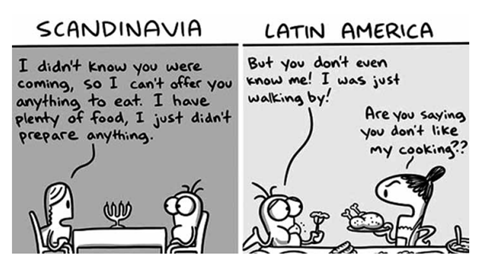
(https://www.boredpanda.com/languages-customs-comics-itchy-feet-comic-part-3/)
Provas
Questão presente nas seguintes provas
Cadernos
Caderno Container