Foram encontradas 45.435 questões.
Disciplina: Inglês (Língua Inglesa)
Banca: Avança SP
Orgão: Pref. Águas Lindóia-SP
Oscar Wilde, The Picture of Dorian Gray
In the excerpt, Wilde suggests that temptation is a:
Provas

Disciplina: Inglês (Língua Inglesa)
Banca: Avança SP
Orgão: Pref. Águas Lindóia-SP
And all the men and women merely players;
They have their exits and their entrances,
And one man in his time plays many parts."
Shakespeare, William. As You Like It. Edited by Michael Billington. Penguin Classics, 2004.
Provas
Disciplina: Inglês (Língua Inglesa)
Banca: Avança SP
Orgão: Pref. Águas Lindóia-SP
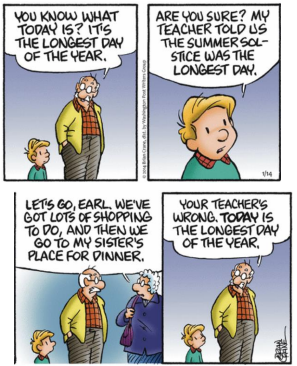
Disponível em: https://www.gocomics.com/pickles/2014/01/14
In the comic strip, what does the grandfather mean when he says, "Today is the longest day of the year"?
Provas
Disciplina: Inglês (Língua Inglesa)
Banca: Avança SP
Orgão: Pref. Águas Lindóia-SP
"And how should I presume?
And how should I begin?
Shall I say, I have gone at dusk through narrow streets
And watched the smoke that rises from the chimneys,
Or bowed to shadows in the public square?"
The speaker's use of rhetorical questions in this passage suggests that he is feeling:
Provas
Disciplina: Inglês (Língua Inglesa)
Banca: Avança SP
Orgão: Pref. Águas Lindóia-SP
- Gramática - Língua InglesaVerbos | Verbs
- Gramática - Língua InglesaOrações condicionais | Conditional Clauses
Complete the following sentence with the correct modal verb:
If I had the money, I ____ buy a new car.
Provas
Disciplina: Inglês (Língua Inglesa)
Banca: Avança SP
Orgão: Pref. Águas Lindóia-SP
Select the correct alternative.
Provas
Disciplina: Inglês (Língua Inglesa)
Banca: Avança SP
Orgão: Pref. Águas Lindóia-SP
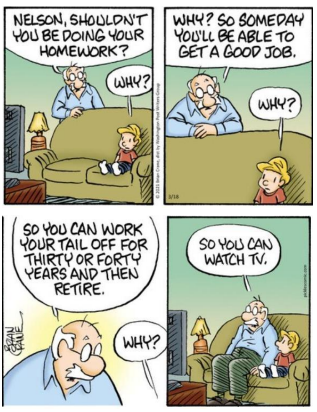
Disponível em: https://www.gocomics.com/pickles/2021/03/18
The grandfather's argument is based on a linear view of life. Which of the following statements best explains the irony in the dialogue?
Provas
Read the following excerpt and answer the following questions.
Every time you're online, you are bombarded by pictures, articles, links and videos trying to tell their story. Unfortunately, not all of these stories are true. Sometimes they want you to click on another story or advertisement at their own site, other times they want to upset people for political reasons. These days it's so easy to share information. These stories circulate quickly, and the result is … fake news.
There is a range of fake news: from crazy stories which people easily recognize to more subtle types of misinformation. Experts in media studies and online psychology have been examining the fake news phenomenon. Read these tips, and don't get fooled!
Check the source
Look at the website where the story comes from. Does it look real? Is the text well written? Are there a variety of other stories or is it just one story? Fake news websites often use addresses that sound like real newspapers, but don't have many real stories about other topics. If you aren't sure, click on the 'About' page and look for a clear description of the organization.
Watch out for fake photos
Many fake news stories use images that are Photoshopped or taken from an unrelated site. Sometimes, if you just look closely at an image, you can see if it has been changed. Or use a tool like Google Reverse Image search. It will show you if the same image has been used in other contexts.
Check the story is in other places
Look to see if the story you are reading is on other news sites that you know and trust. If you do find it on many other sites, then it probably isn't fake (although there are some exceptions), as many big news organizations try to check their sources before they publish a story.
Look for other signs
There are other techniques that fake news uses. These include using ALL CAPS and lots of ads that pop up when you click on a link. Also, think about how the story makes you feel. If the news story makes you angry, it's probably designed to make you angry.
If you know these things about online news, and can apply them in your everyday life, then you have the control over what to read, what to believe and most importantly what to share. If you find a news story that you know is fake, the most important advice is: don't share it!
(From: https://learnenglish.britishcoun cil.org/skills/reading/b1-reading/how-spot-fake news)
Provas
Read the following excerpt and answer the following questions.
Every time you're online, you are bombarded by pictures, articles, links and videos trying to tell their story. Unfortunately, not all of these stories are true. Sometimes they want you to click on another story or advertisement at their own site, other times they want to upset people for political reasons. These days it's so easy to share information. These stories circulate quickly, and the result is … fake news.
There is a range of fake news: from crazy stories which people easily recognize to more subtle types of misinformation. Experts in media studies and online psychology have been examining the fake news phenomenon. Read these tips, and don't get fooled!
Check the source
Look at the website where the story comes from. Does it look real? Is the text well written? Are there a variety of other stories or is it just one story? Fake news websites often use addresses that sound like real newspapers, but don't have many real stories about other topics. If you aren't sure, click on the 'About' page and look for a clear description of the organization.
Watch out for fake photos
Many fake news stories use images that are Photoshopped or taken from an unrelated site. Sometimes, if you just look closely at an image, you can see if it has been changed. Or use a tool like Google Reverse Image search. It will show you if the same image has been used in other contexts.
Check the story is in other places
Look to see if the story you are reading is on other news sites that you know and trust. If you do find it on many other sites, then it probably isn't fake (although there are some exceptions), as many big news organizations try to check their sources before they publish a story.
Look for other signs
There are other techniques that fake news uses. These include using ALL CAPS and lots of ads that pop up when you click on a link. Also, think about how the story makes you feel. If the news story makes you angry, it's probably designed to make you angry.
If you know these things about online news, and can apply them in your everyday life, then you have the control over what to read, what to believe and most importantly what to share. If you find a news story that you know is fake, the most important advice is: don't share it!
(From: https://learnenglish.britishcoun cil.org/skills/reading/b1-reading/how-spot-fake news)
Provas
Read the following excerpt and answer the following questions.
Every time you're online, you are bombarded by pictures, articles, links and videos trying to tell their story. Unfortunately, not all of these stories are true. Sometimes they want you to click on another story or advertisement at their own site, other times they want to upset people for political reasons. These days it's so easy to share information. These stories circulate quickly, and the result is … fake news.
There is a range of fake news: from crazy stories which people easily recognize to more subtle types of misinformation. Experts in media studies and online psychology have been examining the fake news phenomenon. Read these tips, and don't get fooled!
Check the source
Look at the website where the story comes from. Does it look real? Is the text well written? Are there a variety of other stories or is it just one story? Fake news websites often use addresses that sound like real newspapers, but don't have many real stories about other topics. If you aren't sure, click on the 'About' page and look for a clear description of the organization.
Watch out for fake photos
Many fake news stories use images that are Photoshopped or taken from an unrelated site. Sometimes, if you just look closely at an image, you can see if it has been changed. Or use a tool like Google Reverse Image search. It will show you if the same image has been used in other contexts.
Check the story is in other places
Look to see if the story you are reading is on other news sites that you know and trust. If you do find it on many other sites, then it probably isn't fake (although there are some exceptions), as many big news organizations try to check their sources before they publish a story.
Look for other signs
There are other techniques that fake news uses. These include using ALL CAPS and lots of ads that pop up when you click on a link. Also, think about how the story makes you feel. If the news story makes you angry, it's probably designed to make you angry.
If you know these things about online news, and can apply them in your everyday life, then you have the control over what to read, what to believe and most importantly what to share. If you find a news story that you know is fake, the most important advice is: don't share it!
(From: https://learnenglish.britishcoun cil.org/skills/reading/b1-reading/how-spot-fake news)
Provas
Caderno Container