Foram encontradas 45.388 questões.
Leia a matéria para responder à questão.
Plastic Waste In The Oceans
In the last few years there has been more and more evidence that plastic pollution in our oceans is becoming a massive problem. Large pieces of plastic which end up in the sea can entangle marine animals or can also suffocate them.
Tiny pieces of plastic — broken down by the action of water and the sun — cause harm by entering the marine food chain. If the animals eat plastic it will make them feel artificially full so that they do not eat and they starve to death. Furthermore, when fish have eaten plastic it becomes part of their body; if we then eat that fish our food contains plastic — we are eating our own plastic waste.
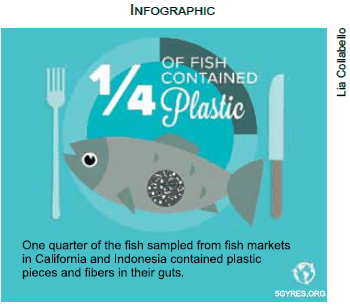
(www.reducereuserecycle.co.uk. Adaptado.)
O trecho dos dois parágrafos iniciais da matéria que está representado no infográfico é:
Provas

Leia o texto para responder à questão.
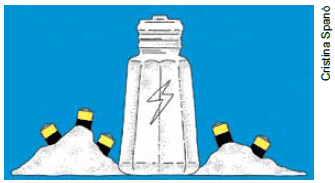
They power tiny phones and two-tonne electric cars. They form the guts of a growing number of grid-storage systems1 that smooth the flow of electricity from wind and solar power stations. Without them, the electrification needed to avoid the worst effects of global warming would be unimaginable.
But lithium-ion (Li-ion) batteries have downsides. Lithium is scarce, for one. And the best Li-ion batteries, those with layered-oxide cathodes, also require cobalt and nickel. These metals are scarce, too — and cobalt is also problematic because a lot of it is mined in the Democratic Republic of Congo, where working conditions leave much to be desired. A second sort of Li-ion battery, a so-called polyanionic design that uses lithium iron phosphate (LFP), does not need nickel or cobalt. However, such batteries cannot store as much energy per kilogram as layered-oxide ones.
A group of companies, though, think they have an alternative: making batteries with sodium instead. Unlike lithium, sodium is abundant: it makes up most of the salt in the oceans. And chemists have found that layered-oxide cathodes which use sodium rather than lithium can get by without cobalt or nickel to increase their quality. The idea of making sodium-ion (Na-ion) batteries at scale is therefore gaining traction. Engineers are adjusting designs. Factories, particularly in China, are springing up. For the first time since the Li-ion revolution began, lithium’s place on the electrochemical pedestal is being challenged.
(www.economist.com, 25.10.2023. Adaptado.)
1 grid-storage system: sistema de armazenamento de energia elétrica.
In the excerpt from the third paragraph “Factories, particularly in China, are springing up”, the underlined expression means
Provas
Leia o texto para responder à questão.
They power tiny phones and two-tonne electric cars. They form the guts of a growing number of grid-storage systems1 that smooth the flow of electricity from wind and solar power stations. Without them, the electrification needed to avoid the worst effects of global warming would be unimaginable.
But lithium-ion (Li-ion) batteries have downsides. Lithium is scarce, for one. And the best Li-ion batteries, those with layered-oxide cathodes, also require cobalt and nickel. These metals are scarce, too — and cobalt is also problematic because a lot of it is mined in the Democratic Republic of Congo, where working conditions leave much to be desired. A second sort of Li-ion battery, a so-called polyanionic design that uses lithium iron phosphate (LFP), does not need nickel or cobalt. However, such batteries cannot store as much energy per kilogram as layered-oxide ones.
A group of companies, though, think they have an alternative: making batteries with sodium instead. Unlike lithium, sodium is abundant: it makes up most of the salt in the oceans. And chemists have found that layered-oxide cathodes which use sodium rather than lithium can get by without cobalt or nickel to increase their quality. The idea of making sodium-ion (Na-ion) batteries at scale is therefore gaining traction. Engineers are adjusting designs. Factories, particularly in China, are springing up. For the first time since the Li-ion revolution began, lithium’s place on the electrochemical pedestal is being challenged.
(www.economist.com, 25.10.2023. Adaptado.)
1 grid-storage system: sistema de armazenamento de energia elétrica.
De acordo com o terceiro parágrafo, baterias de íons de sódio são vantajosas principalmente porque
Provas
Leia o texto para responder à questão.
They power tiny phones and two-tonne electric cars. They form the guts of a growing number of grid-storage systems1 that smooth the flow of electricity from wind and solar power stations. Without them, the electrification needed to avoid the worst effects of global warming would be unimaginable.
But lithium-ion (Li-ion) batteries have downsides. Lithium is scarce, for one. And the best Li-ion batteries, those with layered-oxide cathodes, also require cobalt and nickel. These metals are scarce, too — and cobalt is also problematic because a lot of it is mined in the Democratic Republic of Congo, where working conditions leave much to be desired. A second sort of Li-ion battery, a so-called polyanionic design that uses lithium iron phosphate (LFP), does not need nickel or cobalt. However, such batteries cannot store as much energy per kilogram as layered-oxide ones.
A group of companies, though, think they have an alternative: making batteries with sodium instead. Unlike lithium, sodium is abundant: it makes up most of the salt in the oceans. And chemists have found that layered-oxide cathodes which use sodium rather than lithium can get by without cobalt or nickel to increase their quality. The idea of making sodium-ion (Na-ion) batteries at scale is therefore gaining traction. Engineers are adjusting designs. Factories, particularly in China, are springing up. For the first time since the Li-ion revolution began, lithium’s place on the electrochemical pedestal is being challenged.
(www.economist.com, 25.10.2023. Adaptado.)
1 grid-storage system: sistema de armazenamento de energia elétrica.
A República Democrática do Congo é mencionada no segundo parágrafo porque
Provas
Leia o texto para responder à questão.
They power tiny phones and two-tonne electric cars. They form the guts of a growing number of grid-storage systems1 that smooth the flow of electricity from wind and solar power stations. Without them, the electrification needed to avoid the worst effects of global warming would be unimaginable.
But lithium-ion (Li-ion) batteries have downsides. Lithium is scarce, for one. And the best Li-ion batteries, those with layered-oxide cathodes, also require cobalt and nickel. These metals are scarce, too — and cobalt is also problematic because a lot of it is mined in the Democratic Republic of Congo, where working conditions leave much to be desired. A second sort of Li-ion battery, a so-called polyanionic design that uses lithium iron phosphate (LFP), does not need nickel or cobalt. However, such batteries cannot store as much energy per kilogram as layered-oxide ones.
A group of companies, though, think they have an alternative: making batteries with sodium instead. Unlike lithium, sodium is abundant: it makes up most of the salt in the oceans. And chemists have found that layered-oxide cathodes which use sodium rather than lithium can get by without cobalt or nickel to increase their quality. The idea of making sodium-ion (Na-ion) batteries at scale is therefore gaining traction. Engineers are adjusting designs. Factories, particularly in China, are springing up. For the first time since the Li-ion revolution began, lithium’s place on the electrochemical pedestal is being challenged.
(www.economist.com, 25.10.2023. Adaptado.)
1 grid-storage system: sistema de armazenamento de energia elétrica.
According to the second paragraph, one of the disadvantages of lithium is that it is
Provas
Leia o texto para responder à questão.
They power tiny phones and two-tonne electric cars. They form the guts of a growing number of grid-storage systems1 that smooth the flow of electricity from wind and solar power stations. Without them, the electrification needed to avoid the worst effects of global warming would be unimaginable.
But lithium-ion (Li-ion) batteries have downsides. Lithium is scarce, for one. And the best Li-ion batteries, those with layered-oxide cathodes, also require cobalt and nickel. These metals are scarce, too — and cobalt is also problematic because a lot of it is mined in the Democratic Republic of Congo, where working conditions leave much to be desired. A second sort of Li-ion battery, a so-called polyanionic design that uses lithium iron phosphate (LFP), does not need nickel or cobalt. However, such batteries cannot store as much energy per kilogram as layered-oxide ones.
A group of companies, though, think they have an alternative: making batteries with sodium instead. Unlike lithium, sodium is abundant: it makes up most of the salt in the oceans. And chemists have found that layered-oxide cathodes which use sodium rather than lithium can get by without cobalt or nickel to increase their quality. The idea of making sodium-ion (Na-ion) batteries at scale is therefore gaining traction. Engineers are adjusting designs. Factories, particularly in China, are springing up. For the first time since the Li-ion revolution began, lithium’s place on the electrochemical pedestal is being challenged.
(www.economist.com, 25.10.2023. Adaptado.)
1 grid-storage system: sistema de armazenamento de energia elétrica.
No trecho do primeiro parágrafo “Without them, the electrification needed to avoid the worst effects of global warming would be unimaginable”, o termo sublinhado indica uma
Provas
Leia o texto para responder à questão.
They power tiny phones and two-tonne electric cars. They form the guts of a growing number of grid-storage systems1 that smooth the flow of electricity from wind and solar power stations. Without them, the electrification needed to avoid the worst effects of global warming would be unimaginable.
But lithium-ion (Li-ion) batteries have downsides. Lithium is scarce, for one. And the best Li-ion batteries, those with layered-oxide cathodes, also require cobalt and nickel. These metals are scarce, too — and cobalt is also problematic because a lot of it is mined in the Democratic Republic of Congo, where working conditions leave much to be desired. A second sort of Li-ion battery, a so-called polyanionic design that uses lithium iron phosphate (LFP), does not need nickel or cobalt. However, such batteries cannot store as much energy per kilogram as layered-oxide ones.
A group of companies, though, think they have an alternative: making batteries with sodium instead. Unlike lithium, sodium is abundant: it makes up most of the salt in the oceans. And chemists have found that layered-oxide cathodes which use sodium rather than lithium can get by without cobalt or nickel to increase their quality. The idea of making sodium-ion (Na-ion) batteries at scale is therefore gaining traction. Engineers are adjusting designs. Factories, particularly in China, are springing up. For the first time since the Li-ion revolution began, lithium’s place on the electrochemical pedestal is being challenged.
(www.economist.com, 25.10.2023. Adaptado.)
1 grid-storage system: sistema de armazenamento de energia elétrica.
The word “They” in the first paragraph refers, in the text, to
Provas
Examine o meme publicado pelo perfil “ancientcringe” no Instagram em 02.07.2023. O meme foi criado a partir da pintura intitulada “Sentence of death” (1908), do artista inglês John Collier (1850-1934), na qual um médico comunica a seu paciente uma notícia desagradável.

Na construção de seu sentido, o meme introduz duas falas na pintura. Tal procedimento
Provas
Disciplina: Inglês (Língua Inglesa)
Banca: UEPB
Orgão: Pref. Barra Santana-PB
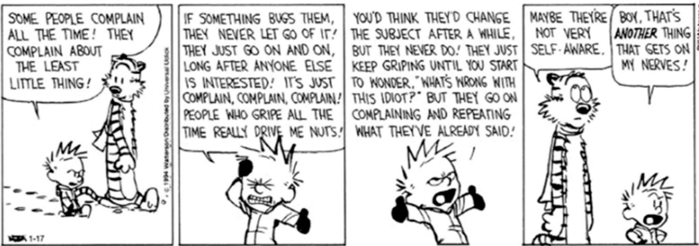
What is Calvin criticizing in his rant in the comic strip?
Provas
Disciplina: Inglês (Língua Inglesa)
Banca: UEPB
Orgão: Pref. Barra Santana-PB
Read the text 1 to answers the questions 26 and 27
Text 1
Education for Sustainable Development
With a world population of 7 billion people and limited natural resources, we, as individuals and societies, need to learn to live together sustainably. We need to take action responsibly based on the understanding that what we do today can have implications on the lives of people and the planet in future. Education for Sustainable Development empowers people to change the way they think and work towards a sustainable future.
UNESCO aims to improve access to quality education on sustainable development at all levels and in all social contexts, to transform society by reorienting education and help people develop knowledge, skills, values and behaviours needed for sustainable development. It is about including sustainable development issues, such as climate change and biodiversity into teaching and learning. Individuals are encouraged to be responsible actors who resolve challenges, respect cultural diversity and contribute to creating a more sustainable world.
(https://en.unesco.org. Adaptado.)
Why is promoting Education for Sustainable Development (ESD) important according to the text?
Provas
Caderno Container