Foram encontradas 45.274 questões.
Analyze the statements below and choose the CORRECT option:
I) The project is focused on fuel conservation and increasing the emission of air pollutants.
II) Google’s Yossi Matias noted that the system is being tested in areas with intense traffic issues.
III) The program was first tested in Bangalore, Budapest, Jakarta, Manchester, Haifa, Hamburg, Rio de Janeiro, and Seattle.
IV) Generally, the project isn’t used at major crossings with heavy traffic and complex traffic lights.
V) The Green Light project is used in areas called intersections, where vehicles start and stop.
Provas

Provas
TEXT II
Avicenna, Arabic Ibn Sīnā, (born 980, near Bukhara, Iran [now in Uzbekistan]—died 1037, Hamadan, Iran), Muslim physician, the most famous and influential of the philosopher-scientists of the medieval Islamic world. He was particularly noted for his contributions in the fields of Aristotelian philosophy and medicine. He composed the Book of the Cure, a vast philosophical and scientific encyclopaedia, and The Canon of Medicine, which is among the most famous books in the history of medicine.
Avicenna did not burst upon an empty Islamic intellectual stage. It is believed that Muslim writer Ibn al-Muqaffaʿ, or possibly his son, had introduced Aristotelian logic to the Islamic world more than two centuries before Avicenna. Al-Kindī, the first Islamic Peripatetic (Aristotelian) philosopher, and Turkish polymath al-Fārābī, from whose book Avicenna would learn Aristotle’s metaphysics, preceded him. Of these luminaries, however, Avicenna remains by far the greatest.
Adapted from https://www.britannica.com/biography/Avicenna
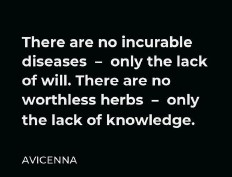
Here is one of his sayings:
https://br.pinterest.com/pin/770326711284710280/
Avicenna’s saying implies that
Provas
TEXT II
Avicenna, Arabic Ibn Sīnā, (born 980, near Bukhara, Iran [now in Uzbekistan]—died 1037, Hamadan, Iran), Muslim physician, the most famous and influential of the philosopher-scientists of the medieval Islamic world. He was particularly noted for his contributions in the fields of Aristotelian philosophy and medicine. He composed the Book of the Cure, a vast philosophical and scientific encyclopaedia, and The Canon of Medicine, which is among the most famous books in the history of medicine.
Avicenna did not burst upon an empty Islamic intellectual stage. It is believed that Muslim writer Ibn al-Muqaffaʿ, or possibly his son, had introduced Aristotelian logic to the Islamic world more than two centuries before Avicenna. Al-Kindī, the first Islamic Peripatetic (Aristotelian) philosopher, and Turkish polymath al-Fārābī, from whose book Avicenna would learn Aristotle’s metaphysics, preceded him. Of these luminaries, however, Avicenna remains by far the greatest.
Adapted from https://www.britannica.com/biography/Avicenna
Here is one of his sayings:
https://br.pinterest.com/pin/770326711284710280/
The pronoun in preceded him refers to
Provas
TEXT II
Avicenna, Arabic Ibn Sīnā, (born 980, near Bukhara, Iran [now in Uzbekistan]—died 1037, Hamadan, Iran), Muslim physician, the most famous and influential of the philosopher-scientists of the medieval Islamic world. He was particularly noted for his contributions in the fields of Aristotelian philosophy and medicine. He composed the Book of the Cure, a vast philosophical and scientific encyclopaedia, and The Canon of Medicine, which is among the most famous books in the history of medicine.
Avicenna did not burst upon an empty Islamic intellectual stage. It is believed that Muslim writer Ibn al-Muqaffaʿ, or possibly his son, had introduced Aristotelian logic to the Islamic world more than two centuries before Avicenna. Al-Kindī, the first Islamic Peripatetic (Aristotelian) philosopher, and Turkish polymath al-Fārābī, from whose book Avicenna would learn Aristotle’s metaphysics, preceded him. Of these luminaries, however, Avicenna remains by far the greatest.
Adapted from https://www.britannica.com/biography/Avicenna
Here is one of his sayings:
https://br.pinterest.com/pin/770326711284710280/
According to the biography, Avicenna
Provas
TEXT III

Unless in “Unless they are nurtured” introduces a(n)
Provas
TEXT III
Text III aims at
Provas
TEXT I
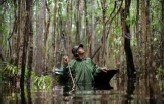
The Amazon is often referred to as "the world's largest medicine cabinet" CREDIT: Getty
(https://www.telegraph.co.uk/travel/cruises/articles/how-to-be-a-botanical-buff/)
Medicinal Treasures of the Rainforest
The widespread destruction of tropical rainforest ecosystems and the consequent extinction of numerous plant and animal species is happening before we know even the most basic facts about what we are losing.
Covering only 6 percent of the Earth's surface, tropical moist forests contain at least half of all species. The abundant botanical resources of tropical forests have already provided tangible medical advances; yet only 1 percent of the known plant and animal species have been thoroughly examined for their medicinal potentials. Meanwhile, 2 percent of the world's rainforests are irreparably damaged each year.
Approximately 7,000 medical compounds prescribed by Western doctors are derived from plants. These drugs had an estimated retail value of US$43 billion in 1985. Seventy percent of the 3000 plants identified by the United States National Cancer Institute as having potential anti-cancer properties are endemic to the rainforest. Tropical forest species serve Western surgery and internal medicine in three ways. First, extracts from organisms can be used directly as drugs. For maladies ranging from nagging headaches to lethal contagions such as malaria, rainforest medicines have provided modern society with a variety of cures and pain relievers.
[…]
Secondly, chemical structures of forest organisms sometimes serve as templates from which scientists and researchers can chemically synthesize drug compounds.[…]
Finally, rainforest plants provide aids for research. Certain plant compounds enable scientists to understand how cancer cells grow, while others serve as testing agents for potentially harmful food and drug products. Tropical forests offer hope for safer contraceptives for both women and men. The exponential growth of world population clearly demonstrates the need for more reliable and effective birth control methods. Worldwide, approximately 4,000 plant species have been shown to offer contraceptive possibilities. The rainforest also holds secrets for safer pesticides for farmers. Two species of potatoes have leaves that produce a sticky substance that traps and kills predatory insects. This natural self-defense mechanism could potentially reduce the need for using pesticides on potatoes. Who knows what other tricks the rainforest might have up its leaves?
Adapted from https://www.adventure-life.com/amazon/articles/medicinal-treasures-of-the-rainforest
The question in the last sentence reveals
Provas
TEXT I
The Amazon is often referred to as "the world's largest medicine cabinet" CREDIT: Getty
(https://www.telegraph.co.uk/travel/cruises/articles/how-to-be-a-botanical-buff/)
Medicinal Treasures of the Rainforest
The widespread destruction of tropical rainforest ecosystems and the consequent extinction of numerous plant and animal species is happening before we know even the most basic facts about what we are losing.
Covering only 6 percent of the Earth's surface, tropical moist forests contain at least half of all species. The abundant botanical resources of tropical forests have already provided tangible medical advances; yet only 1 percent of the known plant and animal species have been thoroughly examined for their medicinal potentials. Meanwhile, 2 percent of the world's rainforests are irreparably damaged each year.
Approximately 7,000 medical compounds prescribed by Western doctors are derived from plants. These drugs had an estimated retail value of US$43 billion in 1985. Seventy percent of the 3000 plants identified by the United States National Cancer Institute as having potential anti-cancer properties are endemic to the rainforest. Tropical forest species serve Western surgery and internal medicine in three ways. First, extracts from organisms can be used directly as drugs. For maladies ranging from nagging headaches to lethal contagions such as malaria, rainforest medicines have provided modern society with a variety of cures and pain relievers.
[…]
Secondly, chemical structures of forest organisms sometimes serve as templates from which scientists and researchers can chemically synthesize drug compounds.[…]
Finally, rainforest plants provide aids for research. Certain plant compounds enable scientists to understand how cancer cells grow, while others serve as testing agents for potentially harmful food and drug products. Tropical forests offer hope for safer contraceptives for both women and men. The exponential growth of world population clearly demonstrates the need for more reliable and effective birth control methods. Worldwide, approximately 4,000 plant species have been shown to offer contraceptive possibilities. The rainforest also holds secrets for safer pesticides for farmers. Two species of potatoes have leaves that produce a sticky substance that traps and kills predatory insects. This natural self-defense mechanism could potentially reduce the need for using pesticides on potatoes. Who knows what other tricks the rainforest might have up its leaves?
Adapted from https://www.adventure-life.com/amazon/articles/medicinal-treasures-of-the-rainforest
In the last paragraph, the modal might in “the rainforest might have” expresses
Provas
TEXT I
The Amazon is often referred to as "the world's largest medicine cabinet" CREDIT: Getty
(https://www.telegraph.co.uk/travel/cruises/articles/how-to-be-a-botanical-buff/)
Medicinal Treasures of the Rainforest
The widespread destruction of tropical rainforest ecosystems and the consequent extinction of numerous plant and animal species is happening before we know even the most basic facts about what we are losing.
Covering only 6 percent of the Earth's surface, tropical moist forests contain at least half of all species. The abundant botanical resources of tropical forests have already provided tangible medical advances; yet only 1 percent of the known plant and animal species have been thoroughly examined for their medicinal potentials. Meanwhile, 2 percent of the world's rainforests are irreparably damaged each year.
Approximately 7,000 medical compounds prescribed by Western doctors are derived from plants. These drugs had an estimated retail value of US$43 billion in 1985. Seventy percent of the 3000 plants identified by the United States National Cancer Institute as having potential anti-cancer properties are endemic to the rainforest. Tropical forest species serve Western surgery and internal medicine in three ways. First, extracts from organisms can be used directly as drugs. For maladies ranging from nagging headaches to lethal contagions such as malaria, rainforest medicines have provided modern society with a variety of cures and pain relievers.
[…]
Secondly, chemical structures of forest organisms sometimes serve as templates from which scientists and researchers can chemically synthesize drug compounds.[…]
Finally, rainforest plants provide aids for research. Certain plant compounds enable scientists to understand how cancer cells grow, while others serve as testing agents for potentially harmful food and drug products. Tropical forests offer hope for safer contraceptives for both women and men. The exponential growth of world population clearly demonstrates the need for more reliable and effective birth control methods. Worldwide, approximately 4,000 plant species have been shown to offer contraceptive possibilities. The rainforest also holds secrets for safer pesticides for farmers. Two species of potatoes have leaves that produce a sticky substance that traps and kills predatory insects. This natural self-defense mechanism could potentially reduce the need for using pesticides on potatoes. Who knows what other tricks the rainforest might have up its leaves?
Adapted from https://www.adventure-life.com/amazon/articles/medicinal-treasures-of-the-rainforest
The expression medicine cabinet in the caption means a place where
Provas
Caderno Container