Foram encontradas 64 questões.
Directions: Answer question based on TEXT II.
TEXT II
SEPTEMBER 11
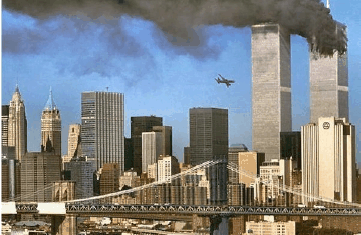
On September 11, 2001, nineteen militants associated with the Islamic extremist group al-Qaeda hijacked four airlines and carried out suicide attacks against targets in the United States. Two of the planes were flown into the towers of the World Trade Center in New York City, a third plane hit the Pentagon just outside Washington, D.C., and the fourth plane crashed in a field in Pennsylvania. Often referred to as 9/11, the attacks resulted in extensive death and destruction, activating major U.S. initiatives to combat terrorism and defining the presidency of George W. Bush. Over three thousand people were killed during the attacks in New York City and Washington, D.C., including more than four hundred police officers and firefighters.
At 8:45 a.m., on a clear Tuesday morning, an American Airlines Boeing 767 loaded with twenty thousand gallons of jet fuel crashed into the north tower of the World Trade Center in New York City. The impact left a wide, burning hole near the 80th floor of the 110- story skyscraper, instantly killing hundreds of people and trapping hundreds more in higher floors. Eighteen minutes after the first plane hit, a second Boeing 767– United Airlines Flight 175–appeared out of the sky, turned sharply toward the World Trade Center and crashed into the south tower near the 60th floor. The collision caused a massive explosion that showered burning fragment over surrounding buildings and the streets below. America was under attack.
The attackers were Islamic terrorists from Saudi Arabia and several other Arab nations. Reportedly financed by Saudi fugitive Osama bin Laden's al-Qaeda terrorist organization, they _____________(1) in retaliation for America's support of Israel, its involvement in the Persian Gulf War and its continued military presence in the Middle East. Some of the terrorists had lived in the United States for more than a year and _____________(2) flying lessons at American commercial flight schools.
As millions watched the events unfolding in New York, American Airlines Flight 77 circled over downtown Washington, D.C., and banged into the west side of the Pentagon military headquarters at 9:45 a.m. Jet fuel from the Boeing 757 caused a devastating inferno that led to the structural collapse of a portion of the giant concrete building. Less than fifteen minutes after the terrorists struck the nerve center of the U.S. military, the horror in New York took a catastrophic turn for the worse when the south tower of the World Trade Center collapsed in a massive cloud of dust and smoke. At 10:30 a.m., the other Trade Center tower collapsed. Close to three thousand people died in the World Trade Center and its vicinity, including an impressive three hundred and forty three firefighters and paramedics, twenty three New York City police officers and thirty seven Port Authority police officers who were struggling to complete an evacuation of the buildings and save the office workers trapped* on higher floors.
Meanwhile, a fourth California-bound plane–United Flight 93–was hijacked about forty minutes after leaving Newark International Airport in New Jersey. Because the plane had been delayed in taking off, passengers on board learned of events in New York and Washington via cell phone calls to the ground. Knowing that the aircraft was not returning to an airport as the hijackers claimed, a group of passengers and flight attendants planned a rebellion. One of the passengers, Thomas Burnett Jr., told his wife over the phone that "I know we're all going to die. There are three of us who are going to do something about it. I love you, honey." Another passenger–Todd Beamer–was heard saying "Are you guys ready? Let's roll" over an open line.
The passengers fought the four hijackers and are suspected to have attacked the cockpit with a fire extinguisher. The plane then flipped over and sped toward the ground, crashing in a rural field in western Pennsylvania at 10:10 a.m. All forty-five people aboard were killed. Within two months, U.S. forces had effectively removed the Taliban from operational power, but the war continued. Osama bin Laden, was finally chased and killed by U.S. forces in Abbottabad, Pakistan.
Adapted from http://www.history.com/topics/9-11-attacks Acessado em 04/04/2013
Glossary:
*Trapped – to be in a bad situation that is difficult to escape.
Choose the alternative containing the correct verbal tenses to complete the gaps (1) and (2) in the text.
Provas
Questão presente nas seguintes provas

Dispõe-se de duas pilhas idênticas de f.e.m \( \varepsilon \) e resistência interna r constante e de um reostato, cuja resistência elétrica R varia de zero até 6 r. Essas pilhas podem ser associadas em série ou em paralelo, conforme ilustram as figuras I e II, respectivamente.
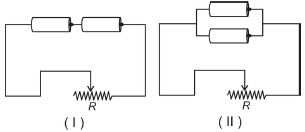
O gráfico que melhor representa a potência P dissipada pelo reostato, para cada uma das associações, em função da resistência R é
Provas
Questão presente nas seguintes provas
Directions: Answer question based on TEXT II.
TEXT II
SEPTEMBER 11
On September 11, 2001, nineteen militants associated with the Islamic extremist group al-Qaeda hijacked four airlines and carried out suicide attacks against targets in the United States. Two of the planes were flown into the towers of the World Trade Center in New York City, a third plane hit the Pentagon just outside Washington, D.C., and the fourth plane crashed in a field in Pennsylvania. Often referred to as 9/11, the attacks resulted in extensive death and destruction, activating major U.S. initiatives to combat terrorism and defining the presidency of George W. Bush. Over three thousand people were killed during the attacks in New York City and Washington, D.C., including more than four hundred police officers and firefighters.
At 8:45 a.m., on a clear Tuesday morning, an American Airlines Boeing 767 loaded with twenty thousand gallons of jet fuel crashed into the north tower of the World Trade Center in New York City. The impact left a wide, burning hole near the 80th floor of the 110- story skyscraper, instantly killing hundreds of people and trapping hundreds more in higher floors. Eighteen minutes after the first plane hit, a second Boeing 767– United Airlines Flight 175–appeared out of the sky, turned sharply toward the World Trade Center and crashed into the south tower near the 60th floor. The collision caused a massive explosion that showered burning fragment over surrounding buildings and the streets below. America was under attack.
The attackers were Islamic terrorists from Saudi Arabia and several other Arab nations. Reportedly financed by Saudi fugitive Osama bin Laden's al-Qaeda terrorist organization, they were acting in retaliation for America's support of Israel, its involvement in the Persian Gulf War and its continued military presence in the Middle East. Some of the terrorists had lived in the United States for more than a year and had taken flying lessons at American commercial flight schools.
As millions watched the events unfolding in New York, American Airlines Flight 77 circled over downtown Washington, D.C., and banged into the west side of the Pentagon military headquarters at 9:45 a.m. Jet fuel from the Boeing 757 caused a devastating inferno that led to the structural collapse of a portion of the giant concrete building. Less than fifteen minutes after the terrorists struck the nerve center of the U.S. military, the horror in New York took a catastrophic turn for the worse when the south tower of the World Trade Center collapsed in a massive cloud of dust and smoke. At 10:30 a.m., the other Trade Center tower collapsed. Close to three thousand people died in the World Trade Center and its vicinity, including an impressive three hundred and forty three firefighters and paramedics, twenty three New York City police officers and thirty seven Port Authority police officers who were struggling to complete an evacuation of the buildings and save the office workers trapped* on higher floors.
Meanwhile, a fourth California-bound plane–United Flight 93–was hijacked about forty minutes after leaving Newark International Airport in New Jersey. Because the plane had been delayed in taking off, passengers on board learned of events in New York and Washington via cell phone calls to the ground. Knowing that the aircraft was not returning to an airport as the hijackers claimed, a group of passengers and flight attendants planned a rebellion. One of the passengers, Thomas Burnett Jr., told his wife over the phone that "I know we're all going to die. There are three of us who are going to do something about it. I love you, honey." Another passenger–Todd Beamer–was heard saying "Are you guys ready? Let's roll" over an open line.
The passengers fought the four hijackers and are suspected to have attacked the cockpit with a fire extinguisher. The plane then flipped over and sped toward the ground, crashing in a rural field in western Pennsylvania at 10:10 a.m. All forty-five people aboard were killed. Within two months, U.S. forces had effectively removed the Taliban from operational power, but the war continued. Osama bin Laden, was finally chased and killed by U.S. forces in Abbottabad, Pakistan.
Adapted from http://www.history.com/topics/9-11-attacks Acessado em 04/04/2013
Glossary:
*Trapped – to be in a bad situation that is difficult to escape.
The sentence “Thomas Burnett Jr. told his wife over the phone that ‘I know that we’re all going to die’ ” is similar in meaning to
Thomas Burnett Jr.
Provas
Questão presente nas seguintes provas
TEXTO IV
SER DIFERENTE É NORMAL
Todo mundo tem seu jeito singular
de ser feliz, de viver e de enxergar
se os olhos são maiores ou são orientais
e daí, que diferença faz?
Todo mundo tem que ser especial
em oportunidades, em direitos, coisa e tal
seja branco, preto, verde, azul ou lilás
e daí, que diferença faz?
Já pensou, tudo sempre igual?
Ser mais do mesmo o tempo todo não é tão legal
Já pensou, sempre tão igual?
Tá na hora de ir em frente:
ser diferente é normal!
Todo mundo tem seu jeito singular
de crescer, aparecer e se manifestar
se o peso na balança é de uns quilinhos a mais
e daí, que diferença faz?
Todo mundo tem que ser especial
em seu sorriso, sua fé e no seu visual
se curte tatuagens ou pinturas naturais
e daí, que diferença faz?
Já pensou, tudo sempre igual?
Ser mais do mesmo o tempo todo não é tão legal
já pensou, sempre tão igual?
Tá na hora de ir em frente:
Ser diferente é normal!
(Adilson Xavier/ Vinícius Castro)
As palavras que ocorrem em um texto têm sempre uma função determinada. Leia os trechos abaixo e analise a função que é indicada para as expressões sublimadas.
I- “E daí, que diferença faz?” – O termo que exprime um estado de dúvida, de incerteza.
II- “Ser mais do mesmo não é tão legal.” - Vocábulo que expressa intensificação.
III- “Todo mundo tem que ser especial” – Termo que exprime obrigatoriedade.
IV- “...em oportunidades, em direitos, coisa e tal” – Expressão coloquial utilizada para sugerir impaciência.
Está(ao) correta(s) apenas
Provas
Questão presente nas seguintes provas
Directions: Answer question based on TEXT II.
TEXT II
SEPTEMBER 11
On September 11, 2001, nineteen militants associated with the Islamic extremist group al-Qaeda hijacked four airlines and carried out suicide attacks against targets in the United States. Two of the planes were flown into the towers of the World Trade Center in New York City, a third plane hit the Pentagon just outside Washington, D.C., and the fourth plane crashed in a field in Pennsylvania. Often referred to as 9/11, the attacks resulted in extensive death and destruction, activating major U.S. initiatives to combat terrorism and defining the presidency of George W. Bush. Over three thousand people were killed during the attacks in New York City and Washington, D.C., including more than four hundred police officers and firefighters.
At 8:45 a.m., on a clear Tuesday morning, an American Airlines Boeing 767 loaded with twenty thousand gallons of jet fuel crashed into the north tower of the World Trade Center in New York City. The impact left a wide, burning hole near the 80th floor of the 110- story skyscraper, instantly killing hundreds of people and trapping hundreds more in higher floors. Eighteen minutes after the first plane hit, a second Boeing 767– United Airlines Flight 175–appeared out of the sky, turned sharply toward the World Trade Center and crashed into the south tower near the 60th floor. The collision caused a massive explosion that showered burning fragment over surrounding buildings and the streets below. America was under attack.
The attackers were Islamic terrorists from Saudi Arabia and several other Arab nations. Reportedly financed by Saudi fugitive Osama bin Laden's al-Qaeda terrorist organization, they were acting in retaliation for America's support of Israel, its involvement in the Persian Gulf War and its continued military presence in the Middle East. Some of the terrorists had lived in the United States for more than a year and had taken flying lessons at American commercial flight schools.
As millions watched the events unfolding in New York, American Airlines Flight 77 circled over downtown Washington, D.C., and banged into the west side of the Pentagon military headquarters at 9:45 a.m. Jet fuel from the Boeing 757 caused a devastating inferno that led to the structural collapse of a portion of the giant concrete building. Less than fifteen minutes after the terrorists struck the nerve center of the U.S. military, the horror in New York took a catastrophic turn for the worse when the south tower of the World Trade Center collapsed in a massive cloud of dust and smoke. At 10:30 a.m., the other Trade Center tower collapsed. Close to three thousand people died in the World Trade Center and its vicinity, including an impressive three hundred and forty three firefighters and paramedics, twenty three New York City police officers and thirty seven Port Authority police officers who were struggling to complete an evacuation of the buildings and save the office workers trapped* on higher floors.
Meanwhile, a fourth California-bound plane–United Flight 93–was hijacked about forty minutes after leaving Newark International Airport in New Jersey. Because the plane had been delayed in taking off, passengers on board learned of events in New York and Washington via cell phone calls to the ground. Knowing that the aircraft was not returning to an airport as the hijackers claimed, a group of passengers and flight attendants planned a rebellion. One of the passengers, Thomas Burnett Jr., told his wife over the phone that "I know we're all going to die. There are three of us who are going to do something about it. I love you, honey." Another passenger–Todd Beamer–was heard saying "Are you guys ready? Let's roll" over an open line.
The passengers fought the four hijackers and are suspected to have attacked the cockpit with a fire extinguisher. The plane then flipped over and sped toward the ground, crashing in a rural field in western Pennsylvania at 10:10 a.m. All forty-five people aboard were killed. Within two months, U.S. forces had effectively removed the Taliban from operational power, but the war continued. Osama bin Laden, was finally chased and killed by U.S. forces in Abbottabad, Pakistan.
Adapted from http://www.history.com/topics/9-11-attacks Acessado em 04/04/2013
Glossary:
*Trapped – to be in a bad situation that is difficult to escape.
The word “meanwhile” (paragraph 5) indicates in the text that
Provas
Questão presente nas seguintes provas
Directions: Answer question based on TEXT I.
TEXT I
ETHICS OF WAR
Human beings have been fighting each other since prehistoric times, and people have been discussing the rights and wrongs of it for almost as long.
The Ethics of War starts by assuming that war is a bad thing, and should be avoided if possible, but it recognizes that there can be situations when war may be the lesser evil of several bad choices.
War is a bad thing because it involves deliberately killing or injuring people, and this is a fundamental wrong – an abuse of the victims human rights.
The purpose of war ethics is to help decide what is right or wrong, both for individuals and countries, and to contribute to debates on public policy, and ultimately to government and individual action.
War ethics also leads to the creation of formal codes of war (e.g. the Hague and Geneva conventions), the drafting and implementation of rules of engagement for soldiers, and in the punishment of soldiers and others for war crimes.
The three key questions are:
Is it ever right to go to war?
When is it right to fight?
What is the moral way to conduct a war?
The discussion of the ethics of war goes back to the Greeks and Romans, although neither civilization behaved particularly well in war.
In the Christian tradition war ethics were developed by St Augustine, and later by St Thomas Aquinas and others.
Hugo Grotius (1583-1645), a Dutch philosopher and author of De Jure Belli Ac Pacis (The Rights of War and Peace), wrote down the conditions for a just war that are accepted today.
Cicero argued that there was no acceptable reason for war outside of just revenge or self-defence – in which he included the defence of honor.
He also argued that a war could not be just unless it was publicly declared and unless compensation for the enemy’s offence had first been demanded.
Cicero based his argument on the assumption that nature and human reason influenced a society against war, and that there was a fundamental code of behavior for nations.
Adapted from http://www.bbc.co.uk/ethics/war/. Shtml Acessado em 14/03/2013
The verbal construction of the underlined sentence in the text expresses the notion of an action
Provas
Questão presente nas seguintes provas
Directions: Answer question based on TEXT I.
TEXT I
ETHICS OF WAR
Human beings have been fighting each other since prehistoric times, and people have been discussing the rights and wrongs of it for almost as long.
The Ethics of War starts by assuming that war is a bad thing, and should be avoided if possible, but it recognizes that there can be situations when war may be the lesser evil of several bad choices.
War is a bad thing because it involves deliberately killing or injuring people, and this is a fundamental wrong – an abuse of the victims human rights.
The purpose of war ethics is to help decide what is right or wrong, both for individuals and countries, and to contribute to debates on public policy, and ultimately to government and individual action.
War ethics also leads to the creation of formal codes of war (e.g. the Hague and Geneva conventions), the drafting and implementation of rules of engagement for soldiers, and in the punishment of soldiers and others for war crimes.
The three key questions are:
Is it ever right to go to war?
When is it right to fight?
What is the moral way to conduct a war?
The discussion of the ethics of war goes back to the Greeks and Romans, although neither civilization behaved particularly well in war.
In the Christian tradition war ethics were developed by St Augustine, and later by St Thomas Aquinas and others.
Hugo Grotius (1583-1645), a Dutch philosopher and author of De Jure Belli Ac Pacis (The Rights of War and Peace), wrote down the conditions for a just war that are accepted today.
Cicero argued that there was no acceptable reason for war outside of just revenge or self-defence – in which he included the defence of honor.
He also argued that a war could not be just unless it was publicly declared and unless compensation for the enemy’s offence had first been demanded.
Cicero based his argument on the assumption that nature and human reason influenced a society against war, and that there was a fundamental code of behavior for nations.
Adapted from http://www.bbc.co.uk/ethics/war/. Shtml Acessado em 14/03/2013
War ethics’ intention, according to the text, is to show that
Provas
Questão presente nas seguintes provas
Uma partícula A, de massa m e carga elétrica q, está em repouso no momento em que uma segunda partícula B, de massa e carga elétrica iguais às de A, é lançada com velocidade de módulo igual a \( v_0 \), na direção x, conforme ilustra a figura abaixo.

A partícula B foi lançada de um ponto muito distante de A, de tal forma que, no instante do lançamento, as forças elétricas coulombianas entre elas possam ser desprezadas. Sendo K a constante eletrostática do meio e considerando apenas interações eletrostáticas entre essas partículas, a distância mínima entre A e B será igual a
Provas
Questão presente nas seguintes provas
Directions: Answer question based on TEXT I.
TEXT I
ETHICS OF WAR
Human beings have been fighting each other since prehistoric times, and people have been discussing the rights and wrongs of it for almost as long.
The Ethics of War starts by assuming that war is a bad thing, and should be avoided if possible, but it recognizes that there can be situations when war may be the lesser evil of several bad choices.
War is a bad thing because it involves deliberately killing or injuring people, and this is a fundamental wrong – an abuse of the victims human rights.
The purpose of war ethics is to help decide what is right or wrong, both for individuals and countries, and to contribute to debates on public policy, and ultimately to government and individual action.
War ethics also leads to the creation of formal codes of war (e.g. the Hague and Geneva conventions), the drafting and implementation of rules of engagement for soldiers, and in the punishment of soldiers and others for war crimes.
The three key questions are:
Is it ever right to go to war?
When is it right to fight?
What is the moral way to conduct a war?
The discussion of the ethics of war goes back to the Greeks and Romans, although neither civilization behaved particularly well in war.
In the Christian tradition war ethics were developed by St Augustine, and later by St Thomas Aquinas and others.
Hugo Grotius (1583-1645), a Dutch philosopher and author of De Jure Belli Ac Pacis (The Rights of War and Peace), wrote down the conditions for a just war that are accepted today.
Cicero argued that there was no acceptable reason for war outside of just revenge or self-defence – in which he included the defence of honor.
He also argued that a war could not be just unless it was publicly declared and unless compensation for the enemy’s offence had first been demanded.
Cicero based his argument on the assumption that nature and human reason influenced a society against war, and that there was a fundamental code of behavior for nations.
Adapted from http://www.bbc.co.uk/ethics/war/. Shtml Acessado em 14/03/2013
The main purpose of this text is to
Provas
Questão presente nas seguintes provas
Pesquisas realizadas verificaram que, no planeta Terra, no início do ano de 2013, a população de pássaros da espécie A era 12 vezes a população de pássaros da espécie B. Sabe-se que a população de pássaros da espécie A cresce a uma taxa de 5% ao ano, enquanto que a população de pássaros da espécie B cresce a uma taxa de 20% ao ano. Com base nesses dados, é correto afirmar que, essas duas populações de pássaros serão iguais
(Considere: \( \log 7= 0,85 \); \( \log 6= 0,78 \); \( \log 2=0,3 \) )
Provas
Questão presente nas seguintes provas
Cadernos
Caderno Container