Magna Concursos

Foram encontradas 50 questões.

311735 Ano: 2010
Disciplina: Segurança Privada e Transportes
Banca: CESGRANRIO
Orgão: BR Distribuidora
Provas:
O condutor de veículos de transporte de produtos perigosos, quando está manobrando na área de abastecimento de uma unidade produtora de combustíveis, deve
 

Provas

Questão presente nas seguintes provas
310787 Ano: 2010
Disciplina: Informática
Banca: CESGRANRIO
Orgão: BR Distribuidora
Provas:
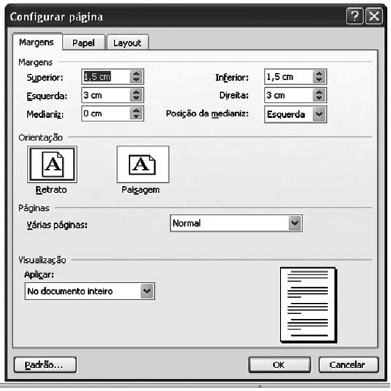
A questão refere-se a suíte Microsoft Office 2003.
Enunciado 310787-1
A figura acima representa a tela do comando Configurar página do Microsoft Word, onde se encontram, entre outras, as opções para ajustes de
 

Provas

Questão presente nas seguintes provas
309330 Ano: 2010
Disciplina: Segurança e Saúde no Trabalho (SST)
Banca: CESGRANRIO
Orgão: BR Distribuidora
Provas:
Ao ser analisada a ocorrência de um incêndio no escritório administrativo do setor de abastecimento de uma unidade produtora de derivados de petróleo, o técnico em segurança do trabalho constatou que o fogo se originou em uma lixeira cheia de papéis. Em seguida, o fogo, descontrolado, se alastrou para a mesa de madeira do chefe do setor, queimando, ainda, o carpete e uma estante, também de madeira, antes de ser combatido e extinto pela Brigada de Incêndio. A partir dessa descrição, conclui-se que se trata de um incêndio
 

Provas

Questão presente nas seguintes provas
308608 Ano: 2010
Disciplina: Informática
Banca: CESGRANRIO
Orgão: BR Distribuidora
Provas:
A questão refere-se a suíte Microsoft Office 2003.
No menu Ferramentas do Microsoft Word, o comando Controlar alterações permite ao usuário
 

Provas

Questão presente nas seguintes provas
301939 Ano: 2010
Disciplina: Segurança Privada e Transportes
Banca: CESGRANRIO
Orgão: BR Distribuidora
Provas:
Quando o transporte de um produto perigoso é feito em embalagens grandes, como recipiente externo, as quais contêm artigos ou recipientes internos, cuja movimentação exige equipamentos mecânicos (como empilhadeira ou grua) e apresenta massa líquida acima de 400 Kg e capacidade volumétrica acima de 450 litros sem exceder 3,0 m³ (metros cúbicos), trata-se da modalidade de transporte classificado como
 

Provas

Questão presente nas seguintes provas
298333 Ano: 2010
Disciplina: Segurança Privada e Transportes
Banca: CESGRANRIO
Orgão: BR Distribuidora
Provas:
Durante uma operação na qual contêineres ou caixas pesadas são movimentadas por um guindaste em direção à carroceria de um equipamento de transporte rodoviário de produtos perigosos,
 

Provas

Questão presente nas seguintes provas
278851 Ano: 2010
Disciplina: Matemática
Banca: CESGRANRIO
Orgão: BR Distribuidora
A cidade de Santos foi escolhida pela Petrobras para ser a “capital do pré-sal”, pois está estrategicamente posicionada na metade do trecho por onde se estende a camada do pré-sal. Dentre outras realizações, serão instalados na cidade três prédios da Petrobras, que ocuparão uma área de 25.000 m2. Se essa área fosse plana e retangular e tivesse 125 m de comprimento, seu perímetro, em metros, seria
 

Provas

Questão presente nas seguintes provas
278593 Ano: 2010
Disciplina: Inglês (Língua Inglesa)
Banca: CESGRANRIO
Orgão: BR Distribuidora
Provas:
Mumbai Joins World-Class Cities to Celebrate “Car Free Day”
Submitted by Erica Schlaikjer on February 24, 2010 THE CITY FIX NEWS
Last Sunday, Mumbai hosted a local event with global importance: Car Free Day. It was the first time the city in India had ever organized such an event, modeled after popular car-free days in other cities, such as Ciclovia in Bogota and Summer Streets in New York City(a). About 140,000 people attended the communitybased activities, which included not only walking and cycling but also yoga, cricket, dancing, skating, kite flying and musical performances. Organizers said the huge turn-out exceeded their expectations.
Now that the city has enjoyed its first taste of vehicle-free people-friendly streets, local residents appear to want more: “We can breathe fresh air now,” one inhabitant said. “We want a car-free day every week.” As other cities have demonstrated, it’s not uncommon for car-free events to spark other sustainable transport projects.
TheCityFix interviewed two of the Mumbai Car Free Day organizers, Seema Tiwari and Madhav Pai, before and after the event, to understand how Mumbai’s firstever Car Free Day made a difference for Mumbaikers and what it means for the global sustainable transport community. Read some excerpts below.
TCF: How does this Sunday’s event compare to other car-free initiatives in cities around the world?
Seema Tiwari: For Mumbai Car Free Day, we carefully reviewed Bogota and New York City’s car-free days. The key difference is that those events are led and funded by the government, whereas in Mumbai, it’s led by an NGO who fundraised with the private sector(b).
In India, the challenge is to get the government to reach an understanding that urban projects are just not “technical” but “socio-technical” in nature(c). Our intention is to bring behavioral change in people to appreciate and use the city’s facilities, rather than rebel against the government’s sustainable transport projects(d).
TCF: What are plans for the future?
Seema Tiwari: There will be an evaluation of the event to note down successes, failures and recommendations. This pilot project will be compiled into a report and submitted to the Ministry of Urban Development and the government.
TCF: Do you think Car Free Day will motivate policymakers to create more bicycle infrastructure in the city?
Madhav Pai: I hope so. There are some initial ideas driven by NGOs, and we’re trying to educate advocacy groups who can push for bicycle improvements. But no plans are being formulated at the government level yet. We hope that if we show decision makers the citizens’ growing interest, they’ll respond.
TCF: What are the most important actions the government and NGOs could take to increase cycling and non-motorized transport in Mumbai?
Madhav Pai: First, there are a lot of people who routinely cycle and walk in Mumbai. 42% of people are walking to work. And a significant number of people who work in the informal sector and who have no other transport alternatives depend on bicycles. The government’s policies must support those people. However, we also want to reach out to potential cyclists(e) who are now commuting by car, in order to shift more people to less-polluting forms of transport.
For both groups, there is one solution: providing cyclists with safe space, including bicycle lanes and parking. This is the most important thing the government can do to increase the viability of the bike as a commuting mode for a wider population, and it must be a focus of their policies.
http://thecityfix.com/mumbai-joins-world-class-cities-to-celebrate-car-free-day/
?utm_source=feedburner&utm_medium=feed utm _ campaign =Feed%3A+ thecityfix%2Fposts+%28THE+CITY+FIX%29, acess on March 1, 2010.
The expression in boldface does NOT express the idea of contrast in
 

Provas

Questão presente nas seguintes provas
278587 Ano: 2010
Disciplina: Inglês (Língua Inglesa)
Banca: CESGRANRIO
Orgão: BR Distribuidora
Provas:
Mumbai Joins World-Class Cities to Celebrate “Car Free Day”
Submitted by Erica Schlaikjer on February 24, 2010 THE CITY FIX NEWS
Last Sunday, Mumbai hosted a local event with global importance: Car Free Day. It was the first time the city in India had ever organized such an event, modeled after popular car-free days in other cities, such as Ciclovia in Bogota and Summer Streets in New York City. About 140,000 people attended the communitybased activities, which included not only walking and cycling but also yoga, cricket, dancing, skating, kite flying and musical performances. Organizers said the huge turn-out exceeded their expectations.
Now that the city has enjoyed its first taste of vehicle-free people-friendly streets, local residents appear to want more: “We can breathe fresh air now,” one inhabitant said. “We want a car-free day every week.” As other cities have demonstrated, it’s not uncommon for car-free events to spark other sustainable transport projects.
TheCityFix interviewed two of the Mumbai Car Free Day organizers, Seema Tiwari and Madhav Pai, before and after the event, to understand how Mumbai’s firstever Car Free Day made a difference for Mumbaikers and what it means for the global sustainable transport community. Read some excerpts below.
TCF: How does this Sunday’s event compare to other car-free initiatives in cities around the world?
Seema Tiwari: For Mumbai Car Free Day, we carefully reviewed Bogota and New York City’s car-free days. The key difference is that those events are led and funded by the government, whereas in Mumbai, it’s led by an NGO who fundraised with the private sector.
In India, the challenge is to get the government to reach an understanding that urban projects are just not “technical” but “socio-technical” in nature. Our intention is to bring behavioral change in people to appreciate and use the city’s facilities, rather than rebel against the government’s sustainable transport projects.
TCF: What are plans for the future?
Seema Tiwari: There will be an evaluation of the event to note down successes, failures and recommendations. This pilot project will be compiled into a report and submitted to the Ministry of Urban Development and the government.
TCF: Do you think Car Free Day will motivate policymakers to create more bicycle infrastructure in the city?
Madhav Pai: I hope so. There are some initial ideas driven by NGOs, and we’re trying to educate advocacy groups who can push for bicycle improvements. But no plans are being formulated at the government level yet. We hope that if we show decision makers the citizens’ growing interest, they’ll respond.
TCF: What are the most important actions the government and NGOs could take to increase cycling and non-motorized transport in Mumbai?
Madhav Pai: First, there are a lot of people who routinely cycle and walk in Mumbai. 42% of people are walking to work. And a significant number of people who work in the informal sector and who have no other transport alternatives depend on bicycles. The government’s policies must support those people. However, we also want to reach out to potential cyclists who are now commuting by car, in order to shift more people to less-polluting forms of transport.
For both groups, there is one solution: providing cyclists with safe space, including bicycle lanes and parking. This is the most important thing the government can do to increase the viability of the bike as a commuting mode for a wider population, and it must be a focus of their policies.
http://thecityfix.com/mumbai-joins-world-class-cities-to-celebrate-car-free-day/
?utm_source=feedburner&utm_medium=feed utm _ campaign =Feed%3A+ thecityfix%2Fposts+%28THE+CITY+FIX%29, acess on March 1, 2010.
The main purpose of this article is to
 

Provas

Questão presente nas seguintes provas
274639 Ano: 2010
Disciplina: Português
Banca: CESGRANRIO
Orgão: BR Distribuidora

Os antigos e a memória

Os antigos gregos consideravam a memória uma entidade sobrenatural ou divina: era a deusa Mnemosyne, mãe das Musas, que protegem as artes e a história. A deusa Memória dava aos poetas e adivinhos o poder de voltar ao passado e de relembrá-lo para a coletividade. Tinha o poder de conferir imortalidade aos mortais, pois, quando o artista ou o historiador registram em suas obras a fisionomia, os gestos, os atos, os feitos e as palavras de um humano, este nunca será esquecido e, por isso, tornando-se memorável, não morrerá jamais.

Os historiadores antigos colocavam suas obras sob a proteção das Musas, escreviam para que não fossem perdidos os feitos memoráveis dos humanos e para que servissem de exemplo às gerações futuras. Dizia Cícero: “A história é mestra da vida”.

A memória é, pois, inseparável do sentimento do tempo ou da percepção/experiência do tempo como algo que escoa ou passa.

A importância da memória não se limitava à poesia e à história, mas também aparecia com muita força e clareza na medicina dos antigos. Um aforismo, atribuído a Hipócrates, o pai da medicina, dizia:

A vida é breve, a arte é longa, a ocasião é fugidia, a experiência é traidora e o julgamento é difícil. O médico precisa estar sempre atento não só para fazer o que convém, mas também para conseguir a cooperação do paciente.

Qual a ajuda ou cooperação trazida pelo paciente ao médico? Sua memória. O médico antigo praticava com o paciente a anamnese, isto é, a reminiscência. Por meio de perguntas, fazia o paciente lembrar-se de todas as circunstâncias que antecederam o momento em que ficara doente e as circunstâncias em que adoecera, pois essas lembranças auxiliavam o médico a fazer o diagnóstico e a receitar remédios, cirurgias e dietas que correspondiam à necessidade específica da cura do paciente.

CHAUÍ, M. Convite à Filosofia. São Paulo: Ática, 2008, p. 138-139.

Que sentença apresenta ERRO de concordância, de acordo com a norma padrão?


Provas

Questão presente nas seguintes provas