Foram encontradas 50 questões.
231878
Ano: 2010
Disciplina: Segurança Privada e Transportes
Banca: CESGRANRIO
Orgão: BR Distribuidora
Disciplina: Segurança Privada e Transportes
Banca: CESGRANRIO
Orgão: BR Distribuidora
Provas:
O condutor de um equipamento de transporte de combustível líquido, ao transitar em áreas internas da unidade produtora onde foi carregar seu caminhão,
Provas
Questão presente nas seguintes provas

225883
Ano: 2010
Disciplina: Segurança e Saúde no Trabalho (SST)
Banca: CESGRANRIO
Orgão: BR Distribuidora
Disciplina: Segurança e Saúde no Trabalho (SST)
Banca: CESGRANRIO
Orgão: BR Distribuidora
Provas:
Há algumas restrições ao uso da água como agente extintor em algumas situações de incêndio envolvendo líquidos inflamáveis e combustíveis. Nessa situação, o meio de se buscar extinguir o fogo é a utilização de
Provas
Questão presente nas seguintes provas
225261
Ano: 2010
Disciplina: Inglês (Língua Inglesa)
Banca: CESGRANRIO
Orgão: BR Distribuidora
Disciplina: Inglês (Língua Inglesa)
Banca: CESGRANRIO
Orgão: BR Distribuidora
Provas:
Mumbai Joins World-Class Cities to Celebrate “Car Free Day”
Submitted by Erica Schlaikjer on February 24, 2010 THE CITY FIX NEWS
Last Sunday, Mumbai hosted a local event with global importance: Car Free Day. It was the first time the city in India had ever organized such an event, modeled after popular car-free days in other cities, such as Ciclovia in Bogota and Summer Streets in New York City. About 140,000 people attended the communitybased activities, which included not only walking and cycling but also yoga, cricket, dancing, skating, kite flying and musical performances. Organizers said the huge turn-out exceeded their expectations.
Now that the city has enjoyed its first taste of vehicle-free people-friendly streets, local residents appear to want more: “We can breathe fresh air now,” one inhabitant said. “We want a car-free day every week.” As other cities have demonstrated, it’s not uncommon for car-free events to spark other sustainable transport projects.
TheCityFix interviewed two of the Mumbai Car Free Day organizers, Seema Tiwari and Madhav Pai, before and after the event, to understand how Mumbai’s firstever Car Free Day made a difference for Mumbaikers and what it means for the global sustainable transport community. Read some excerpts below.
TCF: How does this Sunday’s event compare to other car-free initiatives in cities around the world?
Seema Tiwari: For Mumbai Car Free Day, we carefully reviewed Bogota and New York City’s car-free days. The key difference is that those events are led and funded by the government, whereas in Mumbai, it’s led by an NGO who fundraised with the private sector.
In India, the challenge is to get the government to reach an understanding that urban projects are just not “technical” but “socio-technical” in nature. Our intention is to bring behavioral change in people to appreciate and use the city’s facilities, rather than rebel against the government’s sustainable transport projects.
TCF: What are plans for the future?
Seema Tiwari: There will be an evaluation of the event to note down successes, failures and recommendations. This pilot project will be compiled into a report and submitted to the Ministry of Urban Development and the government.
TCF: Do you think Car Free Day will motivate policymakers to create more bicycle infrastructure in the city?
Madhav Pai: I hope so. There are some initial ideas driven by NGOs, and we’re trying to educate advocacy groups who can push for bicycle improvements. But no plans are being formulated at the government level yet. We hope that if we show decision makers the citizens’ growing interest, they’ll respond.
TCF: What are the most important actions the government and NGOs could take to increase cycling and non-motorized transport in Mumbai?
Madhav Pai: First, there are a lot of people who routinely cycle and walk in Mumbai. 42% of people are walking to work. And a significant number of people who work in the informal sector and who have no other transport alternatives depend on bicycles. The government’s policies must support those people. However, we also want to reach out to potential cyclists who are now commuting by car, in order to shift more people to less-polluting forms of transport.
For both groups, there is one solution: providing cyclists with safe space, including bicycle lanes and parking. This is the most important thing the government can do to increase the viability of the bike as a commuting mode for a wider population, and it must be a focus of their policies.
http://thecityfix.com/mumbai-joins-world-class-cities-to-celebrate-car-free-day/
?utm_source=feedburner&utm_medium=feed utm _ campaign =Feed%3A+ thecityfix%2Fposts+%28THE+CITY+FIX%29, acess on March 1, 2010.
Madhav Pai says that Mumbai authorities should
Provas
Questão presente nas seguintes provas
223056
Ano: 2010
Disciplina: Segurança Privada e Transportes
Banca: CESGRANRIO
Orgão: BR Distribuidora
Disciplina: Segurança Privada e Transportes
Banca: CESGRANRIO
Orgão: BR Distribuidora
Provas:
Ao conduzir o equipamento de transporte de gasolina pelas ruas internas da unidade produtora de combustíveis, o motorista deverá
Provas
Questão presente nas seguintes provas
221140
Ano: 2010
Disciplina: Segurança e Saúde no Trabalho (SST)
Banca: CESGRANRIO
Orgão: BR Distribuidora
Disciplina: Segurança e Saúde no Trabalho (SST)
Banca: CESGRANRIO
Orgão: BR Distribuidora
Provas:
O técnico em abastecimento estava digitando um relatório no computador da sala do encarregado do setor quando sentiu um cheiro de coisa queimada e percebeu estar saindo fumaça da parte de trás do computador. Em seguida, observou haver uma pequena chama naquela parte da máquina. Trata-se de um princípio de incêndio e a atitude correta, diante dessa situação, é
Provas
Questão presente nas seguintes provas
A questão refere-se a suíte Microsoft Office 2003.
Observe a figura a seguir de uma planilha do Microsoft Excel.
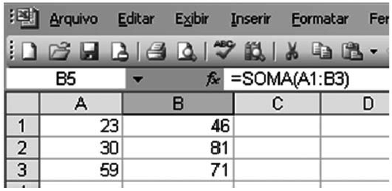
Qual dos valores abaixo representa o resultado da fórmula inserida na célula B5?
Provas
Questão presente nas seguintes provas
214826
Ano: 2010
Disciplina: Segurança Privada e Transportes
Banca: CESGRANRIO
Orgão: BR Distribuidora
Disciplina: Segurança Privada e Transportes
Banca: CESGRANRIO
Orgão: BR Distribuidora
Provas:
Durante a transferência de gasolina para um caminhão-tanque, o técnico de abastecimento observou haver um vazamento deste combustível na área de operações. De acordo com o horário de trabalho, eram os minutos finais de sua jornada. O técnico interrompeu o carregamento, afastou-se do local e dirigiu-se ao vestiário preparando-se para ir para casa antes que acontecesse algum incêndio ou explosão. Nenhuma outra atitude foi tomada por ele; afinal, o pessoal do próximo turno já estava na área. Esse técnico
Provas
Questão presente nas seguintes provas
204539
Ano: 2010
Disciplina: Segurança e Saúde no Trabalho (SST)
Banca: CESGRANRIO
Orgão: BR Distribuidora
Disciplina: Segurança e Saúde no Trabalho (SST)
Banca: CESGRANRIO
Orgão: BR Distribuidora
Provas:
Alguns tipos de princípio de incêndio indicam o pó químico como o melhor agente extintor a ser utilizado. No caso do princípio de incêndio em líquidos e gases combustíveis, o pó químico
Provas
Questão presente nas seguintes provas
197380
Ano: 2010
Disciplina: Segurança Privada e Transportes
Banca: CESGRANRIO
Orgão: BR Distribuidora
Disciplina: Segurança Privada e Transportes
Banca: CESGRANRIO
Orgão: BR Distribuidora
Provas:
De acordo com a regulamentação do transporte rodoviário de produtos perigosos, todo o pessoal envolvido nas operações de carregamento, descarregamento e transbordo de produtos perigosos usará traje e equipamento de proteção individual, conforme normas do Ministério do Trabalho e Emprego. No entanto,
Provas
Questão presente nas seguintes provas
197352
Ano: 2010
Disciplina: Segurança e Saúde no Trabalho (SST)
Banca: CESGRANRIO
Orgão: BR Distribuidora
Disciplina: Segurança e Saúde no Trabalho (SST)
Banca: CESGRANRIO
Orgão: BR Distribuidora
Provas:
O operador de abastecimento de uma unidade industrial, produtora de derivados de petróleo, recebe treinamento periódico. Nesses treinamentos, na opinião deste trabalhador, raramente são transmitidas novidades. Por ser um sujeito curioso, acaba por se irritar com a repetitividade dos temas abordados, deixando de sensibilizar-se com as mensagens prevencionistas transmitidas pelo instrutor. Após algum tempo na empresa, entendiado, o operador passa a tomar a iniciativa de improvisar ferramentas e utilizar equipamentos não adequados, em frequente desacordo com as normas de trabalho. Analisando esse comportamento, verifica-se que o operador
Provas
Questão presente nas seguintes provas
Cadernos
Caderno Container