Foram encontradas 80 questões.
A distrofia muscular de Duchenne é uma patologia condicionada por um gene recessivo ligado ao sexo.
Com base nos conhecimentos sobre genética, pode ser afirmado que
Provas

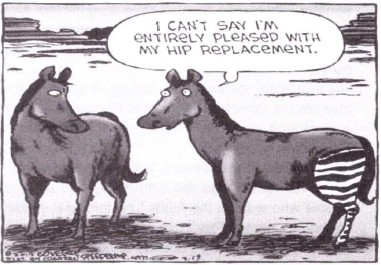
Disponível em: <https://quotesgram.com/quotes-funny-horse-cartoon/>. Acesso em: 29 nov. 2022.
According to the cartoon, it is correct to say that
Provas
Disponível em: <https://quotesgram.com/quotes-funny-horse-cartoon/>. Acesso em: 29 nov. 2022.
According to the cartoon, you can infer that
Provas
Colombia Allows Congress Members To Get Pets To Work, Senator Brings Horse
Alirio Barrera first rode through the capital Bogota before steering his steed into the halls of Congress, to make a statement about the importance of horses for the Colombian countryside.
World NewsAgence France-PresseUpdated: September 29, 2022 7:19 am IST
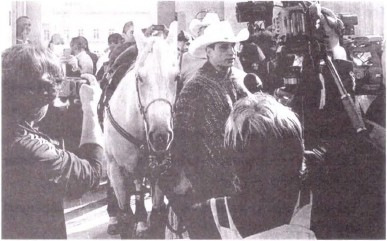
Colombia: Members of Colombia's Congress can now bring their pets to work, in a world first, and for one senator, wild horses couldn't have dragged him away from marking the first day of the new rule.
Alirio Barrera showed up to work astride his white horse.
He first rode through the capital Bogota before steering his steed into the halls of Congress, to make a statement about the importance of horses for the Colombian countryside.
"lt is a tribute to the farmers, to the men and women, to the herdsmen who live with horses. To all those people who work in the fields," he told AFP, holding his horse - named Pasaporte - by the bridle.
Senate president Roy Barreras announced the new policy last week, with his dog lounging in his lap. This makes the Colombian Congress "the first in the world to be pet-friendly," he said.
For Barrera, "my pet is my horse." "lf the law is for one, let it be for all."
But his ride to work rubbed some colleagues the wrong way. Senator Andrea Padilla criticized what she called "an immature attitude with which he wanted to ridicule a good decision."
Disponível em: <https://www.ndtv.com/world-news/colombia-allows-congress-members-to-get-pets-to-work-senator-brings-horse-3387192>. Acesso em: 24 nov. 2022.
The text let us know that
Provas
Colombia Allows Congress Members To Get Pets To Work, Senator Brings Horse
Alirio Barrera first rode through the capital Bogota before steering his steed into the halls of Congress, to make a statement about the importance of horses for the Colombian countryside.
World NewsAgence France-PresseUpdated: September 29, 2022 7:19 am IST
Colombia: Members of Colombia's Congress can now bring their pets to work, in a world first, and for one senator, wild horses couldn't have dragged him away from marking the first day of the new rule.
Alirio Barrera showed up to work astride his white horse.
He first rode through the capital Bogota before steering his steed into the halls of Congress, to make a statement about the importance of horses for the Colombian countryside.
"lt is a tribute to the farmers, to the men and women, to the herdsmen who live with horses. To all those people who work in the fields," he told AFP, holding his horse - named Pasaporte - by the bridle.
Senate president Roy Barreras announced the new policy last week, with his dog lounging in his lap. This makes the Colombian Congress "the first in the world to be pet-friendly," he said.
For Barrera, "my pet is my horse." "lf the law is for one, let it be for all."
But his ride to work rubbed some colleagues the wrong way. Senator Andrea Padilla criticized what she called "an immature attitude with which he wanted to ridicule a good decision."
Disponível em: <https://www.ndtv.com/world-news/colombia-allows-congress-members-to-get-pets-to-work-senator-brings-horse-3387192>. Acesso em: 24 nov. 2022.
According to the text, it is correct to say that
Provas
'Good boy!': How police dogs are trained to sniff out drugs, explosives or find missing people
Police K-9 dogs help officers at the frontline, and have been involved in about 100 successful cases annually over the past three years. Get a glimpse into what the training process is like for these dogs.
Play Video
02:00 Min
Police K-9 dogs help officers at the frontline, and have been involved in about 100 successful cases annually over the past three years. Neo Rong Wei takes a look at how they are trained.
Cheryl Lin
27 Mar 2022 06:00PM (Updated: 27 Mar 2022 11:53PM)
SINGAPORE: Scampering alonga luggage conveyor belt, two-year-old narcotics detection dog Inca is hard at work, sniffing bag after bag.
Abruptly, the labrador retriever freezes -with his snout hovering right above a red suitcase.
lt's a signal to his trainer: They've found what they're looking for. lnside the bag is a small 30g pack of drugs, wrapped in layers of plastic.
His handler, Sergeant Aloysius Ho, responds with praise: "Goooood boy!" He also brandishes a yellow rubber bali - lnca's reward for a job well done.
The dog wastes no time, chewing excitedly on his bounty before starting up a game of fetch with his handler.
lt's an example of the positive reinforcement the Police K-9 unit uses to train their dogs, rewarding them with the bali for desired behaviors.
"The reward will make the dogs more likely to repeat such behaviors that will help its handlers achieve the mission," said the police.
Besides training pups like Inca to sniff out narcotics, the Police K-9 unit - which has about 240 working dogs - also trains them to find explosives , track suspects or missing persons, or help with patrols and security coverage.
The unit has had about 100 successful cases every year over the past three years, the police said.
Dash, a five-year-old black labrador retriever, was the star of one such case.
ln October 2020, the police were alerted after a man was found unresponsive in a car along Bukit Timah Road.
Dash detected something below the driver's seat and arm rest area.
This helped uncover 31 bags of a "brownish powdery substance" and a bag of a "crystallized substance", all believed to be controlled drugs, the police said.
At a media visit to the K-9 center in Choa Chu Kang, Dash makes another appearance - this time, identifying someone carrying drugs from a row of four people.
A large fan blows from behind them , amplifying their scent. This set up is similar to ones used at Woodlands and Tuas Checkpoints.
Soon, she homes in on a suspect, pounces against a metal grille separating them to get a deeper whiff, and then starts gnawing at it.
She has found the person carrying the drugs - drawing praise and pats from her handler, Sergeant Choi Jia Wen.
ln another training room, Koby, an energetic two-yearold English springer spaniel, is looking for explosives. Slightly nervous, the dog needs some coaxing from his handler, Station lnspector See Toh Wai Leng.
After zipping between stacks of crates, he stops at a red box on a low shelf. Staring at it dead-on, he taps his front paws repeatedly, as if to signal: "Here!"
To get to this stage, officers must undergo at least 12 weeks of training to become proficient in the basics of handling a workíng dog . The dogs too undergo 12 weeks of training before they are ready for deployment.
The training process is criticai, said Supenntendent of Police Tan Khoon Seng, who is the unit's operations officer.
"(lt) is incredibly important because it strengthens the bond between the handler and the dog under his or her charge. This, in turn , translates to higher operational effectiveness at the frontline."
Once in deployment, the dogs are trained for about 15 minutes to an hour per day.
Disponível em. <https.//www.channelnewsasia.com/singapore/police-dogs-k9-unit-training-drugs-explosives-2583391>. Acesso em: 24 nov. 2022.
She has found the person carrying the drugs - drawing praise and pats from her handler, Sergeant Choi Jia Wen.
Analysing lhe sentence, you can affirm that
Provas
'Good boy!': How police dogs are trained to sniff out drugs, explosives or find missing people
Police K-9 dogs help officers at the frontline, and have been involved in about 100 successful cases annually over the past three years. Get a glimpse into what the training process is like for these dogs.
Play Video
02:00 Min
Police K-9 dogs help officers at the frontline, and have been involved in about 100 successful cases annually over the past three years. Neo Rong Wei takes a look at how they are trained.
Cheryl Lin
27 Mar 2022 06:00PM (Updated: 27 Mar 2022 11:53PM)
SINGAPORE: Scampering alonga luggage conveyor belt, two-year-old narcotics detection dog Inca is hard at work, sniffing bag after bag.
Abruptly, the labrador retriever freezes -with his snout hovering right above a red suitcase.
lt's a signal to his trainer: They've found what they're looking for. lnside the bag is a small 30g pack of drugs, wrapped in layers of plastic.
His handler, Sergeant Aloysius Ho, responds with praise: "Goooood boy!" He also brandishes a yellow rubber bali - lnca's reward for a job well done.
The dog wastes no time, chewing excitedly on his bounty before starting up a game of fetch with his handler.
lt's an example of the positive reinforcement the Police K-9 unit uses to train their dogs, rewarding them with the bali for desired behaviors.
"The reward will make the dogs more likely to repeat such behaviors that will help its handlers achieve the mission," said the police.
Besides training pups like Inca to sniff out narcotics, the Police K-9 unit - which has about 240 working dogs - also trains them to find explosives , track suspects or missing persons, or help with patrols and security coverage.
The unit has had about 100 successful cases every year over the past three years, the police said.
Dash, a five-year-old black labrador retriever, was the star of one such case.
ln October 2020, the police were alerted after a man was found unresponsive in a car along Bukit Timah Road.
Dash detected something below the driver's seat and arm rest area.
This helped uncover 31 bags of a "brownish powdery substance" and a bag of a "crystallized substance", all believed to be controlled drugs, the police said.
At a media visit to the K-9 center in Choa Chu Kang, Dash makes another appearance - this time, identifying someone carrying drugs from a row of four people.
A large fan blows from behind them , amplifying their scent. This set up is similar to ones used at Woodlands and Tuas Checkpoints.
Soon, she homes in on a suspect, pounces against a metal grille separating them to get a deeper whiff, and then starts gnawing at it.
She has found the person carrying the drugs - drawing praise and pats from her handler, Sergeant Choi Jia Wen.
ln another training room, Koby, an energetic two-yearold English springer spaniel, is looking for explosives. Slightly nervous, the dog needs some coaxing from his handler, Station lnspector See Toh Wai Leng.
After zipping between stacks of crates, he stops at a red box on a low shelf. Staring at it dead-on, he taps his front paws repeatedly, as if to signal: "Here!"
To get to this stage, officers must undergo at least 12 weeks of training to become proficient in the basics of handling a workíng dog . The dogs too undergo 12 weeks of training before they are ready for deployment.
The training process is criticai, said Supenntendent of Police Tan Khoon Seng, who is the unit's operations officer.
"(lt) is incredibly important because it strengthens the bond between the handler and the dog under his or her charge. This, in turn , translates to higher operational effectiveness at the frontline."
Once in deployment, the dogs are trained for about 15 minutes to an hour per day.
Disponível em. <https.//www.channelnewsasia.com/singapore/police-dogs-k9-unit-training-drugs-explosives-2583391>. Acesso em: 24 nov. 2022.
After zipping between stacks of crates, he stops ata red box on a low shelf. Staring at it dead-on, he taps his front paws repeatedly, as if to signal: "Here!"
About the sentence below, it is true to say that
Provas
'Good boy!': How police dogs are trained to sniff out drugs, explosives or find missing people
Police K-9 dogs help officers at the frontline, and have been involved in about 100 successful cases annually over the past three years. Get a glimpse into what the training process is like for these dogs.
Play Video
02:00 Min
Police K-9 dogs help officers at the frontline, and have been involved in about 100 successful cases annually over the past three years. Neo Rong Wei takes a look at how they are trained.
Cheryl Lin
27 Mar 2022 06:00PM (Updated: 27 Mar 2022 11:53PM)
SINGAPORE: Scampering alonga luggage conveyor belt, two-year-old narcotics detection dog Inca is hard at work, sniffing bag after bag.
Abruptly, the labrador retriever freezes -with his snout hovering right above a red suitcase.
lt's a signal to his trainer: They've found what they're looking for. lnside the bag is a small 30g pack of drugs, wrapped in layers of plastic.
His handler, Sergeant Aloysius Ho, responds with praise: "Goooood boy!" He also brandishes a yellow rubber bali - lnca's reward for a job well done.
The dog wastes no time, chewing excitedly on his bounty before starting up a game of fetch with his handler.
lt's an example of the positive reinforcement the Police K-9 unit uses to train their dogs, rewarding them with the bali for desired behaviors.
"The reward will make the dogs more likely to repeat such behaviors that will help its handlers achieve the mission," said the police.
Besides training pups like Inca to sniff out narcotics, the Police K-9 unit - which has about 240 working dogs - also trains them to find explosives , track suspects or missing persons, or help with patrols and security coverage.
The unit has had about 100 successful cases every year over the past three years, the police said.
Dash, a five-year-old black labrador retriever, was the star of one such case.
ln October 2020, the police were alerted after a man was found unresponsive in a car along Bukit Timah Road.
Dash detected something below the driver's seat and arm rest area.
This helped uncover 31 bags of a "brownish powdery substance" and a bag of a "crystallized substance", all believed to be controlled drugs, the police said.
At a media visit to the K-9 center in Choa Chu Kang, Dash makes another appearance - this time, identifying someone carrying drugs from a row of four people.
A large fan blows from behind them , amplifying their scent. This set up is similar to ones used at Woodlands and Tuas Checkpoints.
Soon, she homes in on a suspect, pounces against a metal grille separating them to get a deeper whiff, and then starts gnawing at it.
She has found the person carrying the drugs - drawing praise and pats from her handler, Sergeant Choi Jia Wen.
ln another training room, Koby, an energetic two-yearold English springer spaniel, is looking for explosives. Slightly nervous, the dog needs some coaxing from his handler, Station lnspector See Toh Wai Leng.
After zipping between stacks of crates, he stops at a red box on a low shelf. Staring at it dead-on, he taps his front paws repeatedly, as if to signal: "Here!"
To get to this stage, officers must undergo at least 12 weeks of training to become proficient in the basics of handling a workíng dog . The dogs too undergo 12 weeks of training before they are ready for deployment.
The training process is criticai, said Supenntendent of Police Tan Khoon Seng, who is the unit's operations officer.
"(lt) is incredibly important because it strengthens the bond between the handler and the dog under his or her charge. This, in turn , translates to higher operational effectiveness at the frontline."
Once in deployment, the dogs are trained for about 15 minutes to an hour per day.
Disponível em. <https.//www.channelnewsasia.com/singapore/police-dogs-k9-unit-training-drugs-explosives-2583391>. Acesso em: 24 nov. 2022.
Based on the text, it is correct to state that
Provas
'Good boy!': How police dogs are trained to sniff out drugs, explosives or find missing people
Police K-9 dogs help officers at the frontline, and have been involved in about 100 successful cases annually over the past three years. Get a glimpse into what the training process is like for these dogs.
Play Video
02:00 Min
Police K-9 dogs help officers at the frontline, and have been involved in about 100 successful cases annually over the past three years. Neo Rong Wei takes a look at how they are trained.
Cheryl Lin
27 Mar 2022 06:00PM (Updated: 27 Mar 2022 11:53PM)
SINGAPORE: Scampering alonga luggage conveyor belt, two-year-old narcotics detection dog Inca is hard at work, sniffing bag after bag.
Abruptly, the labrador retriever freezes -with his snout hovering right above a red suitcase.
lt's a signal to his trainer: They've found what they're looking for. lnside the bag is a small 30g pack of drugs, wrapped in layers of plastic.
His handler, Sergeant Aloysius Ho, responds with praise: "Goooood boy!" He also brandishes a yellow rubber bali - lnca's reward for a job well done.
The dog wastes no time, chewing excitedly on his bounty before starting up a game of fetch with his handler.
lt's an example of the positive reinforcement the Police K-9 unit uses to train their dogs, rewarding them with the bali for desired behaviors.
"The reward will make the dogs more likely to repeat such behaviors that will help its handlers achieve the mission," said the police.
Besides training pups like Inca to sniff out narcotics, the Police K-9 unit - which has about 240 working dogs - also trains them to find explosives , track suspects or missing persons, or help with patrols and security coverage.
The unit has had about 100 successful cases every year over the past three years, the police said.
Dash, a five-year-old black labrador retriever, was the star of one such case.
ln October 2020, the police were alerted after a man was found unresponsive in a car along Bukit Timah Road.
Dash detected something below the driver's seat and arm rest area.
This helped uncover 31 bags of a "brownish powdery substance" and a bag of a "crystallized substance", all believed to be controlled drugs, the police said.
At a media visit to the K-9 center in Choa Chu Kang, Dash makes another appearance - this time, identifying someone carrying drugs from a row of four people.
A large fan blows from behind them , amplifying their scent. This set up is similar to ones used at Woodlands and Tuas Checkpoints.
Soon, she homes in on a suspect, pounces against a metal grille separating them to get a deeper whiff, and then starts gnawing at it.
She has found the person carrying the drugs - drawing praise and pats from her handler, Sergeant Choi Jia Wen.
ln another training room, Koby, an energetic two-yearold English springer spaniel, is looking for explosives. Slightly nervous, the dog needs some coaxing from his handler, Station lnspector See Toh Wai Leng.
After zipping between stacks of crates, he stops at a red box on a low shelf. Staring at it dead-on, he taps his front paws repeatedly, as if to signal: "Here!"
To get to this stage, officers must undergo at least 12 weeks of training to become proficient in the basics of handling a workíng dog . The dogs too undergo 12 weeks of training before they are ready for deployment.
The training process is criticai, said Supenntendent of Police Tan Khoon Seng, who is the unit's operations officer.
"(lt) is incredibly important because it strengthens the bond between the handler and the dog under his or her charge. This, in turn , translates to higher operational effectiveness at the frontline."
Once in deployment, the dogs are trained for about 15 minutes to an hour per day.
Disponível em. <https.//www.channelnewsasia.com/singapore/police-dogs-k9-unit-training-drugs-explosives-2583391>. Acesso em: 24 nov. 2022.
According to lhe text, it is correct to say that
Provas

O triângulo em destaque foi construído colocando-se 1 nos lados. Os demais números são encontrados somando os dois números imediatamente acima deles. Considere que a primeira linha corresponde ao binômio do tipo (x + y)0, a segunda linha corresponde ao binômio do tipo (x + y)1 e assim sucessivamente.
Assim, o sexto termo do desenvolvimento do binômio (x + 2)7, considerando-se a que o x é o 1º termo e o 2 é o 2º termo desse binômio, é o monômio:
Provas
Caderno Container