Foram encontradas 49 questões.
Nesse sentido, sobre as estratégicas genéricas, constata-se que a
Provas

Verifica-se que as organizações orgânicas apresentam um(a)
Provas
Considerando-se a sequência de implicações lógicas acima apresentadas textualmente, se Carlos almoçou em casa hoje, então hoje
Provas
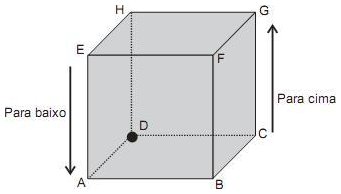
Se o elevador estiver inicialmente sobre o vértice D e receber as ordens “para a direita”, “para cima”, “para a esquerda”, “para a esquerda”, “para baixo”, “para direita”, “para direita” e “para a direita”, ele não passará pelo vértice
Provas
O oponente dispõe suas tentativas (senhas formadas por cinco letras) sobre o tabuleiro, e o jogador que criou a senha secreta deve informar se as letras da tentativa fazem parte da senha e se estão na posição certa através de pinos brancos e pretos. Uma letra que consta na tentativa do oponente recebe um pino branco quando ela pertence à senha secreta, mas sua posição não está correta; recebe um pino preto quando pertence à senha e sua posição está correta. Letras que não pertencem à senha não são qualificadas por pinos. Cada letra da senha secreta que constar na tentativa do oponente deverá ser qualificada por apenas um pino, branco ou preto. O exemplo da figura mostra uma tentativa do oponente que obteve como informação 1 pino preto (Letra S na posição correta) e 3 pinos brancos (Letras S, N e M em posições erradas).
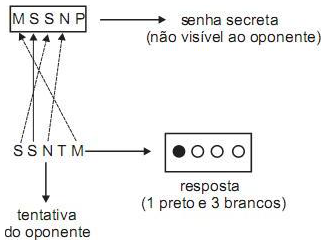
Se a senha secreta for MNMMP e o oponente tentar uma senha usando essas mesmas 5 letras, mas não necessariamente na mesma ordem, qual será o maior número de pinos brancos que ele poderá receber na informação (resposta)?
Provas
Disciplina: Administração Financeira e Orçamentária
Banca: CESGRANRIO
Orgão: CHESF
Tendo em vista essa definição, verifica-se que o orçamento flexível consiste, primordialmente, no(na):
Provas
Water Wars May Lie Ahead
By Neena Rai
June 29, 2011, 9:20 AM GMT
There is a famous Chinese proverb that warns “not only can water float a boat, it can sink it also.”
And with global water shortages on the horizon, climate change supporters say an extreme response will be needed from international governments to stem the potential for conflict it will create around the world.
Professor Patricia Wouters at the IHP-HELP Centre for water law, policy and science at University of Dundee, said the world could face a future of “water wars” as deterioration in climatic patterns and global population growth leave people struggling to stake their claim to the natural resource.
The World Bank in a report said that 1.4 million people could be facing water scarcity by 2025. But the Organization for Economic Co-operation and Development (OECD) forecast is even more gloomy. It estimates that 47% of the world’s population could face water stress in the same period – equivalent to more than three billion people.
The issue isn’t restricted to countries that typically see temperatures soar, such as Cyprus, which in 2009 was forced to import water in tankers and ration its use. Northern hemisphere nations like the U.K. are also finding themselves in the midst of a drought in some regions, forcing governments to start to take action. The U.K. government, for instance, plans to issue a Water White Paper this December that will focus on the future challenges facing the water industry and measures to increase protection of river flows during summer months.
Parts of the U.K. are currently marked as having drought status and other areas of the country are deemed to be at risk of drought. The U.K.’s Department for Environment Food and Rural Affairs held a second drought summit Monday, at which Secretary of State Caroline Spelman warned the prospect of a dry summer and dry winter could have a serious impact on the country’s water reserves.
“We’re going to keep working with farmers, water companies and environmental groups to minimize the impacts of drought, because this year is sign of things to come,” she said. “The climate is changing and these extreme weather events will become more common. How we deal with that problem will be one of the key parts of our Water White Paper, which will be published later this year.”
This may be a far cry from a declaration of war on other more water-abundant nations, but reaching this stage in some countries isn’t beyond the realms of imagination. Egypt and Ethiopia have been battling the issue for the share of the Nile’s water reserves, and Israel – already fighting Palestine for territory that includes precious water reserves – has started to charge the agricultural sector high rates for using the resource.
Even in the U.K., the armed forces are being prepared for potential conflicts over water.
Professor Wouters said that military plans are being prepared on a 30-year horizon, but that the water security topic had somewhat fallen off the table since the financial crisis. Portugal and Spain are facing serious water scarcity issues but the agricultural sector there is having to shout loudly for its voice to be heard above the noise of the countries’ current financial woes.
Maybe Israel’s entrepreneurial approach to the issue is the way forward. Nevertheless, the fact remains that water scarcity is now firmly on the agenda of the world’s governments, and isn’t going to vanish overnight.
Available at:<www.http://blogs.wsj.com/source/2011/06/29/water-wars-may-lie-ahead/>. Retrieved on: March 11, 2012.
The author’s main purpose in the text is to
Provas
Water Wars May Lie Ahead
By Neena Rai
June 29, 2011, 9:20 AM GMT
There is a famous Chinese proverb that warns “not only can water float a boat, it can sink it also.”
And with global water shortages on the horizon, climate change supporters say an extreme response will be needed from international governments to stem the potential for conflict it will create around the world.
Professor Patricia Wouters at the IHP-HELP Centre for water law, policy and science at University of Dundee, said the world could face a future of “water wars” as deterioration in climatic patterns and global population growth leave people struggling to stake their claim to the natural resource.
The World Bank in a report said that 1.4 million people could be facing water scarcity by 2025. But the Organization for Economic Co-operation and Development (OECD) forecast is even more gloomy. It estimates that 47% of the world’s population could face water stress in the same period – equivalent to more than three billion people.
The issue isn’t restricted to countries that typically see temperatures soar, such as Cyprus, which in 2009 was forced to import water in tankers and ration its use. Northern hemisphere nations like the U.K. are also finding themselves in the midst of a drought in some regions, forcing governments to start to take action. The U.K. government, for instance, plans to issue a Water White Paper this December that will focus on the future challenges facing the water industry and measures to increase protection of river flows during summer months.
Parts of the U.K. are currently marked as having drought status and other areas of the country are deemed to be at risk of drought. The U.K.’s Department for Environment Food and Rural Affairs held a second drought summit Monday, at which Secretary of State Caroline Spelman warned the prospect of a dry summer and dry winter could have a serious impact on the country’s water reserves.
“We’re going to keep working with farmers, water companies and environmental groups to minimize the impacts of drought, because this year is sign of things to come,” she said. “The climate is changing and these extreme weather events will become more common. How we deal with that problem will be one of the key parts of our Water White Paper, which will be published later this year.”
This may be a far cry from a declaration of war on other more water-abundant nations, but reaching this stage in some countries isn’t beyond the realms of imagination. Egypt and Ethiopia have been battling the issue for the share of the Nile’s water reserves, and Israel – already fighting Palestine for territory that includes precious water reserves – has started to charge the agricultural sector high rates for using the resource.
Even in the U.K., the armed forces are being prepared for potential conflicts over water.
Professor Wouters said that military plans are being prepared on a 30-year horizon, but that the water security topic had somewhat fallen off the table since the financial crisis. Portugal and Spain are facing serious water scarcity issues but the agricultural sector there is having to shout loudly for its voice to be heard above the noise of the countries’ current financial woes.
Maybe Israel’s entrepreneurial approach to the issue is the way forward. Nevertheless, the fact remains that water scarcity is now firmly on the agenda of the world’s governments, and isn’t going to vanish overnight.
Available at:<www.http://blogs.wsj.com/source/2011/06/29/water-wars-may-lie-ahead/>. Retrieved on: March 11, 2012.
In the text, the excerpt, “the world could face a future of “water wars” ”, the verb form in bold expresses the idea of
Provas
A marca linguística que revela essas situações comuns ao narrador e aos leitores é o emprego de
Provas
O sumiço do pen drive
Houve época em que a força bruta era poder. Houve uma época em que a riqueza era poder. Hoje, informação é poder. Quanto mais somos informados [...], mais poderosos somos, ao menos teoricamente. Daí esta avalanche, este tsunami de informações. [A] A cotação do dólar, a taxa de inflação, o número de casos de determinada doença, candidatos dos vários partidos, a escalação de times de futebol – nomes e números em profusão, que nos chegam por jornais, revistas, livros, filmes, noticiários de rádio, internet, e que tratamos de armazenar em nossa mente.
Aí surge o problema: para armazenar a informação, a natureza nos deu um cérebro, que é a sede da memória. E nessa memória queremos enfiar o máximo possível de informações. Diferente da memória do computador, porém, a nossa é governada por fatores que nada têm a ver com a informática. O estado de nossas células cerebrais, as nossas emoções; tudo isso pode representar uma limitação para nossa capacidade de lembrar. [B] [...]
Felizmente a tecnologia tem vindo em nosso auxílio. Primeiro foi o computador propriamente dito, com sua memória cada vez maior; depois, vieram os dispositivos de armazenamento, os CDs, os pen drives. Coisa incrível, o pen drive: um pequeno objeto no qual cabe uma existência, ou pelo menos uma importante parte dela. Para quem, como eu, viaja bastante e tem de trabalhar em aviões ou em hotéis, é um recurso precioso. [C] [...]
[...] ao chegar ao aeroporto, meti a mão no bolso para dali retirar o pen drive. Mas não encontrei pen drive algum. [D] Encontrei um buraco, verdade que pequeno, mas de tamanho suficiente para dar passagem (ou para dar a liberdade?) ao pen drive. Que tinha caído por ali.
Um transtorno, portanto. Perguntei no aeroporto, entrei em contato com o táxi que me trouxera, liguei para casa: nada. [E] O pen drive tinha mesmo sumido. O buraco da camisa era, portanto, um buraco negro, aqueles orifícios do universo em que toda a energia é sugada e some. [...] De repente eu me dava conta de como nossa existência é frágil, de como somos governados pelo acaso e pelo imprevisto. Nenhuma queixa contra o pen drive, que veio para ficar; aliás, meu palpite é que, no dia do Juízo Final, cada um de nós vai inserir o pen drive de sua vida no Grande Computador Celestial. Virtudes e pecados serão instantaneamente cotejados, e o destino final, Céu ou Inferno, decidido de imediato. Pergunta: o que acontecerá com aqueles que, por causa de um buraco na camisa, perderam o pen drive?
SCLIAR, Moacyr. O sumiço do pen drive. Zero Hora, Rio Grande do Sul, 11 maio 2010. Adaptado.
As palavras podem assumir sentidos figurados, ou seja, significados diferentes das acepções e usos previstos pelos dicionários, embora facilmente compreensíveis no contexto específico em que se encontram.
A passagem do texto em que uma palavra em sentido figurado está presente é:
Provas
Caderno Container