Foram encontradas 80 questões.
Reading Comprehension
Shipping industry faces new risks, says Allianz.
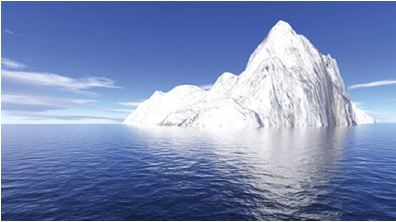
Increasing ship sizes, human error and the challenge of shipping in arctic waters are among the biggest risks facing the modern maritime industry, according to Allianz Global Corporate and Speciality.
The challenge of shipping in arctic waters is among the biggest challenges facing the modern maritime industry, the report said.
Marking 100 years since the sinking of Titanic, the insurers yesterday published a report which noted that, while the world commercial shipping fleet has trebled to over 100,000 vessels over that period, overall shipping loss rates have declined significantly. In 1912, they were one ship per 100 per year; in 2009 they had fallen to one ship per 670 per year.
Despite this, Safety and shipping 1912-2012: from Titanic to Costa Concordia, based on research from Cardiff University, said the industry faced several key challenges. These include the growing trend to ‘super-size’ ships and cost pressures which are forcing ship-owners to source crews from emerging economies where training standards can be inconsistent.
Other emerging risks include reduced crew numbers, which can compromise safety and encourage human error, increasing bureaucracy on board ships and the increased threat of piracy in Somalia and elsewhere. The emergence of ‘ice shipping’ and its associated navigational and environmental complications also poses a risk, the report said.
Dr Sven Gerhard, AGCS’s global product leader for hull & marine liabilities, said the industry needed to address the new risks facing them proactively.
‘For example, ultra-large ships pose challenges for insurers due to their sheer size and value, while others raise concerns on structural integrity and failure. While scale alone does not make these ships riskier, the increased sizes introduce specific risks that need to be addressed, such as salvage and recovery considerations and emergency handling,’ he said.
AGCS noted that, despite hundreds of years of improvements in safety, human error remained a challenge. According to the report, over 75% of marine losses can be attributed to a wide range of ‘human error’ factors, including fatigue, inadequate risk management and competitive pressures, as well as potential deficiencies in training and crewing levels.
Dr Gerhard said: ‘As technological improvements reduce risk, so does the weakest link in the system – the human factor – become more important. This is where the industry should focus most closely, so that best practice risk management and a culture of safety becomes second nature across the world fleet.’
Allianz did, however, note that major accidents have often been the catalysts for key changes in maritime industry safety. In light of this, Dr Gerhard said the Costa Concordia disaster earlier this year was likely to be ‘no different’, regardless of the outcome of investigations into the incident itself.
(The Actuary Newsdesk: Nick Mann 27/Mar 2012)
What can be inferred from the text?
Provas

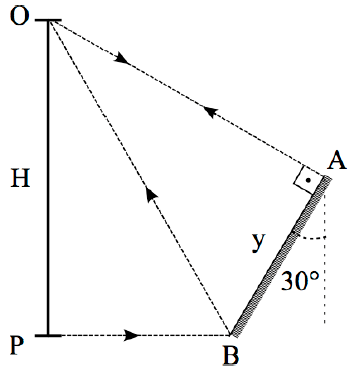
Uma pessoa em postura ereta (OP) consegue observar seu corpo inteiro refletido exatamente entre as extremidades de um espelho plano (AB), inclinado de 30° em relação à vertical, e com a extremidade inferior apoiada no solo. Em função da dimensão y do espelho, mostrada na figura,a altura máxima H da pessoa deve ser
Provas
ESPERA UMA CARTA
Carlos Drummond de Andrade
Agora sei por que não vieste, depois de tanto e tanto te esperar. Cheguei a supor que não existisses. Imaginei, às vezes, que foras ter a outra porta, e alguém se beneficiava de ti. Era o equívoco mais consolador, afinal não se perderia a mensagem. Eu indagava os rostos, pesquisava neles a furtiva iluminação, o traço de beatitude, que indicasse conhecimento de teu segredo. Não distinguia bem, as pessoas se afastavam ou escondiam tão finamente tua posse, que a dúvida ficava enrodilhada à minha esquerda. O desengano, à direita. E não havia combate entre eles. Coexistiam, mais a cabeçuda esperança.
Todas as manhãs te aguardava. Ao meio-dia já era certo que não vinhas. O resto do dia era neutro. Restava amanhã. E outro amanhã. E depois. Repousava, aos domingos, dessa expectação sem limites. Via-te aparecer em sonho, e fechava os olhos como quem soubesse que não te merecia, ou quisesse retardar o instante de comunicação. Esperar era quase receber. Cismava que te recebera havia longos anos, mas era menino e sem condições de avaliar-te, ou vieras em código, e eu, sem possuir a chave, me quedava mirando-te e remirando-te como à estrela intocável.
Muitas recebi durante esse prazo. Não se confundiam contigo. Traziam palavras boas ou más, indiferentes, quaisquer. E o receio de que entre elas rolasses perdida, fosses considerada insignificante? Desprezada, como impresso de propaganda?
As dádivas que devias trazer-me, quais seriam? Nunca imaginei ao certo o que de grande me reservavas. Quem sabe se a riqueza, de que eu tinha medo, mas revestida de doçura e imaginação, a resumir os prazeres do despojamento? Ou a glória espiritual, sem seus gêmeos a jactância e o orgulho? Ou o amor – e esta só palavra me fazia curvar a cabeça, ao peso de sua magnificência. Eu não escolhia nem hesitava. O dom seria perfeito, sem proporção com o ente gratificado. E infinito, a envolver minha finitude.
Mas agora sei por que não vieste nem virás. Estavas entre inúmeras companheiras, jogadas em sacos espessos, por sua vez afundados num subterrâneo. E dizer que todos os dias passei por tuas proximidades, até mesmo em cima de ti, sem discernir tua pulsação. Servidores infiéis ou cansados foram acumulando debaixo do chão o monte de notícias, lamentos, beijos, ameaças, faturas, ordens, saudades, sobre o qual os caminhões passavam, os dias passavam, passavam os governos e suas reformas. Escondida, esmagada no monte, sem sombra de movimento, lá te deixaste jazer, enquanto eu conjeturava mil formas de extravio e omissão. Cheguei a desconfiar de ti, a crer que zombavas de minha urgência, distraindo-te por itinerários loucos. Suspeitei que te recusavas, quase desejei que fogo ou água te liquidassem, já que te esquivavas a tua missão.
E foi o que aconteceu, sem dúvida. A umidade e os ratos de esgoto te consumiram. Restam – se restarem – fragmentos que nada contam ou explicam, senão que uma carta maravilhosa, esperada desde a eternidade, por mim e por outro qualquer homem igual a mim, foi escrita em alguma parte do mundo e não chegou a destino, porque o Correio a jogou fora, entre trezentas mil ou trezentos milhões de cartas.
(...) mas era menino e sem condições de avaliar-te, ou vieras em código, e eu, sem possuir a chave, me quedava mirando-te e remirando-te (...). Nessa passagem, a forma verbal sublinhada tem o sentido de
Provas
Were he not busy, he ________ your cousin.
Provas
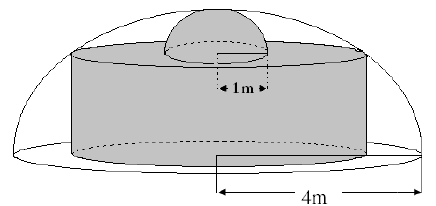
Constrói-se um depósito, na forma de um sólido V, dentro de uma semiesfera de raio 4m. O depósito é formado por uma semiesfera de raio 1m sobreposta a um cilindro circular, dispostos conforme a figura. Então a área da superfície total de V, em m2, é igual a:
Provas
O gráfico da função contínua y = f(x), no plano xy, é uma curva situada acima do eixo x para x > 0 e possui a seguinte propriedade: “A área da região entre a curva y = f(x) e o eixo x no intervalo a !$ \le !$ x !$ \le !$ b (a > 0) é igual à área entre a curva e o eixo x no intervalo ka !$ \le !$ x !$ \le !$ kb (k > 0)”. Se a área da região entre a curva y = f(x) e o eixo x para x no intervalo 1 !$ \le !$ x !$ \le !$ 3 é o número A então a área entre a curva y = f(x) e o eixo x no intervalo 9 !$ \le !$ x !$ \le !$ 243 vale:
Provas
Reading Comprehension
Shipping industry faces new risks, says Allianz.
Increasing ship sizes, human error and the challenge of shipping in arctic waters are among the biggest risks facing the modern maritime industry, according to Allianz Global Corporate and Speciality.
The challenge of shipping in arctic waters is among the biggest challenges facing the modern maritime industry, the report said.
Marking 100 years since the sinking of Titanic, the insurers yesterday published a report which noted that, while the world commercial shipping fleet has trebled to over 100,000 vessels over that period, overall shipping loss rates have declined significantly. In 1912, they were one ship per 100 per year; in 2009 they had fallen to one ship per 670 per year.
Despite this, Safety and shipping 1912-2012: from Titanic to Costa Concordia, based on research from Cardiff University, said the industry faced several key challenges. These include the growing trend to ‘super-size’ ships and cost pressures which are forcing ship-owners to source crews from emerging economies where training standards can be inconsistent.
Other emerging risks include reduced crew numbers, which can compromise safety and encourage human error, increasing bureaucracy on board ships and the increased threat of piracy in Somalia and elsewhere. The emergence of ‘ice shipping’ and its associated navigational and environmental complications also poses a risk, the report said.
Dr Sven Gerhard, AGCS’s global product leader for hull & marine liabilities, said the industry needed to address the new risks facing them proactively.
‘For example, ultra-large ships pose challenges for insurers due to their sheer size and value, while others raise concerns on structural integrity and failure. While scale alone does not make these ships riskier, the increased sizes introduce specific risks that need to be addressed, such as salvage and recovery considerations and emergency handling,’ he said.
AGCS noted that, despite hundreds of years of improvements in safety, human error remained a challenge. According to the report, over 75% of marine losses can be attributed to a wide range of ‘human error’ factors, including fatigue, inadequate risk management and competitive pressures, as well as potential deficiencies in training and crewing levels.
Dr Gerhard said: ‘As technological improvements reduce risk, so does the weakest link in the system – the human factor – become more important. This is where the industry should focus most closely, so that best practice risk management and a culture of safety becomes second nature across the world fleet.’
Allianz did, however, note that major accidents have often been the catalysts for key changes in maritime industry safety. In light of this, Dr Gerhard said the Costa Concordia disaster earlier this year was likely to be ‘no different’, regardless of the outcome of investigations into the incident itself.
(The Actuary Newsdesk: Nick Mann 27/Mar 2012)
In lines 33-34:‘(…) facing them proactively.’, is the same as:
Provas
P(x) é um polinômio de coeficientes reais e menor grau com as propriedades abaixo:
• os números r1 = 1, r2 = i e r3= 1 – i são raízes da equação P(x) = 0;
• P(0) = – 4.
Então, P(– 1) é igual a:
Provas
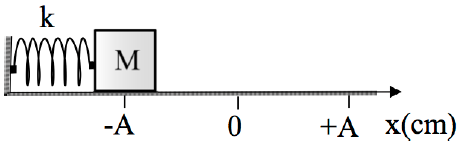
O bloco de massa M da figura é, em t = 0 , liberado do repouso na posição indicada ( x = - A ) e a seguir executa um MHS com amplitude A = 10 cm e período de 1,0 s. No instante t = 0,25 s , o bloco se encontra na posição onde
Provas
Um cone foi formado a partir de uma chapa de aço, no formato de um setor de 12cm de raio e ângulo central de 120º. Então, a altura do cone é:
Provas
Caderno Container