Foram encontradas 80 questões.
Which is the corret alternative to complete the paragraph below?
Many ofthe sarne questions that ____ about coal-powered propulsion ____ of the Internet ofThings (IoT) today: What's wrong with the traditional way; how will this benefit my fleet; why do we need to make this change? They ali good questions, and they ____ a very natural human interest in the three areas that should matter most in deciding whether to use any maritime technology: safety, effectiveness and cost. The biggest challenges to IoT adoption ____ . ln large part, this is due to the ready availability of high-performance data collection.
(Adapted from: Sea Techno/ogy, December2018).
Provas

Passenger ship bits rock
A passenger ship was inbound in daylight and fair visibility. The Master gave the Pilot a briefing regarding the ship's manoeuvring characteristics; the ship was highly manoeuvrable and would 'turn on a dime,' he said. The Master told the Pilot that a three-degree helm arder would create a rate of turn of 10 - 15 degrees per minute.
The bridge team would consist of the Pilot at the con while the Master would have overall navigational command. The staff captain would be in charge of connnunications while the first officer would be in charge of electronic navigation and collision avoidance. Finally, the second officer would be in chai·ge of plotting the ship's position on the navigational chart.
The Pilot and the Master discussed and agreed the intended passage plan, noting a strong flood tide that would be running astern. However, the subsequent investigation found that, due to misconunuication during the exchange, the passage inwards began with the Master and Pilot having different understandings of how the first turn would be conducted.
The ship was lined up with the leading navigation lights and entered the channel without incident. As the Pilot took the con, the Master briefed the staff captain on the Master/ Pilot exchange and explained his understanding of how they were going to negotiate the tum to port. The rest of the bridge team were not included in this conversation and essentially relied on what they overheard.
Under the Pilot's con, the fust alteration of course to port was initiated using three degrees of port helm. At this time the vessel had a speed over ground (SOO) of nearly 18 knots. The initial helm order was followed by successive increases to five and then 10 degrees of rudder.
About one minute after the initial three degree port helm order an offtrack alann flashed on the ECDIS, but this information was not brought to the attention of the Master or the Pilot. The alarm appeared only as a visual indicator on the radar screen because its audio had been muted prior to the sh:ip entering the channel.
Even so, the Master and Pilot soon realised that the ship was proceeding dangerously close to a known rock shoal, so 20 degrees of port rudder was ordered, immediately followed by maximum port rudder.
About three minutes after the initial helm order of tln·ee degrees, and despite the emergency helm order, the ship's bilge keel and the starboard propeller made contact with the rock as the ship passed.
The ship was then navigated back to the centre of the channel and continued on its passage to point without further incident.
The official report on this accident discusses th:e concept of allowing a ship to depart from an intended track in the belief that other influences, such as tide in this case, would return the ship to the intended track. The report notes that th:is canies a high risk when manoeuvring large sh:ips in nairow waterways, where margins for error are small. The report posits that there is less risk when a sh:ip is kept strictly to the intended track by increasing or decreasing its rate of tum in response to the externa! inf!uences such as tide and wind. This method has the advantage of being unainbiguous for other members ofthe bridge team tasked with monitoring the progress of the ship against the planned track.
(Adapted from: https://steamshipmutual.com)
Mark the option that is TRUE about the text.
Provas
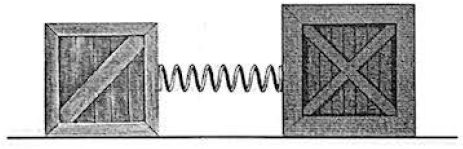
Uma mola de massa desprezível e de constante elástica k = 100 N/m tem um tamanho natural de l m e é comprimida para que se acomode num espaço de 60 cm entre duas caixas de massas I kg e 2 kg. O piso horizontal não tem atrito, e o sistema é mantido em repouso por um agente externo não representado na figura.
Assim que o sistema é liberado, a mola se expande e empurra as caixas até atingir novamente seu tamanho natural, momento em que o contato entre os três objetos é perdido. A partir desse instante, a caixa de massa 1 kg segue com velocidade constante de módulo:
Provas
A tensegridade (ou integridade tensional) é uma característica de uma classe de estruturas mecânicas cuja sustentação está baseada quase que exclusivamente na tensão de seus elementos conectores. Estruturas com essa propriedade, exemplificadas nas imagens abaixo, parecem desafiar a gravidade, justamente por prescindirem de elementos rígidos sob compressão, como vigas e colunas:
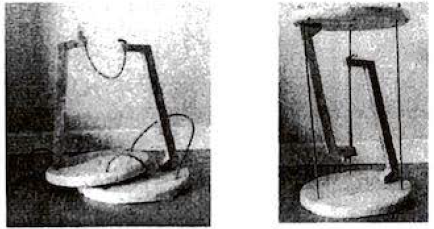
Banco de tcnsegridade suspenso exclusivamente por cordas flexíveis comuns Fonte: https://www.instagram.com/p/B_dOqmmJxtk/
A figura abaixo representa uma estrutura de tensegridade formada por uma porção suspensa ( as duas tábuas horizontais junto da coluna vertical à esquerda), de peso P e com centro de massa no ponto A, que se liga a uma parede fixa e ao chão através de 2 cordas tensionadas:
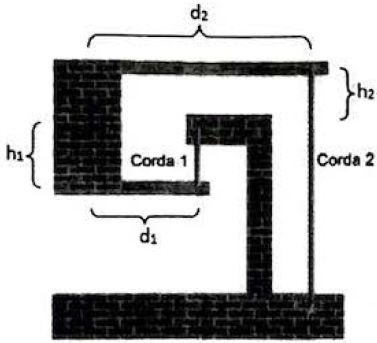
| d1: distância horizontal entre o ponto A e a corda 1 d2: distância horizontal entre o ponto A e a corda 2 h1: distância vertical entre o ponto A e o ponto de contato da corda 1 na porção suspensa h2: distância vertical entre o ponto A e o ponto de contato da corda 2 na porção suspensa |
Se a estrutura está em equilíbrio, então a tensão na corda 2 vale:
Provas
Passenger ship bits rock
A passenger ship was inbound in daylight and fair visibility. The Master gave the Pilot a briefing regarding the ship's manoeuvring characteristics; the ship was highly manoeuvrable and would 'turn on a dime,' he said. The Master told the Pilot that a three-degree helm arder would create a rate of turn of 10 - 15 degrees per minute.
The bridge team would consist of the Pilot at the con while the Master would have overall navigational command. The staff captain would be in charge of connnunications while the first officer would be in charge of electronic navigation and collision avoidance. Finally, the second officer would be in chai·ge of plotting the ship's position on the navigational chart.
The Pilot and the Master discussed and agreed the intended passage plan, noting a strong flood tide that would be running astern. However, the subsequent investigation found that, due to misconunuication during the exchange, the passage inwards began with the Master and Pilot having different understandings of how the first turn would be conducted.
The ship was lined up with the leading navigation lights and entered the channel without incident. As the Pilot took the con, the Master briefed the staff captain on the Master/ Pilot exchange and explained his understanding of how they were going to negotiate the tum to port. The rest of the bridge team were not included in this conversation and essentially relied on what they overheard.
Under the Pilot's con, the fust alteration of course to port was initiated using three degrees of port helm. At this time the vessel had a speed over ground (SOO) of nearly 18 knots. The initial helm order was followed by successive increases to five and then 10 degrees of rudder.
About one minute after the initial three degree port helm order an offtrack alann flashed on the ECDIS, but this information was not brought to the attention of the Master or the Pilot. The alarm appeared only as a visual indicator on the radar screen because its audio had been muted prior to the sh:ip entering the channel.
Even so, the Master and Pilot soon realised that the ship was proceeding dangerously close to a known rock shoal, so 20 degrees of port rudder was ordered, immediately followed by maximum port rudder.
About three minutes after the initial helm order of tln·ee degrees, and despite the emergency helm order, the ship's bilge keel and the starboard propeller made contact with the rock as the ship passed.
The ship was then navigated back to the centre of the channel and continued on its passage to point without further incident.
The official report on this accident discusses th:e concept of allowing a ship to depart from an intended track in the belief that other influences, such as tide in this case, would return the ship to the intended track. The report notes that th:is canies a high risk when manoeuvring large sh:ips in nairow waterways, where margins for error are small. The report posits that there is less risk when a sh:ip is kept strictly to the intended track by increasing or decreasing its rate of tum in response to the externa! inf!uences such as tide and wind. This method has the advantage of being unainbiguous for other members ofthe bridge team tasked with monitoring the progress of the ship against the planned track.
(Adapted from: https://steamshipmutual.com)
It is possible to infer from the text that:
Provas
O número complexo !$ \sqrt[3]{4\sqrt{2}i-4\sqrt{2}} !$ é igual a:
Provas
Um caso de burro
Machado de Assis
Quinta-feira à tarde, pouco mais de três horas, vi uma coisa tão interessante, que determinei logo de começar por ela esta crônica. Agora, porém, no momento de pegar na pena, receio achar no leitor menor gosto que eu para um espetáculo, que lhe parecerá vulgar, e porventura torpe. Releve a importância; os gostos não são iguais.
Entre a grade do jardim da Praça Quinze de Novembro e o lugar onde era o antigo passadiço, ao pé dos trilhos de bondes, estava um burro deitado. O lugar não era próprio para remanso de burros, donde concluí que não estaria deitado, mas caído. Instantes depois, vimos ( eu ia com um amigo), vimos o burro levantar a cabeça e meio corpo. Os ossos furavan1-lhe a pele, os olhos meio mortos fechavam-se de quando em quando. O infeliz cabeceava, mais tão frouxamente, que parecia estar próximo do fim.
Diante do animal havia algum capim espalhado e uma lata com água. Logo, não foi abandonado inteiramente; alguma piedade houve no dono ou quem quer que seja que o deixou na praça, com essa última refeição à vista. Não foi pequena ação. Se o autor dela é homem que leia crônicas, e acaso ler esta, receba daqui um aperto de mão. O burro não comeu do capim, nem bebeu da água; estava já para outros capins e outras águas, em campos mais largos e eternos. Meia dúzia de curiosos tinha parado ao pé do animal. Um deles, menino de dez anos, empunhava uma vara, e se não sentia o desejo de dar com ela na anca do burro para espertá-lo, então eu não sei conhecer meninos, porque ele não estava do lado do pescoço, mas justamente do lado da anca. Diga se a verdade; não o fez - ao menos enquanto ali estive, que foram poucos minutos. Esses poucos minutos, porém, valeram por uma hora ou duas. Se há justiça na Terra valerão por um século, tal foi a descoberta que me pareceu fazei; e aqui deixo recomendada aos estudiosos.
O que me pareceu, é que o burro fazia exame de consciência. Indiferente aos curiosos, como ao capim e à água, tinha no olhar a expressão dos meditativos. Era um trabalho interior e profundo. Este remoque popular: por pensar morreu um burro mostra que o fenômeno foi mal entendido dos que a princípio o viram; o pensamento não é a causa da morte, a morte é que o toma necessário. Quanto à matéria do pensamento, não há dúvidas que é o exame da consciência. Agora, qual foi o exame da consciência daquele burro, é o que presumo ter lido no escasso tempo que ali gastei. Sou outro Champollion, porventura maior; não decifrei palavras escritas, mas ideias íntimas de criatura que não podia exprimi-las verbalmente.
E diria o burro consigo:
"Por mais que vasculhe a consciência, não acho pecado que mereça remorso. Não furtei, não menti, não matei, não caluniei, não ofendi nenhuma pessoa. Em toda a minha vida, se dei três coices, foi o mais, isso mesmo antes haver aprendido maneiras de cidade e de saber o destino do verdadeiro burro, que é apanhar e calar. Quando ao zurro, usei dele como linguagem. Ultimamente é que percebi que me não entendiam, e continuei a zurrar por ser costume velho, não com ideia de agravar ninguém. Nunca dei com homem no chão. Quando passei do tílburi ao bonde, houve algumas vezes homem morto ou pisado na rua, mas a prova de que a culpa não era minha, é que nunca segui o cocheiro na fuga; deixava-me estar aguardando autoridade."
"Passando à ordem mais elevada de ações, não acho em mim a menor lembrança de haver pensado sequer na perturbação da paz pública. Além de ser a minha índole contrária a arruaças, a própria reflexão me diz que, não havendo nenhuma revolução declarado os direitos do burro, tais direitos não existem. Nenhum golpe de estado foi dado em favor dele; nenhuma coroa os obrigou. Monarquia, democracia, oligarquia, nenhuma forma de governo, teve em conta os interesses da minha espécie. Qualquer que seja o regime, ronca o pau. O pau é a minha instituição um pouco temperada pela teima que é, em resumo, o meu único defeito. Quando não teimava, mordia o freio dando assim um bonito exemplo de submissão e conformidade. Nunca perguntei por sóis nem chuvas; bastava sentir o freguês no tílburi ou o apito do bonde, para sair logo. Até aqui os males que não fiz; vejamos os bens que pratiquei."
"A mais de uma aventura amorosa terei servido, levando depressa o tílburi e o namorado à casa da namorada - ou simplesmente empacando em lugar onde o moço que ia ao bonde podia mirar a moça que estava na janela. Não poucos devedores terei conduzido para longe de um credor importuno. Ensinei filosofia a muita gente, esta filosofia que consiste na gravidade do porte e na quietação dos sentidos. Quando algum homem, desses que chamam patuscas, queria fazer rir os amigos, fui sempre em auxílio deles, deixando que me dessem tapas e punhadas na cara. Em fim ...
" Não percebi o resto, e fui andando, não menos alvoroçado que pesaroso. Contente da descoberta, não podia furtar-me à tristeza de ver que um burro tão bom pensador ia morrer. A consideração, porém, de que todos os burros devem ter os mesmos dotes principais, fez-me ver que os que ficavam não seriam menos exemplares do que esse. Por que se não investigará mais profundamente o moral do burro? Da abelha já se escreveu que é superior ao homem, e da formiga também, coletivamente falando, isto é, que as suas instituições políticas são superiores às nossas, mais racionais. Por que não sucederá o mesmo ao burro, que é maior?
Sexta-feira, passando pela Praça Quinze de Novembro, achei o animal já morto.
Dois meninos, parados, contemplavam o cadáver, espetáculo repugnante; mas a infância, como a ciência, é curiosa sem asco. De tarde já não havia cadáver nem nada. Assim passam os trabalhos deste mundo. Sem exagerar o mérito do finado, força é dizer que, se ele não inventou a pólvora, também não inventou a dinamite. Já é alguma coisa neste final de século. Requiescat in pace.
Qual frase empregada pelo narrador - personagem melhor resume sua reflexão sobre a natureza daquele animal morto na praça?
Provas
Dadas as matrizes reais 2x2 do tipo
!$ A(x) = \begin{pmatrix} cos \,x & sin \,x \\ sin \,x & cos \,x \end{pmatrix} !$, pode-se afirmar que
I. A(x) é inversível.
lI.!$ \exists\,\,x \,\,\in\,\, [0,2\pi ]\,\,\mbox{tal que}\,\, A(x)A(x)= A (x) !$
III. A(x) nunca será antissimétrica.
Assinale a opção correta.
Provas
Uma bola de bilhar de raio R tem velocidade de módulo v, enquanto se desloca em linha reta sobre uma mesa horizontal sem atrito. Em algum momento, esse objeto atinge uma segunda bola em repouso, com mesmo raio e massa muito maior, cujo centro se localiza a uma distância R da reta que descreve sua trajetória. A situação é representada na figura abaixo:
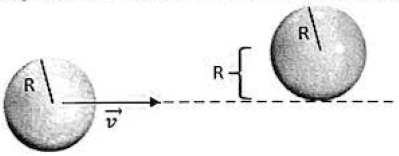
Após o impacto, a primeira esfera retorna para a esquerda em uma linha reta que faz 75º (para baixo) com relação à trajetória horizontal inicial. Suponha que a força que atua em cada esfera durante a colisão é perpendicular à sua superfície e pode ser considerada constante, durante o curto intervalo de tempo em que age. A razão entre os módulos da velocidade final e da velocidade inicial da primeira esfera vale:
Provas
Confluence of Cultures
A professional involved in a merchant marine career gets to meet and mingle with people of different cultures and nationalities. This helps the individual to understand and function better as a team player and learn the nuances of different cultures and traditions at the sarne time. This automatically increases adaptability and brings about more awareness about what goes and what doesn't in a different country.
(From: https://www .marineinsight.com/careers-2/10-reasonswhy- a-career-in-merchant-navy-is-unlike-any-other-career/)
Which word DOES NOT follow the sarne plural rule applied to the word "nationalities" in the text?
Provas
Caderno Container