Foram encontradas 80 questões.
The placebo effect: amazing and real
November 2, 2015
Robert H. Shmerling
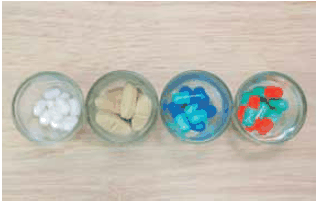
The placebo effect is a mysterious thing. I’ve long been fascinated by the idea that something as inert and harmless as a sugar pill could relieve a person’s pain or hasten their recovery just by the expectation that it would. Studies use placebos – an inactive treatment, such as a sugar pill – in an attempt to understand the true impact of the active drug. Comparing what happens to a group of patients taking the active drug with the results of those taking a placebo can help researchers understand just how good the active drug is.
The word “placebo” comes from Latin and means “I shall please.” And “please” it does. In study after study, many patients who take a placebo show improvement in their symptoms or condition.
The placebo effect is for real
Recent research on the placebo effect only confirms how powerful it can be – and that the benefits of a placebo treatment aren’t just “all in your head.” Measureable physiological changes can be observed in those taking a placebo, similar to those observed among people taking effective medications. In particular, blood pressure, heart rate, and blood test results have been shown to improve among subsets of research subjects who responded to a placebo.
Of course, not everyone has a therapeutic response to a placebo. If that were the case, we wouldn’t need medications at all. Instead, we could simply wield the power of suggestion. Understanding why certain people improve with placebo treatment and others do not is the “holy grail” of placebo research.
Nocebo: Placebo’s evil twin
The power of suggestion is a double-edged sword. If you expect a treatment to help you, it’s more likely to do so. And if you expect a treatment will be harmful, you are more likely to experience negative effects. That phenomenon is called the “nocebo effect” (from the Latin “I shall harm”). For example, if you tell a person that a headache is a common side effect of a particular medication, that person is more likely to report headaches even if they are actually taking a placebo. The power of expectation is formidable and probably plays a significant role in the benefits and the side effects of commonly prescribed medications.
(www.health.harvard.edu. Adaptado.)
No trecho do quinto parágrafo “The power of suggestion is a double-edged sword.”, a expressão em destaque equivale, em português, a
Provas
Questão presente nas seguintes provas

As cidades, normalmente, são as mais afetadas por inundações, enchentes e deslizamentos. Muito embora as inundações sejam fenômenos naturais, as mudanças nas formas de uso e ocupação nas cidades incrementam esses fenômenos, que se tornam potencialmente mais perigosos.
(Mirian V. F. Barros et al. “Vulnerabilidade socioambiental à inundação”.
Confins, no 24, 2015. Adaptado.)
Caracterizam exemplos de intervenções nas cidades que potencializam os fenômenos naturais de inundação
Provas
Questão presente nas seguintes provas
A escala de coma de Glasgow é utilizada como primeira avaliação do nível de consciência de pacientes com trauma craniano. Essa escala consiste em avaliar o paciente em três testes, que são: ocular (O), verbal (V) e motor (M). O especialista que avalia o paciente atribui de 1 a 4 pontos para O, de 1 a 5 pontos para V e de 1 a 6 pontos para M. Um trauma cranioencefálico é considerado grave se a pontuação total é de 3 a 8 pontos, moderado se é de 9 a 13 pontos, e leve se é de 14 a 15 pontos.
(http://misodor.com. Adaptado.)
Se um paciente foi avaliado na escala de Glasgow com classificação moderada de trauma, é correto afirmar que ele obteve, necessariamente, pontuação
Provas
Questão presente nas seguintes provas
A figura representa o esquema de ligação dos faróis de um automóvel à bateria do veículo. O circuito é constituído por: duas lâmpadas de 12 V – 60 W cada uma; uma chave de acionamento e um fusível de proteção, ambos de resistências desprezíveis; e fios de ligação e conectores, também ideais.
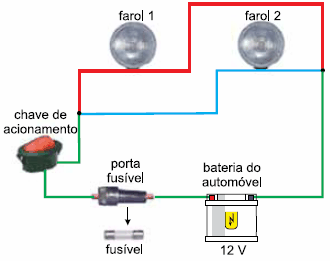
Se os dois faróis estiverem acesos, das opções indicadas nas alternativas, aquela que corresponde à menor amperagem do fusível capaz de proteger esse circuito é
Provas
Questão presente nas seguintes provas
A Revolução é feita de sombra, mas, acima de tudo, de luz.
(Michel Vovelle. A Revolução Francesa explicada à minha neta, 2007.)
A frase apresenta a Revolução Francesa, destacando
Provas
Questão presente nas seguintes provas
Nos últimos anos, monumentos têm sido alvo de protestos em vários países africanos. Na capital da Namíbia, Windhoek, a estátua equestre de um soldado alemão foi removida do espaço público. A mudança do nome de escolas e de outras instituições públicas, de praças, de ruas e de avenidas também faz parte desse movimento cívico que mobiliza a memória e a história coletiva em várias cidades do continente africano.
(www.cartaeducacao.com.br, 18.08.2015. Adaptado.)
O movimento cívico abordado no excerto remete, geopoliticamente,
Provas
Questão presente nas seguintes provas
The placebo effect: amazing and real
November 2, 2015
Robert H. Shmerling
The placebo effect is a mysterious thing. I’ve long been fascinated by the idea that something as inert and harmless as a sugar pill could relieve a person’s pain or hasten their recovery just by the expectation that it would. Studies use placebos – an inactive treatment, such as a sugar pill – in an attempt to understand the true impact of the active drug. Comparing what happens to a group of patients taking the active drug with the results of those taking a placebo can help researchers understand just how good the active drug is.
The word “placebo” comes from Latin and means “I shall please.” And “please” it does. In study after study, many patients who take a placebo show improvement in their symptoms or condition.
The placebo effect is for real
Recent research on the placebo effect only confirms how powerful it can be – and that the benefits of a placebo treatment aren’t just “all in your head.” Measureable physiological changes can be observed in those taking a placebo, similar to those observed among people taking effective medications. In particular, blood pressure, heart rate, and blood test results have been shown to improve among subsets of research subjects who responded to a placebo.
Of course, not everyone has a therapeutic response to a placebo. If that were the case, we wouldn’t need medications at all. Instead, we could simply wield the power of suggestion. Understanding why certain people improve with placebo treatment and others do not is the “holy grail” of placebo research.
Nocebo: Placebo’s evil twin
The power of suggestion is a double-edged sword. If you expect a treatment to help you, it’s more likely to do so. And if you expect a treatment will be harmful, you are more likely to experience negative effects. That phenomenon is called the “nocebo effect” (from the Latin “I shall harm”). For example, if you tell a person that a headache is a common side effect of a particular medication, that person is more likely to report headaches even if they are actually taking a placebo. The power of expectation is formidable and probably plays a significant role in the benefits and the side effects of commonly prescribed medications.
(www.health.harvard.edu. Adaptado.)
No trecho do terceiro parágrafo “similar to those observed among people taking effective medications”, o termo em destaque refere-se a
Provas
Questão presente nas seguintes provas
Para verificar a digestão de lipídios, foram colocados em cinco tubos de ensaio óleo de soja, água e secreções digestivas, em diferentes valores de pH, como indica a tabela. O volume de cada substância utilizada por tubo foi idêntico.
| Tubo 1 | Tubo 2 | Tubo 3 | Tubo 4 | Tubo 5 |
|
Óleo
de soja
+
água
+
bile
|
Óleo
de soja
+
água
+
lipases
pancreáticas
|
Óleo
de soja
+
água
+
lipases
pancreáticas
+
bile
|
Óleo
de soja
+
água
+
lipases
pancreáticas
|
Óleo
de soja
+
água
+
lipases
pancreáticas
+
bile
|
| pH = 8 | pH = 3 | pH = 3 | pH = 8 | pH = 8 |
Unidades de ácidos graxos e de glicerol serão encontradas nos tubos
Provas
Questão presente nas seguintes provas
834792
Ano: 2016
Disciplina: Literatura Brasileira e Estrangeira
Banca: VUNESP
Orgão: FAMERP
Disciplina: Literatura Brasileira e Estrangeira
Banca: VUNESP
Orgão: FAMERP
Provas:
Leia o poema de Ricardo Reis, heterônimo de Fernando Pessoa, para responder a questão a seguir.
As rosas amo dos jardins de Adônis,
Essas volucres1 amo, Lídia, rosas,
Que em o dia em que nascem,
Em esse dia morrem.
A luz para elas é eterna, porque
Nascem nascido já o sol, e acabam
Antes que Apolo deixe
O seu curso visível.
Assim façamos nossa vida um dia,
Inscientes, Lídia, voluntariamente
Que há noite antes e após
O pouco que duramos.
(O guardador de rebanhos e outros poemas, 1997.)
1 volucre: que tem vida curta.
No poema, está presente a seguinte característica do heterônimo Ricardo Reis:
Provas
Questão presente nas seguintes provas
O demógrafo e economista José Eustáquio Alves, do Instituto Brasileiro de Geografia e Estatística (IBGE), falou sobre o bônus demográfico, momento que segundo o especialista, acontece apenas uma vez na história de cada país. “É o momento em que a pirâmide está se transformando. Depois, ele passa e chega o envelhecimento populacional”, constatou.
(www.unicamp.br. Adaptado.)
O momento do bônus demográfico corresponde, na estrutura populacional de um país,
Provas
Questão presente nas seguintes provas
Cadernos
Caderno Container