Foram encontradas 80 questões.
Leia o texto para responder à questão.
There is nothing conventional about 17-year-old Michael Fuller’s relationship with music. As someone with high-functioning autism who sees the world through sound, creating melodies from the bustle of the high street or trains on the tracks feels more natural than any social interaction. This hardwired connection to sound has been with him for as long as he can remember.
By the age of 11, Michael could play Mozart by ear, having taught himself to play the piano through a mobile phone app. The app highlighted notes on a keyboard as classical music played. He describes his unusual musical talent as “downloading” music into his head. His mother, Nadine, remembers that as a child Michael would “suddenly pop up and say: ‘I’ve got a symphony’”. Michael took to the piano and found he could quickly perform complex pieces from memory.
“I liked what I was hearing, sought more music and began studying through Google and YouTube,” he remembers. “It was very organic. I would listen in great depth and the music would be implanted in my mind. I could then just play it on the piano – all without being taught.”
Growing up in a family that listened to reggae over classical music, Michael feels “very much aware” of how different his approach is to music – symbolised by the way he taught himself piano as a child. This, his mother says, came as a “surprise to the family and myself – I’d never listened to classical music in my life”.
It was not long after learning to play the piano that Michael started composing his own works. Describing this process as “making music with my mind”, Michael says composing classical symphonies “helps me to express myself through music – it makes me calm”. Michael wants to nurture his song writing to achieve his ambition of becoming a modern mainstream classical artist. He wants to control the creative process, unlike typical modern-day composers, who he says “write blobs on a page, hand it over to the musicians – then say bye-bye and stay in the background and get no recognition”. Instead, Michael is determined to take centre stage.
(Alex Taylor. www.bbc.com, 27.03.2018. Adaptado.)
The text is mainly about
Provas
Questão presente nas seguintes provas

Uma pesquisa realizada pela Sociedade Brasileira de Cardiologia (SBC) constatou que os níveis elevados de colesterol atingem cerca de quatro em cada dez brasileiros adultos. Isso corresponde a cerca de 60 milhões de pessoas adultas. O estudo ainda revelou que aproximadamente 11% da população adulta brasileira nunca fez exame de colesterol.
(https://noticias.r7.com, 08.08.2018. Adaptado.)
A partir dos dados da notícia, é possível concluir que o número de brasileiros adultos que nunca fizeram exame de colesterol é de, aproximadamente,
Provas
Questão presente nas seguintes provas
Leia o texto para responder à questão.
There is nothing conventional about 17-year-old Michael Fuller’s relationship with music. As someone with high-functioning autism who sees the world through sound, creating melodies from the bustle of the high street or trains on the tracks feels more natural than any social interaction. This hardwired connection to sound has been with him for as long as he can remember.
By the age of 11, Michael could play Mozart by ear, having taught himself to play the piano through a mobile phone app. The app highlighted notes on a keyboard as classical music played. He describes his unusual musical talent as “downloading” music into his head. His mother, Nadine, remembers that as a child Michael would “suddenly pop up and say: ‘I’ve got a symphony’”. Michael took to the piano and found he could quickly perform complex pieces from memory.
“I liked what I was hearing, sought more music and began studying through Google and YouTube,” he remembers. “It was very organic. I would listen in great depth and the music would be implanted in my mind. I could then just play it on the piano – all without being taught.”
Growing up in a family that listened to reggae over classical music, Michael feels “very much aware” of how different his approach is to music – symbolised by the way he taught himself piano as a child. This, his mother says, came as a “surprise to the family and myself – I’d never listened to classical music in my life”.
It was not long after learning to play the piano that Michael started composing his own works. Describing this process as “making music with my mind”, Michael says composing classical symphonies “helps me to express myself through music – it makes me calm”. Michael wants to nurture his song writing to achieve his ambition of becoming a modern mainstream classical artist. He wants to control the creative process, unlike typical modern-day composers, who he says “write blobs on a page, hand it over to the musicians – then say bye-bye and stay in the background and get no recognition”. Instead, Michael is determined to take centre stage.
(Alex Taylor. www.bbc.com, 27.03.2018. Adaptado.)
No trecho do terceiro parágrafo “sought more music”, o termo sublinhado tem sentido semelhante, em português, a
Provas
Questão presente nas seguintes provas
O sistema de plantation, predominante na colonização portuguesa do Brasil, baseou-se na
Provas
Questão presente nas seguintes provas
Leia a crônica de Clarice Lispector, publicada no Jornal do Brasil em 29 de março de 1969, para responder à questão.
Perguntas grandes
Pessoas que são leitoras de meus livros parecem ter receio de que eu, por estar escrevendo em jornal, faça o que se chama de concessões. E muitas disseram: “Seja você mesma.”
Um dia desses, ao ouvir um “seja você mesma”, de repente senti-me entre perplexa e desamparada. É que também de repente me vieram então perguntas terríveis: quem sou eu? como sou? o que ser? quem sou realmente? e eu sou?
Mas eram perguntas maiores do que eu.
(A descoberta do mundo, 1999.)
Os trechos “por estar escrevendo em jornal” (1º parágrafo) e “ao ouvir um ‘seja você mesma’” (2º parágrafo) exprimem, respectivamente, circunstância de
Provas
Questão presente nas seguintes provas
Na ponte Rio-Niterói há aberturas, chamadas juntas de dilatação, que têm a função de acomodar a movimentação das estruturas devido às variações de temperatura.
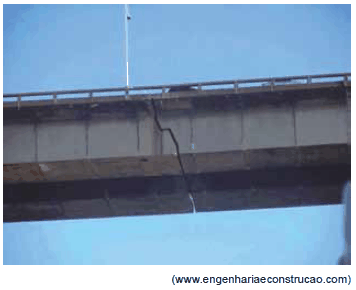
De acordo com a empresa que administra a ponte, no trecho sobre a Baía de Guanabara as juntas de dilatação existem a cada 400 m, com cerca de 12 cm de abertura quando a temperatura está a 25 ºC.
Sabendo que o coeficiente de dilatação linear do material que compõe a estrutura da ponte é 1,2 x 10⁻⁵ ºC–1, a máxima temperatura que o trecho da ponte sobre a Baía de Guanabara pode atingir, sem que suas partes se comprimam umas contra as outras, é
Provas
Questão presente nas seguintes provas
1124998
Ano: 2018
Disciplina: Literatura Brasileira e Estrangeira
Banca: VUNESP
Orgão: FAMERP
Disciplina: Literatura Brasileira e Estrangeira
Banca: VUNESP
Orgão: FAMERP
Provas:
Leia o poema de Mário de Andrade para responder à questão.
Rondó pra você
De você, Rosa, eu não queria
Receber somente esse abraço
Tão devagar que você me dá,
Nem gozar somente esse beijo
Tão molhado que você me dá...
Eu não queria só porque
Por tudo quanto você me fala
Já reparei que no seu peito
Soluça o coração benfeito
De você.
Pois então eu imaginei
Que junto com esse corpo magro
Moreninho que você me dá,
Com a boniteza a faceirice
A risada que você me dá
E me enrabicham como o quê,
Bem que eu podia possuir também
O que mora atrás do seu rosto, Rosa,
O pensamento a alma o desgosto
De você.
(De Pauliceia desvairada a Lira paulistana, 2016.)
O sentimento expresso pelo eu lírico revela
Provas
Questão presente nas seguintes provas
Leia o texto para responder à questão.
Enquanto nas cidades o poder ficou nas mãos dos bispos, nos campos, concentrou-se na dos grandes proprietários. O governo romano perdeu força: já não era capaz de cobrar os impostos de maneira eficiente, nem mesmo de pagar os exércitos. Em 476, o último imperador romano foi deposto. Era o fim do Império Romano e do mundo antigo e o início de uma nova era, a Idade Média.
(Carlos Augusto Ribeiro Machado. Roma e seu império, 2004. Adaptado.)
A queda do Império Romano do Ocidente foi provocada, entre outros fatores,
Provas
Questão presente nas seguintes provas
Leia o texto para responder à questão.
There is nothing conventional about 17-year-old Michael Fuller’s relationship with music. As someone with high-functioning autism who sees the world through sound, creating melodies from the bustle of the high street or trains on the tracks feels more natural than any social interaction. This hardwired connection to sound has been with him for as long as he can remember.
By the age of 11, Michael could play Mozart by ear, having taught himself to play the piano through a mobile phone app. The app highlighted notes on a keyboard as classical music played. He describes his unusual musical talent as “downloading” music into his head. His mother, Nadine, remembers that as a child Michael would “suddenly pop up and say: ‘I’ve got a symphony’”. Michael took to the piano and found he could quickly perform complex pieces from memory.
“I liked what I was hearing, sought more music and began studying through Google and YouTube,” he remembers. “It was very organic. I would listen in great depth and the music would be implanted in my mind. I could then just play it on the piano – all without being taught.”
Growing up in a family that listened to reggae over classical music, Michael feels “very much aware” of how different his approach is to music – symbolised by the way he taught himself piano as a child. This, his mother says, came as a “surprise to the family and myself – I’d never listened to classical music in my life”.
It was not long after learning to play the piano that Michael started composing his own works. Describing this process as “making music with my mind”, Michael says composing classical symphonies “helps me to express myself through music – it makes me calm”. Michael wants to nurture his song writing to achieve his ambition of becoming a modern mainstream classical artist. He wants to control the creative process, unlike typical modern-day composers, who he says “write blobs on a page, hand it over to the musicians – then say bye-bye and stay in the background and get no recognition”. Instead, Michael is determined to take centre stage.
(Alex Taylor. www.bbc.com, 27.03.2018. Adaptado.)
In the excerpt from the first paragraph “has been with him for as long as he can remember”, the underlined expression indicates
Provas
Questão presente nas seguintes provas
Em 14.08.2017, nas Nações Unidas, em Nova Iorque, começou a ser discutida a proposta portuguesa de extensão de sua plataforma continental. Agora para o início da discussão sobre a proposta de poder legal do país sobre os fundos marinhos para lá das 200 milhas marítimas, Portugal entregou uma adenda que contém um novo mapa das “fronteiras” da plataforma continental. Mas, o que é então a extensão da plataforma continental? Ao abrigo Convenção das Nações Unidas sobre o Mar (ou Lei do Mar da ONU), os países costeiros têm a oportunidade de alargar pacificamente o seu território no mar.
(www.publico.pt, 15.08.2018. Adaptado.)
A expansão da plataforma continental diz respeito, portanto, ao aumento
Provas
Questão presente nas seguintes provas
Cadernos
Caderno Container