Foram encontradas 90 questões.
TEXT I
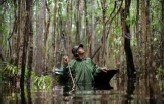
The Amazon is often referred to as "the world's largest medicine cabinet" CREDIT: Getty
(https://www.telegraph.co.uk/travel/cruises/articles/how-to-be-a-botanical-buff/)
Medicinal Treasures of the Rainforest
The widespread destruction of tropical rainforest ecosystems and the consequent extinction of numerous plant and animal species is happening before we know even the most basic facts about what we are losing.
Covering only 6 percent of the Earth's surface, tropical moist forests contain at least half of all species. The abundant botanical resources of tropical forests have already provided tangible medical advances; yet only 1 percent of the known plant and animal species have been thoroughly examined for their medicinal potentials. Meanwhile, 2 percent of the world's rainforests are irreparably damaged each year.
Approximately 7,000 medical compounds prescribed by Western doctors are derived from plants. These drugs had an estimated retail value of US$43 billion in 1985. Seventy percent of the 3000 plants identified by the United States National Cancer Institute as having potential anti-cancer properties are endemic to the rainforest. Tropical forest species serve Western surgery and internal medicine in three ways. First, extracts from organisms can be used directly as drugs. For maladies ranging from nagging headaches to lethal contagions such as malaria, rainforest medicines have provided modern society with a variety of cures and pain relievers.
[…]
Secondly, chemical structures of forest organisms sometimes serve as templates from which scientists and researchers can chemically synthesize drug compounds.[…]
Finally, rainforest plants provide aids for research. Certain plant compounds enable scientists to understand how cancer cells grow, while others serve as testing agents for potentially harmful food and drug products. Tropical forests offer hope for safer contraceptives for both women and men. The exponential growth of world population clearly demonstrates the need for more reliable and effective birth control methods. Worldwide, approximately 4,000 plant species have been shown to offer contraceptive possibilities. The rainforest also holds secrets for safer pesticides for farmers. Two species of potatoes have leaves that produce a sticky substance that traps and kills predatory insects. This natural self-defense mechanism could potentially reduce the need for using pesticides on potatoes. Who knows what other tricks the rainforest might have up its leaves?
Adapted from https://www.adventure-life.com/amazon/articles/medicinal-treasures-of-the-rainforest
The question in the last sentence reveals
Provas

TEXT I
The Amazon is often referred to as "the world's largest medicine cabinet" CREDIT: Getty
(https://www.telegraph.co.uk/travel/cruises/articles/how-to-be-a-botanical-buff/)
Medicinal Treasures of the Rainforest
The widespread destruction of tropical rainforest ecosystems and the consequent extinction of numerous plant and animal species is happening before we know even the most basic facts about what we are losing.
Covering only 6 percent of the Earth's surface, tropical moist forests contain at least half of all species. The abundant botanical resources of tropical forests have already provided tangible medical advances; yet only 1 percent of the known plant and animal species have been thoroughly examined for their medicinal potentials. Meanwhile, 2 percent of the world's rainforests are irreparably damaged each year.
Approximately 7,000 medical compounds prescribed by Western doctors are derived from plants. These drugs had an estimated retail value of US$43 billion in 1985. Seventy percent of the 3000 plants identified by the United States National Cancer Institute as having potential anti-cancer properties are endemic to the rainforest. Tropical forest species serve Western surgery and internal medicine in three ways. First, extracts from organisms can be used directly as drugs. For maladies ranging from nagging headaches to lethal contagions such as malaria, rainforest medicines have provided modern society with a variety of cures and pain relievers.
[…]
Secondly, chemical structures of forest organisms sometimes serve as templates from which scientists and researchers can chemically synthesize drug compounds.[…]
Finally, rainforest plants provide aids for research. Certain plant compounds enable scientists to understand how cancer cells grow, while others serve as testing agents for potentially harmful food and drug products. Tropical forests offer hope for safer contraceptives for both women and men. The exponential growth of world population clearly demonstrates the need for more reliable and effective birth control methods. Worldwide, approximately 4,000 plant species have been shown to offer contraceptive possibilities. The rainforest also holds secrets for safer pesticides for farmers. Two species of potatoes have leaves that produce a sticky substance that traps and kills predatory insects. This natural self-defense mechanism could potentially reduce the need for using pesticides on potatoes. Who knows what other tricks the rainforest might have up its leaves?
Adapted from https://www.adventure-life.com/amazon/articles/medicinal-treasures-of-the-rainforest
In the last paragraph, the modal might in “the rainforest might have” expresses
Provas
TEXT I
The Amazon is often referred to as "the world's largest medicine cabinet" CREDIT: Getty
(https://www.telegraph.co.uk/travel/cruises/articles/how-to-be-a-botanical-buff/)
Medicinal Treasures of the Rainforest
The widespread destruction of tropical rainforest ecosystems and the consequent extinction of numerous plant and animal species is happening before we know even the most basic facts about what we are losing.
Covering only 6 percent of the Earth's surface, tropical moist forests contain at least half of all species. The abundant botanical resources of tropical forests have already provided tangible medical advances; yet only 1 percent of the known plant and animal species have been thoroughly examined for their medicinal potentials. Meanwhile, 2 percent of the world's rainforests are irreparably damaged each year.
Approximately 7,000 medical compounds prescribed by Western doctors are derived from plants. These drugs had an estimated retail value of US$43 billion in 1985. Seventy percent of the 3000 plants identified by the United States National Cancer Institute as having potential anti-cancer properties are endemic to the rainforest. Tropical forest species serve Western surgery and internal medicine in three ways. First, extracts from organisms can be used directly as drugs. For maladies ranging from nagging headaches to lethal contagions such as malaria, rainforest medicines have provided modern society with a variety of cures and pain relievers.
[…]
Secondly, chemical structures of forest organisms sometimes serve as templates from which scientists and researchers can chemically synthesize drug compounds.[…]
Finally, rainforest plants provide aids for research. Certain plant compounds enable scientists to understand how cancer cells grow, while others serve as testing agents for potentially harmful food and drug products. Tropical forests offer hope for safer contraceptives for both women and men. The exponential growth of world population clearly demonstrates the need for more reliable and effective birth control methods. Worldwide, approximately 4,000 plant species have been shown to offer contraceptive possibilities. The rainforest also holds secrets for safer pesticides for farmers. Two species of potatoes have leaves that produce a sticky substance that traps and kills predatory insects. This natural self-defense mechanism could potentially reduce the need for using pesticides on potatoes. Who knows what other tricks the rainforest might have up its leaves?
Adapted from https://www.adventure-life.com/amazon/articles/medicinal-treasures-of-the-rainforest
The expression medicine cabinet in the caption means a place where
Provas
TEXT I
The Amazon is often referred to as "the world's largest medicine cabinet" CREDIT: Getty
(https://www.telegraph.co.uk/travel/cruises/articles/how-to-be-a-botanical-buff/)
Medicinal Treasures of the Rainforest
The widespread destruction of tropical rainforest ecosystems and the consequent extinction of numerous plant and animal species is happening before we know even the most basic facts about what we are losing.
Covering only 6 percent of the Earth's surface, tropical moist forests contain at least half of all species. The abundant botanical resources of tropical forests have already provided tangible medical advances; yet only 1 percent of the known plant and animal species have been thoroughly examined for their medicinal potentials. Meanwhile, 2 percent of the world's rainforests are irreparably damaged each year.
Approximately 7,000 medical compounds prescribed by Western doctors are derived from plants. These drugs had an estimated retail value of US$43 billion in 1985. Seventy percent of the 3000 plants identified by the United States National Cancer Institute as having potential anti-cancer properties are endemic to the rainforest. Tropical forest species serve Western surgery and internal medicine in three ways. First, extracts from organisms can be used directly as drugs. For maladies ranging from nagging headaches to lethal contagions such as malaria, rainforest medicines have provided modern society with a variety of cures and pain relievers.
[…]
Secondly, chemical structures of forest organisms sometimes serve as templates from which scientists and researchers can chemically synthesize drug compounds.[…]
Finally, rainforest plants provide aids for research. Certain plant compounds enable scientists to understand how cancer cells grow, while others serve as testing agents for potentially harmful food and drug products. Tropical forests offer hope for safer contraceptives for both women and men. The exponential growth of world population clearly demonstrates the need for more reliable and effective birth control methods. Worldwide, approximately 4,000 plant species have been shown to offer contraceptive possibilities. The rainforest also holds secrets for safer pesticides for farmers. Two species of potatoes have leaves that produce a sticky substance that traps and kills predatory insects. This natural self-defense mechanism could potentially reduce the need for using pesticides on potatoes. Who knows what other tricks the rainforest might have up its leaves?
Adapted from https://www.adventure-life.com/amazon/articles/medicinal-treasures-of-the-rainforest
In relation to preserving the rainforest, this text
Provas
TEXT I
The Amazon is often referred to as "the world's largest medicine cabinet" CREDIT: Getty
(https://www.telegraph.co.uk/travel/cruises/articles/how-to-be-a-botanical-buff/)
Medicinal Treasures of the Rainforest
The widespread destruction of tropical rainforest ecosystems and the consequent extinction of numerous plant and animal species is happening before we know even the most basic facts about what we are losing.
Covering only 6 percent of the Earth's surface, tropical moist forests contain at least half of all species. The abundant botanical resources of tropical forests have already provided tangible medical advances; yet only 1 percent of the known plant and animal species have been thoroughly examined for their medicinal potentials. Meanwhile, 2 percent of the world's rainforests are irreparably damaged each year.
Approximately 7,000 medical compounds prescribed by Western doctors are derived from plants. These drugs had an estimated retail value of US$43 billion in 1985. Seventy percent of the 3000 plants identified by the United States National Cancer Institute as having potential anti-cancer properties are endemic to the rainforest. Tropical forest species serve Western surgery and internal medicine in three ways. First, extracts from organisms can be used directly as drugs. For maladies ranging from nagging headaches to lethal contagions such as malaria, rainforest medicines have provided modern society with a variety of cures and pain relievers.
[…]
Secondly, chemical structures of forest organisms sometimes serve as templates from which scientists and researchers can chemically synthesize drug compounds.[…]
Finally, rainforest plants provide aids for research. Certain plant compounds enable scientists to understand how cancer cells grow, while others serve as testing agents for potentially harmful food and drug products. Tropical forests offer hope for safer contraceptives for both women and men. The exponential growth of world population clearly demonstrates the need for more reliable and effective birth control methods. Worldwide, approximately 4,000 plant species have been shown to offer contraceptive possibilities. The rainforest also holds secrets for safer pesticides for farmers. Two species of potatoes have leaves that produce a sticky substance that traps and kills predatory insects. This natural self-defense mechanism could potentially reduce the need for using pesticides on potatoes. Who knows what other tricks the rainforest might have up its leaves?
Adapted from https://www.adventure-life.com/amazon/articles/medicinal-treasures-of-the-rainforest
Based on the information provided by Text I, mark the statements below as true (T) or false (F).
( ) The medicinal potentials of all Amazonian plants are well known.
( ) The structure of plants can be used as patterns for producing drugs.
( ) Amazonian plants have been proven to be useless as contraceptives.
The statements are, respectively,
Provas
O pentágono ABCDE da figura abaixo foi ampliado a partir do ponto A, resultando no pentágono AB’C’D’E’ semelhante ao pentágono inicial.
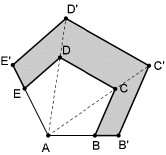
Sabe-se que AB = 10 m, BB’ = 5 m e que a área do pentágono ABCDE é igual a 220 m2.
Assinale a opção que indica a área da região sombreada da figura, em m2.
Provas
A figura a seguir mostra duas réguas A e B graduadas linearmente, com unidades diferentes e posicionadas paralelamente.
A figura mostra ainda as coincidências entre as abscissas de três pontos das duas réguas.
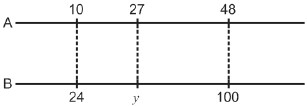
O valor y da régua B, que coincide com o 27 da régua A, é
Provas
Na figura a seguir, os pontos A, B e C pertencem à circunferência de centro O.
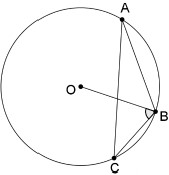
Sabe-se que o ângulo CAB mede 26º.
O ângulo OBC mede
Provas
No plano cartesiano, são dados os pontos A(1, 2) e B(3, 6).
O ponto P pertence ao eixo das abscissas e é equidistante dos pontos A e B.
A abscissa de P é
Provas
Considere a divisão do polinômio
\( P(x)=x^4−3x^2+2x+1 \)
pelo polinômio
\( D(x)=x^2+x−1. \)
O resto dessa divisão é
Provas
Caderno Container