Foram encontradas 704 questões.
Analise as afirmativas abaixo quanto à ferramenta de corte.
I. Quanto maior a dureza do material a ser usinado, menor o ângulo de cunha da ferramenta;
II. Quanto menor o ângulo de folga maior o atrito com a peça a ser usinada;
III. O ângulo de cunha é o que faz desprender da peça o que chamamos de cavaco.
Está(ão) correta(s) apenas a(s) afirmativa(s)
Provas
Questão presente nas seguintes provas

Um professor apresentou para seus alunos uma obra musical para piano em que o conjunto de sons dispostos em ordem simultânea referenciava a compositora brasileira Chiquinha Gonzaga. No entanto, a mesma peça, no decorrer, apresentava uma textura sonora formada por notas que não se completavam, notas estas indicadas pelo caráter ativo, dinâmico, transitivo, instável de movimento.
De acordo com o exposto, as frases “conjunto de sons dispostos em ordem simultânea” e “notas que não completavam, notas estas indicadas pelo caráter ativo, dinâmico, transitivo, instável de movimento”, tratam de quais conceitos?
Provas
Questão presente nas seguintes provas
Um dos questionamentos de Becker (2003) é por que se fala na escola somente em conteúdo? Por que não se fala em estrutura? A escola precisa falar dessas duas coisas. Falar só de conteúdo ou só de estrutura é como andar em uma perna só.
Em que alternativa o autor aponta para o ponto positivo dessa relação?
Provas
Questão presente nas seguintes provas
No artigo 260 do decreto, que trata das diretrizes a serem observadas para a sua aplicação, consta a descrição da diretriz IV referente à aquisição de bens e serviços pelo Poder Público.
Faz parte dessa diretriz
Provas
Questão presente nas seguintes provas
Observe as afirmativas a respeito dos processos de soldagem.
I. O metal de adição é fundido na brasagem, sem que haja fusão do metal-base;
II. A soldagem por fricção permite a soldagem de metais e ligas diferentes;
III. O processo de soldagem aluminotérmica é muito utilizada na soldagem de trilhos.
Está(ão) correta(s) apenas a(s) afirmativa(s)
Provas
Questão presente nas seguintes provas
Observe a viga abaixo, uniformemente carregada, sendo originalmente dimensionada com a seção indicada por Pos1.
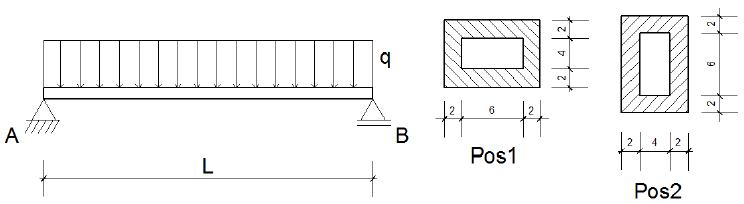
Se esta viga tiver sua posição trocada de Pos1 para a posição Pos2 e considerando que a tensão máxima deva ser mantida, o novo valor da carga distribuída será igual a
Provas
Questão presente nas seguintes provas
“Como todas as demais manifestações da crise geral do Feudalismo, a peste deve ser vista como um fator interno a ele. É verdade que ela atingiu a Europa Ocidental levada da região do mar Negro por comerciantes genoveses. Mas esse fato decorreu em última análise da expansão ocidental, que criara colônias comerciais em locais onde a peste sempre existira em forma endêmica.”
FRANCO JR, Hilário. O Feudalismo. São Paulo:
Brasiliense, 1983. p. 81.
A respeito da epidemia de Peste Bubônica, no final da Idade Média, o seu elevado grau de contágio deve-se
Provas
Questão presente nas seguintes provas
A respeito das três características que os usuários esperam de um sistema de busca, segundo Jakob Nielsen (2007), analise as seguintes afirmações.
I. Uma caixa em que os usuários podem digitar palavras.
II. Um botão rotulado pesquisar em que eles clicam para executar a busca.
III. A opção de pesquisar a web inteira.
Estão corretas as afirmativas
Provas
Questão presente nas seguintes provas
Technology in education: if students aren't worried, why are teachers?
As a new episode of My Teacher is an App airs on BBC Radio 4, Edward Lawless urges teachers to embrace digital technology in the classroom – however frightening it seems
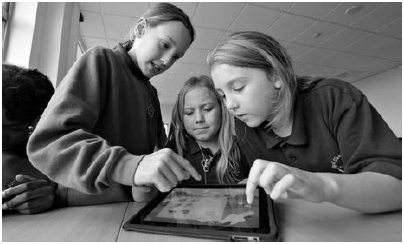
"As teachers, our role must change to one that embraces digital technology as a fundamental part of student learning," says Edward Lawless. Photograph: Athena
The third episode of the BBC Radio 4 series, My Teacher is an App, offered a provocative glimpse into the ways that technology is now being used to meet current educational needs. I attended the debate at The Great Hall of King's College London, where a respected panel and an energetic audience discussed the future of online technology and education.
While students in the audience didn't think it was a big deal, not all of the educators saw technology and education flowing together so smoothly. There was some anxiety in the room about what would happen to "authentic teaching", whether online learning could really offer "meaningful activity" and "true engagement", and if social media could provide "real interaction". Then, of course, there was concern about what would become of "the human element" in a virtual classroom.
These are all valid concerns, but they represent the dangerous assumption that a "different" learning environment can't preserve cherished educational priorities. I have seen online courses that are committed to promoting authentic teaching and learning, and worked with "virtual" teachers who regularly offer meaningful engagement, bringing the "human element" to their students around the world.
On the other hand, I have also seen traditional secondary and university classrooms that disregard these same priorities, with "live" teachers and lecturers capable of automating instruction, objectifying and isolating students, and reducing education to the mere transfer of content.
No matter what the conditions may be – online or face-to-face – the quality of the educational experience depends on the integrity of the curriculum, the teacher and the learning community.
That said, it's normal that teachers and leaders find the integration of online technology in education frightening. First of all, our generation of "digital immigrant" teachers must shift out of our comfort zone and into the world of our "digital-native" students. Second, it requires bricks-and-mortar schools to take a leap of faith into a medium that's essentially an unknown world. They have to let go of the familiar model that we hold dear – not necessarily because it works so well, but because it's what we know so well – to embrace an educational medium that many of us don't use, don't understand and don't trust. Third, and most importantly, it requires us to shift the power of learning from the teacher to the student; to become the facilitator for learning rather than the deliverer of knowledge and in so doing, to let students lead their own learning. That is a very disturbing prospect for many educators – and parents – because it's all about relinquishing control and taking risks.
But the internet is a natural part of students' lives and for many of them it has been that way since before they could walk. It's their natural environment for watching movies and TV programmes, accessing music, communicating with friends and organising their daily lives. It's not surprising that these digital natives don't consider online learning as such a risky venture. The internet already empowers our students with unprecedented educational access in ways that we could never have foreseen as teachers in training. The question is – how are we teaching them to use that power?
At the close of the Radio 4 debate evening, one audience member remarked to the panel that we need to proceed with caution – our students could suffer if we are too bold in adopting online learning technologies. One panellist quietly responded that our students and our future will more likely suffer because we are too timid rather than too bold.
I couldn't agree more. As teachers, our role must change to one that enables, guides, personalises and embraces digital technology as a fundamental part of student learning. The most dangerous thing we can do to our students is to keep doing what our teachers and professors did to us:
!$ \bullet !$ Remain centre stage in a face-to-face classroom.
!$ \bullet !$ Ensure that every lesson goes according to our educational script.
!$ \bullet !$ Focus upon what we want all students to cover during a scheduled lesson rather than what each student needs to learn, when they need to learn it.
!$ \bullet !$ Keep overestimating our own importance in the teaching-learning dynamic and underestimating the potential of students to learn independently and collaboratively.
!$ \bullet !$ Maintain our roles as mediators of content rather than developing our students' capacities as discriminating, self-regulated learners in an open-source world.
It was good enough for us. Right?
Edward Lawless is the principal of Pamoja Education, an online provider of the International Baccalaureate Diploma Programme
Available at: <http://www.theguardian.com/teacher-network/teacher-blog/2014/mar/10/
technology-education-students-teachers-worried> Consulted on Mar. 26th, 2014.
Consider the sentence below, taken from the text (the sentence is located below the illustration):
"As teachers, our role must change to one that embraces digital technology as a fundamental part of student learning," says Edward Lawless.
I. “says” is a reporting verb that indicates a recommendation given by the author.
II. that embraces digital technology as a fundamental part of student learning” is a defining relative clause and, for this reason, the relative pronoun “that” can not be ommited in the sentence.
III. “that” can be replaced by “which” in the sentence, without changing its meaning.
IV. Considering defining and non-defining relative clauses, a similar type of clause to the one presented in the example in the box is given in the sentence “Could you iron the trousers that I’ve brought from Spain?”.
V. Neither “who” nor “which” can be used instead of “that” in the example in the box.~
From the assertions above, the correct ones are only
Provas
Questão presente nas seguintes provas
Em se tratando da criação da HTML5, definida principalmente pelos comitês da World Wide Web Consortium (W3C), Web Hypertext Application Technology Working Group (WHATWG) e Internet Engineering Task Force (IETF), o que corresponde aos princípios de projeto definidos para a nova tecnologia?
Provas
Questão presente nas seguintes provas
Cadernos
Caderno Container