Foram encontradas 400 questões.
Observe as afirmativas abaixo, referentes à redemocratização.
I. No início da década de 1980, os governos autoritários multiplicados pela América do Sul entre os anos 1960 e 1970 começaram a se desestabilizar, pressionados no plano internacional e principalmente no plano interno pela organização das sociedades e pelos movimentos oposicionistas.
II. Depois de anos de autoritarismo, a América do Sul iniciou sua redemocratização, ou seja, voltaram ao cenário as eleições livres, o Estado de direito, as reformas constitucionais, a liberalização partidária.
III. Na Argentina houve eleições diretas em 1983, quando foi eleito o presidente Raúl Alfonsín; no Equador, as eleições foram restabelecidas em 1979 e elegeram Julio Sanguinetti; no Brasil, nas eleições de 1984, ainda indiretas, elegeu-se o candidato civil Tancredo Neves.
Estão corretas as afirmativas
Provas
Questão presente nas seguintes provas

Observe as figuras abaixo:
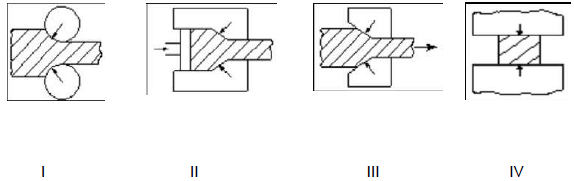
Analisando as figuras esquemáticas acima, podemos afirmar que elas representam, respectivamente,
Provas
Questão presente nas seguintes provas
754618
Ano: 2009
Disciplina: TI - Organização e Arquitetura dos Computadores
Banca: IF-SUL
Orgão: IF-SUL
Disciplina: TI - Organização e Arquitetura dos Computadores
Banca: IF-SUL
Orgão: IF-SUL
Memórias DDR2 são a evolução natural das memórias DDR-SDRAM. Sobre as principais diferenças entre estas tecnologias, afirma-se:
I. As memórias DDR2 podem transmitir o dobro de sinais por pulsos de clock comparados a memória DDR convencional.
II. O consumo de energia das memórias DDR2 é menor se comparado ao da memória DDR.
III. A tecnologia DDR2 permite que os módulos de memória trabalhem em Dual Channel, recurso que não estava presente nas memórias com tecnologia DDR.
Está(ão) CORRETA(S) a(s) afirmativa(s)
Provas
Questão presente nas seguintes provas
Analise as figuras a seguir:
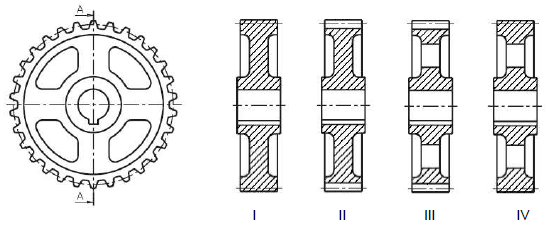
Qual figura representa CORRETAMENTE o Corte AA?
Provas
Questão presente nas seguintes provas
Observe a figura abaixo:

Considerando que a barra tem largura constante de 35mm e espessura de 10mm, a tensão normal média máxima da barra quando submetida ao carregamento mostrado é de
Provas
Questão presente nas seguintes provas
A respeito das diretivas include e require em PHP, é CORRETO afirmar que:
Provas
Questão presente nas seguintes provas
691626
Ano: 2009
Disciplina: Direito Cultural, Desportivo e da Comunicação
Banca: IF-SUL
Orgão: IF-SUL
Disciplina: Direito Cultural, Desportivo e da Comunicação
Banca: IF-SUL
Orgão: IF-SUL
As aplicações de recursos efetuadas conforme a Lei Rouanet, quer sejam as estabelecidas no art. 18, quer sejam as estabelecidas no art. 26, podem ser parceladas. Sendo assim, uma pessoa jurídica, ao efetuar aplicações mensais de R$ 30.000,00 a título de doação ou patrocínio, no período de julho a maio do exercício seguinte, tem sua dedutibilidade fiscal dentro desse exercício no valor de
Provas
Questão presente nas seguintes provas
691556
Ano: 2009
Disciplina: Direito Cultural, Desportivo e da Comunicação
Banca: IF-SUL
Orgão: IF-SUL
Disciplina: Direito Cultural, Desportivo e da Comunicação
Banca: IF-SUL
Orgão: IF-SUL
A montagem ou a formatação do projeto cultural é a fase da concepção do produto cultural incentivado. Tratando-se de proposta de convênio com recursos do Fundo Nacional de Cultura, é necessário estabelecer o valor da contrapartida, que, neste caso, é obrigatória e legal de
Provas
Questão presente nas seguintes provas
No mercado existem empresas distintas entre si, que podem ser agrupadas em categorias diferenciadas, em que surgem, as que se caracterizam por ganho no giro do ativo, diferentemente daquelas que ganham na margem de rentabilidade, somente para citar dois exemplos de análise. Então, diferentes tipos de negócios exigem enfoques diferenciados em sua gestão. Dentre as alternativas abaixo, qual a ênfase correta do tipo de negócio “comércio varejista”?
Provas
Questão presente nas seguintes provas
ScienceDaily (Dec. 19, 2008) — Wellcome Trust researchers have developed a new form of psychotherapy that has been shown to have the potential to treat more than eight out of ten cases of eating disorders in adults, a study out today reports.
This new "enhanced" form of cognitive behavioural therapy (CBT-E) builds on and improves the current leading treatment for bulimia nervosa as recommended by the National Institute of Health and Clinical Excellence (NICE). CBT-E is the first treatment to be shown to be suitable for the majority of cases of eating disorders.
According to NICE, eating disorders are a major cause of physical and psychosocial impairment in young women, affecting at least one in twenty women between the ages of 18 and 30. They also occur in young men but are less common. Three eating disorders are recognised: anorexia nervosa, which accounts for around one in ten cases in adults; bulimia nervosa, which accounts for a third of all cases; and the remainder are classed as "atypical eating disorders, which account for over half of all cases. In these atypical cases the features of anorexia nervosa and bulimia nervosa are combined in a different way.
The three eating disorders vary in their severity, but typically involve extreme and relentless dieting, self-induced vomiting or laxative misuse, binge eating, driven exercising and in some cases marked weight loss. Common associated features are depression, social withdrawal, perfectionism and low self-esteem. The disorders tend to run a chronic course and are notoriously difficult to treat. Relapse is common.
This new treatment derives from an earlier form of CBT that was designed exclusively for patients with bulimia nervosa. Both were developed by Professor Christopher Fairburn, a Wellcome Trust Principal Research Fellow at the University of Oxford. In 2004, the earlier treatment became the first psychotherapy to be recognised by NICE as the leading treatment for a clinical condition and its use was recommended across the NHS.
Now, in a study published today in the American Journal of Psychiatry, Professor Fairburn and colleagues have shown that the enhanced version of the treatment is not only more potent than the earlier NICE-recommended treatment, but it can also be used to treat both bulimia nervosa and the atypical eating disorders, making it suitable for over 80 percent of cases of eating disorders.
"Eating disorders are serious mental health problems and can be very distressing for both patients and their families," says Professor Fairburn. "Now for the first time, we have a single treatment which can be effective at treating the majority of cases without the need for patients to be admitted into hospital."
154 people were recruited for the study which was based in Oxfordshire and Leicestershire. Two versions of CBT-E were compared: a simple version that focused solely on the eating disorder and a second, more complex version that simultaneously addressed commonly associated problems such as low self-esteem and extreme perfectionism. Both treatments comprised twenty 50-minute outpatient appointments over twenty weeks.
The researchers found that the majority of patients responded well and rapidly to the two forms of CBT-E and that the changes were sustained over the following year, the time at which relapse is most likely to occur. Approximately two-thirds of those who completed treatment made a complete and lasting response with many of the remainder showing substantial improvement. Patients with bulimia nervosa or an atypical eating disorder responded equally well, though a planned sub-analysis showed that patients with particularly complex clinical features responded better to the more complex treatment and vice versa.
"This new psychotherapy is an effective and relatively straightforward intervention for treating most clinical disorders seen in adults," says Professor Fairburn. "It is increasingly being used across the NHS and has the potential to improve the lives of the hundreds of thousands of people living with eating disorders."
Professor Fairburn and colleagues are also nearing the completion of a largescale trial investigating the effectiveness of CBT-E as a treatment for anorexia nervosa, the interim result of which look very promising.
The findings have been welcomed by Susan Ringwood, Chief Executive Officer of Beat, the beating eating disorders campaign group: "This research shows that people can benefit from psychological therapy even at a very low weight. There has been so little research into eating disorders and anorexia in particular, and Professor Fairburn's work has really added to our knowledge in this challenging field."
The research is the culmination of a seven-year study funded by the Wellcome Trust, the UK's largest medical research charity.
Adapted from materials provided by Wellcome Trust.
Available at <http://www.sciencedaily.com/releases/2008/12/081215074404.htm> access on June 19, 2009.
I. The first CBT treatment developed by Professor Fairburn, in 2004, although recognised by NICE as the leading treatment for a clinical condition, addressed only one of the eating disorders, being considered not as complex as the new treatment now in study.
II. In the new study developed, different versions of the treatment were compared: one of them focused on the disorder itself; the other, besides treating the disorder, dealt with associated problems, like low selfesteem, for example.
III. Patients submitted to both versions of the new treatment showed, in most cases, effective and lasting results, having the more complex cases shown better responses to the second version of CBT-E.
IV. The new version of CBT treatment does not comprise patients suffering from anorexia nervosa, since the studies performed did not find substantial evidence of positive effects of the treatment towards patients suffering from this condition.
According to the text, the assertions above are, respectively,
Provas
Questão presente nas seguintes provas
Cadernos
Caderno Container