Foram encontradas 60 questões.
Em um pequeno ramal do Metrô, um trem parte da estação inicial até o destino final e volta à estação inicial em exatos 25 minutos. Em outro ramal, parte outro trem da mesma estação inicial, vai até o destino final e volta à estação inicial em exatos 35 minutos. Suponha que os dois trens realizem sucessivas viagens, sempre com a mesma duração e sem qualquer intervalo de tempo entre uma viagem e a seguinte. Sabendo-se que às 8 horas e 10 minutos os dois trens partiram simultaneamente da estação inicial, após às 17 horas deste mesmo dia, a primeira vez que esse fato ocorrerá novamente será às :
Provas
Questão presente nas seguintes provas

Subiram no trem vazio, na estação inicial, x pessoas e nesse dia ninguém mais entrou nesse trem. Na 1ª estação desembarcaram 2/3 dos passageiros que estavam no trem e ainda mais 10 passageiros. Na 2ª estação desembarcaram 2/3 dos passageiros que ainda estavam no trem e mais 10 pessoas. Exatamente assim aconteceu também nas 3ª , 4ª e 5ª estações. Da 5ª estação em diante, o trem trafegou com apenas 1 passageiro. Desta maneira, o número de passageiros que desembarcaram, ao todo, nas três primeimeiras estações, é igual a :
Provas
Questão presente nas seguintes provas
Um ramal do Metrô de uma cidade possui 5 estações, após a estação inicial, e que são nomeadas por Água, Brisa, Vento, Chuva e Terra. Essas estações não estão localizadas no ramal, necessariamente, na ordem dada. Considerando o sentido do trem que parte da estação inicial, sabe-se que:
I. os passageiros que descem na estação Chuva, descem na terceira estação após os passageiros que descem na estação Vento.
II. os passageiros que descem na estação Brisa, descem antes do que os passageiros que descem na estação Água e também os que descem na estação Vento.
III. a estação Terra não é a estação central das cinco estações.
Dos 500 passageiros que embarcaram no trem na estação inicial, 35% desceram em Água, 12% desceram em Brisa, 32% desceram em Chuva, 10% desceram em Terra e 11% desceram em Vento. Assim, pode-se concluir corretamente que, dos 500 passageiros que embarcaram no trem na estação inicial, ainda restam no trem, após a estação Água, um número de passageiros igual a :
I. os passageiros que descem na estação Chuva, descem na terceira estação após os passageiros que descem na estação Vento.
II. os passageiros que descem na estação Brisa, descem antes do que os passageiros que descem na estação Água e também os que descem na estação Vento.
III. a estação Terra não é a estação central das cinco estações.
Dos 500 passageiros que embarcaram no trem na estação inicial, 35% desceram em Água, 12% desceram em Brisa, 32% desceram em Chuva, 10% desceram em Terra e 11% desceram em Vento. Assim, pode-se concluir corretamente que, dos 500 passageiros que embarcaram no trem na estação inicial, ainda restam no trem, após a estação Água, um número de passageiros igual a :
Provas
Questão presente nas seguintes provas
Metro releases preliminary findings of investigation into overnight construction accident in Red Line work zone
News release issued at 3:27 pm, October 6, 2013.
The investigation into the cause of a fatal overnight construction accident on the Red Line in Washington, D.C. is ....B .... . The investigation team, led by Metro's Chief Safety Officer, has authorized the release of the following facts and preliminary findings:
The incident occurred shortly after midnight, Sunday, October 6, 2013, in a work zone on the outbound (Glenmont direction) track between Union Station and Judiciary Square.
Contractors and WMATA employees were performing rail renewal, a process that involves removing old sections of rail, installing new sections of rail and related activity such as welding and grinding.
At approximately 12:03 a.m., there was a fire and loud noise that originated near heavy track equipment used to weld rail sections together into a continuous strip.
The fire and loud noise originated approximately 70 to 80 feet from the injured workers. The root cause of the fire/noise has not yet been determined. It is not yet known if there was a fluid leak or another mechanical issue.
The fire was extinguished by workers using a handheld fire extinguisher.
The incident caused a 40-foot section of rail to move, striking three workers (two WMATA employees and a contractor). It is not yet known what caused the piece of rail to move.
The two WMATA employees - one track worker and one supervisor - suffered serious but non-life-threatening injuries from being struck by the piece of rail. They were transported to local hospitals.
The contractor, an employee of Holland Co., was fatally injured as a result of being struck by the piece of rail.
Dentro do contexto, a palavra que preenche corretamente a lacuna ...B... éNews release issued at 3:27 pm, October 6, 2013.
The investigation into the cause of a fatal overnight construction accident on the Red Line in Washington, D.C. is ....B .... . The investigation team, led by Metro's Chief Safety Officer, has authorized the release of the following facts and preliminary findings:
The incident occurred shortly after midnight, Sunday, October 6, 2013, in a work zone on the outbound (Glenmont direction) track between Union Station and Judiciary Square.
Contractors and WMATA employees were performing rail renewal, a process that involves removing old sections of rail, installing new sections of rail and related activity such as welding and grinding.
At approximately 12:03 a.m., there was a fire and loud noise that originated near heavy track equipment used to weld rail sections together into a continuous strip.
The fire and loud noise originated approximately 70 to 80 feet from the injured workers. The root cause of the fire/noise has not yet been determined. It is not yet known if there was a fluid leak or another mechanical issue.
The fire was extinguished by workers using a handheld fire extinguisher.
The incident caused a 40-foot section of rail to move, striking three workers (two WMATA employees and a contractor). It is not yet known what caused the piece of rail to move.
The two WMATA employees - one track worker and one supervisor - suffered serious but non-life-threatening injuries from being struck by the piece of rail. They were transported to local hospitals.
The contractor, an employee of Holland Co., was fatally injured as a result of being struck by the piece of rail.
Provas
Questão presente nas seguintes provas
Metro releases preliminary findings of investigation into overnight construction accident in Red Line work zone
News release issued at 3:27 pm, October 6, 2013.
The investigation into the cause of a fatal overnight construction accident on the Red Line in Washington, D.C. is ....B .... . The investigation team, led by Metro's Chief Safety Officer, has authorized the release of the following facts and preliminary findings:
The incident occurred shortly after midnight, Sunday, October 6, 2013, in a work zone on the outbound (Glenmont direction) track between Union Station and Judiciary Square.
Contractors and WMATA employees were performing rail renewal, a process that involves removing old sections of rail, installing new sections of rail and related activity such as welding and grinding.
At approximately 12:03 a.m., there was a fire and loud noise that originated near heavy track equipment used to weld rail sections together into a continuous strip.
The fire and loud noise originated approximately 70 to 80 feet from the injured workers. The root cause of the fire/noise has not yet been determined. It is not yet known if there was a fluid leak or another mechanical issue.
The fire was extinguished by workers using a handheld fire extinguisher.
The incident caused a 40-foot section of rail to move, striking three workers (two WMATA employees and a contractor). It is not yet known what caused the piece of rail to move.
The two WMATA employees - one track worker and one supervisor - suffered serious but non-life-threatening injuries from being struck by the piece of rail. They were transported to local hospitals.
The contractor, an employee of Holland Co., was fatally injured as a result of being struck by the piece of rail.
Segundo o texto,News release issued at 3:27 pm, October 6, 2013.
The investigation into the cause of a fatal overnight construction accident on the Red Line in Washington, D.C. is ....B .... . The investigation team, led by Metro's Chief Safety Officer, has authorized the release of the following facts and preliminary findings:
The incident occurred shortly after midnight, Sunday, October 6, 2013, in a work zone on the outbound (Glenmont direction) track between Union Station and Judiciary Square.
Contractors and WMATA employees were performing rail renewal, a process that involves removing old sections of rail, installing new sections of rail and related activity such as welding and grinding.
At approximately 12:03 a.m., there was a fire and loud noise that originated near heavy track equipment used to weld rail sections together into a continuous strip.
The fire and loud noise originated approximately 70 to 80 feet from the injured workers. The root cause of the fire/noise has not yet been determined. It is not yet known if there was a fluid leak or another mechanical issue.
The fire was extinguished by workers using a handheld fire extinguisher.
The incident caused a 40-foot section of rail to move, striking three workers (two WMATA employees and a contractor). It is not yet known what caused the piece of rail to move.
The two WMATA employees - one track worker and one supervisor - suffered serious but non-life-threatening injuries from being struck by the piece of rail. They were transported to local hospitals.
The contractor, an employee of Holland Co., was fatally injured as a result of being struck by the piece of rail.
Provas
Questão presente nas seguintes provas
San Francisco Subway TBMs Dig Deep to Overcome Tunnel Challenges
September 4, 2013
By Greg Aragon
Tunneling 100 ft below a busy city with varying substructure is a delicate job, especially when the work comes .....A.... 8 ft of existing tunnels. Such is the case on San Francisco's new $1.5-billion Central Subway Project, which began major subterranean excavation last month.
"The tunnels pass through both soft ground and Franciscan formation, which is heterogeneous rock that is not predictable except in its unpredictability," says Sarah Wilson, a San Francisco Municipal Transportation Agency (SFMTA) resident engineer.
While underground conditions will be tricky, the project's twin earth-pressure-balance tunnel-boring machines will be able to adjust their blades and cut through any sand, dirt or rock, says Wilson. The TBMs, dubbed Mom Chung and Big Alma, are each 350 ft long and weigh 750 tons.
Mom Chung was first out of the 450-ft-long launch box. Over the next 10 months, she will travel north, creating a 1.7-mile-long tunnel. Big Alma will begin digging a southbound parallel tunnel later this month.
The tunnels are the main component of the Central Subway Project, which is extending the Muni Metro T Third Line through one of the most densely populated neighborhoods in the U.S. with three new underground stations and one at street level. Work on the line is scheduled to wrap up in 2019.
To prevent and control ground and adjacent structure settlement, the team will use compensation grouting, in which a horizontal array of grout pipes is installed into a shaft drilled down next to the tunnel alignment. "We are basically preconditioning the ground and making it homogeneous so that there are no surprises for the crossing," says John Funghi, SFMTA program director.
A palavra que preenche corretamente a lacuna ...A... é :September 4, 2013
By Greg Aragon
Tunneling 100 ft below a busy city with varying substructure is a delicate job, especially when the work comes .....A.... 8 ft of existing tunnels. Such is the case on San Francisco's new $1.5-billion Central Subway Project, which began major subterranean excavation last month.
"The tunnels pass through both soft ground and Franciscan formation, which is heterogeneous rock that is not predictable except in its unpredictability," says Sarah Wilson, a San Francisco Municipal Transportation Agency (SFMTA) resident engineer.
While underground conditions will be tricky, the project's twin earth-pressure-balance tunnel-boring machines will be able to adjust their blades and cut through any sand, dirt or rock, says Wilson. The TBMs, dubbed Mom Chung and Big Alma, are each 350 ft long and weigh 750 tons.
Mom Chung was first out of the 450-ft-long launch box. Over the next 10 months, she will travel north, creating a 1.7-mile-long tunnel. Big Alma will begin digging a southbound parallel tunnel later this month.
The tunnels are the main component of the Central Subway Project, which is extending the Muni Metro T Third Line through one of the most densely populated neighborhoods in the U.S. with three new underground stations and one at street level. Work on the line is scheduled to wrap up in 2019.
To prevent and control ground and adjacent structure settlement, the team will use compensation grouting, in which a horizontal array of grout pipes is installed into a shaft drilled down next to the tunnel alignment. "We are basically preconditioning the ground and making it homogeneous so that there are no surprises for the crossing," says John Funghi, SFMTA program director.
Provas
Questão presente nas seguintes provas
San Francisco Subway TBMs Dig Deep to Overcome Tunnel Challenges
September 4, 2013
By Greg Aragon
Tunneling 100 ft below a busy city with varying substructure is a delicate job, especially when the work comes .....A.... 8 ft of existing tunnels. Such is the case on San Francisco's new $1.5-billion Central Subway Project, which began major subterranean excavation last month.
"The tunnels pass through both soft ground and Franciscan formation, which is heterogeneous rock that is not predictable except in its unpredictability," says Sarah Wilson, a San Francisco Municipal Transportation Agency (SFMTA) resident engineer.
While underground conditions will be tricky, the project's twin earth-pressure-balance tunnel-boring machines will be able to adjust their blades and cut through any sand, dirt or rock, says Wilson. The TBMs, dubbed Mom Chung and Big Alma, are each 350 ft long and weigh 750 tons.
Mom Chung was first out of the 450-ft-long launch box. Over the next 10 months, she will travel north, creating a 1.7-mile-long tunnel. Big Alma will begin digging a southbound parallel tunnel later this month.
The tunnels are the main component of the Central Subway Project, which is extending the Muni Metro T Third Line through one of the most densely populated neighborhoods in the U.S. with three new underground stations and one at street level. Work on the line is scheduled to wrap up in 2019.
To prevent and control ground and adjacent structure settlement, the team will use compensation grouting, in which a horizontal array of grout pipes is installed into a shaft drilled down next to the tunnel alignment. "We are basically preconditioning the ground and making it homogeneous so that there are no surprises for the crossing," says John Funghi, SFMTA program director.
Segundo Wilson,September 4, 2013
By Greg Aragon
Tunneling 100 ft below a busy city with varying substructure is a delicate job, especially when the work comes .....A.... 8 ft of existing tunnels. Such is the case on San Francisco's new $1.5-billion Central Subway Project, which began major subterranean excavation last month.
"The tunnels pass through both soft ground and Franciscan formation, which is heterogeneous rock that is not predictable except in its unpredictability," says Sarah Wilson, a San Francisco Municipal Transportation Agency (SFMTA) resident engineer.
While underground conditions will be tricky, the project's twin earth-pressure-balance tunnel-boring machines will be able to adjust their blades and cut through any sand, dirt or rock, says Wilson. The TBMs, dubbed Mom Chung and Big Alma, are each 350 ft long and weigh 750 tons.
Mom Chung was first out of the 450-ft-long launch box. Over the next 10 months, she will travel north, creating a 1.7-mile-long tunnel. Big Alma will begin digging a southbound parallel tunnel later this month.
The tunnels are the main component of the Central Subway Project, which is extending the Muni Metro T Third Line through one of the most densely populated neighborhoods in the U.S. with three new underground stations and one at street level. Work on the line is scheduled to wrap up in 2019.
To prevent and control ground and adjacent structure settlement, the team will use compensation grouting, in which a horizontal array of grout pipes is installed into a shaft drilled down next to the tunnel alignment. "We are basically preconditioning the ground and making it homogeneous so that there are no surprises for the crossing," says John Funghi, SFMTA program director.
Provas
Questão presente nas seguintes provas
San Francisco Subway TBMs Dig Deep to Overcome Tunnel Challenges
September 4, 2013
By Greg Aragon
Tunneling 100 ft below a busy city with varying substructure is a delicate job, especially when the work comes .....A.... 8 ft of existing tunnels. Such is the case on San Francisco's new $1.5-billion Central Subway Project, which began major subterranean excavation last month.
"The tunnels pass through both soft ground and Franciscan formation, which is heterogeneous rock that is not predictable except in its unpredictability," says Sarah Wilson, a San Francisco Municipal Transportation Agency (SFMTA) resident engineer.
While underground conditions will be tricky, the project's twin earth-pressure-balance tunnel-boring machines will be able to adjust their blades and cut through any sand, dirt or rock, says Wilson. The TBMs, dubbed Mom Chung and Big Alma, are each 350 ft long and weigh 750 tons.
Mom Chung was first out of the 450-ft-long launch box. Over the next 10 months, she will travel north, creating a 1.7-mile-long tunnel. Big Alma will begin digging a southbound parallel tunnel later this month.
The tunnels are the main component of the Central Subway Project, which is extending the Muni Metro T Third Line through one of the most densely populated neighborhoods in the U.S. with three new underground stations and one at street level. Work on the line is scheduled to wrap up in 2019.
To prevent and control ground and adjacent structure settlement, the team will use compensation grouting, in which a horizontal array of grout pipes is installed into a shaft drilled down next to the tunnel alignment. "We are basically preconditioning the ground and making it homogeneous so that there are no surprises for the crossing," says John Funghi, SFMTA program director.
Segundo o texto,September 4, 2013
By Greg Aragon
Tunneling 100 ft below a busy city with varying substructure is a delicate job, especially when the work comes .....A.... 8 ft of existing tunnels. Such is the case on San Francisco's new $1.5-billion Central Subway Project, which began major subterranean excavation last month.
"The tunnels pass through both soft ground and Franciscan formation, which is heterogeneous rock that is not predictable except in its unpredictability," says Sarah Wilson, a San Francisco Municipal Transportation Agency (SFMTA) resident engineer.
While underground conditions will be tricky, the project's twin earth-pressure-balance tunnel-boring machines will be able to adjust their blades and cut through any sand, dirt or rock, says Wilson. The TBMs, dubbed Mom Chung and Big Alma, are each 350 ft long and weigh 750 tons.
Mom Chung was first out of the 450-ft-long launch box. Over the next 10 months, she will travel north, creating a 1.7-mile-long tunnel. Big Alma will begin digging a southbound parallel tunnel later this month.
The tunnels are the main component of the Central Subway Project, which is extending the Muni Metro T Third Line through one of the most densely populated neighborhoods in the U.S. with three new underground stations and one at street level. Work on the line is scheduled to wrap up in 2019.
To prevent and control ground and adjacent structure settlement, the team will use compensation grouting, in which a horizontal array of grout pipes is installed into a shaft drilled down next to the tunnel alignment. "We are basically preconditioning the ground and making it homogeneous so that there are no surprises for the crossing," says John Funghi, SFMTA program director.
Provas
Questão presente nas seguintes provas
O resultado dessa expressão numérica:
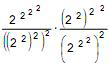
é igual a:
é igual a:
Provas
Questão presente nas seguintes provas
Viagens
Viagens de avião e de metrô podem guardar certa semelhança. Entre nuvens carregadas, ou tendo o azul como horizonte infinito, o passageiro não sente que está em percurso; no interior dos túneis, diante das velozes e uniformes paredes de concreto, o passageiro tampouco sabe da viagem. Em ambos os casos, vai de um ponto a outro como se alguém o levantasse de um lugar para pô-lo em outro, mais adiante.
Nesses casos, praticamente se impõe uma viagem interior. As nuvens, o azul ou o concreto escuro hipnotizam-nos, deixam-nos a sós com nossas imagens e nossos pensamentos, que também sabem mover-se com rapidez. Confesso que gosto desses momentos que, sendo velozes, são, paradoxalmente, de letargia: os olhos abertos veem para dentro, nosso cinema interior se abre para uma profusão de cenas vividas ou de expectativas abertas. Em tais viagens, estamos surpreendentemente sós - uma experiência rara em nossos dias, concordam?
Que ninguém se socorra do celular ou de qualquer engenhoca eletrônica, por favor: que enfrente o vital desafio de um colóquio consigo mesmo, de uma viagem em que somos ao mesmo tempo passageiros e condutores, roteiristas do nosso trajeto, produtores do nosso sentido. Não é pouco: nesses minutos de íntima peregrinação, o único compromisso é o de não resistir à súbita liberdade que nossa imaginação ganhou. Chegando à nossa estação ou ao nosso aeroporto, retomaremos a rotina e nos curvaremos à fatalidade de que as obrigações mundanas rejam o nosso destino. Navegar é preciso, viver não é preciso, diziam os antigos marinheiros. É verdade: há viagens em que o menos importante é chegar.
(Ulisses Rebonato, inédito)
Provas
Questão presente nas seguintes provas
Cadernos
Caderno Container