Foram encontradas 245 questões.
Um dado é um cubo, onde em cada face colocamos de 1 a 6 pontos, de tal maneira que a soma dos pontos que ficam em cada par de faces opostas é sempre 7.
Quatro dados foram empilhados como na figura abaixo.
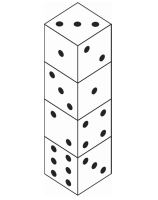
A soma dos pontos das faces que não aparecem na figura é
Provas

Ana, Beatriz e Célia moram com suas avós Sandra, Adélia e Maria em Franca, Campinas e em Araras, não necessariamente nas ordens indicadas. Além disso, sabe-se que:
− Beatriz não é neta de Maria.
− Ana não mora em Araras e é neta de Sandra.
− A menina que mora em Franca é neta de Adélia.
Desse modo, é correto afirmar que:
Provas
O quadrado mágico abaixo deve ser preenchido, sem repetições, com os números ímpares de 1 a 17 de modo que a soma de qualquer linha, coluna ou diagonal seja a mesma.
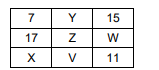
Alguns valores já foram corretamente colocados no quadrado mágico. O valor de X é
Provas
“Art. 10. A execução das atividades da Administração Federal deverá ser amplamente
 § 1º A
  será posta em prática em três planos principais:
a) dentro dos quadros da Administração Federal, distinguindo-se claramente o nível de direção do de execução;
b) da Administração Federal para a das unidades federadas, quando estejam devidamente aparelhadas e mediante convênio;
c) da Administração Federal para a órbita privada, mediante contratos ou concessões”.
será posta em prática em três planos principais:
a) dentro dos quadros da Administração Federal, distinguindo-se claramente o nível de direção do de execução;
b) da Administração Federal para a das unidades federadas, quando estejam devidamente aparelhadas e mediante convênio;
c) da Administração Federal para a órbita privada, mediante contratos ou concessões”.
Preenchem correta e respectivamente as lacunas I e II do texto acima:
Provas
Provas
- Auditoria InternaAuditoria Interna Contábil
- Auditoria InternaAuditor Interno: Requisitos Profissionais e Normas de Conduta
Provas
Suponha que um auditor independente esteja auditando uma empresa e se depare com uma das seguintes situações:
I. Obteve evidência de auditoria apropriada e suficiente, e concluiu que as distorções, individualmente ou em conjunto, são relevantes, mas não generalizadas nas demonstrações contábeis; ou
II. Não consegue obter evidência apropriada e suficiente de auditoria para suportar sua opinião, mas conclui que os possíveis efeitos de distorções não detectadas, se houver, sobre as demonstrações contábeis poderiam ser relevantes, mas não generalizados.
Em ambos os casos, deve expressar no relatório de auditoria sua opinião
Provas
Provas
The London Underground
The London Underground (also known simply as the Underground, or by its nickname the Tube) is a public rapid transit system serving London, England and some parts of the adjacent counties of Buckinghamshire, Essex and Hertfordshire in the United Kingdom.
The Underground has its origins in the Metropolitan Railway, the world's first underground passenger railway. Opened in January 1863, it is now part of the Circle, Hammersmith & City and Metropolitan lines; the first line to operate underground electric traction trains, the City & South London Railway in 1890, is now part of the Northern line. The network has expanded to 11 lines, and in 2017/18 carried 1.357 billion passengers, making it the world's 11th busiest metro system. The 11 lines collectively handle up to 5 million passengers a day.
Despite its name, only 45% of the system is underground in tunnels, with much of the network in the outer environs of London being on the surface.
As of 2015, 92% of operational expenditure is covered by passenger fares.
Early years
The idea of an underground railway linking the City of London with the urban centre was proposed in the 1830s, and the Metropolitan Railway was granted permission to build such a line in 1854. To prepare construction, a short test tunnel was built in 1855 in Kibblesworth, a small town with geological properties similar to London. This test tunnel was used for two years in the development of the first underground train, and was later, in 1861, filled up. The world's first underground railway opened in January 1863 between Paddington and Farringdon using gas-lit wooden carriages hauled by steam locomotives.
While steam locomotives were in use on the Underground there were I health reports. There were many instances of passengers collapsing whilst travelling, due to heat and pollution, leading for calls to clean the air through the installation of garden plants. The Metropolitan even encouraged beards for staff to act as an air filter. There were other reports claiming beneficial outcomes of using the Underground, including the designation of Great Portland Street as a "sanatorium for [sufferers of ...] asthma and bronchial complaints", tonsillitis could be cured with acid gas and the Twopenny Tube cured anorexia.
During the war many tube stations were used as air-raid shelters. On 3 March 1943, a test of the air-raid warning sirens, together with the firing of a new type of anti-aircraft rocket, resulted in a crush of people attempting to take shelter in Bethnal Green Underground station. A total of 173 people, including 62 children, died, making this both the worst civilian disaster of World War II, and the largest loss of life in a single incident on the London Underground network.
A different kind of accident occurred on 28 February 1975, a southbound train on the Northern City Line failed to stop at its Moorgate terminus and crashed into the wall at the end of the tunnel, in the Moorgate tube crash. There were 43 deaths and 74 injuries, the greatest loss of life during peacetime on the London Underground.
A few years later, on 18 November 1987, fire broke out in an escalator at King's Cross St. Pancras tube station. The resulting fire cost the lives of 31 people and injured a further 100. London Underground were strongly criticised in the aftermath for their attitude to fires underground, and publication of the report into the fire led to the resignation of senior management of both London Underground and London Regional Transport. To comply with new safety regulations issued as a result of the fire, and to combat graffiti, a train refurbishment project was launched in July 1991.
(Adapted from: https://en.wikipedia.org)
Provas
The London Underground
The London Underground (also known simply as the Underground, or by its nickname the Tube) is a public rapid transit system serving London, England and some parts of the adjacent counties of Buckinghamshire, Essex and Hertfordshire in the United Kingdom.
The Underground has its origins in the Metropolitan Railway, the world's first underground passenger railway. Opened in January 1863, it is now part of the Circle, Hammersmith & City and Metropolitan lines; the first line to operate underground electric traction trains, the City & South London Railway in 1890, is now part of the Northern line. The network has expanded to 11 lines, and in 2017/18 carried 1.357 billion passengers, making it the world's 11th busiest metro system. The 11 lines collectively handle up to 5 million passengers a day.
Despite its name, only 45% of the system is underground in tunnels, with much of the network in the outer environs of London being on the surface.
As of 2015, 92% of operational expenditure is covered by passenger fares.
Early years
The idea of an underground railway linking the City of London with the urban centre was proposed in the 1830s, and the Metropolitan Railway was granted permission to build such a line in 1854. To prepare construction, a short test tunnel was built in 1855 in Kibblesworth, a small town with geological properties similar to London. This test tunnel was used for two years in the development of the first underground train, and was later, in 1861, filled up. The world's first underground railway opened in January 1863 between Paddington and Farringdon using gas-lit wooden carriages hauled by steam locomotives.
While steam locomotives were in use on the Underground there were I health reports. There were many instances of passengers collapsing whilst travelling, due to heat and pollution, leading for calls to clean the air through the installation of garden plants. The Metropolitan even encouraged beards for staff to act as an air filter. There were other reports claiming beneficial outcomes of using the Underground, including the designation of Great Portland Street as a "sanatorium for [sufferers of ...] asthma and bronchial complaints", tonsillitis could be cured with acid gas and the Twopenny Tube cured anorexia.
During the war many tube stations were used as air-raid shelters. On 3 March 1943, a test of the air-raid warning sirens, together with the firing of a new type of anti-aircraft rocket, resulted in a crush of people attempting to take shelter in Bethnal Green Underground station. A total of 173 people, including 62 children, died, making this both the worst civilian disaster of World War II, and the largest loss of life in a single incident on the London Underground network.
A different kind of accident occurred on 28 February 1975, a southbound train on the Northern City Line failed to stop at its Moorgate terminus and crashed into the wall at the end of the tunnel, in the Moorgate tube crash. There were 43 deaths and 74 injuries, the greatest loss of life during peacetime on the London Underground.
A few years later, on 18 November 1987, fire broke out in an escalator at King's Cross St. Pancras tube station. The resulting fire cost the lives of 31 people and injured a further 100. London Underground were strongly criticised in the aftermath for their attitude to fires underground, and publication of the report into the fire led to the resignation of senior management of both London Underground and London Regional Transport. To comply with new safety regulations issued as a result of the fire, and to combat graffiti, a train refurbishment project was launched in July 1991.
(Adapted from: https://en.wikipedia.org)
Provas
Caderno Container