Foram encontradas 100 questões.
TEXT I
Breaking the habit: From oiloholics to e-totallers
What changes in driving habits and improved batteries might do to oil demand
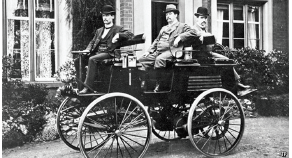
It has been a bad couple of years for those hoping for the death of driving. In America, where cars are an important part of the national psyche, a decade ago people had suddenly started to drive less, which had not happened since the oil shocks of the 1970s. Academics started to talk excitedly about “peak driving”, offering explanations such as urbanisation, ageing baby-boomers, car-shy millennials, ride-sharing apps such as Uber and even the distraction of Facebook.
Yet the causes may have been more prosaic: a combination of higher petrol prices and lower incomes in the wake of the 2008-09 financial crisis. Since the drop in oil prices in 2014, and a recovery in employment, the number of vehicle-miles travelled has rebounded, and sales of trucks and SUVs, which are less fuel-efficient than cars, have hit record highs.
This sensitivity to prices and incomes is important for global oil demand. More than half the world’s oil is used for transport, and of that, 46% goes into passenger cars. But the response to lower prices has been partially offset by dramatic improvements in fuel efficiency in America and elsewhere, thanks to standards like America’s Corporate Average Fuel Economy (CAFE.), the EU’s rules on CO2 emissions and those in place in China since 2012.
The IEA says that such measures cut oil consumption in 2015 by a whopping 2.3m b/d. This is particularly impressive because interest in fuel efficiency usually wanes when prices are low. If best practice were applied to all the world’s vehicles, the savings would be 4.3m b/d, roughly equivalent to the crude output of Canada. This helps explain why some forecasters think demand for petrol may peak within the next 10-15 years even if the world’s vehicle fleet keeps growing.
Occo Roelofsen of McKinsey, a consultancy, goes further. Hereckons that thanks to the decline in the use of oil in light vehicles, total consumption of liquid fuels will begin to fall within a decade, and that in the next few decades driving will be shaken up by electric vehicles (EVs), self-driving cars and car-sharing. […]
(Dated Nov 24th, 2016. From https://www.economist.com/news/
specialreport/ 21710635-what-changes-driving-habits-and-improved-batteries-might-dooil- demand-coming. Accessed July 18th, 2017)
The word “offset” in “has been partially offset” means:
Provas

TEXT I
Breaking the habit: From oiloholics to e-totallers
What changes in driving habits and improved batteries might do to oil demand
It has been a bad couple of years for those hoping for the death of driving. In America, where cars are an important part of the national psyche, a decade ago people had suddenly started to drive less, which had not happened since the oil shocks of the 1970s. Academics started to talk excitedly about “peak driving”, offering explanations such as urbanisation, ageing baby-boomers, car-shy millennials, ride-sharing apps such as Uber and even the distraction of Facebook.
Yet the causes may have been more prosaic: a combination of higher petrol prices and lower incomes in the wake of the 2008-09 financial crisis. Since the drop in oil prices in 2014, and a recovery in employment, the number of vehicle-miles travelled has rebounded, and sales of trucks and SUVs, which are less fuel-efficient than cars, have hit record highs.
This sensitivity to prices and incomes is important for global oil demand. More than half the world’s oil is used for transport, and of that, 46% goes into passenger cars. But the response to lower prices has been partially offset by dramatic improvements in fuel efficiency in America and elsewhere, thanks to standards like America’s Corporate Average Fuel Economy (CAFE.), the EU’s rules on CO2 emissions and those in place in China since 2012.
The IEA says that such measures cut oil consumption in 2015 by a whopping 2.3m b/d. This is particularly impressive because interest in fuel efficiency usually wanes when prices are low. If best practice were applied to all the world’s vehicles, the savings would be 4.3m b/d, roughly equivalent to the crude output of Canada. This helps explain why some forecasters think demand for petrol may peak within the next 10-15 years even if the world’s vehicle fleet keeps growing.
Occo Roelofsen of McKinsey, a consultancy, goes further. Hereckons that thanks to the decline in the use of oil in light vehicles, total consumption of liquid fuels will begin to fall within a decade, and that in the next few decades driving will be shaken up by electric vehicles (EVs), self-driving cars and car-sharing. […]
(Dated Nov 24th, 2016. From https://www.economist.com/news/
specialreport/ 21710635-what-changes-driving-habits-and-improved-batteries-might-dooil- demand-coming. Accessed July 18th, 2017)
The use of “yet” in the opening of the second paragraph indicates that the author will provide a(n):
Provas
TEXT I
Breaking the habit: From oiloholics to e-totallers
What changes in driving habits and improved batteries might do to oil demand
It has been a bad couple of years for those hoping for the death of driving. In America, where cars are an important part of the national psyche, a decade ago people had suddenly started to drive less, which had not happened since the oil shocks of the 1970s. Academics started to talk excitedly about “peak driving”, offering explanations such as urbanisation, ageing baby-boomers, car-shy millennials, ride-sharing apps such as Uber and even the distraction of Facebook.
Yet the causes may have been more prosaic: a combination of higher petrol prices and lower incomes in the wake of the 2008-09 financial crisis. Since the drop in oil prices in 2014, and a recovery in employment, the number of vehicle-miles travelled has rebounded, and sales of trucks and SUVs, which are less fuel-efficient than cars, have hit record highs.
This sensitivity to prices and incomes is important for global oil demand. More than half the world’s oil is used for transport, and of that, 46% goes into passenger cars. But the response to lower prices has been partially offset by dramatic improvements in fuel efficiency in America and elsewhere, thanks to standards like America’s Corporate Average Fuel Economy (CAFE.), the EU’s rules on CO2 emissions and those in place in China since 2012.
The IEA says that such measures cut oil consumption in 2015 by a whopping 2.3m b/d. This is particularly impressive because interest in fuel efficiency usually wanes when prices are low. If best practice were applied to all the world’s vehicles, the savings would be 4.3m b/d, roughly equivalent to the crude output of Canada. This helps explain why some forecasters think demand for petrol may peak within the next 10-15 years even if the world’s vehicle fleet keeps growing.
Occo Roelofsen of McKinsey, a consultancy, goes further. Hereckons that thanks to the decline in the use of oil in light vehicles, total consumption of liquid fuels will begin to fall within a decade, and that in the next few decades driving will be shaken up by electric vehicles (EVs), self-driving cars and car-sharing. […]
(Dated Nov 24th, 2016. From https://www.economist.com/news/
specialreport/ 21710635-what-changes-driving-habits-and-improved-batteries-might-dooil- demand-coming. Accessed July 18th, 2017)
In the first paragraph, one of the reasons provided for the fact that driving was reduced in America a decade ago is:
Provas
TEXT I
Breaking the habit: From oiloholics to e-totallers
What changes in driving habits and improved batteries might do to oil demand
It has been a bad couple of years for those hoping for the death of driving. In America, where cars are an important part of the national psyche, a decade ago people had suddenly started to drive less, which had not happened since the oil shocks of the 1970s. Academics started to talk excitedly about “peak driving”, offering explanations such as urbanisation, ageing baby-boomers, car-shy millennials, ride-sharing apps such as Uber and even the distraction of Facebook.
Yet the causes may have been more prosaic: a combination of higher petrol prices and lower incomes in the wake of the 2008-09 financial crisis. Since the drop in oil prices in 2014, and a recovery in employment, the number of vehicle-miles travelled has rebounded, and sales of trucks and SUVs, which are less fuel-efficient than cars, have hit record highs.
This sensitivity to prices and incomes is important for global oil demand. More than half the world’s oil is used for transport, and of that, 46% goes into passenger cars. But the response to lower prices has been partially offset by dramatic improvements in fuel efficiency in America and elsewhere, thanks to standards like America’s Corporate Average Fuel Economy (CAFE.), the EU’s rules on CO2 emissions and those in place in China since 2012.
The IEA says that such measures cut oil consumption in 2015 by a whopping 2.3m b/d. This is particularly impressive because interest in fuel efficiency usually wanes when prices are low. If best practice were applied to all the world’s vehicles, the savings would be 4.3m b/d, roughly equivalent to the crude output of Canada. This helps explain why some forecasters think demand for petrol may peak within the next 10-15 years even if the world’s vehicle fleet keeps growing.
Occo Roelofsen of McKinsey, a consultancy, goes further. Hereckons that thanks to the decline in the use of oil in light vehicles, total consumption of liquid fuels will begin to fall within a decade, and that in the next few decades driving will be shaken up by electric vehicles (EVs), self-driving cars and car-sharing. […]
(Dated Nov 24th, 2016. From https://www.economist.com/news/
specialreport/ 21710635-what-changes-driving-habits-and-improved-batteries-might-dooil- demand-coming. Accessed July 18th, 2017)
The title of Text I implies a(n):
Provas
Na maioria das análises sísmicas de exploração e de reservatório, os principais objetivos são reproduzir corretamente a estrutura geológica em tempo e profundidade, e caracterizar corretamente as amplitudes das reflexões. Atributos sísmicos têm sido usado com sucesso para determinar ambientes deposicionais (canais fluviais ou de águas profundas, acumulações carbonáticas); detectar e melhorar falhas e conjuntos de fraturas para revelar a geodinâmica da bacia. Os atributos a seguir são geneticamente designados para definição de feições estruturais, EXCETO:
Provas
Atributos sísmicos são rotineiramente utilizados para acelerar e quantificar a interpretação de características tectônicas em dados sísmicos 3D. Seu maior uso é para destacar propriedades sutis das amplitudes, difíceis de serem percebidos a olho nu. Porém diversos efeitos causados pela interferência direta do geofísico podem trazer artefatos considerados como falsas estruturas, em feições falsamente realçadas (pitfalls) na visualização. Constata-se que a chance de um intérprete não compreender uma falsa estrutura (pitfall), gerada pela interferência humana, é inversamente proporcional à sua experiência. São possíveis causas de falsas estruturas por interferência humana, EXCETO:
Provas
Atributos sísmicos descrevem características dos dados sísmicos e buscam quantificá-las para diversas finalidades geológicas. Taner e Sheriff (1979) apresentaram cinco atributos usando a matemática de definição do traço sísmico complexo. Seus significados geológicos tiveram que ser inferidos empiricamente. a seguinte sequência aponta os 5 atributos primitivos do traço complexo propostos por tais autores:
Provas
Análise de fácies sísmicas também pode se correlacionar à descrição e interpretação geológica (ambiente, litofácies, etc.) dos parâmetros de reflexão sísmica, principalmente seus arranjos 3D e terminações 2D. Quanto às terminações observadas nas amplitudes, uma das ferramentas mais úteis na sismoestratigrafia é o Método ABC, que mapeia e traduz as terminações de amplitudes de cada unidade de fácies sísmica que represente uma sequência sismoestratigráfica.
O método se expressa na forma (A-B)/C, em que A é o padrão de terminação das reflexões no limite da sequência superior, B é o padrão de terminação das reflexões no limite da sequência inferior e C é o padrão sísmico interno da sequência analisada. Com relação a esse método ABC, todas as afirmações a seguir são corretas, EXCETO:
Provas
Fácies sísmicas podem ser descritas como “unidades sísmicas tridimensionais mapeáveis, compostas por grupos de reflexões cujos parâmetros são diferentes das unidades fácies adjacentes”. Análise de facies sísmicas é a descrição e a interpretação de eventos de reflexão sísmica, tais como configuração, continuidade, amplitude e frequência, internos a uma estrutura estratigráfica de uma seqüência deposicional. Seu objetivo é determinar as variações de parâmetros sísmicos internos de seqüências de terceira ordem e seus tratos de sistemas para descrever variações laterais de litofácies e alterações do tipo de fluido. Quando se deseja usar atributos sísmicos na interpretação de parâmetros de reflexão sísmica, as seguintes afirmativas, que relacionam o atributo sísmico a suas aplicações geológicas, estão corretas, EXCETO:
Provas
Na área do Pré-Sal brasileiro, uma prática muito comum é a aplicação de dados invertidos para geração de volumes de impedâncias compressionais (IP) e cisalhantes (IS) calibradas com valores obtidos em perfis de poços.
Um volume sísmico muito comum na tentativa de correlações entre dados sísmicos e tais impedâncias é denominado volume !$ \mu !$ p (em que !$ \mu !$ é o módulo de cisalhamento e p, a densidade). A seguinte equação, usada para gerar volumes invertidos, mostra a melhor aproximação do valor sísmico de !$ \mu !$ p:
Provas
Caderno Container