Foram encontradas 310 questões.
Combating teacher shortages in U.S.
In America, states have recently focused their efforts to reduce the nation’s teacher shortage by promoting strategies that “remove or relax barriers to entry” to quickly bring new people into the teaching profession. California allows teacher candidates to skip subject matter tests if they have taken approved college courses. New Mexico is replacing subject skills tests with a portfolio to demonstrate teaching competency. Missouri no longer looks at a prospective teacher’s overall grades – just the ones earned in select courses required to become a teacher. Arizona’s education requirements for teachers now allow people without a college degree to begin teaching – so long as they are currently enrolled in college.
But approaches to recruit new teachers do not address the actual causes of the comprehensive and nationwide teacher shortage. As revealed by research data recently published in the book “How Did We Get Here?: The Decay of the Teaching Profession,” college students who are interested in becoming teachers and current teachers agree: the root cause of the problem is a longstanding overall lack of respect for teachers and their craft, which is reflected by decades of low pay, hyperscrutiny and poor working conditions.
Even before covid-19 hit, teachers were leaving the profession at an increasing rate. And the stress of teaching through a pandemic has been speculated to drive away even more teachers. About 1 in 6 teachers expressed that they would likely leave their job pre-pandemic, but this increased to 1 in 4 by the 2020-21 school year. While teachers continue to leave classrooms, fewer people are signing up to replace them.
We believe efforts to loosen requirements for new teachers will bring more disrespect to the profession. Lowering the standards to allow more people to enter the teaching profession may, for a short period, boost the number of people available to stand in front of classrooms. Nevertheless, that approach does not make teaching an attractive profession to consider, nor worthwhile for someone to stay and thrive in. Solving the teacher shortage problem requires solutions that reduce the numbers of teachers leaving the field and specifically address the difficulties that they regularly endure.
(TRAN, H. & SMITH, D.A. www.theconversation.com, 08.08.2022. Adaptado)
It is correct information from the third paragraph:
Provas

Combating teacher shortages in U.S.
In America, states have recently focused their efforts to reduce the nation’s teacher shortage by promoting strategies that “remove or relax barriers to entry” to quickly bring new people into the teaching profession. California allows teacher candidates to skip subject matter tests if they have taken approved college courses. New Mexico is replacing subject skills tests with a portfolio to demonstrate teaching competency. Missouri no longer looks at a prospective teacher’s overall grades – just the ones earned in select courses required to become a teacher. Arizona’s education requirements for teachers now allow people without a college degree to begin teaching – so long as they are currently enrolled in college.
But approaches to recruit new teachers do not address the actual causes of the comprehensive and nationwide teacher shortage. As revealed by research data recently published in the book “How Did We Get Here?: The Decay of the Teaching Profession,” college students who are interested in becoming teachers and current teachers agree: the root cause of the problem is a longstanding overall lack of respect for teachers and their craft, which is reflected by decades of low pay, hyperscrutiny and poor working conditions.
Even before covid-19 hit, teachers were leaving the profession at an increasing rate. And the stress of teaching through a pandemic has been speculated to drive away even more teachers. About 1 in 6 teachers expressed that they would likely leave their job pre-pandemic, but this increased to 1 in 4 by the 2020-21 school year. While teachers continue to leave classrooms, fewer people are signing up to replace them.
We believe efforts to loosen requirements for new teachers will bring more disrespect to the profession. Lowering the standards to allow more people to enter the teaching profession may, for a short period, boost the number of people available to stand in front of classrooms. Nevertheless, that approach does not make teaching an attractive profession to consider, nor worthwhile for someone to stay and thrive in. Solving the teacher shortage problem requires solutions that reduce the numbers of teachers leaving the field and specifically address the difficulties that they regularly endure.
(TRAN, H. & SMITH, D.A. www.theconversation.com, 08.08.2022. Adaptado)
In the fragment from the second paragraph “The root cause of the problem is a longstanding overall lack of respect for teachers”, the underlined term refers to an attitude towards teachers that
Provas
Combating teacher shortages in U.S.
In America, states have recently focused their efforts to reduce the nation’s teacher shortage by promoting strategies that “remove or relax barriers to entry” to quickly bring new people into the teaching profession. California allows teacher candidates to skip subject matter tests if they have taken approved college courses. New Mexico is replacing subject skills tests with a portfolio to demonstrate teaching competency. Missouri no longer looks at a prospective teacher’s overall grades – just the ones earned in select courses required to become a teacher. Arizona’s education requirements for teachers now allow people without a college degree to begin teaching – so long as they are currently enrolled in college.
But approaches to recruit new teachers do not address the actual causes of the comprehensive and nationwide teacher shortage. As revealed by research data recently published in the book “How Did We Get Here?: The Decay of the Teaching Profession,” college students who are interested in becoming teachers and current teachers agree: the root cause of the problem is a longstanding overall lack of respect for teachers and their craft, which is reflected by decades of low pay, hyperscrutiny and poor working conditions.
Even before covid-19 hit, teachers were leaving the profession at an increasing rate. And the stress of teaching through a pandemic has been speculated to drive away even more teachers. About 1 in 6 teachers expressed that they would likely leave their job pre-pandemic, but this increased to 1 in 4 by the 2020-21 school year. While teachers continue to leave classrooms, fewer people are signing up to replace them.
We believe efforts to loosen requirements for new teachers will bring more disrespect to the profession. Lowering the standards to allow more people to enter the teaching profession may, for a short period, boost the number of people available to stand in front of classrooms. Nevertheless, that approach does not make teaching an attractive profession to consider, nor worthwhile for someone to stay and thrive in. Solving the teacher shortage problem requires solutions that reduce the numbers of teachers leaving the field and specifically address the difficulties that they regularly endure.
(TRAN, H. & SMITH, D.A. www.theconversation.com, 08.08.2022. Adaptado)
Four of the words below are false cognates in the context of the second paragraph; a true cognate between English and Portuguese is only found in alternative
Provas
Combating teacher shortages in U.S.
In America, states have recently focused their efforts to reduce the nation’s teacher shortage by promoting strategies that “remove or relax barriers to entry” to quickly bring new people into the teaching profession. California allows teacher candidates to skip subject matter tests if they have taken approved college courses. New Mexico is replacing subject skills tests with a portfolio to demonstrate teaching competency. Missouri no longer looks at a prospective teacher’s overall grades – just the ones earned in select courses required to become a teacher. Arizona’s education requirements for teachers now allow people without a college degree to begin teaching – so long as they are currently enrolled in college.
But approaches to recruit new teachers do not address the actual causes of the comprehensive and nationwide teacher shortage. As revealed by research data recently published in the book “How Did We Get Here?: The Decay of the Teaching Profession,” college students who are interested in becoming teachers and current teachers agree: the root cause of the problem is a longstanding overall lack of respect for teachers and their craft, which is reflected by decades of low pay, hyperscrutiny and poor working conditions.
Even before covid-19 hit, teachers were leaving the profession at an increasing rate. And the stress of teaching through a pandemic has been speculated to drive away even more teachers. About 1 in 6 teachers expressed that they would likely leave their job pre-pandemic, but this increased to 1 in 4 by the 2020-21 school year. While teachers continue to leave classrooms, fewer people are signing up to replace them.
We believe efforts to loosen requirements for new teachers will bring more disrespect to the profession. Lowering the standards to allow more people to enter the teaching profession may, for a short period, boost the number of people available to stand in front of classrooms. Nevertheless, that approach does not make teaching an attractive profession to consider, nor worthwhile for someone to stay and thrive in. Solving the teacher shortage problem requires solutions that reduce the numbers of teachers leaving the field and specifically address the difficulties that they regularly endure.
(TRAN, H. & SMITH, D.A. www.theconversation.com, 08.08.2022. Adaptado)
In the last sentence of the first paragraph, the expression “so long as” means the same as
Provas
Combating teacher shortages in U.S.
In America, states have recently focused their efforts to reduce the nation’s teacher shortage by promoting strategies that “remove or relax barriers to entry” to quickly bring new people into the teaching profession. California allows teacher candidates to skip subject matter tests if they have taken approved college courses. New Mexico is replacing subject skills tests with a portfolio to demonstrate teaching competency. Missouri no longer looks at a prospective teacher’s overall grades – just the ones earned in select courses required to become a teacher. Arizona’s education requirements for teachers now allow people without a college degree to begin teaching – so long as they are currently enrolled in college.
But approaches to recruit new teachers do not address the actual causes of the comprehensive and nationwide teacher shortage. As revealed by research data recently published in the book “How Did We Get Here?: The Decay of the Teaching Profession,” college students who are interested in becoming teachers and current teachers agree: the root cause of the problem is a longstanding overall lack of respect for teachers and their craft, which is reflected by decades of low pay, hyperscrutiny and poor working conditions.
Even before covid-19 hit, teachers were leaving the profession at an increasing rate. And the stress of teaching through a pandemic has been speculated to drive away even more teachers. About 1 in 6 teachers expressed that they would likely leave their job pre-pandemic, but this increased to 1 in 4 by the 2020-21 school year. While teachers continue to leave classrooms, fewer people are signing up to replace them.
We believe efforts to loosen requirements for new teachers will bring more disrespect to the profession. Lowering the standards to allow more people to enter the teaching profession may, for a short period, boost the number of people available to stand in front of classrooms. Nevertheless, that approach does not make teaching an attractive profession to consider, nor worthwhile for someone to stay and thrive in. Solving the teacher shortage problem requires solutions that reduce the numbers of teachers leaving the field and specifically address the difficulties that they regularly endure.
(TRAN, H. & SMITH, D.A. www.theconversation.com, 08.08.2022. Adaptado)
Four U.S. states are mentioned in the first paragraph to
Provas
Um recipiente, na forma de um prisma reto de base quadrada, tem dimensões internas, em centímetros, indicadas na figura.
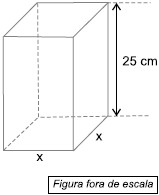
Se a capacidade máxima desse recipiente é de 4,9 litros, então o perímetro de sua base é igual a
Provas
Uma sala retangular, com 6 m de comprimento, teve 50% da área de seu piso recoberta com laminado de madeira, cujo valor por metro quadrado, já colocado, era de R$ 110,00. Se o valor gasto com esse laminado foi R$ 1.650,00, o perímetro dessa sala é
Provas
A tabela apresenta algumas informações sobre o número de horas extras feitas por 5 funcionários de uma empresa em determinado mês.
| Funcionário | Nº de horas extras |
| A | x |
| B | 2 |
| C | 4 |
| D | 5 |
| E | 2x |
A média aritmética do número de horas extras feitas pelos funcionários A, B e C foi 1 hora extra a menos do que a média aritmética do número de horas extras feitas pelos 5 funcionários. A média aritmética do número de horas extras feitas pelos funcionários C, D e E foi igual a
Provas
Uma atividade cultural terá a participação de 208 alunos do Ensino Fundamental II e 120 alunos do Ensino Médio. Todos esses alunos serão divididos em grupos de modo que cada grupo não tenha alunos do Ensino Fundamental II e do Ensino Médio juntos. Além disso, todos os grupos deverão ter o mesmo número de alunos, sendo esse número o maior possível. Nessas condições, o número total de grupos que poderão ser formados é
Provas
A soma do número de aulas semanais dadas pelos professores Bruno e Caio é 21. Se o número de aulas semanais dadas por Bruno é igual a !$ \large{3 \over 4} !$ do número de aulas semanais dadas por Caio, então o número de aulas semanais dadas por Caio supera o número de aulas semanais dadas por Bruno em
Provas
Caderno Container