Foram encontradas 300 questões.
Disciplina: Literatura Brasileira e Estrangeira
Banca: VUNESP
Orgão: SEDUC-SP
Leia o texto para responder às questões de números 22 a 25.
CAPÍTULO PRIMEIRO / ÓBITO DO AUTOR
Algum tempo hesitei se devia abrir estas memórias pelo princípio ou pelo fim, isto é, se poria em primeiro lugar o meu nascimento ou a minha morte. Suposto o uso vulgar seja começar pelo nascimento, duas considerações me levaram a adotar diferente método: a primeira é que eu não sou propriamente um autor defunto, mas um defunto autor, para quem a campa foi outro berço; a segunda é que o escrito ficaria assim mais galante e mais novo. Moisés, que também contou a sua morte, não a pôs no introito, mas no cabo: diferença radical entre este livro e o Pentateuco.
Dito isto, expirei às duas horas da tarde de uma sextafeira do mês de agosto de 1869, na minha bela chácara de Catumbi. Tinha uns sessenta e quatro anos, rijos e prósperos, era solteiro, possuía cerca de trezentos contos e fui acompanhado ao cemitério por onze amigos. Onze amigos! Verdade é que não houve cartas nem anúncios. Acresce que chovia — peneirava uma chuvinha miúda, triste e constante, tão constante e tão triste, que levou um daqueles fiéis da última hora a intercalar esta engenhosa ideia no discurso que proferiu à beira de minha cova: — “Vós, que o conhecestes, meus senhores, vós podeis dizer comigo que a natureza parece estar chorando a perda irreparável de um dos mais belos caracteres que têm honrado a humanidade. Este ar sombrio, estas gotas do céu, aquelas nuvens escuras que cobrem o azul como um crepe funéreo, tudo isso é a dor crua e má que lhe rói à Natureza as mais íntimas entranhas; tudo isso é um sublime louvor ao nosso ilustre finado.”
Bom e fiel amigo! Não, não me arrependo das vinte apólices que lhe deixei. E foi assim que cheguei à cláusula dos meus dias; foi assim que me encaminhei para o undiscovered country de Hamlet, sem as ânsias nem as dúvidas do moço príncipe, mas pausado e trôpego como quem se retira tarde do espetáculo. Tarde e aborrecido. Viram-me ir umas nove ou dez pessoas, entre elas três senhoras, minha irmã Sabina, casada com o Cotrim, a filha, — um lírio do vale, — e... Tenham paciência! daqui a pouco lhes direi quem era a terceira senhora. Contentem-se de saber que essa anônima, ainda que não parenta, padeceu mais do que as parentas. É verdade, padeceu mais. Não digo que se carpisse, não digo que se deixasse rolar pelo chão, convulsa. Nem o meu óbito era coisa altamente dramática... Um solteirão que expira aos sessenta e quatro anos, não parece que reúna em si todos os elementos de uma tragédia. E dado que sim, o que menos convinha a essa anônima era aparentá-lo. De pé, à cabeceira da cama, com os olhos estúpidos, a boca entreaberta, a triste senhora mal podia crer na minha extinção.
— “Morto! morto!” dizia consigo.
(Machado de Assis, Memórias Póstumas de Brás Cubas)
Com base em Alfredo Bosi (2015), é correto afirmar que a narrativa de Memórias Póstumas de Brás Cubas traduz a literatura machadiana
Provas

Disciplina: Literatura Brasileira e Estrangeira
Banca: VUNESP
Orgão: SEDUC-SP
A literatura indígena brasileira contemporânea é uma expressão vinculada ao lugar de fala (Dalcastagnè, 2012) do sujeito indígena que reivindica, cada vez mais, protagonismo para articular em nome de suas ancestralidades, sem mediações alheias a eles. O lugar de fala indígena é a sua ancestralidade. Matos (2011), refletindo sobre a enunciação literária indígena e o lugar de onde partem os textos criativos indígenas, argumenta que a autoidentificação e a autodenominação étnicas sob a forma de ‘nós’, ‘os humanos’, os ‘verdadeiros humanos’, é uma constante para vários povos indígenas (araweté, yaminawa, waiapi, etc.). Estas alcunhas autorreferenciais são, conforme Viveiros de Castro (1996 apud Matos, 2011), pronomes cosmológicos, e não nomes próprios. “Eles servem para marcar o lugar de onde se fala, o nós do grupo” (Matos, 2011, p. 33). Na literatura indígena brasileira, os escritores e escritoras empenham-se em esclarecer que a cultura indígena é formada por diferentes grupos que possuem tradições e práticas diversas entre si. Reiteram que não são um monólito homogêneo e fenotípico que justifica o rótulo de índios do Brasil. Seus lugares de fala são suas ancestralidades e pertenças étnicas, uma vez que são munduruku, potiguara, guarani, sateré-mawé, dessana, kambeba, entre outros. Desse modo, a leitura das obras desses autores de etnias diferentes coopera para o conhecimento de diferentes lugares de fala cuja expressão se anuncia a partir da própria alteridade. Diferentes projetos literários, nesse sentido, encontram-se dentro desse sistema, anunciando diferentes mensagens elaboradas criativamente a partir de matérias ancestrais, históricas, estéticas, políticas etc.
(Julie Dorrico, “Vozes da literatura indígena brasileira contemporânea: do registro etnográfico à criação literária”. Em: DORRICO, Julie; DANNER, Leno Francisco; CORREIA, Heloisa Helena Siqueira; DANNER, Fernando (Orgs.). Literatura indígena brasileira contemporânea: criação, crítica e recepção [recurso eletrônico]. Em: https://www.editorafi.org/438indigena. Adaptado)
A habilidade EF69AR34 do Currículo Paulista – Ensino Fundamental diz respeito a “Analisar e valorizar o patrimônio cultural, material e imaterial, de culturas diversas, em especial a brasileira, incluindo suas matrizes indígenas, africanas e europeias, de diferentes épocas, e favorecendo a construção de vocabulário e repertório relativos às diferentes linguagens artísticas.”
Nesse sentido, as considerações de Dorrico articulam-se aos pressupostos do Currículo na medida em que
Provas
Disciplina: Literatura Brasileira e Estrangeira
Banca: VUNESP
Orgão: SEDUC-SP
Leia o poema de Manuel Bandeira.
Neologismo
Beijo pouco, falo menos ainda.
Mas invento palavras
Que traduzem a ternura mais funda
E mais cotidiana.
Inventei, por exemplo, o verbo teadorar.
Intransitivo:
Teadoro, Teodora.
(Manuel Bandeira, As cidades e as musas)
Antonio Candido afirma que “um certo número de escritores se aplica a mostrar como somos diferentes da Europa e como, por isso, devemos ver e exprimir diversamente as coisas. Em todos eles encontramos latente o sentimento de que a expressão livre, principalmente na poesia, é a grande possibilidade que tem para manifestar-se com autenticidade um país de contrastes, onde tudo se misturas e as formas regulares não correspondem à realidade.” Tal afirmação, em relação ao poema de Manual Bandeira, é
Provas
Leia o texto para responder às questões de números 23 a 30.
Artificial Intelligence in the classroom?
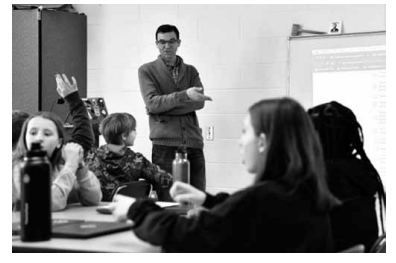
I recently asked Bard, Google’s conversational chatbot, whether artificial intelligence would replace teachers. Here’s what it said, “It is unlikely that AI will completely replace teachers in the near future.”
I agreed.
During a poetry night, I remember joking with a friend that it takes a broken heart to nurture and heal another heart. I added, “Until AI experiences heartbreaks, we must trust human teachers to nurture the hearts and minds of the next generation.” Yet it’s hard to ignore the growing questions and concerns emerging from the teaching community on the impact of AI on their jobs, their classrooms and their very vocation.
At the moment, AI still lags behind humans in complex tasks that require a combination of technical competencies and socio-emotional skills. However, and importantly, we must not give up all things cognitive to machines. Doing so would undermine critical thinking and reflection which are essential aspects of the human experience. We must continue to teach children how to think.
AI is forcing us to reimagine education as a vehicle for democratising thinking and knowing. There is no denying that. About 40% of the world’s population is under 24. If schools fail to prepare this generation of youth for the age of thinking machines, the consequences on social and economic peace may be dire.
As teachers, we must try and see how our classes will prepare students for technology and AI. On the surface, this requires reviewing curricula, syllabi and teacher professional development programmes, and incorporating content on AI literacy, risks, ethics and skills. At a deeper level, as machines become better at answering questions, educators should guide students to ask better questions. Today’s schools should inspire students to be curious as this is an essential ingredient to conducting primary research, including in frontier areas, where humans have an edge over AI.
When change becomes the only constant, we should not just help students to learn, we must inspire them to love lifelong learning.
(Momo Bertrand. https://www.aljazeera.com, 24.05.2023. Adaptado)
Releia o trecho a seguir, retirado do texto Artificial Intelligence in the classroom?, e leia o cartum.
As teachers, we must try and see how our classes will prepare students for technology and AI. […] as machines become better at answering questions, educators should guide students to ask better questions. Today’s schools should inspire students to be curious as this is an essential ingredient to conducting primary research, including in frontier areas, where humans have an edge over AI. (sexto parágrafo)
(https://www.glasbergen.com)

"My term paper is almost finished. I updated my software, defragmented my hard drive, bookmarked an online dictionary, and installed new ink cartridges. Now all I need are some words and a topic!"
As palavras do jovem no cartum ilustram a seguinte necessidade para a relação entre AI e educação, apontada no trecho:
Provas
Leia o texto para responder às questões de números 23 a 30.
Artificial Intelligence in the classroom?
I recently asked Bard, Google’s conversational chatbot, whether artificial intelligence would replace teachers. Here’s what it said, “It is unlikely that AI will completely replace teachers in the near future.”
I agreed.
During a poetry night, I remember joking with a friend that it takes a broken heart to nurture and heal another heart. I added, “Until AI experiences heartbreaks, we must trust human teachers to nurture the hearts and minds of the next generation.” Yet it’s hard to ignore the growing questions and concerns emerging from the teaching community on the impact of AI on their jobs, their classrooms and their very vocation.
At the moment, AI still lags behind humans in complex tasks that require a combination of technical competencies and socio-emotional skills. However, and importantly, we must not give up all things cognitive to machines. Doing so would undermine critical thinking and reflection which are essential aspects of the human experience. We must continue to teach children how to think.
AI is forcing us to reimagine education as a vehicle for democratising thinking and knowing. There is no denying that. About 40% of the world’s population is under 24. If schools fail to prepare this generation of youth for the age of thinking machines, the consequences on social and economic peace may be dire.
As teachers, we must try and see how our classes will prepare students for technology and AI. On the surface, this requires reviewing curricula, syllabi and teacher professional development programmes, and incorporating content on AI literacy, risks, ethics and skills. At a deeper level, as machines become better at answering questions, educators should guide students to ask better questions. Today’s schools should inspire students to be curious as this is an essential ingredient to conducting primary research, including in frontier areas, where humans have an edge over AI.
When change becomes the only constant, we should not just help students to learn, we must inspire them to love lifelong learning.
(Momo Bertrand. https://www.aljazeera.com, 24.05.2023. Adaptado)
There are several instances of the -ing suffix in the fifth paragraph, employed as either a verb, a noun or an adjective.
AI is forcing us to reimagine education as a vehicle for democratising (I) thinking (II) and knowing (III). There is no denying(IV) that. About 40% of the world’s population is under 24. If schools fail to prepare this generation of youth for the age of thinking (V) machnes, the consequences on social and economic peace may be dire.
Choose the alternative in which the bolded word is an adjective in the context.
Provas
Read the excerpt from the document Currículo Paulista – etapa Ensino Médio, and the description it makes of students from EJA (Educação de Jovens e Adultos). Then answer the test item that follows.
… um público heterogêneo, que apresenta diversidade de idade e origem, ritmos diferentes de aprendizagem, além da pluralidade de crenças e valores. São jovens e adultos, que em geral, já experimentam diversos papéis sociais no cotidiano, com experiências e responsabilidades no âmbito do trabalho, na esfera familiar e em grupos sociais. Esses estudantes trazem vivências importantes e já construíram outros conhecimentos que precisam ser fortemente considerados no processo educacional.
(SÃO PAULO (Estado). Secretaria da Educação. Currículo Paulista etapa Ensino Médio (Volume 2). Homologação em agosto de 2020. p. 40-41)
A proposal on written textual genres, and one which values the diversity of EJA students’ background knowledge and experience, is found in alternative:
Provas
- Gramática - Língua InglesaSubstantivos e compostos | Nouns and compoundsPlural dos substantivos | Plural of nouns
Leia o texto para responder às questões de números 23 a 30.
Artificial Intelligence in the classroom?
I recently asked Bard, Google’s conversational chatbot, whether artificial intelligence would replace teachers. Here’s what it said, “It is unlikely that AI will completely replace teachers in the near future.”
I agreed.
During a poetry night, I remember joking with a friend that it takes a broken heart to nurture and heal another heart. I added, “Until AI experiences heartbreaks, we must trust human teachers to nurture the hearts and minds of the next generation.” Yet it’s hard to ignore the growing questions and concerns emerging from the teaching community on the impact of AI on their jobs, their classrooms and their very vocation.
At the moment, AI still lags behind humans in complex tasks that require a combination of technical competencies and socio-emotional skills. However, and importantly, we must not give up all things cognitive to machines. Doing so would undermine critical thinking and reflection which are essential aspects of the human experience. We must continue to teach children how to think.
AI is forcing us to reimagine education as a vehicle for democratising thinking and knowing. There is no denying that. About 40% of the world’s population is under 24. If schools fail to prepare this generation of youth for the age of thinking machines, the consequences on social and economic peace may be dire.
As teachers, we must try and see how our classes will prepare students for technology and AI. On the surface, this requires reviewing curricula, syllabi and teacher professional development programmes, and incorporating content on AI literacy, risks, ethics and skills. At a deeper level, as machines become better at answering questions, educators should guide students to ask better questions. Today’s schools should inspire students to be curious as this is an essential ingredient to conducting primary research, including in frontier areas, where humans have an edge over AI.
When change becomes the only constant, we should not just help students to learn, we must inspire them to love lifelong learning.
(Momo Bertrand. https://www.aljazeera.com, 24.05.2023. Adaptado)
The words “curricula” and “syllabi”, in the sixth paragraph, are examples of irregular plural nouns in English. Mark the alternative containing a correct singular-plural pair.
Provas
Leia o texto para responder às questões de números 23 a 30.
Artificial Intelligence in the classroom?
I recently asked Bard, Google’s conversational chatbot, whether artificial intelligence would replace teachers. Here’s what it said, “It is unlikely that AI will completely replace teachers in the near future.”
I agreed.
During a poetry night, I remember joking with a friend that it takes a broken heart to nurture and heal another heart. I added, “Until AI experiences heartbreaks, we must trust human teachers to nurture the hearts and minds of the next generation.” Yet it’s hard to ignore the growing questions and concerns emerging from the teaching community on the impact of AI on their jobs, their classrooms and their very vocation.
At the moment, AI still lags behind humans in complex tasks that require a combination of technical competencies and socio-emotional skills. However, and importantly, we must not give up all things cognitive to machines. Doing so would undermine critical thinking and reflection which are essential aspects of the human experience. We must continue to teach children how to think.
AI is forcing us to reimagine education as a vehicle for democratising thinking and knowing. There is no denying that. About 40% of the world’s population is under 24. If schools fail to prepare this generation of youth for the age of thinking machines, the consequences on social and economic peace may be dire.
As teachers, we must try and see how our classes will prepare students for technology and AI. On the surface, this requires reviewing curricula, syllabi and teacher professional development programmes, and incorporating content on AI literacy, risks, ethics and skills. At a deeper level, as machines become better at answering questions, educators should guide students to ask better questions. Today’s schools should inspire students to be curious as this is an essential ingredient to conducting primary research, including in frontier areas, where humans have an edge over AI.
When change becomes the only constant, we should not just help students to learn, we must inspire them to love lifelong learning.
(Momo Bertrand. https://www.aljazeera.com, 24.05.2023. Adaptado)
In the fragment from the fourth paragraph – Doing so would undermine critical thinking and reflection… –, the word “undermine” means
Provas
Leia o texto para responder às questões de números 23 a 30.
Artificial Intelligence in the classroom?
I recently asked Bard, Google’s conversational chatbot, whether artificial intelligence would replace teachers. Here’s what it said, “It is unlikely that AI will completely replace teachers in the near future.”
I agreed.
During a poetry night, I remember joking with a friend that it takes a broken heart to nurture and heal another heart. I added, “Until AI experiences heartbreaks, we must trust human teachers to nurture the hearts and minds of the next generation.” Yet it’s hard to ignore the growing questions and concerns emerging from the teaching community on the impact of AI on their jobs, their classrooms and their very vocation.
At the moment, AI still lags behind humans in complex tasks that require a combination of technical competencies and socio-emotional skills. However, and importantly, we must not give up all things cognitive to machines. Doing so would undermine critical thinking and reflection which are essential aspects of the human experience. We must continue to teach children how to think.
AI is forcing us to reimagine education as a vehicle for democratising thinking and knowing. There is no denying that. About 40% of the world’s population is under 24. If schools fail to prepare this generation of youth for the age of thinking machines, the consequences on social and economic peace may be dire.
As teachers, we must try and see how our classes will prepare students for technology and AI. On the surface, this requires reviewing curricula, syllabi and teacher professional development programmes, and incorporating content on AI literacy, risks, ethics and skills. At a deeper level, as machines become better at answering questions, educators should guide students to ask better questions. Today’s schools should inspire students to be curious as this is an essential ingredient to conducting primary research, including in frontier areas, where humans have an edge over AI.
When change becomes the only constant, we should not just help students to learn, we must inspire them to love lifelong learning.
(Momo Bertrand. https://www.aljazeera.com, 24.05.2023. Adaptado)
Reading teachers should be good readers themselves – which means, among others, having developed reading coping strategies to make up for deficient background knowledge.
Suppose that, while reading the article Artificial Intelligence in the classroom? you have used contextual clues to get at the meaning of the word “undermine”(paragraph 4), which you were not familiar with. You have then employed the coping strategy named
Provas
Leia o texto para responder às questões de números 23 a 30.
Artificial Intelligence in the classroom?
I recently asked Bard, Google’s conversational chatbot, whether artificial intelligence would replace teachers. Here’s what it said, “It is unlikely that AI will completely replace teachers in the near future.”
I agreed.
During a poetry night, I remember joking with a friend that it takes a broken heart to nurture and heal another heart. I added, “Until AI experiences heartbreaks, we must trust human teachers to nurture the hearts and minds of the next generation.” Yet it’s hard to ignore the growing questions and concerns emerging from the teaching community on the impact of AI on their jobs, their classrooms and their very vocation.
At the moment, AI still lags behind humans in complex tasks that require a combination of technical competencies and socio-emotional skills. However, and importantly, we must not give up all things cognitive to machines. Doing so would undermine critical thinking and reflection which are essential aspects of the human experience. We must continue to teach children how to think.
AI is forcing us to reimagine education as a vehicle for democratising thinking and knowing. There is no denying that. About 40% of the world’s population is under 24. If schools fail to prepare this generation of youth for the age of thinking machines, the consequences on social and economic peace may be dire.
As teachers, we must try and see how our classes will prepare students for technology and AI. On the surface, this requires reviewing curricula, syllabi and teacher professional development programmes, and incorporating content on AI literacy, risks, ethics and skills. At a deeper level, as machines become better at answering questions, educators should guide students to ask better questions. Today’s schools should inspire students to be curious as this is an essential ingredient to conducting primary research, including in frontier areas, where humans have an edge over AI.
When change becomes the only constant, we should not just help students to learn, we must inspire them to love lifelong learning.
(Momo Bertrand. https://www.aljazeera.com, 24.05.2023. Adaptado)
No terceiro parágrafo, a palavra destacada em – Yet it’s hard to ignore the growing questions and concerns… – corresponde, no contexto, a
Provas
Caderno Container