Foram encontradas 300 questões.
Leia o texto para responder às questões de números 23 a 30.
Artificial Intelligence in the classroom?
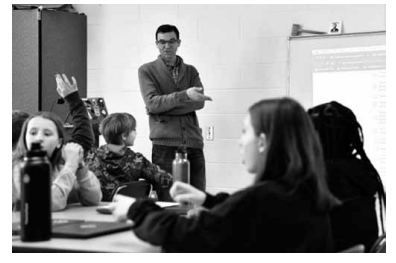
I recently asked Bard, Google’s conversational chatbot, whether artificial intelligence would replace teachers. Here’s what it said, “It is unlikely that AI will completely replace teachers in the near future.”
I agreed.
During a poetry night, I remember joking with a friend that it takes a broken heart to nurture and heal another heart. I added, “Until AI experiences heartbreaks, we must trust human teachers to nurture the hearts and minds of the next generation.” Yet it’s hard to ignore the growing questions and concerns emerging from the teaching community on the impact of AI on their jobs, their classrooms and their very vocation.
At the moment, AI still lags behind humans in complex tasks that require a combination of technical competencies and socio-emotional skills. However, and importantly, we must not give up all things cognitive to machines. Doing so would undermine critical thinking and reflection which are essential aspects of the human experience. We must continue to teach children how to think.
AI is forcing us to reimagine education as a vehicle for democratising thinking and knowing. There is no denying that. About 40% of the world’s population is under 24. If schools fail to prepare this generation of youth for the age of thinking machines, the consequences on social and economic peace may be dire.
As teachers, we must try and see how our classes will prepare students for technology and AI. On the surface, this requires reviewing curricula, syllabi and teacher professional development programmes, and incorporating content on AI literacy, risks, ethics and skills. At a deeper level, as machines become better at answering questions, educators should guide students to ask better questions. Today’s schools should inspire students to be curious as this is an essential ingredient to conducting primary research, including in frontier areas, where humans have an edge over AI.
When change becomes the only constant, we should not just help students to learn, we must inspire them to love lifelong learning.
(Momo Bertrand. https://www.aljazeera.com, 24.05.2023. Adaptado)
In the sentence from the first paragraph – “It is unlikely that AI will completely replace teachers in the near future. –, the bolded word can be replaced, with no change in meaning, by
Provas

Leia o texto para responder às questões de números 23 a 30.
Artificial Intelligence in the classroom?
I recently asked Bard, Google’s conversational chatbot, whether artificial intelligence would replace teachers. Here’s what it said, “It is unlikely that AI will completely replace teachers in the near future.”
I agreed.
During a poetry night, I remember joking with a friend that it takes a broken heart to nurture and heal another heart. I added, “Until AI experiences heartbreaks, we must trust human teachers to nurture the hearts and minds of the next generation.” Yet it’s hard to ignore the growing questions and concerns emerging from the teaching community on the impact of AI on their jobs, their classrooms and their very vocation.
At the moment, AI still lags behind humans in complex tasks that require a combination of technical competencies and socio-emotional skills. However, and importantly, we must not give up all things cognitive to machines. Doing so would undermine critical thinking and reflection which are essential aspects of the human experience. We must continue to teach children how to think.
AI is forcing us to reimagine education as a vehicle for democratising thinking and knowing. There is no denying that. About 40% of the world’s population is under 24. If schools fail to prepare this generation of youth for the age of thinking machines, the consequences on social and economic peace may be dire.
As teachers, we must try and see how our classes will prepare students for technology and AI. On the surface, this requires reviewing curricula, syllabi and teacher professional development programmes, and incorporating content on AI literacy, risks, ethics and skills. At a deeper level, as machines become better at answering questions, educators should guide students to ask better questions. Today’s schools should inspire students to be curious as this is an essential ingredient to conducting primary research, including in frontier areas, where humans have an edge over AI.
When change becomes the only constant, we should not just help students to learn, we must inspire them to love lifelong learning.
(Momo Bertrand. https://www.aljazeera.com, 24.05.2023. Adaptado)
The author of the text answers the question in the title by
Provas
Leia o texto para responder às questões de números 15 a 21.
See if this problem sounds familiar. A language learner, Andy, works hard memorizing a vocabulary word or some other bit of language, just as a good student should. He then gets a chance to speak to someone – an actual conversation – but while trying to remember what he studied, it seems to have disappeared completely.
It gets worse. Andy begins to think that this event is a sign that he is not good at learning language. As a result, a short time later, he gives up thinking that learning a language is just not for him. Andy believes “he doesn´t have what it takes”.
False.
Language is not something you learn just to score high on a test. In fact, learning a language is not like learning math or science; rather, think of it more like basketball.
Here is a fictitious story to help you see why. Imagine Michael Jordan is teaching a basketball class. Now imagine that he tells everyone he has written “the book” on basketball – “How to Play Basketball”, by Michael Jordan. Now imagine that he has written a dozen chapters, and that all the chapters together contain every concept and rule of basketball. There are chapters on dribbling, passing, shooting, and, of course, dunking. He further explains that every Friday he will have a test so that he can ensure that students have learned all the information.
Imagine once more that the students, loving Michael Jordan the way they do, all studiously memorize the book, prepare for every test, and, in fact, get perfect scores. On the last day of the class, Michael Jordan puts a basketball in front of the class and states, “Students – I am so proud of you. You read my book. You know all the rules. You have passed every test. Now you can play basketball like Michael Jordan!”
How much would you agree with that last statement? My guess is that most of you would very strongly disagree. Now think about why you feel this way. What is missing in the fabricated experience just described?
(DIXON, Shane. The language learner guidebook powerful tools to help you conquer any language. [S.l.]: Wayzgoose Press, 2018. Adaptado)
Choose the alternative describing an English language activity for secondary students which aims at fulfilling a short-term genuine communication purpose
Provas
Leia o texto para responder às questões de números 15 a 21.
See if this problem sounds familiar. A language learner, Andy, works hard memorizing a vocabulary word or some other bit of language, just as a good student should. He then gets a chance to speak to someone – an actual conversation – but while trying to remember what he studied, it seems to have disappeared completely.
It gets worse. Andy begins to think that this event is a sign that he is not good at learning language. As a result, a short time later, he gives up thinking that learning a language is just not for him. Andy believes “he doesn´t have what it takes”.
False.
Language is not something you learn just to score high on a test. In fact, learning a language is not like learning math or science; rather, think of it more like basketball.
Here is a fictitious story to help you see why. Imagine Michael Jordan is teaching a basketball class. Now imagine that he tells everyone he has written “the book” on basketball – “How to Play Basketball”, by Michael Jordan. Now imagine that he has written a dozen chapters, and that all the chapters together contain every concept and rule of basketball. There are chapters on dribbling, passing, shooting, and, of course, dunking. He further explains that every Friday he will have a test so that he can ensure that students have learned all the information.
Imagine once more that the students, loving Michael Jordan the way they do, all studiously memorize the book, prepare for every test, and, in fact, get perfect scores. On the last day of the class, Michael Jordan puts a basketball in front of the class and states, “Students – I am so proud of you. You read my book. You know all the rules. You have passed every test. Now you can play basketball like Michael Jordan!”
How much would you agree with that last statement? My guess is that most of you would very strongly disagree. Now think about why you feel this way. What is missing in the fabricated experience just described?
(DIXON, Shane. The language learner guidebook powerful tools to help you conquer any language. [S.l.]: Wayzgoose Press, 2018. Adaptado)
Mark the alternative in which the particle en- means the same as in “ensure”, in the last sentence in the fifth paragraph
Provas
Leia o texto para responder às questões de números 15 a 21.
See if this problem sounds familiar. A language learner, Andy, works hard memorizing a vocabulary word or some other bit of language, just as a good student should. He then gets a chance to speak to someone – an actual conversation – but while trying to remember what he studied, it seems to have disappeared completely.
It gets worse. Andy begins to think that this event is a sign that he is not good at learning language. As a result, a short time later, he gives up thinking that learning a language is just not for him. Andy believes “he doesn´t have what it takes”.
False.
Language is not something you learn just to score high on a test. In fact, learning a language is not like learning math or science; rather, think of it more like basketball.
Here is a fictitious story to help you see why. Imagine Michael Jordan is teaching a basketball class. Now imagine that he tells everyone he has written “the book” on basketball – “How to Play Basketball”, by Michael Jordan. Now imagine that he has written a dozen chapters, and that all the chapters together contain every concept and rule of basketball. There are chapters on dribbling, passing, shooting, and, of course, dunking. He further explains that every Friday he will have a test so that he can ensure that students have learned all the information.
Imagine once more that the students, loving Michael Jordan the way they do, all studiously memorize the book, prepare for every test, and, in fact, get perfect scores. On the last day of the class, Michael Jordan puts a basketball in front of the class and states, “Students – I am so proud of you. You read my book. You know all the rules. You have passed every test. Now you can play basketball like Michael Jordan!”
How much would you agree with that last statement? My guess is that most of you would very strongly disagree. Now think about why you feel this way. What is missing in the fabricated experience just described?
(DIXON, Shane. The language learner guidebook powerful tools to help you conquer any language. [S.l.]: Wayzgoose Press, 2018. Adaptado)
In the fifth and sixth paragraphs the author draws on the analogy between language and basketball to put forward the idea that
Provas
Leia o texto para responder às questões de números 15 a 21.
See if this problem sounds familiar. A language learner, Andy, works hard memorizing a vocabulary word or some other bit of language, just as a good student should. He then gets a chance to speak to someone – an actual conversation – but while trying to remember what he studied, it seems to have disappeared completely.
It gets worse. Andy begins to think that this event is a sign that he is not good at learning language. As a result, a short time later, he gives up thinking that learning a language is just not for him. Andy believes “he doesn´t have what it takes”.
False.
Language is not something you learn just to score high on a test. In fact, learning a language is not like learning math or science; rather, think of it more like basketball.
Here is a fictitious story to help you see why. Imagine Michael Jordan is teaching a basketball class. Now imagine that he tells everyone he has written “the book” on basketball – “How to Play Basketball”, by Michael Jordan. Now imagine that he has written a dozen chapters, and that all the chapters together contain every concept and rule of basketball. There are chapters on dribbling, passing, shooting, and, of course, dunking. He further explains that every Friday he will have a test so that he can ensure that students have learned all the information.
Imagine once more that the students, loving Michael Jordan the way they do, all studiously memorize the book, prepare for every test, and, in fact, get perfect scores. On the last day of the class, Michael Jordan puts a basketball in front of the class and states, “Students – I am so proud of you. You read my book. You know all the rules. You have passed every test. Now you can play basketball like Michael Jordan!”
How much would you agree with that last statement? My guess is that most of you would very strongly disagree. Now think about why you feel this way. What is missing in the fabricated experience just described?
(DIXON, Shane. The language learner guidebook powerful tools to help you conquer any language. [S.l.]: Wayzgoose Press, 2018. Adaptado)
If compared to language teaching and learning, the method to teach basketball described in the fictitious story about Michael Jordan could be said to illustrate
Provas
Leia o texto para responder às questões de números 15 a 21.
See if this problem sounds familiar. A language learner, Andy, works hard memorizing a vocabulary word or some other bit of language, just as a good student should. He then gets a chance to speak to someone – an actual conversation – but while trying to remember what he studied, it seems to have disappeared completely.
It gets worse. Andy begins to think that this event is a sign that he is not good at learning language. As a result, a short time later, he gives up thinking that learning a language is just not for him. Andy believes “he doesn´t have what it takes”.
False.
Language is not something you learn just to score high on a test. In fact, learning a language is not like learning math or science; rather, think of it more like basketball.
Here is a fictitious story to help you see why. Imagine Michael Jordan is teaching a basketball class. Now imagine that he tells everyone he has written “the book” on basketball – “How to Play Basketball”, by Michael Jordan. Now imagine that he has written a dozen chapters, and that all the chapters together contain every concept and rule of basketball. There are chapters on dribbling, passing, shooting, and, of course, dunking. He further explains that every Friday he will have a test so that he can ensure that students have learned all the information.
Imagine once more that the students, loving Michael Jordan the way they do, all studiously memorize the book, prepare for every test, and, in fact, get perfect scores. On the last day of the class, Michael Jordan puts a basketball in front of the class and states, “Students – I am so proud of you. You read my book. You know all the rules. You have passed every test. Now you can play basketball like Michael Jordan!”
How much would you agree with that last statement? My guess is that most of you would very strongly disagree. Now think about why you feel this way. What is missing in the fabricated experience just described?
(DIXON, Shane. The language learner guidebook powerful tools to help you conquer any language. [S.l.]: Wayzgoose Press, 2018. Adaptado)
In the second paragraph, the fragment – … “he doesn’t have what it takes.” – means that Andy believes
Provas
Leia o texto para responder às questões de números 15 a 21.
See if this problem sounds familiar. A language learner, Andy, works hard memorizing a vocabulary word or some other bit of language, just as a good student should. He then gets a chance to speak to someone – an actual conversation – but while trying to remember what he studied, it seems to have disappeared completely.
It gets worse. Andy begins to think that this event is a sign that he is not good at learning language. As a result, a short time later, he gives up thinking that learning a language is just not for him. Andy believes “he doesn´t have what it takes”.
False.
Language is not something you learn just to score high on a test. In fact, learning a language is not like learning math or science; rather, think of it more like basketball.
Here is a fictitious story to help you see why. Imagine Michael Jordan is teaching a basketball class. Now imagine that he tells everyone he has written “the book” on basketball – “How to Play Basketball”, by Michael Jordan. Now imagine that he has written a dozen chapters, and that all the chapters together contain every concept and rule of basketball. There are chapters on dribbling, passing, shooting, and, of course, dunking. He further explains that every Friday he will have a test so that he can ensure that students have learned all the information.
Imagine once more that the students, loving Michael Jordan the way they do, all studiously memorize the book, prepare for every test, and, in fact, get perfect scores. On the last day of the class, Michael Jordan puts a basketball in front of the class and states, “Students – I am so proud of you. You read my book. You know all the rules. You have passed every test. Now you can play basketball like Michael Jordan!”
How much would you agree with that last statement? My guess is that most of you would very strongly disagree. Now think about why you feel this way. What is missing in the fabricated experience just described?
(DIXON, Shane. The language learner guidebook powerful tools to help you conquer any language. [S.l.]: Wayzgoose Press, 2018. Adaptado)
In the sentence from the second paragraph – Andy begins to think that this event is a sign that he is not good at learning language. – the phrase “this event” refers to the fact that Andy
Provas
Leia o texto para responder às questões de números 15 a 21.
See if this problem sounds familiar. A language learner, Andy, works hard memorizing a vocabulary word or some other bit of language, just as a good student should. He then gets a chance to speak to someone – an actual conversation – but while trying to remember what he studied, it seems to have disappeared completely.
It gets worse. Andy begins to think that this event is a sign that he is not good at learning language. As a result, a short time later, he gives up thinking that learning a language is just not for him. Andy believes “he doesn´t have what it takes”.
False.
Language is not something you learn just to score high on a test. In fact, learning a language is not like learning math or science; rather, think of it more like basketball.
Here is a fictitious story to help you see why. Imagine Michael Jordan is teaching a basketball class. Now imagine that he tells everyone he has written “the book” on basketball – “How to Play Basketball”, by Michael Jordan. Now imagine that he has written a dozen chapters, and that all the chapters together contain every concept and rule of basketball. There are chapters on dribbling, passing, shooting, and, of course, dunking. He further explains that every Friday he will have a test so that he can ensure that students have learned all the information.
Imagine once more that the students, loving Michael Jordan the way they do, all studiously memorize the book, prepare for every test, and, in fact, get perfect scores. On the last day of the class, Michael Jordan puts a basketball in front of the class and states, “Students – I am so proud of you. You read my book. You know all the rules. You have passed every test. Now you can play basketball like Michael Jordan!”
How much would you agree with that last statement? My guess is that most of you would very strongly disagree. Now think about why you feel this way. What is missing in the fabricated experience just described?
(DIXON, Shane. The language learner guidebook powerful tools to help you conquer any language. [S.l.]: Wayzgoose Press, 2018. Adaptado)
We may read the statement from the first paragraph – just as a good student should. – as reflecting the common-sense belief that we learn a language by memorizing individual words or stretches of language; it is another voice in the text, apart from the writer’s own voice. This characteristic of texts is named
Provas
Recent research has identified traits of English as a Língua Franca which, though commonly encountered in Lingua Franca speech, do not conform to standard English grammar. Among these traits is the use of an all-purpose tag question such as “isn’t it” (They should arrive soon, isn’t it?).
Standard English use of a question tag is found in alternative:
Provas
Caderno Container