Foram encontradas 510 questões.
825182
Ano: 2008
Disciplina: Administração Financeira e Orçamentária
Banca: CESPE / CEBRASPE
Orgão: STJ
Disciplina: Administração Financeira e Orçamentária
Banca: CESPE / CEBRASPE
Orgão: STJ
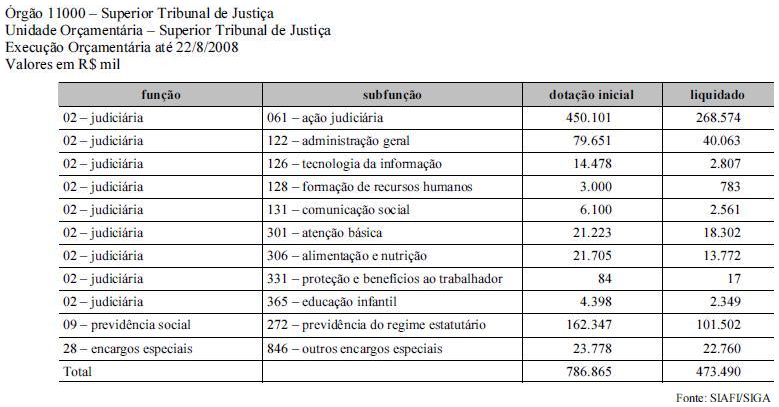
A partir da tabela acima, que apresenta a execução orçamentária de 2008 do STJ, julgue os itens seguintes, acerca de administração
financeira e orçamentária.
Provas
Questão presente nas seguintes provas

825181
Ano: 2008
Disciplina: Administração Financeira e Orçamentária
Banca: CESPE / CEBRASPE
Orgão: STJ
Disciplina: Administração Financeira e Orçamentária
Banca: CESPE / CEBRASPE
Orgão: STJ
A partir da tabela acima, que apresenta a execução orçamentária de 2008 do STJ, julgue os itens seguintes, acerca de administração
financeira e orçamentária.
Provas
Questão presente nas seguintes provas
825180
Ano: 2008
Disciplina: Administração Financeira e Orçamentária
Banca: CESPE / CEBRASPE
Orgão: STJ
Disciplina: Administração Financeira e Orçamentária
Banca: CESPE / CEBRASPE
Orgão: STJ
A partir da tabela acima, que apresenta a execução orçamentária de 2008 do STJ, julgue os itens seguintes, acerca de administração
financeira e orçamentária.
Provas
Questão presente nas seguintes provas
825179
Ano: 2008
Disciplina: Administração Financeira e Orçamentária
Banca: CESPE / CEBRASPE
Orgão: STJ
Disciplina: Administração Financeira e Orçamentária
Banca: CESPE / CEBRASPE
Orgão: STJ
A partir da tabela acima, que apresenta a execução orçamentária de 2008 do STJ, julgue os itens seguintes, acerca de administração
financeira e orçamentária.
Provas
Questão presente nas seguintes provas
825178
Ano: 2008
Disciplina: Administração Financeira e Orçamentária
Banca: CESPE / CEBRASPE
Orgão: STJ
Disciplina: Administração Financeira e Orçamentária
Banca: CESPE / CEBRASPE
Orgão: STJ
A partir da tabela acima, que apresenta a execução orçamentária de 2008 do STJ, julgue os itens seguintes, acerca de administração
financeira e orçamentária.
Provas
Questão presente nas seguintes provas
825177
Ano: 2008
Disciplina: Administração Financeira e Orçamentária
Banca: CESPE / CEBRASPE
Orgão: STJ
Disciplina: Administração Financeira e Orçamentária
Banca: CESPE / CEBRASPE
Orgão: STJ
O ciclo orçamentário corresponde a um período de quatro anos, que tem início com a elaboração do PPA e se encerra com
o julgamento da última prestação de contas do Poder Executivo pelo Poder Legislativo. Trata-se, portanto, de um processo dinâmico
e contínuo, com várias etapas articuladas entre si, por meio das quais sucessivos orçamentos são discutidos, elaborados, aprovados,
executados, avaliados e julgados.
Tendo o texto acima como referência inicial, julgue os itens que se seguem.
Na esfera federal, o Poder Executivo é obrigado, anualmente, a enviar ao Poder Legislativo um conjunto de informações que permitam o acompanhamento e a avaliação do cumprimento das metas estabelecidas para as programações definidas no PPA, contemplando: a execução física e orçamentária das ações para os exercícios já encerrados; demonstrativo, por programa e por indicador, dos índices alcançados ao término do exercício anterior e dos índices finais previstos; avaliação, por programa, da possibilidade de alcance do índice final previsto para cada indicador e de cumprimento de metas, com indicação das medidas corretivas necessárias; e as estimativas das metas físicas e valores financeiros não só para o exercício a que se refere a proposta orçamentária, mas também para os três exercícios subseqüentes.o julgamento da última prestação de contas do Poder Executivo pelo Poder Legislativo. Trata-se, portanto, de um processo dinâmico
e contínuo, com várias etapas articuladas entre si, por meio das quais sucessivos orçamentos são discutidos, elaborados, aprovados,
executados, avaliados e julgados.
Tendo o texto acima como referência inicial, julgue os itens que se seguem.
Provas
Questão presente nas seguintes provas
825176
Ano: 2008
Disciplina: Administração Financeira e Orçamentária
Banca: CESPE / CEBRASPE
Orgão: STJ
Disciplina: Administração Financeira e Orçamentária
Banca: CESPE / CEBRASPE
Orgão: STJ
Considere, por mera hipótese, que o presidente do STJ resolva abrir,
ao orçamento fiscal do tribunal, crédito suplementar no valor de
R$ 100.000,00 para atender ao pagamento de precatório de sentença
judicial transitada em julgado. Em face dessa consideração, julgue os
itens subseqüentes.
Por se tratar de despesa que não estava prevista, o presidente do STJ poderia abrir um crédito especial ou um crédito extraordinário respaldado na LOA, que assegura o crédito orçamentário extraordinário para as despesas não computadas ou insuficientemente dotadas de recursos.ao orçamento fiscal do tribunal, crédito suplementar no valor de
R$ 100.000,00 para atender ao pagamento de precatório de sentença
judicial transitada em julgado. Em face dessa consideração, julgue os
itens subseqüentes.
Provas
Questão presente nas seguintes provas
In Brazil, federal and state court systems have used
technology in the last years, but the experience and coverage is
mixed. In the early 1990s, one of the major initiatives of the federal
judiciary has been the computerization of electoral courts. This
experience and other reforms have motivated some states judiciaries
to advance court automation in different jurisdictions, in aspects
such as public information, case management, and document
archiving. Studies indicate that the needs for information technology
and communications use are rising as many state court systems lag1
behind in investments.
The modernization of the documentary archives of the
federal judiciary is a fairly recent initiative that has been motivated
by a growing concern for the preservation of the country's historical
archive, and by the need to manage the exponential growth of current
archives. Paper archives constitute an enormous investment in terms
of time and space, documents deteriorate or are lost, and information
retrieval can be laborious. The modernization of archives involves
not only the rationalization of existing resources and collections, but
also the introduction of new technologies for the electronic storage
and retrieval of current documents.
In May 1998, the Supreme Federal Tribunal initiated a
project of reform, and in early 2000 carried out a survey to identify
the problem areas relating to infrastructure, access, archiving policy,
training and management strategies. The survey results constitute an
important first step in the development of a long-term technical and
administrative policy for the management of judicial archives.
Follow on work has so far collected information from all the archiveholding
judicial institutions in the area of the capital, Brasília.
There are on average 4 archivists per institution, which
means one archivist for every 751 meters of documents. The
technical equipment is for the most part antiquated, with only 37%
of archives equipped with computer terminals. Most of the judicial
archives do not, therefore, have either the technical or personnel
resources necessary for the efficient management, storage and
retrieval of documents.
 - a delay between two things happening.

Based on the passage above, it is correct to say that
four archivists are to be found in each archive-holding judicial institution in Brasília.technology in the last years, but the experience and coverage is
mixed. In the early 1990s, one of the major initiatives of the federal
judiciary has been the computerization of electoral courts. This
experience and other reforms have motivated some states judiciaries
to advance court automation in different jurisdictions, in aspects
such as public information, case management, and document
archiving. Studies indicate that the needs for information technology
and communications use are rising as many state court systems lag1
behind in investments.
The modernization of the documentary archives of the
federal judiciary is a fairly recent initiative that has been motivated
by a growing concern for the preservation of the country's historical
archive, and by the need to manage the exponential growth of current
archives. Paper archives constitute an enormous investment in terms
of time and space, documents deteriorate or are lost, and information
retrieval can be laborious. The modernization of archives involves
not only the rationalization of existing resources and collections, but
also the introduction of new technologies for the electronic storage
and retrieval of current documents.
In May 1998, the Supreme Federal Tribunal initiated a
project of reform, and in early 2000 carried out a survey to identify
the problem areas relating to infrastructure, access, archiving policy,
training and management strategies. The survey results constitute an
important first step in the development of a long-term technical and
administrative policy for the management of judicial archives.
Follow on work has so far collected information from all the archiveholding
judicial institutions in the area of the capital, Brasília.
There are on average 4 archivists per institution, which
means one archivist for every 751 meters of documents. The
technical equipment is for the most part antiquated, with only 37%
of archives equipped with computer terminals. Most of the judicial
archives do not, therefore, have either the technical or personnel
resources necessary for the efficient management, storage and
retrieval of documents.
- a delay between two things happening.Based on the passage above, it is correct to say that
Provas
Questão presente nas seguintes provas
In Brazil, federal and state court systems have used
technology in the last years, but the experience and coverage is
mixed. In the early 1990s, one of the major initiatives of the federal
judiciary has been the computerization of electoral courts. This
experience and other reforms have motivated some states judiciaries
to advance court automation in different jurisdictions, in aspects
such as public information, case management, and document
archiving. Studies indicate that the needs for information technology
and communications use are rising as many state court systems lag1
behind in investments.
The modernization of the documentary archives of the
federal judiciary is a fairly recent initiative that has been motivated
by a growing concern for the preservation of the country's historical
archive, and by the need to manage the exponential growth of current
archives. Paper archives constitute an enormous investment in terms
of time and space, documents deteriorate or are lost, and information
retrieval can be laborious. The modernization of archives involves
not only the rationalization of existing resources and collections, but
also the introduction of new technologies for the electronic storage
and retrieval of current documents.
In May 1998, the Supreme Federal Tribunal initiated a
project of reform, and in early 2000 carried out a survey to identify
the problem areas relating to infrastructure, access, archiving policy,
training and management strategies. The survey results constitute an
important first step in the development of a long-term technical and
administrative policy for the management of judicial archives.
Follow on work has so far collected information from all the archiveholding
judicial institutions in the area of the capital, Brasília.
There are on average 4 archivists per institution, which
means one archivist for every 751 meters of documents. The
technical equipment is for the most part antiquated, with only 37%
of archives equipped with computer terminals. Most of the judicial
archives do not, therefore, have either the technical or personnel
resources necessary for the efficient management, storage and
retrieval of documents.
- a delay between two things happening.
Based on the passage above, it is correct to say that
the work following the survey carried out by the Supreme Federal Tribunal has already collected information from every judicial institution in Brasília holding archives.technology in the last years, but the experience and coverage is
mixed. In the early 1990s, one of the major initiatives of the federal
judiciary has been the computerization of electoral courts. This
experience and other reforms have motivated some states judiciaries
to advance court automation in different jurisdictions, in aspects
such as public information, case management, and document
archiving. Studies indicate that the needs for information technology
and communications use are rising as many state court systems lag1
behind in investments.
The modernization of the documentary archives of the
federal judiciary is a fairly recent initiative that has been motivated
by a growing concern for the preservation of the country's historical
archive, and by the need to manage the exponential growth of current
archives. Paper archives constitute an enormous investment in terms
of time and space, documents deteriorate or are lost, and information
retrieval can be laborious. The modernization of archives involves
not only the rationalization of existing resources and collections, but
also the introduction of new technologies for the electronic storage
and retrieval of current documents.
In May 1998, the Supreme Federal Tribunal initiated a
project of reform, and in early 2000 carried out a survey to identify
the problem areas relating to infrastructure, access, archiving policy,
training and management strategies. The survey results constitute an
important first step in the development of a long-term technical and
administrative policy for the management of judicial archives.
Follow on work has so far collected information from all the archiveholding
judicial institutions in the area of the capital, Brasília.
There are on average 4 archivists per institution, which
means one archivist for every 751 meters of documents. The
technical equipment is for the most part antiquated, with only 37%
of archives equipped with computer terminals. Most of the judicial
archives do not, therefore, have either the technical or personnel
resources necessary for the efficient management, storage and
retrieval of documents.
- a delay between two things happening.Based on the passage above, it is correct to say that
Provas
Questão presente nas seguintes provas
In Brazil, federal and state court systems have used
technology in the last years, but the experience and coverage is
mixed. In the early 1990s, one of the major initiatives of the federal
judiciary has been the computerization of electoral courts. This
experience and other reforms have motivated some states judiciaries
to advance court automation in different jurisdictions, in aspects
such as public information, case management, and document
archiving. Studies indicate that the needs for information technology
and communications use are rising as many state court systems lag1
behind in investments.
The modernization of the documentary archives of the
federal judiciary is a fairly recent initiative that has been motivated
by a growing concern for the preservation of the country's historical
archive, and by the need to manage the exponential growth of current
archives. Paper archives constitute an enormous investment in terms
of time and space, documents deteriorate or are lost, and information
retrieval can be laborious. The modernization of archives involves
not only the rationalization of existing resources and collections, but
also the introduction of new technologies for the electronic storage
and retrieval of current documents.
In May 1998, the Supreme Federal Tribunal initiated a
project of reform, and in early 2000 carried out a survey to identify
the problem areas relating to infrastructure, access, archiving policy,
training and management strategies. The survey results constitute an
important first step in the development of a long-term technical and
administrative policy for the management of judicial archives.
Follow on work has so far collected information from all the archiveholding
judicial institutions in the area of the capital, Brasília.
There are on average 4 archivists per institution, which
means one archivist for every 751 meters of documents. The
technical equipment is for the most part antiquated, with only 37%
of archives equipped with computer terminals. Most of the judicial
archives do not, therefore, have either the technical or personnel
resources necessary for the efficient management, storage and
retrieval of documents.
- a delay between two things happening.
Based on the passage above, it is correct to say that
the survey undertaken by the Supreme Federal Tribunal is a first stage to set up a policy for the management of judicial archives in the long run.technology in the last years, but the experience and coverage is
mixed. In the early 1990s, one of the major initiatives of the federal
judiciary has been the computerization of electoral courts. This
experience and other reforms have motivated some states judiciaries
to advance court automation in different jurisdictions, in aspects
such as public information, case management, and document
archiving. Studies indicate that the needs for information technology
and communications use are rising as many state court systems lag1
behind in investments.
The modernization of the documentary archives of the
federal judiciary is a fairly recent initiative that has been motivated
by a growing concern for the preservation of the country's historical
archive, and by the need to manage the exponential growth of current
archives. Paper archives constitute an enormous investment in terms
of time and space, documents deteriorate or are lost, and information
retrieval can be laborious. The modernization of archives involves
not only the rationalization of existing resources and collections, but
also the introduction of new technologies for the electronic storage
and retrieval of current documents.
In May 1998, the Supreme Federal Tribunal initiated a
project of reform, and in early 2000 carried out a survey to identify
the problem areas relating to infrastructure, access, archiving policy,
training and management strategies. The survey results constitute an
important first step in the development of a long-term technical and
administrative policy for the management of judicial archives.
Follow on work has so far collected information from all the archiveholding
judicial institutions in the area of the capital, Brasília.
There are on average 4 archivists per institution, which
means one archivist for every 751 meters of documents. The
technical equipment is for the most part antiquated, with only 37%
of archives equipped with computer terminals. Most of the judicial
archives do not, therefore, have either the technical or personnel
resources necessary for the efficient management, storage and
retrieval of documents.
- a delay between two things happening.Based on the passage above, it is correct to say that
Provas
Questão presente nas seguintes provas
Cadernos
Caderno Container