Foram encontradas 120 questões.
A seguir, a figura I apresenta o conjunto U e três subconjuntos identificados por A, B e C, e as figuras II e III destacam subconjuntos específicos do conjunto U.

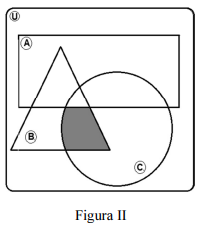
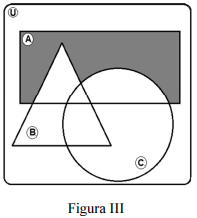
Com base nessas informações, julgue os itens seguintes, relacionados à descrição dos subconjuntos destacados nas figuras II e III.
O subconjunto destacado na figura III pode ser expresso como [A ∨(B ∪ C)C], em que (B U C)C significa o complementar do conjunto (B ∪ C) em U.
Provas

Com base na Lei Complementar estadual n.º 39/1993 (Estatuto dos Servidores Públicos Civis do Estado do Acre), julgue o próximo item.
Em regra, veda-se o desconto sobre a remuneração ou o provento do servidor público, no entanto, como exceção a essa regra, permite-se exclusivamente o desconto ou por ordem judicial ou por autorização do próprio servidor, para fins de consignação em folha de pagamento.
Provas
Com base no disposto no Decreto n.º 10.160/2019, que estabelece a Política Nacional de Governo Aberto, julgue os seguintes itens.
Os planos de ação nacionais sobre governo aberto deverão contemplar, prioritariamente, a inclusão de iniciativas, de ações, de projetos, de programas e de políticas públicas inovadoras e terão duração de até cinco anos.
Provas
Com base no disposto no Decreto n.º 10.160/2019, que estabelece a Política Nacional de Governo Aberto, julgue os seguintes itens.
O coordenador do Comitê Interministerial de Governo Aberto poderá instituir até dois grupos de trabalho temporários com duração não superior a um ano e compostos por, no máximo, sete membros.
Provas
Julgue os próximos itens, relativos à Política de Dados Abertos, estabelecida pelo Decreto n.º 8.777/2016.
A gestão da Política de Dados Abertos do Poder Executivo federal será coordenada pela Advocacia-Geral da União, por meio da Infraestrutura Nacional de Dados Abertos (INDA).
Provas
Julgue os próximos itens, relativos à Política de Dados Abertos, estabelecida pelo Decreto n.º 8.777/2016.
A Infraestrutura Nacional de Dados Abertos (INDA) poderá estabelecer normas complementares relacionadas à elaboração do plano de dados abertos bem como à proteção de informações pessoais na publicação de bases de dados abertos.
Provas
Considerando o modelo ITIL v4, julgue os itens que se seguem.
Os acordos documentados entre um provedor de serviços e o consumidor que identifica os serviços requeridos representam uma característica do gerenciamento de nível de serviços.
Provas
Responsible state fiscal policy requires more than just balancing the current year’s budget. It must also include ensuring that the budget is on a sustainable path. Otherwise, policymakers cannot have the lasting impact they hope for. This risk is especially high in the aftermath of the COVID-19 pandemic. Record budget surpluses, driven largely by federal pandemic aid, empowered states to adopt historically large tax cuts and spending increases from 2021 to 2023.
State leaders must be able to assess whether their decisions will be affordable over the long term or will jeopardize their ability to solve state problems or even sustain programs and services in the future. Unfortunately, the nature of state budget processes discourages such long-term thinking. State policymakers devote much of their time to developing, enacting, and implementing annual or biennial budgets, a prime opportunity to achieve immediate policy goals.
One key strategy for changing this short-term focus is for states to use long-term budget assessments and budget stress tests to regularly measure risks, anticipate potential shortfalls, and identify ways to address impending challenges. Long-term budget assessments project revenue and spending several years into the future, and stress tests estimate the size of temporary budget shortfalls that would result from recessions or other economic events and gauge whether states are prepared for these events.
Internet:https://www.pewtrusts.org/en/ (adapted).
Considering the ideas conveyed in the previous text, as well as its linguistic aspects, judge the following items.
The author believes the risk of a fiscal policy not having its expected long-term impacts is increased in the years following the COVID-19 pandemic.
Provas
Responsible state fiscal policy requires more than just balancing the current year’s budget. It must also include ensuring that the budget is on a sustainable path. Otherwise, policymakers cannot have the lasting impact they hope for. This risk is especially high in the aftermath of the COVID-19 pandemic. Record budget surpluses, driven largely by federal pandemic aid, empowered states to adopt historically large tax cuts and spending increases from 2021 to 2023.
State leaders must be able to assess whether their decisions will be affordable over the long term or will jeopardize their ability to solve state problems or even sustain programs and services in the future. Unfortunately, the nature of state budget processes discourages such long-term thinking. State policymakers devote much of their time to developing, enacting, and implementing annual or biennial budgets, a prime opportunity to achieve immediate policy goals.
One key strategy for changing this short-term focus is for states to use long-term budget assessments and budget stress tests to regularly measure risks, anticipate potential shortfalls, and identify ways to address impending challenges. Long-term budget assessments project revenue and spending several years into the future, and stress tests estimate the size of temporary budget shortfalls that would result from recessions or other economic events and gauge whether states are prepared for these events.
Internet:https://www.pewtrusts.org/en/ (adapted).
Considering the ideas conveyed in the previous text, as well as its linguistic aspects, judge the following items.
In the first sentence of the second paragraph, the word “jeopardize” is being used with a similar meaning as the one of enhance.
Provas
Responsible state fiscal policy requires more than just balancing the current year’s budget. It must also include ensuring that the budget is on a sustainable path. Otherwise, policymakers cannot have the lasting impact they hope for. This risk is especially high in the aftermath of the COVID-19 pandemic. Record budget surpluses, driven largely by federal pandemic aid, empowered states to adopt historically large tax cuts and spending increases from 2021 to 2023.
State leaders must be able to assess whether their decisions will be affordable over the long term or will jeopardize their ability to solve state problems or even sustain programs and services in the future. Unfortunately, the nature of state budget processes discourages such long-term thinking. State policymakers devote much of their time to developing, enacting, and implementing annual or biennial budgets, a prime opportunity to achieve immediate policy goals.
One key strategy for changing this short-term focus is for states to use long-term budget assessments and budget stress tests to regularly measure risks, anticipate potential shortfalls, and identify ways to address impending challenges. Long-term budget assessments project revenue and spending several years into the future, and stress tests estimate the size of temporary budget shortfalls that would result from recessions or other economic events and gauge whether states are prepared for these events.
Internet:https://www.pewtrusts.org/en/ (adapted).
Considering the ideas conveyed in the previous text, as well as its linguistic aspects, judge the following items.
Without harming the meaning and the correctness of the text, the word “ensuring” (second sentence of the text) could be correctly replaced with to make sure.
Provas
Caderno Container