Foram encontradas 70 questões.
3001285
Ano: 2023
Disciplina: Engenharia de Telecomunicações
Banca: CESGRANRIO
Orgão: Transpetro
Disciplina: Engenharia de Telecomunicações
Banca: CESGRANRIO
Orgão: Transpetro
Provas:
As fibras ópticas constituem um meio de transmissão guiado, cujas portadoras se encontram na faixa de frequências
do infravermelho próximo (THz), quando usadas para comunicações. Elas possuem diversas características especiais que as tornam um excelente meio de transmissão de
dados em alta velocidade.
Dentre essas características, observa-se que
Dentre essas características, observa-se que
Provas
Questão presente nas seguintes provas

3001284
Ano: 2023
Disciplina: Engenharia de Telecomunicações
Banca: CESGRANRIO
Orgão: Transpetro
Disciplina: Engenharia de Telecomunicações
Banca: CESGRANRIO
Orgão: Transpetro
Provas:
Em fibras ópticas, o espalhamento Rayleigh é o mecanismo de perda intrínseca dominante, na janela de baixa
absorção usada em telecomunicações. Uma fibra óptica
foi fabricada com um material cujo coeficiente de espalhamento Rayleigh é dado por: 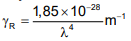 onde λ é o comprimento de onda do sinal. O fator de perda
de transmissão (transmissividade) da fibra é dado por
T = exp(-ϒR
.L), em que L é o comprimento da fibra.
Sabendo-se que log10(e) ≅ 0,43, qual é o valor que mais
se aproxima da atenuação, em dB/km, dessa fibra,
para λ = 980 nm?
onde λ é o comprimento de onda do sinal. O fator de perda
de transmissão (transmissividade) da fibra é dado por
T = exp(-ϒR
.L), em que L é o comprimento da fibra.
Sabendo-se que log10(e) ≅ 0,43, qual é o valor que mais
se aproxima da atenuação, em dB/km, dessa fibra,
para λ = 980 nm?
Provas
Questão presente nas seguintes provas
3001283
Ano: 2023
Disciplina: Engenharia de Telecomunicações
Banca: CESGRANRIO
Orgão: Transpetro
Disciplina: Engenharia de Telecomunicações
Banca: CESGRANRIO
Orgão: Transpetro
Provas:
O espaço ao redor de uma antena é normalmente dividido
em 3 regiões: Região de Campo Próximo Reativo, Região
de Campo Próximo Radiante (ou Região de Fresnel) e
Região de Campo Distante (ou Região de Fraunhofer).
A Região de Campo Distante apresenta as seguintes características:
A Região de Campo Distante apresenta as seguintes características:
Provas
Questão presente nas seguintes provas
3001282
Ano: 2023
Disciplina: Engenharia de Telecomunicações
Banca: CESGRANRIO
Orgão: Transpetro
Disciplina: Engenharia de Telecomunicações
Banca: CESGRANRIO
Orgão: Transpetro
Provas:
Em meados dos anos 80, a falta de padrões para as
redes ópticas levou a uma proliferação de interfaces
proprietárias, onde os sistemas de uma fabricante não
conversavam com os de outras.
Diante da necessidade de padronização, um novo padrão de rede óptica síncrona, o SDH (Synchronous Digital Hierarchy), foi desenvolvido pelo ITU-T.
Com relação ao SDH, verifica-se que o(s)
Diante da necessidade de padronização, um novo padrão de rede óptica síncrona, o SDH (Synchronous Digital Hierarchy), foi desenvolvido pelo ITU-T.
Com relação ao SDH, verifica-se que o(s)
Provas
Questão presente nas seguintes provas
3001281
Ano: 2023
Disciplina: Engenharia de Telecomunicações
Banca: CESGRANRIO
Orgão: Transpetro
Disciplina: Engenharia de Telecomunicações
Banca: CESGRANRIO
Orgão: Transpetro
Provas:
A 5ª geração de sistemas sem fio, conhecida como 5G,
está em crescente expansão no Brasil, após o leilão para
a concessão de direitos de exploração de faixas de frequência realizado pela Anatel, em 2021. O Release 15
da especificação feita pelo 3GPP (3rd Generation Partnership Project), com a colaboração de diversas empresas
do mercado, foi finalizado em junho de 2018, quando esse
padrão foi introduzido.
Com relação às especificações e desafios do 5G, sabe-se que
Com relação às especificações e desafios do 5G, sabe-se que
Provas
Questão presente nas seguintes provas
3001280
Ano: 2023
Disciplina: Engenharia de Telecomunicações
Banca: CESGRANRIO
Orgão: Transpetro
Disciplina: Engenharia de Telecomunicações
Banca: CESGRANRIO
Orgão: Transpetro
Provas:
Na Figura abaixo está representado um cluster para telefonia celular, composto por 7 células, numeradas de
1 a 7, em que cada célula possui uma faixa de canais
específica.
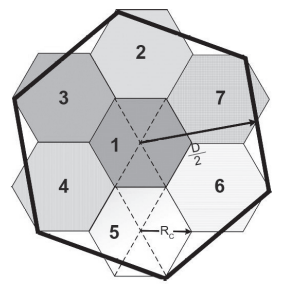
Uma certa operadora de telefonia celular resolveu dividir sua área de atuação em clusters, como o da Figura, projetando cada célula com um raio Rc = 2,2 km. Essa operadora possui 38,5 MHz de banda à disposição para o serviço. A tecnologia a ser adotada utiliza canais simplex de 25 KHz e duplexação FDD (Frequency Division Duplexing).
Assim sendo, quais valores mais se aproximam da distância entre dois clusters (D) e do número de canais full- -duplex por célula, respectivamente?
Uma certa operadora de telefonia celular resolveu dividir sua área de atuação em clusters, como o da Figura, projetando cada célula com um raio Rc = 2,2 km. Essa operadora possui 38,5 MHz de banda à disposição para o serviço. A tecnologia a ser adotada utiliza canais simplex de 25 KHz e duplexação FDD (Frequency Division Duplexing).
Assim sendo, quais valores mais se aproximam da distância entre dois clusters (D) e do número de canais full- -duplex por célula, respectivamente?
Provas
Questão presente nas seguintes provas
3001279
Ano: 2023
Disciplina: Engenharia de Telecomunicações
Banca: CESGRANRIO
Orgão: Transpetro
Disciplina: Engenharia de Telecomunicações
Banca: CESGRANRIO
Orgão: Transpetro
Provas:
Os conjuntos de antenas são formados por um aglomerado de irradiadores conhecidos como elementos. Cada
elemento recebe um sinal de entrada, cujas amplitude e
fase podem variar entre eles.
Considerando-se essa definição, a antena considerada um conjunto é a antena
Considerando-se essa definição, a antena considerada um conjunto é a antena
Provas
Questão presente nas seguintes provas
How space technology is bringing
green wins for transport
1 Space technology is developing fast, and, with
every advance, it is becoming more accessible to
industry. Today, satellite communications (satcoms)
and space-based data are underpinning new ways
of operating that boost both sustainability and
profitability. Some projects are still in the planning
stages, offering great promise for the future. However,
others are already delivering practical results.
2 The benefits of space technology broadly fall
into two categories: connectivity that can reach into
situations where terrestrial technologies struggle to
deliver and the deep, unique insights delivered by
Earth Observation (EO) data. Both depend on access
to satellite networks, particularly medium earth orbit
(MEO) and low earth orbit (LEO) satellites that offer
low-latency connectivity and frequently updated data.
Right now, the satellite supplier market is booming,
driving down the cost of access to satellites. Suppliers
are increasingly tailoring their services to emerging
customer needs and the potential applications are
incredible – as a look at the transportation sector
shows.
3 Satellite technology is a critical part of
revolutionizing connectivity on trains. The Satellites
for Digitalization of Railways (SODOR) project will
provide low latency, highly reliable connectivity that,
combined with monitoring sensors, will mean near realtime data guides operational decisions. This insight
will help trains run more efficiently with fewer delays
for passengers. Launching this year, SODOR will help
operators reduce emissions by using the network
more efficiently, allowing preventative maintenance
and extending the lifetime of some existing trains. It
will also make rail travel more attractive and help shift
more passengers from road to rail (that typically emits
even less CO2
per passenger than electric cars do).
4 Satellite data and communications will also play
a fundamental role in shaping a sustainable future
for road vehicles. Right now, the transport sector
contributes around 14% of the UK’s greenhouse gas
emissions, of which 91% is from road vehicles – and
this needs to change.
5 A future where Electric Vehicles (EV) dominate
will need a smart infrastructure to monitor and control
the electricity network, managing highly variable
supply and demand, as well as a large network of
EV charging points. EO data will be critical in future
forecasting models for wind and solar production, to
help manage a consistent flow of green energy.
6 Satellite communications will also be pivotal. As
more wind and solar installations join the electricity
network – often in remote locations – satcoms will step in to deliver highly reliable connectivity where 4G
struggles to reach. It will underpin a growing network
of EV charging points, connecting each point to the
internet for operational management purposes, for
billing and access app functionality and for the users’
comfort, they may access the system wherever they
are.
7 Satellite technology will increasingly be a part of
the vehicles themselves, particularly when automated
driving becomes more mainstream. It will be essential
for every vehicle to have continuous connectivity to
support real-time software patches, map updates
and inter-vehicle communications. Already, satellites
provide regular software updates to vehicles and
enhanced safety through an in-car emergency call
service.
8 At our company, we have been deeply embedded
in the space engineering for more than 40 years – and
we continue to be involved with the state-of-the-art
technologies and use cases. We have a strong track
record of translating these advances into practical
benefits for our customers that make sense on both a
business and a sustainability level.
Available at: https://www.cgi.com/uk/en-gb/blog/space/how-space-technology-is-bringing-green-wins-to-transport. Retrieved on
April 25, 2023. Adapted.
Provas
Questão presente nas seguintes provas
How space technology is bringing
green wins for transport
1 Space technology is developing fast, and, with
every advance, it is becoming more accessible to
industry. Today, satellite communications (satcoms)
and space-based data are underpinning new ways
of operating that boost both sustainability and
profitability. Some projects are still in the planning
stages, offering great promise for the future. However,
others are already delivering practical results.
2 The benefits of space technology broadly fall
into two categories: connectivity that can reach into
situations where terrestrial technologies struggle to
deliver and the deep, unique insights delivered by
Earth Observation (EO) data. Both depend on access
to satellite networks, particularly medium earth orbit
(MEO) and low earth orbit (LEO) satellites that offer
low-latency connectivity and frequently updated data.
Right now, the satellite supplier market is booming,
driving down the cost of access to satellites. Suppliers
are increasingly tailoring their services to emerging
customer needs and the potential applications are
incredible – as a look at the transportation sector
shows.
3 Satellite technology is a critical part of
revolutionizing connectivity on trains. The Satellites
for Digitalization of Railways (SODOR) project will
provide low latency, highly reliable connectivity that,
combined with monitoring sensors, will mean near realtime data guides operational decisions. This insight
will help trains run more efficiently with fewer delays
for passengers. Launching this year, SODOR will help
operators reduce emissions by using the network
more efficiently, allowing preventative maintenance
and extending the lifetime of some existing trains. It
will also make rail travel more attractive and help shift
more passengers from road to rail (that typically emits
even less CO2
per passenger than electric cars do).
4 Satellite data and communications will also play
a fundamental role in shaping a sustainable future
for road vehicles. Right now, the transport sector
contributes around 14% of the UK’s greenhouse gas
emissions, of which 91% is from road vehicles – and
this needs to change.
5 A future where Electric Vehicles (EV) dominate
will need a smart infrastructure to monitor and control
the electricity network, managing highly variable
supply and demand, as well as a large network of
EV charging points. EO data will be critical in future
forecasting models for wind and solar production, to
help manage a consistent flow of green energy.
6 Satellite communications will also be pivotal. As
more wind and solar installations join the electricity
network – often in remote locations – satcoms will step in to deliver highly reliable connectivity where 4G
struggles to reach. It will underpin a growing network
of EV charging points, connecting each point to the
internet for operational management purposes, for
billing and access app functionality and for the users’
comfort, they may access the system wherever they
are.
7 Satellite technology will increasingly be a part of
the vehicles themselves, particularly when automated
driving becomes more mainstream. It will be essential
for every vehicle to have continuous connectivity to
support real-time software patches, map updates
and inter-vehicle communications. Already, satellites
provide regular software updates to vehicles and
enhanced safety through an in-car emergency call
service.
8 At our company, we have been deeply embedded
in the space engineering for more than 40 years – and
we continue to be involved with the state-of-the-art
technologies and use cases. We have a strong track
record of translating these advances into practical
benefits for our customers that make sense on both a
business and a sustainability level.
Available at: https://www.cgi.com/uk/en-gb/blog/space/how-space-technology-is-bringing-green-wins-to-transport. Retrieved on
April 25, 2023. Adapted.
Provas
Questão presente nas seguintes provas
How space technology is bringing
green wins for transport
1 Space technology is developing fast, and, with
every advance, it is becoming more accessible to
industry. Today, satellite communications (satcoms)
and space-based data are underpinning new ways
of operating that boost both sustainability and
profitability. Some projects are still in the planning
stages, offering great promise for the future. However,
others are already delivering practical results.
2 The benefits of space technology broadly fall
into two categories: connectivity that can reach into
situations where terrestrial technologies struggle to
deliver and the deep, unique insights delivered by
Earth Observation (EO) data. Both depend on access
to satellite networks, particularly medium earth orbit
(MEO) and low earth orbit (LEO) satellites that offer
low-latency connectivity and frequently updated data.
Right now, the satellite supplier market is booming,
driving down the cost of access to satellites. Suppliers
are increasingly tailoring their services to emerging
customer needs and the potential applications are
incredible – as a look at the transportation sector
shows.
3 Satellite technology is a critical part of
revolutionizing connectivity on trains. The Satellites
for Digitalization of Railways (SODOR) project will
provide low latency, highly reliable connectivity that,
combined with monitoring sensors, will mean near realtime data guides operational decisions. This insight
will help trains run more efficiently with fewer delays
for passengers. Launching this year, SODOR will help
operators reduce emissions by using the network
more efficiently, allowing preventative maintenance
and extending the lifetime of some existing trains. It
will also make rail travel more attractive and help shift
more passengers from road to rail (that typically emits
even less CO2
per passenger than electric cars do).
4 Satellite data and communications will also play
a fundamental role in shaping a sustainable future
for road vehicles. Right now, the transport sector
contributes around 14% of the UK’s greenhouse gas
emissions, of which 91% is from road vehicles – and
this needs to change.
5 A future where Electric Vehicles (EV) dominate
will need a smart infrastructure to monitor and control
the electricity network, managing highly variable
supply and demand, as well as a large network of
EV charging points. EO data will be critical in future
forecasting models for wind and solar production, to
help manage a consistent flow of green energy.
6 Satellite communications will also be pivotal. As
more wind and solar installations join the electricity
network – often in remote locations – satcoms will step in to deliver highly reliable connectivity where 4G
struggles to reach. It will underpin a growing network
of EV charging points, connecting each point to the
internet for operational management purposes, for
billing and access app functionality and for the users’
comfort, they may access the system wherever they
are.
7 Satellite technology will increasingly be a part of
the vehicles themselves, particularly when automated
driving becomes more mainstream. It will be essential
for every vehicle to have continuous connectivity to
support real-time software patches, map updates
and inter-vehicle communications. Already, satellites
provide regular software updates to vehicles and
enhanced safety through an in-car emergency call
service.
8 At our company, we have been deeply embedded
in the space engineering for more than 40 years – and
we continue to be involved with the state-of-the-art
technologies and use cases. We have a strong track
record of translating these advances into practical
benefits for our customers that make sense on both a
business and a sustainability level.
Available at: https://www.cgi.com/uk/en-gb/blog/space/how-space-technology-is-bringing-green-wins-to-transport. Retrieved on
April 25, 2023. Adapted.
Provas
Questão presente nas seguintes provas
Cadernos
Caderno Container