Foram encontradas 72 questões.
Durante o processo evolutivo, algumas organelas de células eucariotas se formaram por endossimbiose com procariotos. Tais organelas mantiveram o mesmo mecanismo de síntese proteica encontrado nesses procariotos.
Considere as seguintes organelas celulares, existentes em eucariotos:
1 - mitocôndrias
2 - aparelho golgiense
3 - lisossomas
4 - cloroplastos
5 - vesículas secretoras
6 - peroxissomas
Nas células das plantas, as organelas que apresentam o mecanismo de síntese proteica igual ao dos procariotos correspondem às de números:
Provas

Coco Chanel, biographie d’une icône
Travail, âpreté, rigueur, extravagance, indépendance. Cinq mots, c’est peu pour parler d’une vie entière, mais ceux-là résument bien ce qui ressort de la personnalité de Coco Chanel. Le cliché de l’orpheline abandonnée par son père est gros comme un camion, mais la mode n’a pas fini de remercier Albert Chanel d’être parti faire fortune aux Etats-Unis, laissant derrière lui cinq enfants, dont Gabrielle Chanel, qui deviendra celle qu’on sait. Son adolescence est celle d’une fille placée en orphelinat, puis apprentie couseuse à ses 18 ans. Consciente de son talent, Gabrielle refuse d’imaginer qu’elle passera sa vie à confectionner des draps et de la layette. Son avenir sera ailleurs. Elle s’imagine chanteuse au music-hall, s’y essaie, reçoit le soutien d’une bande de jeunes et riches admirateurs, qui lui attribueront son pseudonyme, “Coco”. Parmi eux, Etienne Balsan, qui deviendra son ami, son amant pour un temps, et son protecteur pour toujours.
Mademoiselle s’emporte quand elle voit les femmes engoncées dans leurs corsets, emplumées jusqu’au moindre recoin. Par provocation et parce qu’elle est visionnaire, celle qui crée déjà des chapeaux pour ses amies intimes se montre en public portant des jodhpurs* et tailleurs aux coupes très masculines, autant de tenues libératrices pour le corps de la femme. Elle propose une nouvelle vision de la mode et ouvre en 1910 sa première boutique au mythique numéro 21 de la rue Cambon à Paris. A ses côtés, Boy Capell, un jeune aristocrate anglais qui sera son seul véritable amour. Il l’encourage à ouvrir une deuxième boutique à Deauville, puis une troisième à Biarritz.
La première guerre mondiale contribuera à faire avancer les créations de Coco Chanel. Privée de tissu, elle rachètera tout un stock de jersey qui sert à confectionner les maillots de corps des soldats. Les femmes de hauts dignitaires sont intriguées puis séduites, et les boutiques de Paris, de Deauville et de Biarritz ne désemplissent pas. L’entre-deux-guerres asseoit la notoriété de la griffe Chanel. Coco crée en s’inspirant de ses amants et donne naissance à la mythique petite robe noire, au chapeau cloche, le tout sur fond de Charleston et dans une brume de N°5, alors commercialisé par la marque Bourjois.
La seconde guerre mondiale mettra entre parenthèses l’histoire de Coco Chanel, puisqu’à l’aube des années 40 elle décide brutalement de tout arrêter et de licencier tout son personnel. Au sortir de la guerre, elle s’installera en Suisse, d’où elle ne reviendra que sur l’insistance de ses associés, qui comptent relancer les ventes de parfum de la marque.
La première collection après guerre de Coco Chanel n’a pas de succès. Depuis ses heures de gloire, les jupes se sont raccourcies avec Courrèges, Christian Lacroix a réenfermé la femme dans des corsets. Coco s’emporte: “Mademoiselle ne montera pas la jupe au-dessus du genou, car le genou, c’est laid”. Il faudra une autre collection avant que l’icône ne signe son dernier coup d’éclat, le mythique tailleur à quatre poches qui habillera Jackie Kennedy, Romy Schneider ou Jeanne Moreau. Mais les années 60, les hippies en tunique auront la peau de l’icône. Coco Chanel, née Gabrielle Bonheur Chanel en 1883, meurt à 87 ans, dans la chambre du Ritz qu’elle occupe depuis quinze ans.
Mademoiselle So www.madmoizelle.com
*jodhpurs - calças compridas usadas em equitação
Le cliché de l’orpheline abandonnée par son père est gros comme un camion ,
Dans la phrase ci-dessus, l’expression soulignée exprime l’idée de:
Provas
Eva Perón, según su séquito íntimo
Mientras el café ayuda a disipar la temperatura de un atardecer glacial, Francisco Ernesto Molina, chofer particular de Eva Perón, toma la iniciativa del relato:
− Yo fui el chofer de la señora Evita − aclara. El trato de la señora era algo extraordinario.A) Les diré que era una persona de carácter, muy dura cuando debía serlo, pero con nosotros, con su personal, el trato era siempre cariñoso. El día de trabajo de la señora − rememora Molina − comenzaba muy temprano. Nosotros tomábamos servicio a las 8 de la mañana. A esa hora, mientras el peluquero la peinaba, ella ya atendía a la gente humilde que llegaba con algún pedido.
Molina menciona cierta ocasión en que habían salido muy temprano de la residencia:
− Le pregunté: “¿Adónde vamos?”. “A la boîte*”, me contestó seria. Yo la miré por el espejo, perplejo. “Sí, sí, a la boîte, al Ministerio de Trabajo y Previsión, porque ahí los hago bailar a todos”. Jamás nos llamaba por el nombre, siempre era: “Hijo, vamos a tal lado”B). De todas formas, por la señora sentíamos un afecto especial. Teníamos por ella un gran fanatismo porque veíamos cómo se sacrificaba. La señora quemó su vida, la quiso quemar. Pero la quiso quemar por el general (Perón). Un día − recuerda el chofer − la señora subió al vehículo muy nerviosa, conversando con un funcionario de Cancillería. “Esto no se hace así”, le decía enojada, “esto debe hacerse en esta forma”. Entonces, como observé que había un clima difícil, levanté el vidrio de la visión para que le pudiera decir todo lo que quisiera y yo no tuviera que oírlo. Pero ella enseguida, de su lado, lo volvió a bajar. Cada vez que tenía que llamarle la atención a alguno bajaba el vidrioC) y los hacía pasar vergüenza delante nuestro. Tenía eso la señora. A la hija del ministro Oscar Nicolini, Irma, le hizo saludarnos especialmente porque previamente nos había ignorado al llegar.D) Eso no quiere decir que a veces no nos diera un tirón de orejas porque íbamos muy ligero o por algún otro motivo.
Molina recuerda de un crudo invierno a comienzos de la década del cincuenta. En aquel entonces, en Plaza de Mayo y Reconquista, estaban todas las paradas de los colectivos:
− Cuando pasamos por el lugar con Evita − señala − , ella empezó a decir: “Ay, pobrecita esa gente, con el frío que hace. Cuando me dejen a mí, vengan a buscar a estas personas y las lleven a su casa. Y que esto mismo lo hagan todos los otros funcionarios que vayan llegando, como orden del día”. Así que una vez que dejamos a Evita, fuimos a invitar a los que hacían la cola del colectivo a subir al automóvil oficial. Una señora del grupo no quería subir. Le explicamos que era el coche de la señora y que un rato antes, al pasar, ella misma la había saludado. Les dijimos que teníamos la orden de llevarlos a su casa porque era un día muy frío. Finalmente subió y la trasladamos hasta Villa Lugano. Esa gente, cuando se bajó en Lugano, nos besaba el coche por todos lados.
Molina asegura:
− La señora no tenía “noches de gala”. Todos los días se terminaba acostando a las 3 de la mañana, pero porque se quedaba trabajando en su oficina. Eran las tres y media de la mañana y todavía estaba ahí, atendiendo gente. Ella ni salía a almorzar. Trabajaba desde las 8 de la mañana hasta las 3 de la mañana del día siguiente. Dormía poco. Una hora o dos horas, a lo sumo. Quizás ella se sentía ya enferma y quería darlo todo.
Los relatos se superponen y la memoria domina. Eva Perón no es una figura de manual de historia, sino una mujer de carne y hueso.
Semejante devoción sorprende en una época tan fría y tan carente de devociones como ésta.
ERNESTO CASTRILLÓN Y LUIS CASABAL www.lanacion.com.ar
*boîte - casa nocturna donde se baila al son de música
Evita mantenía una relación respetuosa mutua con los trabajadores a su servicio. A los demás, les exigía que procedieran del mismo modo.
Se observa tal exigencia en el siguiente fragmento:
Provas
Happiness
It was almost nightfall. The whole day: rain, torrents of rain. Drenched to the bone, I arrived in a little Calabrian village. I had to find a hearth where I could dry out, a corner where I could sleep. The streets were deserted, the doors bolted. The dogs were the only ones to scent the stranger’s breath; they began to bark from within the courtyards. The peasants in this region are wild and misanthropic, suspicious of strangers. I hesitated at every door, extended my hand, but did not dare to knock.
O for my late grandfather in Crete!, who took his lantern each evening and made the rounds of the village to see if any stranger had come. He would take him home, feed him, give him a bed for the night, and then in the morning see him off with a cup of wine and a slice of bread. Here in the Calabrian villages there were no such grandfathers.
Suddenly I saw an open door at the edge of the village. Inclining my head, I looked in: a murky corridor with a lighted fire at the far end and an old lady bent over it. She seemed to be cooking. I crossed the threshold and entered. I reached the fire and sat down on a stool which I found in front of the hearth. The old lady was squatting on another stool, stirring the meal with a wooden spoon. I felt that she eyed me rapidly, without turning.A) But she said nothing. Taking off my jacket, I began to dry it. I sensed happiness rising in me like warmth, from my feet to my shins, my thighs, my breast. Hungrily, avidly, I breathed in the delicious smell of the steam rising from the pot. Once more I realized to what an extent earthly happiness is made to the measure of man. It is not a rare bird which we must pursue at one moment in heaven, at the next in our minds. Happiness is a domestic bird in our own courtyards.
As soon as we finished, she prepared a bed for me on a bench to the right of the table. I lay down, and she lay down on the other bench opposite me. Outside the rain was falling by the bucketful. For a considerable time I heard the water cackle on the roof, mixed with the old lady’s calm, quiet breathing. She must have been tired, for she fell asleep the moment she inclined her head.B) Little by little, with the rain and the old lady’s respiration, I too slipped into sleep. When I awoke, I saw daylight peering through the cracks in the door.
The old lady had already risen and placed a saucepan on the fire to prepare the morning milk. I looked at her now in the sparse daylight. Shriveled and hump, she could fit into the palm of your hand.C) Her legs were so swollen that she had to stop at every step and catch her breath. But her eyes, only her large, pitch-black eyes, gleamed with youthful, unaging brilliance. How beautiful she must have been in her youth, I thought to myself, cursing man’s fate, his inevitable deterioration. Sitting down opposite each other again, we drank the milk. Then I rose and slung my carpetbag over my shoulder. I took out my wallet, but the old lady colored deeply.
“No, no,” she murmured, extending her hand.
As I looked at her in astonishment, the whole of her wrinkled face suddenly gleamed.D)
“Goodbye, and God bless you,” she said. “May the Lord repay you for the good you’ve done me. Since my husband died I’ve never slept so well.”
NIKOS KAZANTZAKIS* http://grammar.about.com
* Nikos Kazantzakis (1883-1957) was one of the most important Greek writers of the 20th century.
The old lady is presented by means of the description of her actions and looks.
The passage from the text which best describes her bodily appearance is in:
Provas
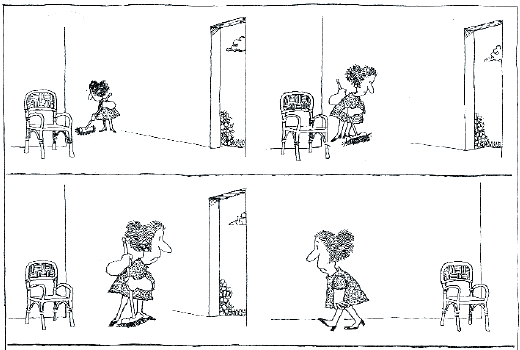

QUINO Déjenme inventar. Buenos Aires: Ediciones de La Flor, 2003.
Na tira do cartunista argentino Quino, utilizam-se recursos gráficos que lembram o cinema.
A associação com a linguagem artística do cinema, que lida com o movimento e com o instrumento da câmera, é garantida pelo procedimento do cartunista demonstrado a seguir:
Provas
Happiness
It was almost nightfall. The whole day: rain, torrents of rain. Drenched to the bone, I arrived in a little Calabrian village. I had to find a hearth where I could dry out, a corner where I could sleep. The streets were deserted, the doors bolted. The dogs were the only ones to scent the stranger’s breath; they began to bark from within the courtyards. The peasants in this region are wild and misanthropic, suspicious of strangers. I hesitated at every door, extended my hand, but did not dare to knock.
O for my late grandfather in Crete!, who took his lantern each evening and made the rounds of the village to see if any stranger had come. He would take him home, feed him, give him a bed for the night, and then in the morning see him off with a cup of wine and a slice of bread. Here in the Calabrian villages there were no such grandfathers.
Suddenly I saw an open door at the edge of the village. Inclining my head, I looked in: a murky corridor with a lighted fire at the far end and an old lady bent over it. She seemed to be cooking. I crossed the threshold and entered. I reached the fire and sat down on a stool which I found in front of the hearth. The old lady was squatting on another stool, stirring the meal with a wooden spoon. I felt that she eyed me rapidly, without turning. But she said nothing. Taking off my jacket, I began to dry it. I sensed happiness rising in me like warmth, from my feet to my shins, my thighs, my breast. Hungrily, avidly, I breathed in the delicious smell of the steam rising from the pot. Once more I realized to what an extent earthly happiness is made to the measure of man. It is not a rare bird which we must pursue at one moment in heaven, at the next in our minds. Happiness is a domestic bird in our own courtyards.
As soon as we finished, she prepared a bed for me on a bench to the right of the table. I lay down, and she lay down on the other bench opposite me. Outside the rain was falling by the bucketful. For a considerable time I heard the water cackle on the roof, mixed with the old lady’s calm, quiet breathing. She must have been tired, for she fell asleep the moment she inclined her head. Little by little, with the rain and the old lady’s respiration, I too slipped into sleep. When I awoke, I saw daylight peering through the cracks in the door.
The old lady had already risen and placed a saucepan on the fire to prepare the morning milk. I looked at her now in the sparse daylight. Shriveled and hump, she could fit into the palm of your hand. Her legs were so swollen that she had to stop at every step and catch her breath. But her eyes, only her large, pitch-black eyes, gleamed with youthful, unaging brilliance. How beautiful she must have been in her youth, I thought to myself, cursing man’s fate, his inevitable deterioration. Sitting down opposite each other again, we drank the milk. Then I rose and slung my carpetbag over my shoulder. I took out my wallet, but the old lady colored deeply.
“No, no,” she murmured, extending her hand.
As I looked at her in astonishment, the whole of her wrinkled face suddenly gleamed.
“Goodbye, and God bless you,” she said. “May the Lord repay you for the good you’ve done me. Since my husband died I’ve never slept so well.”
NIKOS KAZANTZAKIS* http://grammar.about.com
* Nikos Kazantzakis (1883-1957) was one of the most important Greek writers of the 20th century.
In the third and fourth paragraphs, there are different sensory images, as in the fragment below:
I breathed in the delicious smell of the steam rising from the pot.
In this fragment, the narrator makes use of the following type of imagery:
Provas
A figura abaixo representa um círculo de centro O e uma régua retangular, graduada em milímetros. Os pontos A, E e O pertencem à régua e os pontos B, C e D pertencem, simultaneamente, à régua e à circunferência.
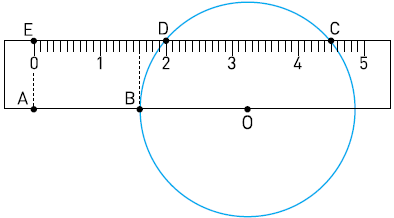
Considere os seguintes dados:
| SEGMENTOS | MEDIDA (cm) |
| !$ \overline{AB} !$ | 1,6 |
| !$ \overline{ED} !$ | 2,0 |
| !$ \overline{EC} !$ | 4,5 |
O diâmetro do círculo é, em centímetros, igual a:
Provas
Os líderes dos países que integram os Brics – Brasil, Rússia, Índia, China e África do Sul – encerraram seu terceiro encontro com um comunicado em que pedem conjunta e explicitamente, pela primeira vez, mudanças no Conselho de Segurança das Nações Unidas. O texto defende reformas na ONU para aumentar a representatividade na instituição, além de alterações no Fundo Monetário Internacional e no Banco Mundial. Para os líderes dos Brics, a reforma da ONU é essencial, pois não é mais possível manter as formas institucionais erguidas logo após a Segunda Guerra Mundial.
Adaptado de O Globo, 15/04/2011
Uma das principais mudanças no contexto internacional contemporâneo que se relaciona com as reformas propostas pelos Brics está indicada em:
Provas
Happiness
It was almost nightfall. The whole day: rain, torrents of rain. Drenched to the bone, I arrived in a little Calabrian village. I had to find a hearth where I could dry out, a corner where I could sleep. The streets were deserted, the doors bolted. The dogs were the only ones to scent the stranger’s breath; they began to bark from within the courtyards. The peasants in this region are wild and misanthropic, suspicious of strangers. I hesitated at every door, extended my hand, but did not dare to knock.
O for my late grandfather in Crete!, who took his lantern each evening and made the rounds of the village to see if any stranger had come. He would take him home, feed him, give him a bed for the night, and then in the morning see him off with a cup of wine and a slice of bread. Here in the Calabrian villages there were no such grandfathers.
Suddenly I saw an open door at the edge of the village. Inclining my head, I looked in: a murky corridor with a lighted fire at the far end and an old lady bent over it. She seemed to be cooking. I crossed the threshold and entered. I reached the fire and sat down on a stool which I found in front of the hearth. The old lady was squatting on another stool, stirring the meal with a wooden spoon. I felt that she eyed me rapidly, without turning. But she said nothing. Taking off my jacket, I began to dry it. I sensed happiness rising in me like warmth, from my feet to my shins, my thighs, my breast. Hungrily, avidly, I breathed in the delicious smell of the steam rising from the pot. Once more I realized to what an extent earthly happiness is made to the measure of man. It is not a rare bird which we must pursue at one moment in heaven, at the next in our minds. Happiness is a domestic bird in our own courtyards.
As soon as we finished, she prepared a bed for me on a bench to the right of the table. I lay down, and she lay down on the other bench opposite me. Outside the rain was falling by the bucketful. For a considerable time I heard the water cackle on the roof, mixed with the old lady’s calm, quiet breathing. She must have been tired, for she fell asleep the moment she inclined her head. Little by little, with the rain and the old lady’s respiration, I too slipped into sleep. When I awoke, I saw daylight peering through the cracks in the door.
The old lady had already risen and placed a saucepan on the fire to prepare the morning milk. I looked at her now in the sparse daylight. Shriveled and hump, she could fit into the palm of your hand. Her legs were so swollen that she had to stop at every step and catch her breath. But her eyes, only her large, pitch-black eyes, gleamed with youthful, unaging brilliance. How beautiful she must have been in her youth, I thought to myself, cursing man’s fate, his inevitable deterioration. Sitting down opposite each other again, we drank the milk. Then I rose and slung my carpetbag over my shoulder. I took out my wallet, but the old lady colored deeply.
“No, no,” she murmured, extending her hand.
As I looked at her in astonishment, the whole of her wrinkled face suddenly gleamed.
“Goodbye, and God bless you,” she said. “May the Lord repay you for the good you’ve done me. Since my husband died I’ve never slept so well.”
NIKOS KAZANTZAKIS* http://grammar.about.com
* Nikos Kazantzakis (1883-1957) was one of the most important Greek writers of the 20th century.
Happiness is a domestic bird in our own courtyards.
This fragment contains a figure of speech which is labeled as:
Provas
Utilize as informações a seguir para responder a questão.
Uma sala é iluminada por um circuito de lâmpadas incandescentes em paralelo.
Considere os dados abaixo:
− a corrente elétrica eficaz limite do fusível que protege esse circuito é igual a 10 A;
− a tensão eficaz disponível é de 120 V;
− sob essa tensão, cada lâmpada consome uma potência de 60 W.
O número máximo de lâmpadas que podem ser mantidas acesas corresponde a:
Provas
Caderno Container