Foram encontradas 819 questões.
Assinale o conceito CORRETO.
Provas
Questão presente nas seguintes provas

Assinale a alternativa CORRETA, quanto à prestação de primeiros socorros.
Provas
Questão presente nas seguintes provas
1192644
Ano: 2013
Disciplina: Direito Cultural, Desportivo e da Comunicação
Banca: UFSC
Orgão: UFSC
Disciplina: Direito Cultural, Desportivo e da Comunicação
Banca: UFSC
Orgão: UFSC
Provas:
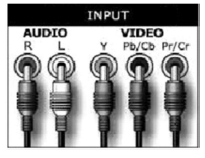
Analisando as conexões da figura abaixo, indique a utilização do padrão de vídeo.
Provas
Questão presente nas seguintes provas
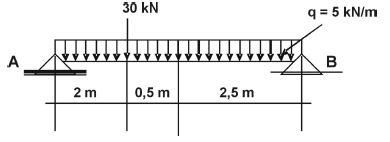
Calcular as reações de apoio nos pontos A e B (Ra e Rb) da viga abaixo esquematizada.
Provas
Questão presente nas seguintes provas
Introduction
The Census Bureau’s Methodology and Standards Council sets statistical standards for the Census Bureau’s surveys and censuses. This responsibility encompasses providing guidelines for the translation of Census Bureau data collection instruments and related materials. This guideline provides direction to program managers to help them and their teams ensure that Census Bureau data collection instruments and related materials that are translated from a source language into a target language are of the highest quality possible, given available resources.
Translation Guideline
The Census Bureau developed guidelines for the translation of data collection instruments and supporting materials in order to ensure that such documents translated from a source language into a target language are reliable, complete, accurate, and culturally appropriate. When the translated text conveys the intended meaning of the original text, the translation is deemed reliable. Translations that do not add any new information to the translated document and do not omit information provided in the source document are said to be complete. An accurate translation is one that is free of spelling and grammatical errors. Cultural appropriateness is achieved when the message conveyed in the translated text is appropriate for the target population. In addition to meeting the aforementioned criteria, translated Census Bureau data collection instruments and related materials should also have semantic, conceptual, and normative equivalence.
The matter of equivalence and the extent to which there is equivalence (to the source language) in the translated text is central to the quality and appropriateness of a translation. If the translation lacks equivalence, then the intended meaning of the information in the source language text is not appropriately conveyed in the translation. The literature points to several types of equivalence. Semantic equivalence refers to the extent to which the terms and sentence structures that give meaning to the information presented in the source language is maintained in the translated text. Conceptual equivalence concerns the degree to which a given concept is present in both the source and target cultures, regardless of the words used to express the concept. The third main type of equivalence discussed in the research literature is normative equivalence. This form of equivalence refers to the extent to which the translated text successfully addresses the difficulties created by differences in societal rules between the source and target cultures.
Census Bureau research conducted for the development of the translation guideline showed that there is considerable evidence in the field of survey methodology and crosscultural research that translated questionnaires which lack the features noted above are not of the highest possible quality and that data obtained from such instruments may not necessarily be comparable to data collected using the source language instrument.
Adapted from Acesso em 20 nov. 2013)
Why has the Census Bureau developed the Translation Guideline?
Provas
Questão presente nas seguintes provas
Analise os itens I a III, referentes ao mecanismo de reação a seguir:
D + Q → J + M (rápido)
J + E → L + Q (lento)
J + E → L + Q (lento)
I) O catalisador é a espécie Q.
II) A espécie J é um intermediário de reação.
III) A lei de velocidade é dada por !$ - { \large d[J] \over dt} !$ = !$ k[J] [E] !$.
Está(ão) CORRETA(s):
Provas
Questão presente nas seguintes provas
A partir das equações I a IV, fornecidas a seguir, e com base na lei de Hess, assinale a alternativa que apresenta a equação que, se substituída pelos valores correspondentes, determina a entalpia de reação de formação do !$ K_2S !$, sendo !$ K_{(s)} !$ + !$ ½Br2_{(g)} !$ → !$ KBr_{(s)} !$
I) !$ K_{(s)} !$ + !$ HBr_{(aq)} !$ → !$ KBr_{(aq)} !$ + !$ H_{2(g)} !$ ΔHº = x
II) !$ H_{2(g)} !$ + !$ Br_{2(g)} !$ → !$ HBr_{(g)} !$ ΔHº = y
III) !$ KBr_{(s)} !$ → !$ KBr_{(aq)} !$ ΔHº = z
IV) !$ HBr_{(aq)} !$ → !$ HBr_{(g)} !$ ΔHº = t
Provas
Questão presente nas seguintes provas
A distância linear entre os pontos “A” e “B” é igual a 60 m e o azimute da direção AB é 135°. Determine as coordenadas do Ponto B (XB ; YB) em metros, considerando as coordenadas do Ponto A como XA = 0,0 e YA = 0,0.
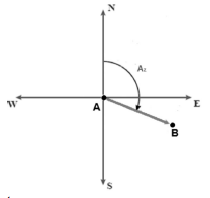
Assinale a alternativa correta.
Provas
Questão presente nas seguintes provas
Por meio de um teodolito instalado na margem de um rio, um observador vê o topo de uma torre existente na outra margem, segundo um ângulo de 60º00’00” (β). Ao afastar-se 50 m (AB) , o mesmo observador vê a mesma torre segundo um ângulo de 45º00’00” (α). Calcule a largura desse rio (BC) e a altura da torre (CD) em metros.

Assinale a alternativa CORRETA, quanto à largura do rio e a altura da torre.
Provas
Questão presente nas seguintes provas
Sabendo que o INCRA define as normas para o georreferenciamento de imóveis rurais, assinale a alternativa que apresenta a precisão angular e linear para estação total na Classe 2 - precisão média.
Provas
Questão presente nas seguintes provas
Cadernos
Caderno Container