Foram encontradas 353 questões.
Disciplina: Espanhol (Língua Espanhola)
Banca: CESPE / CEBRASPE
Orgão: UnB
Los jóvenes son la carne viva de nuestras contradicciones sociales. Son una generación privada de trabajo en una sociedad donde la identidad se define por el trabajo que el individuo tiene. No todos los espacios tienen el mismo peso significativo y la misma relevancia para la construcción de las identidades de los individuos. El trabajo es un espacio de identidad muy importante para la construcción de la personalidad de los sujetos, de los jóvenes en concreto, porque en él realizan la afirmación de sí mismos y la consecución de las metas a las que aspiran o aspiraban.
Cuando las transiciones o el rito de paso a la adultez no se cumple — la meta de tener trabajo —, la identidad social y personal del individuo entra en crisis y es cuestionada. En las sociedades capitalistas, la transición al trabajo (y su estabilidad) implica la posibilidad de expandir el yo social del joven para dotarse, en un segundo momento, de otras ramificaciones identitarias que sólo son posibles si
se tiene trabajo. Es decir, el primer espacio de proyección de la identidad juvenil consiste en obtener recursos económicos propios (empleo estable); a continuación, dotarse de un espacio geométrico y simbólico propio (residencia o domicilio), y, en último lugar, en poder reconocerse a sí mismo realizando sus potencialidades afectivas, emocionales y sexuales a través de una pareja. En definitiva, de la primera transición depende la conquista de las subsiguientes, pero matizando que estas transiciones en pos de la construcción
de las identidades no se “objetivan” por igual en las diferentes clases sociales ni en los diferentes géneros: las trayectorias de construcción de identidades están fuertemente mediatizadas por la clase social y por el género, de modo que no podemos hablar de una única y abstracta juventud, sino de tantas juventudes como recorridos transicionales posibles. M. Martín Serrano. Los valores actuales de la juventud en España. Madrid,
Ministerio de Asuntos Sociales, Instituto de la Juventud, 1991 (con adaptaciones).
Con respecto a las ideas y estructuras lingüísticas del texto de arriba, juzgue los ítems siguientes.
El texto afirma que los jóvenes son contradictorios.
Provas

Les suffragettes
Les suffragettes est le nom donné à un mouvement féministe qui s’est développé au Royaume-Uni au début du XX ème siècle. Le terme provient du mot suffrage qui désigne le droit de vote. Ses membres revendiquaient l’élargissement du droit de vote aux femmes. Avant la Première Guerre Mondiale, les femmes étaient généralement considérées comme inférieures. Il paraissait donc évident qu’elles ne pouvaient pas prétendre aux mêmes droits que les hommes. Le mouvement, né en 1865, a pris une forme militante entre 1903 et 1917. Durant la guerre, d’importantes pénuries de main d’oeuvre masculine obligèrent les femmes à occuper des emplois traditionnellement masculins. Cela provoqua dans les esprits de nombreuses remises en question sur les capacités des femmes, et, en 1918, les femmes britanniques ont obtenu le droit de vote à partir de l’âge de 30 ans. Dix ans plus tard, les femmes furent autorisées à voter dès l’âge de 21 ans comme les hommes. En France, les femmes n’ont eu ce droit qu’en 1944, à la fin de la Seconde Guerre Mondiale.
Internet: <www.fr.wikipedia.org> (adapté).
D’après les informations données par le texte, il est correct d’affirmer que
les femmes ont pu voter en Grande-Bretagne en 1917 à l’âge de 21 ans pour la première fois.
Provas
On the road from slavery to freedom
In the 1870s, black men and women might have been expected to look forward to a bright future. But the false dawn immediately after the Civil War soon gave way to nearly a century of legal, economic and social discrimination. Whatever the Fourteenth Amendment may have said about equal protection and citizenship, blacks in America enjoyed few of the blessings of liberty; they remained outsiders,
condemned by the white majority as inferior.
By the 1890s, the South had erected a system of legally enforced segregation in which blacks were relegated to a decidedly inferior status, and the Supreme Court had endorsed the notion of “separate but equal”, claiming that the Fourteenth Amendment’s Equal Protection Clause had never been intended to promote social equality between the races. The separate facilities were far from equal, and beyond that, were designed to keep African Americans in a subordinate position.
Civil rights groups never accepted segregation, and began a long and slow campaign in the courts to do away with it. World War II gave their struggle a new impetus. The fight against Nazi racism made many Americans take a closer look at racism at home, and the nation as a whole finally began taking measures to give African Americans their full legal and civil rights.
It has been a slow struggle, with progress often measured in small increments, but there has been progress, and the position of black Americans today has markedly improved over that of a half-century ago. Moreover, legal racism of the type that kept southern blacks from voting and relegated to separate and inferior schools is gone, wiped out by both court decisions and civil rights legislation.
Internet: <usinfo.state.gov> (adapted).
Based on the text, judge the following items
It can be said that black Americans today are in no better position than those of a half-century ago..
Provas
Disciplina: Espanhol (Língua Espanhola)
Banca: CESPE / CEBRASPE
Orgão: UnB
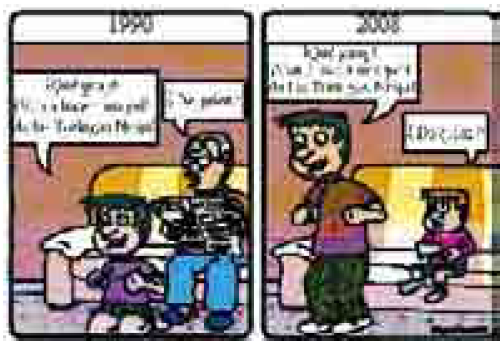
Internet: <www.gameprotv.com> (adapted).
Basándose en las imágenes de arriba, juzgue los ítems subsiguientes.
De las generaciones representadas en las imágenes solamente una sabe lo que son las Tortugas Ninja.
Provas
On the road from slavery to freedom
In the 1870s, black men and women might have been expected to look forward to a bright future. But the false dawn immediately after the Civil War soon gave way to nearly a century of legal, economic and social discrimination. Whatever the Fourteenth Amendment may have said about equal protection and citizenship, blacks in America enjoyed few of the blessings of liberty; they remained outsiders,
condemned by the white majority as inferior.
By the 1890s, the South had erected a system of legally enforced segregation in which blacks were relegated to a decidedly inferior status, and the Supreme Court had endorsed the notion of “separate but equal”, claiming that the Fourteenth Amendment’s Equal Protection Clause had never been intended to promote social equality between the races. The separate facilities were far from equal, and beyond that, were designed to keep African Americans in a subordinate position.
Civil rights groups never accepted segregation, and began a long and slow campaign in the courts to do away with it. World War II gave their struggle a new impetus. The fight against Nazi racism made many Americans take a closer look at racism at home, and the nation as a whole finally began taking measures to give African Americans their full legal and civil rights.
It has been a slow struggle, with progress often measured in small increments, but there has been progress, and the position of black Americans today has markedly improved over that of a half-century ago. Moreover, legal racism of the type that kept southern blacks from voting and relegated to separate and inferior schools is gone, wiped out by both court decisions and civil rights legislation.
Internet: <usinfo.state.gov> (adapted).
Based on the text, judge the following items.
Because of the Nazi racism of World War II, many Americans gained conscience of the racial discrimination they had been practicing against African Americans.
Provas
Les suffragettes
Les suffragettes est le nom donné à un mouvement féministe qui s’est développé au Royaume-Uni au début du XX ème siècle. Le terme provient du mot suffrage qui désigne le droit de vote. Ses membres revendiquaient l’élargissement du droit de vote aux femmes. Avant la Première Guerre Mondiale, les femmes étaient généralement considérées comme inférieures. Il paraissait donc évident qu’elles ne pouvaient pas prétendre aux mêmes droits que les hommes. Le mouvement, né en 1865, a pris une forme militante entre 1903 et 1917. Durant la guerre, d’importantes pénuries de main d’oeuvre masculine obligèrent les femmes à occuper des emplois traditionnellement masculins. Cela provoqua dans les esprits de nombreuses remises en question sur les capacités des femmes, et, en 1918, les femmes britanniques ont obtenu le droit de vote à partir de l’âge de 30 ans. Dix ans plus tard, les femmes furent autorisées à voter dès l’âge de 21 ans comme les hommes. En France, les femmes n’ont eu ce droit qu’en 1944, à la fin de la Seconde Guerre Mondiale.
Internet: <www.fr.wikipedia.org> (adapté).
D’après les informations données par le texte, il est correct d’affirmer que
les femmes anglaises ont conquis le droit de vote dans l’année de la fin de la Première Guerre Mondiale.
Provas
Disciplina: Espanhol (Língua Espanhola)
Banca: CESPE / CEBRASPE
Orgão: UnB
Internet: <www.gameprotv.com> (adapted).
Basándose en las imágenes de arriba, juzgue los ítems subsiguientes.
Hoy en día, solamente los niños se interesan por las Tortugas Ninja.
Provas
Les suffragettes
Les suffragettes est le nom donné à un mouvement féministe qui s’est développé au Royaume-Uni au début du XX ème siècle. Le terme provient du mot suffrage qui désigne le droit de vote. Ses membres revendiquaient l’élargissement du droit de vote aux femmes. Avant la Première Guerre Mondiale, les femmes étaient généralement considérées comme inférieures. Il paraissait donc évident qu’elles ne pouvaient pas prétendre aux mêmes droits que les hommes. Le mouvement, né en 1865, a pris une forme militante entre 1903 et 1917. Durant la guerre, d’importantes pénuries de main d’oeuvre masculine obligèrent les femmes à occuper des emplois traditionnellement masculins. Cela provoqua dans les esprits de nombreuses remises en question sur les capacités des femmes, et, en 1918, les femmes britanniques ont obtenu le droit de vote à partir de l’âge de 30 ans. Dix ans plus tard, les femmes furent autorisées à voter dès l’âge de 21 ans comme les hommes. En France, les femmes n’ont eu ce droit qu’en 1944, à la fin de la Seconde Guerre Mondiale.
Internet: <www.fr.wikipedia.org> (adapté).
Le texte se réfère à
l’injustice dont étaient victimes les femmes anglaises sur le plan politique qui a perduré jusqu’en 1928.
Provas
Disciplina: Espanhol (Língua Espanhola)
Banca: CESPE / CEBRASPE
Orgão: UnB
Internet: <www.gameprotv.com> (adapted).
Basándose en las imágenes de arriba, juzgue los ítems subsiguientes.
De las imágenes es correcto inferir que a medida que las personas crecen cambian sus intereses.
Provas
On the road from slavery to freedom
In the 1870s, black men and women might have been expected to look forward to a bright future. But the false dawn immediately after the Civil War soon gave way to nearly a century of legal, economic and social discrimination. Whatever the Fourteenth Amendment may have said about equal protection and citizenship, blacks in America enjoyed few of the blessings of liberty; they remained outsiders,
condemned by the white majority as inferior.
By the 1890s, the South had erected a system of legally enforced segregation in which blacks were relegated to a decidedly inferior status, and the Supreme Court had endorsed the notion of “separate but equal”, claiming that the Fourteenth Amendment’s Equal Protection Clause had never been intended to promote social equality between the races. The separate facilities were far from equal, and beyond that, were designed to keep African Americans in a subordinate position.
Civil rights groups never accepted segregation, and began a long and slow campaign in the courts to do away with it. World War II gave their struggle a new impetus. The fight against Nazi racism made many Americans take a closer look at racism at home, and the nation as a whole finally began taking measures to give African Americans their full legal and civil rights.
It has been a slow struggle, with progress often measured in small increments, but there has been progress, and the position of black Americans today has markedly improved over that of a half-century ago. Moreover, legal racism of the type that kept southern blacks from voting and relegated to separate and inferior schools is gone, wiped out by both court decisions and civil rights legislation.
Internet: <usinfo.state.gov> (adapted).
Based on the text, judge the following items.
It can be said that World War II marked a turning point in the fight against segregation.
Provas
Caderno Container