Foram encontradas 351 questões.
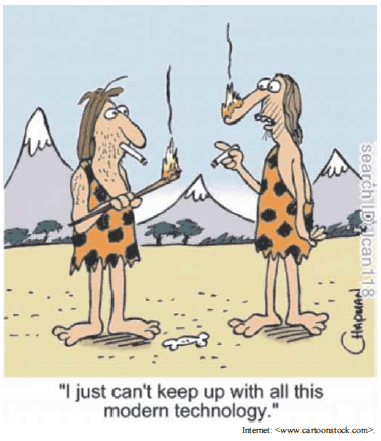
Based on the cartoon above, judge the item below.
Both men seem to have trouble getting familiar with the current technology.
Provas

It has long been a fascinating puzzle to scientists: Why did our apelike ancestors come down from the trees and develop brains many times larger than they actually needed? Many theories have been discussed, most of which revolve around social cooperation; big brains would have helped our ancestors develop language, make better tools, plan hunting strategies, and pass on complex culture to the next generation.
However, some scientists have pointed out that other animals — chimpanzees and crows, for example — are also able to make and use tools, can communicate adequately to suit their purposes, and live within a matrix of socially intricate relationships. Yet these animals do not possess the enormous brains that humans do, relative to their body size. Therefore, some other factor must have led to our runaway brain growth, and in his 2009 book Catching Fire, biological anthropologist Richard Wranghamm makes a case for cooking. It is not currently known when early hominids began controlling fire and the first discovery of fire was likely accidental.
While it is unclear whether these early fires were used to cook food, fire would have kept predators at bay, allowing our vulnerable ancestors to sleep on the ground, rather than in trees as other apes do. This ground living could explain some of the anatomical changes early hominids eventually underwent, such as the loss of climbing efficiency, and the lengthening of the legs and flattening of the feet, which facilitated upright walking.
Internet: <www.suite101.com> (adapted).
Based on the text, it can be deduced that
some birds and mammals can bear some similarities with human beings.
Provas
It has long been a fascinating puzzle to scientists: Why did our apelike ancestors come down from the trees and develop brains many times larger than they actually needed? Many theories have been discussed, most of which revolve around social cooperation; big brains would have helped our ancestors develop language, make better tools, plan hunting strategies, and pass on complex culture to the next generation.
However, some scientists have pointed out that other animals — chimpanzees and crows, for example — are also able to make and use tools, can communicate adequately to suit their purposes, and live within a matrix of socially intricate relationships. Yet these animals do not possess the enormous brains that humans do, relative to their body size. Therefore, some other factor must have led to our runaway brain growth, and in his 2009 book Catching Fire, biological anthropologist Richard Wranghamm makes a case for cooking. It is not currently known when early hominids began controlling fire and the first discovery of fire was likely accidental.
While it is unclear whether these early fires were used to cook food, fire would have kept predators at bay, allowing our vulnerable ancestors to sleep on the ground, rather than in trees as other apes do. This ground living could explain some of the anatomical changes early hominids eventually underwent, such as the loss of climbing efficiency, and the lengthening of the legs and flattening of the feet, which facilitated upright walking.
Internet: <www.suite101.com> (adapted).
Based on the text, it can be deduced that
the difference between humans’ brain size and that of some other animals can be attributed to the mastering of fire.
Provas
It has long been a fascinating puzzle to scientists: Why did our apelike ancestors come down from the trees and develop brains many times larger than they actually needed? Many theories have been discussed, most of which revolve around social cooperation; big brains would have helped our ancestors develop language, make better tools, plan hunting strategies, and pass on complex culture to the next generation.
However, some scientists have pointed out that other animals — chimpanzees and crows, for example — are also able to make and use tools, can communicate adequately to suit their purposes, and live within a matrix of socially intricate relationships. Yet these animals do not possess the enormous brains that humans do, relative to their body size. Therefore, some other factor must have led to our runaway brain growth, and in his 2009 book Catching Fire, biological anthropologist Richard Wranghamm makes a case for cooking. It is not currently known when early hominids began controlling fire and the first discovery of fire was likely accidental.
While it is unclear whether these early fires were used to cook food, fire would have kept predators at bay, allowing our vulnerable ancestors to sleep on the ground, rather than in trees as other apes do. This ground living could explain some of the anatomical changes early hominids eventually underwent, such as the loss of climbing efficiency, and the lengthening of the legs and flattening of the feet, which facilitated upright walking.
Internet: <www.suite101.com> (adapted).
Based on the text, it can be deduced that
it has been concluded that having big brains and living together in society are closely linked.
Provas
It has long been a fascinating puzzle to scientists: Why did our apelike ancestors come down from the trees and develop brains many times larger than they actually needed? Many theories have been discussed, most of which revolve around social cooperation; big brains would have helped our ancestors develop language, make better tools, plan hunting strategies, and pass on complex culture to the next generation.
However, some scientists have pointed out that other animals — chimpanzees and crows, for example — are also able to make and use tools, can communicate adequately to suit their purposes, and live within a matrix of socially intricate relationships. Yet these animals do not possess the enormous brains that humans do, relative to their body size. Therefore, some other factor must have led to our runaway brain growth, and in his 2009 book Catching Fire, biological anthropologist Richard Wranghamm makes a case for cooking. It is not currently known when early hominids began controlling fire and the first discovery of fire was likely accidental.
While it is unclear whether these early fires were used to cook food, fire would have kept predators at bay, allowing our vulnerable ancestors to sleep on the ground, rather than in trees as other apes do. This ground living could explain some of the anatomical changes early hominids eventually underwent, such as the loss of climbing efficiency, and the lengthening of the legs and flattening of the feet, which facilitated upright walking.
Internet: <www.suite101.com> (adapted).
Based on the text, it can be deduced that
scientists are yet to find out why our monkey-like forefathers gave up living up in trees.
Provas
It has long been a fascinating puzzle to scientists: Why did our apelike ancestors come down from the trees and develop brains many times larger than they actually needed? Many theories have been discussed, most of which revolve around social cooperation; big brains would have helped our ancestors develop language, make better tools, plan hunting strategies, and pass on complex culture to the next generation.
However, some scientists have pointed out that other animals — chimpanzees and crows, for example — are also able to make and use tools, can communicate adequately to suit their purposes, and live within a matrix of socially intricate relationships. Yet these animals do not possess the enormous brains that humans do, relative to their body size. Therefore, some other factor must have led to our runaway brain growth, and in his 2009 book Catching Fire, biological anthropologist Richard Wranghamm makes a case for cooking. It is not currently known when early hominids began controlling fire and the first discovery of fire was likely accidental.
While it is unclear whether these early fires were used to cook food, fire would have kept predators at bay, allowing our vulnerable ancestors to sleep on the ground, rather than in trees as other apes do. This ground living could explain some of the anatomical changes early hominids eventually underwent, such as the loss of climbing efficiency, and the lengthening of the legs and flattening of the feet, which facilitated upright walking.
Internet: <www.suite101.com> (adapted).
Based on the text, it can be deduced that
“their” refers to “other animals”.
Provas
It has long been a fascinating puzzle to scientists: Why did our apelike ancestors come down from the trees and develop brains many times larger than they actually needed? Many theories have been discussed, most of which revolve around social cooperation; big brains would have helped our ancestors develop language, make better tools, plan hunting strategies, and pass on complex culture to the next generation.
However, some scientists have pointed out that other animals — chimpanzees and crows, for example — are also able to make and use tools, can communicate adequately to suit their purposes, and live within a matrix of socially intricate relationships. Yet these animals do not possess the enormous brains that humans do, relative to their body size. Therefore, some other factor must have led to our runaway brain growth, and in his 2009 book Catching Fire, biological anthropologist Richard Wranghamm makes a case for cooking. It is not currently known when early hominids began controlling fire and the first discovery of fire was likely accidental.
While it is unclear whether these early fires were used to cook food, fire would have kept predators at bay, allowing our vulnerable ancestors to sleep on the ground, rather than in trees as other apes do. This ground living could explain some of the anatomical changes early hominids eventually underwent, such as the loss of climbing efficiency, and the lengthening of the legs and flattening of the feet, which facilitated upright walking.
Internet: <www.suite101.com> (adapted).
Based on the text, it can be deduced that
not only would fire have driven away our predators, but it would also have helped the advent of Homo erectus.
Provas
It has long been a fascinating puzzle to scientists: Why did our apelike ancestors come down from the trees and develop brains many times larger than they actually needed? Many theories have been discussed, most of which revolve around social cooperation; big brains would have helped our ancestors develop language, make better tools, plan hunting strategies, and pass on complex culture to the next generation.
However, some scientists have pointed out that other animals — chimpanzees and crows, for example — are also able to make and use tools, can communicate adequately to suit their purposes, and live within a matrix of socially intricate relationships. Yet these animals do not possess the enormous brains that humans do, relative to their body size. Therefore, some other factor must have led to our runaway brain growth, and in his 2009 book Catching Fire, biological anthropologist Richard Wranghamm makes a case for cooking. It is not currently known when early hominids began controlling fire and the first discovery of fire was likely accidental.
While it is unclear whether these early fires were used to cook food, fire would have kept predators at bay, allowing our vulnerable ancestors to sleep on the ground, rather than in trees as other apes do. This ground living could explain some of the anatomical changes early hominids eventually underwent, such as the loss of climbing efficiency, and the lengthening of the legs and flattening of the feet, which facilitated upright walking.
Internet: <www.suite101.com> (adapted).
Based on the text, it can be deduced that
living on the ground brought about new progress to human beings besides all the progress they had already achieved.
Provas
It has long been a fascinating puzzle to scientists: Why did our apelike ancestors come down from the trees and develop brains many times larger than they actually needed? Many theories have been discussed, most of which revolve around social cooperation; big brains would have helped our ancestors develop language, make better tools, plan hunting strategies, and pass on complex culture to the next generation.
However, some scientists have pointed out that other animals — chimpanzees and crows, for example — are also able to make and use tools, can communicate adequately to suit their purposes, and live within a matrix of socially intricate relationships. Yet these animals do not possess the enormous brains that humans do, relative to their body size. Therefore, some other factor must have led to our runaway brain growth, and in his 2009 book Catching Fire, biological anthropologist Richard Wranghamm makes a case for cooking. It is not currently known when early hominids began controlling fire and the first discovery of fire was likely accidental.
While it is unclear whether these early fires were used to cook food, fire would have kept predators at bay, allowing our vulnerable ancestors to sleep on the ground, rather than in trees as other apes do. This ground living could explain some of the anatomical changes early hominids eventually underwent, such as the loss of climbing efficiency, and the lengthening of the legs and flattening of the feet, which facilitated upright walking.
Internet: <www.suite101.com> (adapted).
Based on the text, it can be deduced that
the human brain is bigger than that of other animals.
Provas

Through the advancement of technology nowadays, many things were invented to make our lives easier than it has usually been. Communication is now at its best. Mobile phone is a vital and integral part of our everyday life in this modern age. More than luxury, it is indeed a necessity.
The mobile phone industry is changing fast. The early years were ruled by smart phones based on a simple operating system. These old smart phones did not have advanced features, and they were limited in their functions. The history of the mobile phone has taken a new turn with the introduction of a new generation of smart mobile phones which have replaced old types of smart phones. These new smart phones use adapted operating systems for mobile applications. Just like computers, they allow us to use text and image editors.
The new mobile smart phones offer a wide choice of configurations. They have both a physical keypad and touch screen pads. Typing on these smart phones is much easier when compared to typing on a laptop or PC. With the push of the button or a slight touch, it also allows you to explore mobile phones. It only takes some days of practice to be an expert user of these mobiles. Internet access is the main function of these mobiles. You can download different browsers and browse with the hand set. The new smart phones can be used as a modem which does not require any wires to connect.
Internet: <ezinearticles.com> and <www.articlesnatch.com> (adapted).
According to the text, it is true to infer that
outmoded mobile phones have long been a common substitute for the previously existing smart phones.
Provas
Caderno Container