Foram encontradas 45.388 questões.
Leia o texto a seguir para responder à questão.
Speakers of different languages have different sounds.
Thus, as there is no equivalent in English for the ‘click’ in
the South African language Xhosa, English speakers find it
difficult to produce. British speakers mangle French vowels
because they are not the same as the English ones. Japanese
speakers, on the other hand, do not have different phonemes
for /l/ and /r/ and so have difficulty differentiating between
them.
Whereas in some languages there seems to be a close
relationship between sounds and spelling, in English this is
often not the case. The sound /∧/, for example, can be realized
in a number of different spellings (e.g. won, young, funny,
flood). The letters ou, on the other hand, can be pronounced
in a number of different ways (e.g. enough, through, though,
and even journey). A lot depends on the sounds that come
before or after them, but the fact remains that we spell some
sounds in a variety of different ways, and we have a variety of
different sounds for the same spelling.
(Jeremy Harmer. The practice of English language teaching, 2007)
Provas
Questão presente nas seguintes provas

Leia o texto a seguir para responder à questão.
Speakers of different languages have different sounds.
Thus, as there is no equivalent in English for the ‘click’ in
the South African language Xhosa, English speakers find it
difficult to produce. British speakers mangle French vowels
because they are not the same as the English ones. Japanese
speakers, on the other hand, do not have different phonemes
for /l/ and /r/ and so have difficulty differentiating between
them.
Whereas in some languages there seems to be a close
relationship between sounds and spelling, in English this is
often not the case. The sound /∧/, for example, can be realized
in a number of different spellings (e.g. won, young, funny,
flood). The letters ou, on the other hand, can be pronounced
in a number of different ways (e.g. enough, through, though,
and even journey). A lot depends on the sounds that come
before or after them, but the fact remains that we spell some
sounds in a variety of different ways, and we have a variety of
different sounds for the same spelling.
(Jeremy Harmer. The practice of English language teaching, 2007)
Provas
Questão presente nas seguintes provas
Read the cartoon.

(https://larrycuban.wordpress.com)
The cartoon may be used in an English class for teenage learners in Brazil to discuss the
(https://larrycuban.wordpress.com)
The cartoon may be used in an English class for teenage learners in Brazil to discuss the
Provas
Questão presente nas seguintes provas
Leia a entrevista a seguir para responder à questão.
Can childhood survive the smartphone?
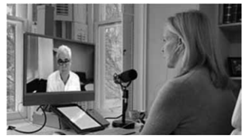
Below is an excerpt from a conversation between the
reporter Katty Kay and Jonathan Haidt who, with his book The
Anxious Generation, sparked a global reckoning about mobile
phone usage among children when it came out last year.
Katty Kay: It’s been a year since your book came out
and caused a huge conversation. I wanted to start by getting
a kind of report card of where we are on the various aspects
of what you put forward: phones in school, age gating, social
media, getting kids to have more free playtime. Who’s doing
well and who isn’t in America on all of those issues?
Jonathan Haidt: I knew that the book was going to be
popular. What I wasn’t prepared for is that this issue would
spread like wildfire around the world, not just in the US.
Because around the world, family life has turned into a fight
over screen time. Everyone hates it. Everyone sees it.
Where it took off most quickly was phone-free schools,
because that is something that is more easily done. It’s so
hard to teach to a classroom when half of them are watching
short videos and playing video games. So, the teachers have
hated the phones from the beginning but they were afraid,
especially in America – maybe it’s the same in other countries
– but in America, there are a lot of parents who want to be able
to communicate all the time with their child, and they think they
have a right to check in on their child. And, ‘What if something
goes wrong? I need to be there.’ So, the overparenting — ...
KK: That’s a paradox, then, because you’ve got the
parents who are super worried about the phones; they see
what phones are doing to their kids. But they also don’t want
their kids to relinquish their phones when they go into school.
JH: Hey, look, people are complicated! They contain
multitudes. And I shouldn’t say that everyone saw the problem,
because there were a lot of parents who saw the phone as a
lifeline. They see the world as very threatening and dangerous.
But we have to focus on what it will take to allow kids to have
healthy brain development through puberty. We’ve got to give
kids a lot less screen time. A lot less fragmenting time. No
TikTok. No short videos. Let’s give them a lot more experience
interacting with people.
(Katty Kay. www.bbc.com, 10.04.2025. Adaptado)
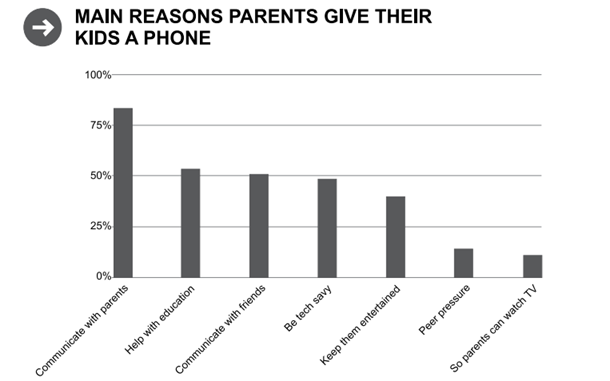
(https://www.sellcell.com)
The content of the text “Can childhood survive the smartphone?” is confirmed in the following finding in the survey on reasons why kids get a phone:
Provas
Questão presente nas seguintes provas
Leia a entrevista a seguir para responder à questão.
Can childhood survive the smartphone?
Below is an excerpt from a conversation between the
reporter Katty Kay and Jonathan Haidt who, with his book The
Anxious Generation, sparked a global reckoning about mobile
phone usage among children when it came out last year.
Katty Kay: It’s been a year since your book came out
and caused a huge conversation. I wanted to start by getting
a kind of report card of where we are on the various aspects
of what you put forward: phones in school, age gating, social
media, getting kids to have more free playtime. Who’s doing
well and who isn’t in America on all of those issues?
Jonathan Haidt: I knew that the book was going to be
popular. What I wasn’t prepared for is that this issue would
spread like wildfire around the world, not just in the US.
Because around the world, family life has turned into a fight
over screen time. Everyone hates it. Everyone sees it.
Where it took off most quickly was phone-free schools,
because that is something that is more easily done. It’s so
hard to teach to a classroom when half of them are watching
short videos and playing video games. So, the teachers have
hated the phones from the beginning but they were afraid,
especially in America – maybe it’s the same in other countries
– but in America, there are a lot of parents who want to be able
to communicate all the time with their child, and they think they
have a right to check in on their child. And, ‘What if something
goes wrong? I need to be there.’ So, the overparenting — ...
KK: That’s a paradox, then, because you’ve got the
parents who are super worried about the phones; they see
what phones are doing to their kids. But they also don’t want
their kids to relinquish their phones when they go into school.
JH: Hey, look, people are complicated! They contain
multitudes. And I shouldn’t say that everyone saw the problem,
because there were a lot of parents who saw the phone as a
lifeline. They see the world as very threatening and dangerous.
But we have to focus on what it will take to allow kids to have
healthy brain development through puberty. We’ve got to give
kids a lot less screen time. A lot less fragmenting time. No
TikTok. No short videos. Let’s give them a lot more experience
interacting with people.
(Katty Kay. www.bbc.com, 10.04.2025. Adaptado)
Provas
Questão presente nas seguintes provas
Leia a entrevista a seguir para responder à questão.
Can childhood survive the smartphone?
Below is an excerpt from a conversation between the
reporter Katty Kay and Jonathan Haidt who, with his book The
Anxious Generation, sparked a global reckoning about mobile
phone usage among children when it came out last year.
Katty Kay: It’s been a year since your book came out
and caused a huge conversation. I wanted to start by getting
a kind of report card of where we are on the various aspects
of what you put forward: phones in school, age gating, social
media, getting kids to have more free playtime. Who’s doing
well and who isn’t in America on all of those issues?
Jonathan Haidt: I knew that the book was going to be
popular. What I wasn’t prepared for is that this issue would
spread like wildfire around the world, not just in the US.
Because around the world, family life has turned into a fight
over screen time. Everyone hates it. Everyone sees it.
Where it took off most quickly was phone-free schools,
because that is something that is more easily done. It’s so
hard to teach to a classroom when half of them are watching
short videos and playing video games. So, the teachers have
hated the phones from the beginning but they were afraid,
especially in America – maybe it’s the same in other countries
– but in America, there are a lot of parents who want to be able
to communicate all the time with their child, and they think they
have a right to check in on their child. And, ‘What if something
goes wrong? I need to be there.’ So, the overparenting — ...
KK: That’s a paradox, then, because you’ve got the
parents who are super worried about the phones; they see
what phones are doing to their kids. But they also don’t want
their kids to relinquish their phones when they go into school.
JH: Hey, look, people are complicated! They contain
multitudes. And I shouldn’t say that everyone saw the problem,
because there were a lot of parents who saw the phone as a
lifeline. They see the world as very threatening and dangerous.
But we have to focus on what it will take to allow kids to have
healthy brain development through puberty. We’ve got to give
kids a lot less screen time. A lot less fragmenting time. No
TikTok. No short videos. Let’s give them a lot more experience
interacting with people.
(Katty Kay. www.bbc.com, 10.04.2025. Adaptado)
Provas
Questão presente nas seguintes provas
Leia a entrevista a seguir para responder à questão.
Can childhood survive the smartphone?
Below is an excerpt from a conversation between the
reporter Katty Kay and Jonathan Haidt who, with his book The
Anxious Generation, sparked a global reckoning about mobile
phone usage among children when it came out last year.
Katty Kay: It’s been a year since your book came out
and caused a huge conversation. I wanted to start by getting
a kind of report card of where we are on the various aspects
of what you put forward: phones in school, age gating, social
media, getting kids to have more free playtime. Who’s doing
well and who isn’t in America on all of those issues?
Jonathan Haidt: I knew that the book was going to be
popular. What I wasn’t prepared for is that this issue would
spread like wildfire around the world, not just in the US.
Because around the world, family life has turned into a fight
over screen time. Everyone hates it. Everyone sees it.
Where it took off most quickly was phone-free schools,
because that is something that is more easily done. It’s so
hard to teach to a classroom when half of them are watching
short videos and playing video games. So, the teachers have
hated the phones from the beginning but they were afraid,
especially in America – maybe it’s the same in other countries
– but in America, there are a lot of parents who want to be able
to communicate all the time with their child, and they think they
have a right to check in on their child. And, ‘What if something
goes wrong? I need to be there.’ So, the overparenting — ...
KK: That’s a paradox, then, because you’ve got the
parents who are super worried about the phones; they see
what phones are doing to their kids. But they also don’t want
their kids to relinquish their phones when they go into school.
JH: Hey, look, people are complicated! They contain
multitudes. And I shouldn’t say that everyone saw the problem,
because there were a lot of parents who saw the phone as a
lifeline. They see the world as very threatening and dangerous.
But we have to focus on what it will take to allow kids to have
healthy brain development through puberty. We’ve got to give
kids a lot less screen time. A lot less fragmenting time. No
TikTok. No short videos. Let’s give them a lot more experience
interacting with people.
(Katty Kay. www.bbc.com, 10.04.2025. Adaptado)
Provas
Questão presente nas seguintes provas
Leia a entrevista a seguir para responder à questão.
Can childhood survive the smartphone?
Below is an excerpt from a conversation between the
reporter Katty Kay and Jonathan Haidt who, with his book The
Anxious Generation, sparked a global reckoning about mobile
phone usage among children when it came out last year.
Katty Kay: It’s been a year since your book came out
and caused a huge conversation. I wanted to start by getting
a kind of report card of where we are on the various aspects
of what you put forward: phones in school, age gating, social
media, getting kids to have more free playtime. Who’s doing
well and who isn’t in America on all of those issues?
Jonathan Haidt: I knew that the book was going to be
popular. What I wasn’t prepared for is that this issue would
spread like wildfire around the world, not just in the US.
Because around the world, family life has turned into a fight
over screen time. Everyone hates it. Everyone sees it.
Where it took off most quickly was phone-free schools,
because that is something that is more easily done. It’s so
hard to teach to a classroom when half of them are watching
short videos and playing video games. So, the teachers have
hated the phones from the beginning but they were afraid,
especially in America – maybe it’s the same in other countries
– but in America, there are a lot of parents who want to be able
to communicate all the time with their child, and they think they
have a right to check in on their child. And, ‘What if something
goes wrong? I need to be there.’ So, the overparenting — ...
KK: That’s a paradox, then, because you’ve got the
parents who are super worried about the phones; they see
what phones are doing to their kids. But they also don’t want
their kids to relinquish their phones when they go into school.
JH: Hey, look, people are complicated! They contain
multitudes. And I shouldn’t say that everyone saw the problem,
because there were a lot of parents who saw the phone as a
lifeline. They see the world as very threatening and dangerous.
But we have to focus on what it will take to allow kids to have
healthy brain development through puberty. We’ve got to give
kids a lot less screen time. A lot less fragmenting time. No
TikTok. No short videos. Let’s give them a lot more experience
interacting with people.
(Katty Kay. www.bbc.com, 10.04.2025. Adaptado)
Provas
Questão presente nas seguintes provas
Leia a entrevista a seguir para responder à questão.
Can childhood survive the smartphone?
Below is an excerpt from a conversation between the
reporter Katty Kay and Jonathan Haidt who, with his book The
Anxious Generation, sparked a global reckoning about mobile
phone usage among children when it came out last year.
Katty Kay: It’s been a year since your book came out
and caused a huge conversation. I wanted to start by getting
a kind of report card of where we are on the various aspects
of what you put forward: phones in school, age gating, social
media, getting kids to have more free playtime. Who’s doing
well and who isn’t in America on all of those issues?
Jonathan Haidt: I knew that the book was going to be
popular. What I wasn’t prepared for is that this issue would
spread like wildfire around the world, not just in the US.
Because around the world, family life has turned into a fight
over screen time. Everyone hates it. Everyone sees it.
Where it took off most quickly was phone-free schools,
because that is something that is more easily done. It’s so
hard to teach to a classroom when half of them are watching
short videos and playing video games. So, the teachers have
hated the phones from the beginning but they were afraid,
especially in America – maybe it’s the same in other countries
– but in America, there are a lot of parents who want to be able
to communicate all the time with their child, and they think they
have a right to check in on their child. And, ‘What if something
goes wrong? I need to be there.’ So, the overparenting — ...
KK: That’s a paradox, then, because you’ve got the
parents who are super worried about the phones; they see
what phones are doing to their kids. But they also don’t want
their kids to relinquish their phones when they go into school.
JH: Hey, look, people are complicated! They contain
multitudes. And I shouldn’t say that everyone saw the problem,
because there were a lot of parents who saw the phone as a
lifeline. They see the world as very threatening and dangerous.
But we have to focus on what it will take to allow kids to have
healthy brain development through puberty. We’ve got to give
kids a lot less screen time. A lot less fragmenting time. No
TikTok. No short videos. Let’s give them a lot more experience
interacting with people.
(Katty Kay. www.bbc.com, 10.04.2025. Adaptado)
Provas
Questão presente nas seguintes provas
Leia a entrevista a seguir para responder à questão.
Can childhood survive the smartphone?
Below is an excerpt from a conversation between the
reporter Katty Kay and Jonathan Haidt who, with his book The
Anxious Generation, sparked a global reckoning about mobile
phone usage among children when it came out last year.
Katty Kay: It’s been a year since your book came out
and caused a huge conversation. I wanted to start by getting
a kind of report card of where we are on the various aspects
of what you put forward: phones in school, age gating, social
media, getting kids to have more free playtime. Who’s doing
well and who isn’t in America on all of those issues?
Jonathan Haidt: I knew that the book was going to be
popular. What I wasn’t prepared for is that this issue would
spread like wildfire around the world, not just in the US.
Because around the world, family life has turned into a fight
over screen time. Everyone hates it. Everyone sees it.
Where it took off most quickly was phone-free schools,
because that is something that is more easily done. It’s so
hard to teach to a classroom when half of them are watching
short videos and playing video games. So, the teachers have
hated the phones from the beginning but they were afraid,
especially in America – maybe it’s the same in other countries
– but in America, there are a lot of parents who want to be able
to communicate all the time with their child, and they think they
have a right to check in on their child. And, ‘What if something
goes wrong? I need to be there.’ So, the overparenting — ...
KK: That’s a paradox, then, because you’ve got the
parents who are super worried about the phones; they see
what phones are doing to their kids. But they also don’t want
their kids to relinquish their phones when they go into school.
JH: Hey, look, people are complicated! They contain
multitudes. And I shouldn’t say that everyone saw the problem,
because there were a lot of parents who saw the phone as a
lifeline. They see the world as very threatening and dangerous.
But we have to focus on what it will take to allow kids to have
healthy brain development through puberty. We’ve got to give
kids a lot less screen time. A lot less fragmenting time. No
TikTok. No short videos. Let’s give them a lot more experience
interacting with people.
(Katty Kay. www.bbc.com, 10.04.2025. Adaptado)
Provas
Questão presente nas seguintes provas
Cadernos
Caderno Container