Foram encontradas 45.388 questões.
Leia a entrevista a seguir para responder à questão.
Can childhood survive the smartphone?
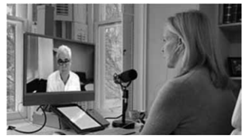
Below is an excerpt from a conversation between the
reporter Katty Kay and Jonathan Haidt who, with his book The
Anxious Generation, sparked a global reckoning about mobile
phone usage among children when it came out last year.
Katty Kay: It’s been a year since your book came out
and caused a huge conversation. I wanted to start by getting
a kind of report card of where we are on the various aspects
of what you put forward: phones in school, age gating, social
media, getting kids to have more free playtime. Who’s doing
well and who isn’t in America on all of those issues?
Jonathan Haidt: I knew that the book was going to be
popular. What I wasn’t prepared for is that this issue would
spread like wildfire around the world, not just in the US.
Because around the world, family life has turned into a fight
over screen time. Everyone hates it. Everyone sees it.
Where it took off most quickly was phone-free schools,
because that is something that is more easily done. It’s so
hard to teach to a classroom when half of them are watching
short videos and playing video games. So, the teachers have
hated the phones from the beginning but they were afraid,
especially in America – maybe it’s the same in other countries
– but in America, there are a lot of parents who want to be able
to communicate all the time with their child, and they think they
have a right to check in on their child. And, ‘What if something
goes wrong? I need to be there.’ So, the overparenting — ...
KK: That’s a paradox, then, because you’ve got the
parents who are super worried about the phones; they see
what phones are doing to their kids. But they also don’t want
their kids to relinquish their phones when they go into school.
JH: Hey, look, people are complicated! They contain
multitudes. And I shouldn’t say that everyone saw the problem,
because there were a lot of parents who saw the phone as a
lifeline. They see the world as very threatening and dangerous.
But we have to focus on what it will take to allow kids to have
healthy brain development through puberty. We’ve got to give
kids a lot less screen time. A lot less fragmenting time. No
TikTok. No short videos. Let’s give them a lot more experience
interacting with people.
(Katty Kay. www.bbc.com, 10.04.2025. Adaptado)
Provas
Questão presente nas seguintes provas

Leia a entrevista a seguir para responder à questão.
Can childhood survive the smartphone?
Below is an excerpt from a conversation between the
reporter Katty Kay and Jonathan Haidt who, with his book The
Anxious Generation, sparked a global reckoning about mobile
phone usage among children when it came out last year.
Katty Kay: It’s been a year since your book came out
and caused a huge conversation. I wanted to start by getting
a kind of report card of where we are on the various aspects
of what you put forward: phones in school, age gating, social
media, getting kids to have more free playtime. Who’s doing
well and who isn’t in America on all of those issues?
Jonathan Haidt: I knew that the book was going to be
popular. What I wasn’t prepared for is that this issue would
spread like wildfire around the world, not just in the US.
Because around the world, family life has turned into a fight
over screen time. Everyone hates it. Everyone sees it.
Where it took off most quickly was phone-free schools,
because that is something that is more easily done. It’s so
hard to teach to a classroom when half of them are watching
short videos and playing video games. So, the teachers have
hated the phones from the beginning but they were afraid,
especially in America – maybe it’s the same in other countries
– but in America, there are a lot of parents who want to be able
to communicate all the time with their child, and they think they
have a right to check in on their child. And, ‘What if something
goes wrong? I need to be there.’ So, the overparenting — ...
KK: That’s a paradox, then, because you’ve got the
parents who are super worried about the phones; they see
what phones are doing to their kids. But they also don’t want
their kids to relinquish their phones when they go into school.
JH: Hey, look, people are complicated! They contain
multitudes. And I shouldn’t say that everyone saw the problem,
because there were a lot of parents who saw the phone as a
lifeline. They see the world as very threatening and dangerous.
But we have to focus on what it will take to allow kids to have
healthy brain development through puberty. We’ve got to give
kids a lot less screen time. A lot less fragmenting time. No
TikTok. No short videos. Let’s give them a lot more experience
interacting with people.
(Katty Kay. www.bbc.com, 10.04.2025. Adaptado)
Provas
Questão presente nas seguintes provas
Read the text and the dialogue which follows it.
“No mundo real, raramente as perguntas se referem a um único tipo de conteúdo. Para preparar os alunos para isso, tente avançar a partir de uma resposta certa, pedindo que integrem a ela conhecimentos aprendidos anteriormente.”
(Doug Lemov. Aula Nota 10 3.0, 2022. Adaptado)
Teacher: Who would like to use the verb “cook” in a sentence?”
Student: I like to cook. Teacher: Good! Who would add an indirect object to the sentence?
Student: I like to cook to my family.
Teacher: Could you use a compound indirect object?
Student: I like to cook to my family and friends.
Teacher: When do you cook to them? Add a time adverb to your sentence.
Student: I like to cook to my family and friends on weekends.
The interventions by the teacher recover the students’ knowledge about
“No mundo real, raramente as perguntas se referem a um único tipo de conteúdo. Para preparar os alunos para isso, tente avançar a partir de uma resposta certa, pedindo que integrem a ela conhecimentos aprendidos anteriormente.”
(Doug Lemov. Aula Nota 10 3.0, 2022. Adaptado)
Teacher: Who would like to use the verb “cook” in a sentence?”
Student: I like to cook. Teacher: Good! Who would add an indirect object to the sentence?
Student: I like to cook to my family.
Teacher: Could you use a compound indirect object?
Student: I like to cook to my family and friends.
Teacher: When do you cook to them? Add a time adverb to your sentence.
Student: I like to cook to my family and friends on weekends.
The interventions by the teacher recover the students’ knowledge about
Provas
Questão presente nas seguintes provas
Leia o texto para responder à questão.
Consider these anecdotes:
1. An ESL teacher instructs a group of 7 children every day
for 45 minutes. They sing “I’m a Little Teapot” over and over
again. Standing, they make gestures to show the tea pouring
out. “I’m a little teapot, short and stout, here is my handle,
here is my spout. When I get it all steamed up, hear me shout,
just tip me over and pour me out”. And then the group starts
again…
2. In visiting a class of a successful ESL teacher, you are
struck that each activity lasts no more than ten minutes, that
children are usually in movement - making something, holding
something, moving their hands and walking somewhere.
There are few major contrasts that we can make between
child and adult ESL learners. Children are more likely to play
with language than adults are. In general, children are more
holistic learners who need to use language for authentic
communication in ESL classes.
In a children’s class, activities need to be child centered
and communication should be authentic. Several themes
repeatedly come up:
• Focus on meaning, not correctness.
• Focus on the value of the activity, not the value of language.
• Focus on collaboration and social development.
• Provide a rich context, including movement, the senses,
objects and pictures, and a variety of activities.
• Teach ESL holistically, integrating the four skills.
• Treat learners appropriately in the light of their age and
interests.
• Treat language as a tool for children to use for their own
social and academic ends.
(S. Peck. Developing Children´s Listening and Speaking. IN: Marianne
Cerce-Murcia(ed). Teaching English as a second or foreign language.
Boston, Massachusstes: Heinle&Heinle. 2nd edition. 2001. Adaptado)
Provas
Questão presente nas seguintes provas
Leia o texto para responder à questão.
Consider these anecdotes:
1. An ESL teacher instructs a group of 7 children every day
for 45 minutes. They sing “I’m a Little Teapot” over and over
again. Standing, they make gestures to show the tea pouring
out. “I’m a little teapot, short and stout, here is my handle,
here is my spout. When I get it all steamed up, hear me shout,
just tip me over and pour me out”. And then the group starts
again…
2. In visiting a class of a successful ESL teacher, you are
struck that each activity lasts no more than ten minutes, that
children are usually in movement - making something, holding
something, moving their hands and walking somewhere.
There are few major contrasts that we can make between
child and adult ESL learners. Children are more likely to play
with language than adults are. In general, children are more
holistic learners who need to use language for authentic
communication in ESL classes.
In a children’s class, activities need to be child centered
and communication should be authentic. Several themes
repeatedly come up:
• Focus on meaning, not correctness.
• Focus on the value of the activity, not the value of language.
• Focus on collaboration and social development.
• Provide a rich context, including movement, the senses,
objects and pictures, and a variety of activities.
• Teach ESL holistically, integrating the four skills.
• Treat learners appropriately in the light of their age and
interests.
• Treat language as a tool for children to use for their own
social and academic ends.
(S. Peck. Developing Children´s Listening and Speaking. IN: Marianne
Cerce-Murcia(ed). Teaching English as a second or foreign language.
Boston, Massachusstes: Heinle&Heinle. 2nd edition. 2001. Adaptado)
Provas
Questão presente nas seguintes provas
Leia o texto para responder à questão.
One of the major foci of applied linguistics scholarship
has been the foreign or second language classroom. A glance
through the past century or so of language teaching gives us
an interesting picture of varied interpretations of the best way
to teach a foreign language. As schools of thought have come
and gone, so have language teaching trends waxed and
waned in popularity.
Albert Marckwardt (1972) saw these “changing winds and
shifting sands” as a cyclical pattern where a new paradigm
of teaching methodology emerged about every quarter of a
century, with each new method breaking from the old but at
the same time taking with it some of the positive aspects of the
previous paradigm. One of the best examples of the cyclical
nature of methods is seen in the revolutionary Audiolingual
Method (ALM) of the late 1940s and 1950s. The ALM borrowed
principles and beliefs from its predecessor by almost half
a century, the Direct Method, while breaking away entirely
from the Grammar-Translation paradigm. Within a short time,
however, ALM critics were advocating more attention to rules
of language which, to some, smacked a return to Grammar
Translation.
(BROWN, H.Douglas. Principles of language learning and teaching.
5th ed. Longman, 2000. Adaptado)
Provas
Questão presente nas seguintes provas
Leia o texto para responder à questão.
One of the major foci of applied linguistics scholarship
has been the foreign or second language classroom. A glance
through the past century or so of language teaching gives us
an interesting picture of varied interpretations of the best way
to teach a foreign language. As schools of thought have come
and gone, so have language teaching trends waxed and
waned in popularity.
Albert Marckwardt (1972) saw these “changing winds and
shifting sands” as a cyclical pattern where a new paradigm
of teaching methodology emerged about every quarter of a
century, with each new method breaking from the old but at
the same time taking with it some of the positive aspects of the
previous paradigm. One of the best examples of the cyclical
nature of methods is seen in the revolutionary Audiolingual
Method (ALM) of the late 1940s and 1950s. The ALM borrowed
principles and beliefs from its predecessor by almost half
a century, the Direct Method, while breaking away entirely
from the Grammar-Translation paradigm. Within a short time,
however, ALM critics were advocating more attention to rules
of language which, to some, smacked a return to Grammar
Translation.
(BROWN, H.Douglas. Principles of language learning and teaching.
5th ed. Longman, 2000. Adaptado)
Provas
Questão presente nas seguintes provas
Leia o texto para responder à questão.
One of the major foci of applied linguistics scholarship
has been the foreign or second language classroom. A glance
through the past century or so of language teaching gives us
an interesting picture of varied interpretations of the best way
to teach a foreign language. As schools of thought have come
and gone, so have language teaching trends waxed and
waned in popularity.
Albert Marckwardt (1972) saw these “changing winds and
shifting sands” as a cyclical pattern where a new paradigm
of teaching methodology emerged about every quarter of a
century, with each new method breaking from the old but at
the same time taking with it some of the positive aspects of the
previous paradigm. One of the best examples of the cyclical
nature of methods is seen in the revolutionary Audiolingual
Method (ALM) of the late 1940s and 1950s. The ALM borrowed
principles and beliefs from its predecessor by almost half
a century, the Direct Method, while breaking away entirely
from the Grammar-Translation paradigm. Within a short time,
however, ALM critics were advocating more attention to rules
of language which, to some, smacked a return to Grammar
Translation.
(BROWN, H.Douglas. Principles of language learning and teaching.
5th ed. Longman, 2000. Adaptado)
Provas
Questão presente nas seguintes provas
Leia o texto para responder à questão.
One of the major foci of applied linguistics scholarship
has been the foreign or second language classroom. A glance
through the past century or so of language teaching gives us
an interesting picture of varied interpretations of the best way
to teach a foreign language. As schools of thought have come
and gone, so have language teaching trends waxed and
waned in popularity.
Albert Marckwardt (1972) saw these “changing winds and
shifting sands” as a cyclical pattern where a new paradigm
of teaching methodology emerged about every quarter of a
century, with each new method breaking from the old but at
the same time taking with it some of the positive aspects of the
previous paradigm. One of the best examples of the cyclical
nature of methods is seen in the revolutionary Audiolingual
Method (ALM) of the late 1940s and 1950s. The ALM borrowed
principles and beliefs from its predecessor by almost half
a century, the Direct Method, while breaking away entirely
from the Grammar-Translation paradigm. Within a short time,
however, ALM critics were advocating more attention to rules
of language which, to some, smacked a return to Grammar
Translation.
(BROWN, H.Douglas. Principles of language learning and teaching.
5th ed. Longman, 2000. Adaptado)
Provas
Questão presente nas seguintes provas
Leia o texto para responder à questão.
One of the major foci of applied linguistics scholarship
has been the foreign or second language classroom. A glance
through the past century or so of language teaching gives us
an interesting picture of varied interpretations of the best way
to teach a foreign language. As schools of thought have come
and gone, so have language teaching trends waxed and
waned in popularity.
Albert Marckwardt (1972) saw these “changing winds and
shifting sands” as a cyclical pattern where a new paradigm
of teaching methodology emerged about every quarter of a
century, with each new method breaking from the old but at
the same time taking with it some of the positive aspects of the
previous paradigm. One of the best examples of the cyclical
nature of methods is seen in the revolutionary Audiolingual
Method (ALM) of the late 1940s and 1950s. The ALM borrowed
principles and beliefs from its predecessor by almost half
a century, the Direct Method, while breaking away entirely
from the Grammar-Translation paradigm. Within a short time,
however, ALM critics were advocating more attention to rules
of language which, to some, smacked a return to Grammar
Translation.
(BROWN, H.Douglas. Principles of language learning and teaching.
5th ed. Longman, 2000. Adaptado)
Provas
Questão presente nas seguintes provas
Cadernos
Caderno Container