Foram encontradas 45.435 questões.
Disciplina: Inglês (Língua Inglesa)
Banca: OBJETIVA
Orgão: Pref. Entre Rios Oeste-PR
Hanji
Hanji is the name of the handmade paper produced in ancient Korea from the 1st century BCE. Made from mulberry trees, its exceptional quality made it a successful export, and it was widely used not only for writing but also for interior walls and everyday objects, such as fans and umbrellas. Hanji, famed throughout Asia for its whiteness, texture, and strength, is still made today in specialized Korean workshops.
Initially Korean paper was made using hemp fiber, but the highest quality hanji was, for many centuries, made only from the pith of mulberry trees (tak in Korean, Latin: Broussonetia papyrifera). The toughness of hanji meant that it was ideally suited for use in printing presses that used blocks made from magnolia wood, which had been soaked and boiled in saltwater and then dried for several years before use. Each block was 24x4x64cm and carried 23 lines of vertical text on each side. These were then covered in ink and paper was pressed against them. The resilience of hanji was especially useful from the 12th century CE when printing was done using heavier moveable metal type made of bronze, a Korean invention.
In the Joseon Period (from the 15th century CE), such was the demand for hanji, that Sejong the Great (r. 1418 - 1450 CE) permitted other plant materials to be used in its manufacture, especially bamboo. The paper was made in specialized workshops in the capital and the five provincial capitals. The hanji which was produced for state use was supervised by a government agency, the Chonjo-chang.
World History Encyclopedia. Adaptation.
The word “resilience”, underlined in the second paragraph of the text, in its context, means the ability:
Provas

Disciplina: Inglês (Língua Inglesa)
Banca: OBJETIVA
Orgão: Pref. Entre Rios Oeste-PR
Hanji
Hanji is the name of the handmade paper produced in ancient Korea from the 1st century BCE. Made from mulberry trees, its exceptional quality made it a successful export, and it was widely used not only for writing but also for interior walls and everyday objects, such as fans and umbrellas. Hanji, famed throughout Asia for its whiteness, texture, and strength, is still made today in specialized Korean workshops.
Initially Korean paper was made using hemp fiber, but the highest quality hanji was, for many centuries, made only from the pith of mulberry trees (tak in Korean, Latin: Broussonetia papyrifera). The toughness of hanji meant that it was ideally suited for use in printing presses that used blocks made from magnolia wood, which had been soaked and boiled in saltwater and then dried for several years before use. Each block was 24x4x64cm and carried 23 lines of vertical text on each side. These were then covered in ink and paper was pressed against them. The resilience of hanji was especially useful from the 12th century CE when printing was done using heavier moveable metal type made of bronze, a Korean invention.
In the Joseon Period (from the 15th century CE), such was the demand for hanji, that Sejong the Great (r. 1418 - 1450 CE) permitted other plant materials to be used in its manufacture, especially bamboo. The paper was made in specialized workshops in the capital and the five provincial capitals. The hanji which was produced for state use was supervised by a government agency, the Chonjo-chang.
World History Encyclopedia. Adaptation.
Mark “T” (true) for the words that present the same “gh” sound as in “toughness” and “F” (false) for those who don’t. Then, mark the correct sequence.
( ) Ghost.
( ) Enough.
( ) Cough.
( ) Ghetto.
Provas
Disciplina: Inglês (Língua Inglesa)
Banca: OBJETIVA
Orgão: Pref. Entre Rios Oeste-PR
Hanji
Hanji is the name of the handmade paper produced in ancient Korea from the 1st century BCE. Made from mulberry trees, its exceptional quality made it a successful export, and it was widely used not only for writing but also for interior walls and everyday objects, such as fans and umbrellas. Hanji, famed throughout Asia for its whiteness, texture, and strength, is still made today in specialized Korean workshops.
Initially Korean paper was made using hemp fiber, but the highest quality hanji was, for many centuries, made only from the pith of mulberry trees (tak in Korean, Latin: Broussonetia papyrifera). The toughness of hanji meant that it was ideally suited for use in printing presses that used blocks made from magnolia wood, which had been soaked and boiled in saltwater and then dried for several years before use. Each block was 24x4x64cm and carried 23 lines of vertical text on each side. These were then covered in ink and paper was pressed against them. The resilience of hanji was especially useful from the 12th century CE when printing was done using heavier moveable metal type made of bronze, a Korean invention.
In the Joseon Period (from the 15th century CE), such was the demand for hanji, that Sejong the Great (r. 1418 - 1450 CE) permitted other plant materials to be used in its manufacture, especially bamboo. The paper was made in specialized workshops in the capital and the five provincial capitals. The hanji which was produced for state use was supervised by a government agency, the Chonjo-chang.
World History Encyclopedia. Adaptation.
According to the text, mark the INCORRECT item.
Provas
Disciplina: Inglês (Língua Inglesa)
Banca: OBJETIVA
Orgão: Pref. Entre Rios Oeste-PR
Considerando-se a BNCC — Língua Inglesa, analisar a sentença.]
Situar a língua inglesa em seu status de língua franca implica compreender que determinadas crenças — como a de que há um “inglês melhor” para se ensinar, ou um “nível de proficiência” específico a ser alcançado pelo aluno — precisam ser relativizadas (1ª parte). Isso exige do professor uma atitude de acolhimento e legitimação de diferentes formas de expressão na língua, como o uso de ain’t para fazer a negação, e não apenas formas “padrão” como isn’t ou aren’t. Em outras palavras, não queremos tratar esses usos como uma exceção, uma curiosidade local da língua, que foge ao “padrão” a ser seguido (2ª parte).
A sentença está:
Provas
Disciplina: Inglês (Língua Inglesa)
Banca: PROMUN
Orgão: Pref. Campos do Jordão-SP
Identify the sentence where the choice of phrasal verb conveys the closest meaning to "resolve an issue":
Provas
Disciplina: Inglês (Língua Inglesa)
Banca: PROMUN
Orgão: Pref. Campos do Jordão-SP
Choose the correct synonym for the word in bold:
"The students were thrilled to hear about the upcoming school trip."
Provas
Disciplina: Inglês (Língua Inglesa)
Banca: PROMUN
Orgão: Pref. Campos do Jordão-SP
Choose the correct option to complete the sentence:
"She ___ to the park every morning before school."
Provas
Disciplina: Inglês (Língua Inglesa)
Banca: PROMUN
Orgão: Pref. Campos do Jordão-SP
Choose the word that best completes the sentence:
"Tom was very tired after working all day, so he decided to take a short ___ before dinner."
Provas
Disciplina: Inglês (Língua Inglesa)
Banca: PROMUN
Orgão: Pref. Campos do Jordão-SP
“Anna loves to spend her weekends outdoors. On Saturdays, she usually goes hiking with her friends, and on Sundays, she enjoys gardening in her backyard."
What does Anna like to do on Sundays?
Provas
Analyze the cartoon below by Ellis Rosen:
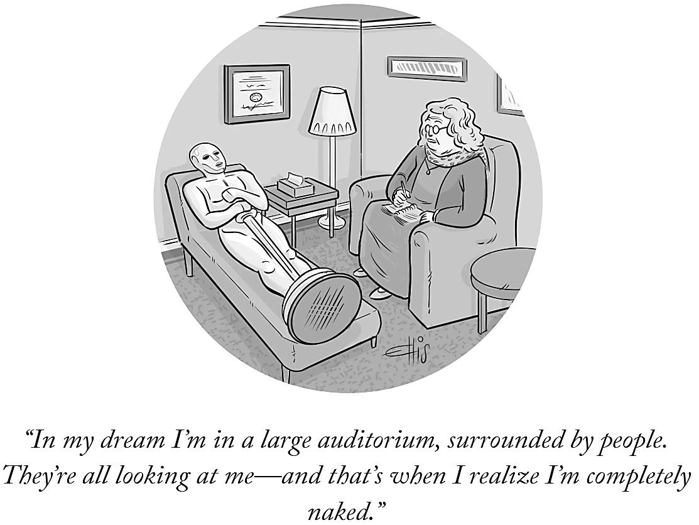
(Available at: https://www.newyorker.com/gallery/and-the-oscar-goes-to – text specially adapted for this test).
The present continuous tense has the same use as in “They’re all looking at me” in which of the alternatives below?
Provas
Caderno Container