Foram encontradas 45.274 questões.
Disciplina: Inglês (Língua Inglesa)
Banca: CONSULPAM
Orgão: Pref. Santa Maria Jetibá-ES
Read the text to answer 36.
Communicative competence and the native-speaker model
Whatever the original characteristics of the concept of communicative competence – Hymes emphasised the heterogeneousness of linguistic communities and individual competences –, it has developed, as far as language teaching is concerned, within a model of an ideal native communicator: the characteristics of communicative competence, seen as distinct from a strictly linguistic competence, are the sociolinguistic and pragmatic abilities, knowledge and aptitudes of speakers who are implicitly assumed to be monolingual native speakers, or who are at least regarded as functioning in endolingual communicative situations (i.e. communication involving persons deemed to have a mastered, homogenous knowledge of the entire resources of the medium used, namely their first language). The goals of learning a foreign language, including the various threshold levels, fall short of this native speaker competence; furthermore, the learner is not explicitly taken into account as a plurilingual subject able, for example, to call on the resources of his mother tongue(s) or of another foreign language of which he already has some knowledge.
(Available on: https://rm.coe.int/168069d29b. Adapted.)
\quad
Taking into account text clues, the item displaying suitable information is:
Provas

Disciplina: Inglês (Língua Inglesa)
Banca: CONSULPAM
Orgão: Pref. Santa Maria Jetibá-ES
Read the text carefully to answer 45.
Language assessment has undergone two broad paradigms. Assessment of learning, also known as traditional assessment, refers to practices that involve the use of assessment for administrative purposes (assigning grades, selection, decisions) and looks into what learners can do at the end of the teaching and learning process to rank their achievement levels against a standard. Assessment for learning, also known as authentic assessment, embeds assessment processes throughout the teaching and learning process to constantly adjust teaching and inform learners of how they may improve. In real life, teachers employ both assessment paradigms and regard them as opportunities to gather insights into learner abilities. Regardless of the assessment paradigm, teachers have to design assessment instruments that provide them with the information they need to gain about the students they work with. In designing those instruments, whether for traditional or authentic assessment, teachers should follow a series of principles to create “appropriate assessment” (MCCRAY; BRUNFAUT, 2016). Brown (2004) stated that these principles need to be applied to all kinds of assessment from tests and quizzes (traditional assessment), to oral presentations and debates (authentic assessment). In fact, it is required that all teachers, regardless of the discipline, should be able to balance these principles in any assessment they design. These five assessment principles are key to assess learners fairly and effectively: Authenticity, Fairness, Practicality, Reliability, and Validity (QIAOCHAN, 2018; TOFFOLI et al., 2016).
(Available on: https://www.scielo.br. Adapted.)
Regarding the essential aspects that identify the quoted assessment principles, there is incompatible information in the
Provas
Disciplina: Inglês (Língua Inglesa)
Banca: CONSULPAM
Orgão: Pref. Santa Maria Jetibá-ES
Carry out the analysis of the sentences below and indicate the assertion which describes their shared characteristic.
a) It is essential that he listen to his parents’ advise.
b) Since she was exhausted, the doctor insisted that she rest more.
c) I only ask that he cease behaving in this extraordinary manner.
d) If I were you, I would take that job because it pays better than average.
e) It is important that he be present at the meeting.
f) They gave the tip that our cousin come and explain everything.
g) She advised that I not take the Interstate 59 because of the traffic jam.
h) The company urged that employees not answer personal calls at work.
Provas
Disciplina: Inglês (Língua Inglesa)
Banca: CONSULPAM
Orgão: Pref. Santa Maria Jetibá-ES
Analyse the image to answer 43.
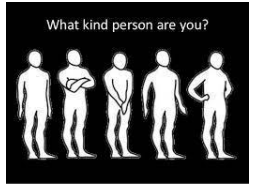
(Available on: https://br.pinterest.com.)
The “Parâmetros Curriculares Nacionais – PCNs” propose the development of skills related to representation and communication to modern foreign language studies. In the analysed image, the featured skill is:
Provas
Disciplina: Inglês (Língua Inglesa)
Banca: CONSULPAM
Orgão: Pref. Santa Maria Jetibá-ES
The discussions concerning the ideal method to teach languages has given rise to deeper research regarding the concept of method. Kumaravadivelu (1994, 2001, 2006) proposed as a starting point the publications of Prabhu (1990), in order to guide language teaching understanding. The Postmethod condition, as he titled it, is based on three parameters, namely:
Provas
Disciplina: Inglês (Língua Inglesa)
Banca: CONSULPAM
Orgão: Pref. Santa Maria Jetibá-ES
Point out the sentence that matches nonverbal information provided by the image below.
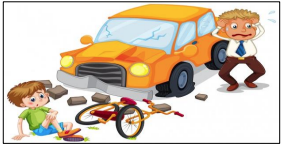
(Available on: https://www.freepik.com.)
Provas
The main players in the Spanish–Aztec War (1519–21) are well known: Hernán Cortés and Montezuma. Lesser-known, though no less important, is a multilingual exiled Aztec woman who was enslaved, then served as a guide and interpreter, then became Cortés’s mistress. She was known as Doña Marina, and as La Malinche.
Scholar and researcher Cordelia Candelaria writes: her paramount value to the Spaniards was not merely linguistic. She was an interpreter/liaison who served as a guide to the region, as an advisor on native customs and beliefs, and as a strategist.
La Malinche was the daughter of an Aztec cacique (chief). This gave her an unusual level of education, which she would later leverage as a guide and interpreter for the Spanish. Throughout Cortés’s travels, she became indispensable as a translator, not only capable of functionally translating from one language to the other, but of speaking compellingly, strategizing, and forging political connections.
Integral as she was to Spain’s success, La Malinche is a controversial figure. Candelaria quotes T. R. Fehrenbach as saying, “If there is one villainess in Mexican history, she is La Malinche. She was to become the ethnic traitress supreme.” But Candelaria argues that La Malinche’s act of turning her back on her own people makes more psychological sense when we consider that, at a young age, she had been sold by her own mother into slavery. Candelaria asks, “What else could this outcast from the Aztecs, ‘her own people,’ have done?”
Disponível em https://daily.jstor.org/. Adaptado.
Segundo o texto, em relação à imagem de La Malinche como traidora do povo Asteca, a pesquisadora Cordelia Candelaria argumenta que a intérprete
Provas
TEXTO PARA QUESTÃO.
Over the last two decades, technology companies and policymakers warned of a “digital divide” in which poor children could fall behind their more affluent peers without equal access to technology. Today, with widespread internet access and smartphone ownership, the gap has narrowed sharply.
But with less fanfare a different division has appeared: Across the country, poor children and adolescents are participating far less in sports and fitness activities than more affluent youngsters are. Call it the physical divide. Data from multiple sources reveal a significant gap in sports participation by income level.
A combination of factors is responsible. Spending cuts and changing priorities at some public schools have curtailed physical education classes and organized sports. At the same time, privatized youth sports have become a multibilliondollar enterprise offering new opportunities — at least for families that can afford hundreds to thousands of dollars each season for club-team fees, uniforms, equipment, travel to tournaments and private coaching.
“What’s happened as sports has become privatized is that it has become the haves and have-nots,” said Jon Solomon, editorial director for the Aspen Institute Sports and Society Program. “Particularly for low-income kids, if they don’t have access to sports within the school setting, where are they going to get their physical activity?” Mr. Solomon said. “The answer is nowhere.”
The New York Times. 24 March 2023. Adaptado.
Considerado o contexto, o termo “far”, na expressão “far less” (2º parágrafo), expressa
Provas
TEXTO PARA QUESTÃO.
Over the last two decades, technology companies and policymakers warned of a “digital divide” in which poor children could fall behind their more affluent peers without equal access to technology. Today, with widespread internet access and smartphone ownership, the gap has narrowed sharply.
But with less fanfare a different division has appeared: Across the country, poor children and adolescents are participating far less in sports and fitness activities than more affluent youngsters are. Call it the physical divide. Data from multiple sources reveal a significant gap in sports participation by income level.
A combination of factors is responsible. Spending cuts and changing priorities at some public schools have curtailed physical education classes and organized sports. At the same time, privatized youth sports have become a multibilliondollar enterprise offering new opportunities — at least for families that can afford hundreds to thousands of dollars each season for club-team fees, uniforms, equipment, travel to tournaments and private coaching.
“What’s happened as sports has become privatized is that it has become the haves and have-nots,” said Jon Solomon, editorial director for the Aspen Institute Sports and Society Program. “Particularly for low-income kids, if they don’t have access to sports within the school setting, where are they going to get their physical activity?” Mr. Solomon said. “The answer is nowhere.”
The New York Times. 24 March 2023. Adaptado.
Conforme o texto, um dos motivos para a disparidade relativa à prática de atividades físicas por alunos, segundo o nível de renda, reside
Provas
TEXTO PARA QUESTÃO.

Disponível em https://www.tate.org.uk/art/artworks/.
Considerado o contexto, a expressão “be worth” tem sentido de
Provas
Caderno Container