Foram encontradas 45.244 questões.
3091897
Ano: 2023
Disciplina: Inglês (Língua Inglesa)
Banca: Unesc
Orgão: Pref. Balneário Rincão-SC
Disciplina: Inglês (Língua Inglesa)
Banca: Unesc
Orgão: Pref. Balneário Rincão-SC
Provas:
Lines and Geoglyphs of Nasca and Palpa
(1º§) Located in the arid Peruvian coastal plain, some
400 km south of Lima, the geoglyphs of Nasca and the
pampas of Jumana cover about 450 km2 . These lines,
which were scratched on the surface of the ground
between 500 B.C. and A.D. 500, are among
archaeology's greatest enigmas because of their
quantity, nature, size and continuity. The geoglyphs
depict living creatures, stylized plants and imaginary
beings, as well as geometric figures several kilometres
long. They are believed to have had ritual astronomical
functions.
(2º§) Located in the arid Peruvian coastal plain, some
400 km south of Lima, the Lines and Geoglyphs of Nasca
and Pampas de Jumana are one of the most
impressive-looking archaeological areas in the world and
an extraordinary example of the traditional and millenary
magical-religious world of the ancient Pre-Hispanic
societies which flourished on the Peruvian south coast
between the 8th century BC and the 8th century AD.
They are located in the desert plains of the basin river of Rio Grande de Nasca, the archaeological site covers an
area of approximately 75,358.47 Ha where for nearly
2,000 uninterrupted years, the region's ancient
inhabitants drew on the arid ground a great variety of
thousands of large scale zoomorphic and
anthropomorphic figures and lines or sweeps with
outstanding geometric precision, transforming the vast
land into a highly symbolic, ritual and social cultural
landscape that remains until today. They represent a
remarkable manifestation of a common religion and
social homogeneity that lasted a considerable period of
time.
(3º§) They are the most outstanding group of geoglyphs
anywhere in the world and are unmatched in its extent,
magnitude, quantity, size, diversity and ancient tradition
to any similar work in the world. The concentration and
juxtaposition of the lines, as well as their cultural
continuity, demonstrate that this was an important and
long-lasting activity, lasting approximately one thousand
years. Intensive study of the geoglyphs and comparison
with other manifestations of contemporary art forms
suggests that they can be divided chronologically from
the Middle and Late Formative (500 BC − 200 AD) to the
Regional Development Period (200 − 500 AD),
highlighting the Paracas phase (400 - 200 BC) and the
Nasca phase (200 BC - 500 AD). There are two
categories of glyphs: the first group is representational,
depicting in schematic form a variety of natural forms
including animals, birds, insects, and other living
creatures and flowers, plants, and trees, deformed or
fantastic figures and objects of everyday life. There are
very few anthropomorphic figures. The second group
comprises the lines, which are generally straight lines
that criss-cross certain parts of the pampas in all
directions. Some are several kilometres in length and
form designs of many different geometrical figures -
triangles, spirals, rectangles, wavy lines, etc. Others
radiate from a central promontory or encircle it. Yet
another group consists of so-called 'tracks', which appear
to have been laid out to accommodate large numbers of
people.
(4º§) Criterion (i): The Nasca Lines and Geoglyphs form
a unique and magnificent artistic achievement of the
Andean culture that is unrivalled in its extension,
dimensions and diversity and long existence anywhere in
the prehistoric world.
(5º§) Criterion (iii): The Nasca and Pampas de Jumana
Lines and Geoglyphs, through its unique form of land
use, are an exceptional testimony of the culture and
magical-religious tradition and beliefs of the societies that
developed in Pre-Columbian South America between the
8th BC and 8th AD centuries.
(6º§) Criterion (iv): The system of lines and geoglyphs,
which has survived intact for more than two millennia,
evidences an unusual way of using the land and the
natural environment that represent a highly symbolic
cultural landscape, using a construction technology that
allowed them to design large-scale figures with
outstanding geometric precision.
(7º§) The Lines and Geoglyphs of Nasca and Pampas de
Jumana, with their protection area that extends over
75,358.47 Ha, are well defined and include all physical
aspects that convey the Outstanding Universal Value of
the property, including its surrounding landscape with
which they make up an indivisible unit in a harmonious
relationship that has survived virtually unaltered over the
centuries.
(8º§) The Pleistocene alluvial terrace, currently with
occasional water activity (only during the El Niño
Southern Oscillation - ENSO) and the low rainfall rates
(the lowest in the world), determine desert climate
characteristics and extreme aridity that have favoured the
preservation of the Lines and Geoglyphs of Nasca and
Pampas de Jumana. Likewise, harmful human activity
has caused no severe impact on the property, so the
geoglyphs and cultural landscape have remained intact
for nearly two millennia, from their design in the 8th
century BC to nowadays. The cleaning and preservation
works performed have not affected the property's integrity
and have promoted their conservation.
(9º§) The construction of the South Pan-American
Highway, which directly crosses the property, has caused
damages in some lines and figures sectors. However,
most of the lines and figures are in fair condition.
(10º§) The authenticity of the Lines and Geoglyphs of
Nasca and Pampas de Jumana is indisputable. The
method of their formation, by removing the overlying
weathered gravels to reveal the lighter bedrock, is such
that their authenticity is assured. The creation, design,
morphology, size and variety of the geoglyphs and lines
correspond to the original designs produced during the
historic evolution of the region's and have remained
unchanged. The ideology, symbolism and sacred and
ritual character of the geoglyphs and the landscape are
clearly represented, and their significance remains intact
even today.
(11º§) The concentration and overlapping of lines and
figures provide a clear evidence of long and intense
activity in the territory, reflecting the millenary
magical-religious tradition of this activity by pre-Hispanic
societies and the historic continuity in Nasca's Rio
Grande river basin. The property also shows different
social process stages. Several historic sources and
researches confirm the property's originality and its
original landscape surroundings still preserved in pristine
condition and unaltered.
(12º§) Even though there have been some impacts
caused by natural and human factors, these have been
minimal and the geoglyphs maintain their authenticity and
express their high symbolic and historic value even
today.
(13º§) The National Constitution (Art 36) and Law Nº
28296, General Law for National Cultural Heritage are
the main legal protection tools for the Lines and
Geoglyphs of Nasca and Pampas de Jumana,
(14º§) The protection area boundaries are established by
Resolution Nº 421/INC as an Archaeological Reserve.
However, it has been recommended to redefine those boundaries according to the lines and geoglyphs' real
distribution in the field and submit a new proposal to the
World Heritage Committee.
(15º§) Since 1941 foreign scientists (notably Dr. Maria
Reiche) and the Ministry of Culture have carried out
archaeological investigation, conservation, permanent
protection and maintenance measures.
(16º§) The management and protection of the Lines and
Geoglyphs of Nasca and Pampas de Jumana is the
responsibility of the Peruvian Government represented by
the Ministry of Culture. Documentation, research,
protection and dissemination activities are being
performed through the implementation of national and
international research projects and civil associations, in
the territory of Nasca and Palpa provinces.
(17º§) A management plan "Sistema de Gestión para el
Patrimonio Cultural y Natural del territorio de Nasca y
Palpa" for the entire area, which is fundamental in the
protection of the Lines and Geoglyphs, has been
formulated and is being implemented.
https://whc.unesco.org/en/list/700/
Provas
Questão presente nas seguintes provas

3091896
Ano: 2023
Disciplina: Inglês (Língua Inglesa)
Banca: Unesc
Orgão: Pref. Balneário Rincão-SC
Disciplina: Inglês (Língua Inglesa)
Banca: Unesc
Orgão: Pref. Balneário Rincão-SC
Provas:
Lines and Geoglyphs of Nasca and Palpa
(1º§) Located in the arid Peruvian coastal plain, some
400 km south of Lima, the geoglyphs of Nasca and the
pampas of Jumana cover about 450 km2 . These lines,
which were scratched on the surface of the ground
between 500 B.C. and A.D. 500, are among
archaeology's greatest enigmas because of their
quantity, nature, size and continuity. The geoglyphs
depict living creatures, stylized plants and imaginary
beings, as well as geometric figures several kilometres
long. They are believed to have had ritual astronomical
functions.
(2º§) Located in the arid Peruvian coastal plain, some
400 km south of Lima, the Lines and Geoglyphs of Nasca
and Pampas de Jumana are one of the most
impressive-looking archaeological areas in the world and
an extraordinary example of the traditional and millenary
magical-religious world of the ancient Pre-Hispanic
societies which flourished on the Peruvian south coast
between the 8th century BC and the 8th century AD.
They are located in the desert plains of the basin river of Rio Grande de Nasca, the archaeological site covers an
area of approximately 75,358.47 Ha where for nearly
2,000 uninterrupted years, the region's ancient
inhabitants drew on the arid ground a great variety of
thousands of large scale zoomorphic and
anthropomorphic figures and lines or sweeps with
outstanding geometric precision, transforming the vast
land into a highly symbolic, ritual and social cultural
landscape that remains until today. They represent a
remarkable manifestation of a common religion and
social homogeneity that lasted a considerable period of
time.
(3º§) They are the most outstanding group of geoglyphs
anywhere in the world and are unmatched in its extent,
magnitude, quantity, size, diversity and ancient tradition
to any similar work in the world. The concentration and
juxtaposition of the lines, as well as their cultural
continuity, demonstrate that this was an important and
long-lasting activity, lasting approximately one thousand
years. Intensive study of the geoglyphs and comparison
with other manifestations of contemporary art forms
suggests that they can be divided chronologically from
the Middle and Late Formative (500 BC − 200 AD) to the
Regional Development Period (200 − 500 AD),
highlighting the Paracas phase (400 - 200 BC) and the
Nasca phase (200 BC - 500 AD). There are two
categories of glyphs: the first group is representational,
depicting in schematic form a variety of natural forms
including animals, birds, insects, and other living
creatures and flowers, plants, and trees, deformed or
fantastic figures and objects of everyday life. There are
very few anthropomorphic figures. The second group
comprises the lines, which are generally straight lines
that criss-cross certain parts of the pampas in all
directions. Some are several kilometres in length and
form designs of many different geometrical figures -
triangles, spirals, rectangles, wavy lines, etc. Others
radiate from a central promontory or encircle it. Yet
another group consists of so-called 'tracks', which appear
to have been laid out to accommodate large numbers of
people.
(4º§) Criterion (i): The Nasca Lines and Geoglyphs form
a unique and magnificent artistic achievement of the
Andean culture that is unrivalled in its extension,
dimensions and diversity and long existence anywhere in
the prehistoric world.
(5º§) Criterion (iii): The Nasca and Pampas de Jumana
Lines and Geoglyphs, through its unique form of land
use, are an exceptional testimony of the culture and
magical-religious tradition and beliefs of the societies that
developed in Pre-Columbian South America between the
8th BC and 8th AD centuries.
(6º§) Criterion (iv): The system of lines and geoglyphs,
which has survived intact for more than two millennia,
evidences an unusual way of using the land and the
natural environment that represent a highly symbolic
cultural landscape, using a construction technology that
allowed them to design large-scale figures with
outstanding geometric precision.
(7º§) The Lines and Geoglyphs of Nasca and Pampas de
Jumana, with their protection area that extends over
75,358.47 Ha, are well defined and include all physical
aspects that convey the Outstanding Universal Value of
the property, including its surrounding landscape with
which they make up an indivisible unit in a harmonious
relationship that has survived virtually unaltered over the
centuries.
(8º§) The Pleistocene alluvial terrace, currently with
occasional water activity (only during the El Niño
Southern Oscillation - ENSO) and the low rainfall rates
(the lowest in the world), determine desert climate
characteristics and extreme aridity that have favoured the
preservation of the Lines and Geoglyphs of Nasca and
Pampas de Jumana. Likewise, harmful human activity
has caused no severe impact on the property, so the
geoglyphs and cultural landscape have remained intact
for nearly two millennia, from their design in the 8th
century BC to nowadays. The cleaning and preservation
works performed have not affected the property's integrity
and have promoted their conservation.
(9º§) The construction of the South Pan-American
Highway, which directly crosses the property, has caused
damages in some lines and figures sectors. However,
most of the lines and figures are in fair condition.
(10º§) The authenticity of the Lines and Geoglyphs of
Nasca and Pampas de Jumana is indisputable. The
method of their formation, by removing the overlying
weathered gravels to reveal the lighter bedrock, is such
that their authenticity is assured. The creation, design,
morphology, size and variety of the geoglyphs and lines
correspond to the original designs produced during the
historic evolution of the region's and have remained
unchanged. The ideology, symbolism and sacred and
ritual character of the geoglyphs and the landscape are
clearly represented, and their significance remains intact
even today.
(11º§) The concentration and overlapping of lines and
figures provide a clear evidence of long and intense
activity in the territory, reflecting the millenary
magical-religious tradition of this activity by pre-Hispanic
societies and the historic continuity in Nasca's Rio
Grande river basin. The property also shows different
social process stages. Several historic sources and
researches confirm the property's originality and its
original landscape surroundings still preserved in pristine
condition and unaltered.
(12º§) Even though there have been some impacts
caused by natural and human factors, these have been
minimal and the geoglyphs maintain their authenticity and
express their high symbolic and historic value even
today.
(13º§) The National Constitution (Art 36) and Law Nº
28296, General Law for National Cultural Heritage are
the main legal protection tools for the Lines and
Geoglyphs of Nasca and Pampas de Jumana,
(14º§) The protection area boundaries are established by
Resolution Nº 421/INC as an Archaeological Reserve.
However, it has been recommended to redefine those boundaries according to the lines and geoglyphs' real
distribution in the field and submit a new proposal to the
World Heritage Committee.
(15º§) Since 1941 foreign scientists (notably Dr. Maria
Reiche) and the Ministry of Culture have carried out
archaeological investigation, conservation, permanent
protection and maintenance measures.
(16º§) The management and protection of the Lines and
Geoglyphs of Nasca and Pampas de Jumana is the
responsibility of the Peruvian Government represented by
the Ministry of Culture. Documentation, research,
protection and dissemination activities are being
performed through the implementation of national and
international research projects and civil associations, in
the territory of Nasca and Palpa provinces.
(17º§) A management plan "Sistema de Gestión para el
Patrimonio Cultural y Natural del territorio de Nasca y
Palpa" for the entire area, which is fundamental in the
protection of the Lines and Geoglyphs, has been
formulated and is being implemented.
https://whc.unesco.org/en/list/700/
Provas
Questão presente nas seguintes provas
3091895
Ano: 2023
Disciplina: Inglês (Língua Inglesa)
Banca: Unesc
Orgão: Pref. Balneário Rincão-SC
Disciplina: Inglês (Língua Inglesa)
Banca: Unesc
Orgão: Pref. Balneário Rincão-SC
Provas:
Lines and Geoglyphs of Nasca and Palpa
(1º§) Located in the arid Peruvian coastal plain, some
400 km south of Lima, the geoglyphs of Nasca and the
pampas of Jumana cover about 450 km2 . These lines,
which were scratched on the surface of the ground
between 500 B.C. and A.D. 500, are among
archaeology's greatest enigmas because of their
quantity, nature, size and continuity. The geoglyphs
depict living creatures, stylized plants and imaginary
beings, as well as geometric figures several kilometres
long. They are believed to have had ritual astronomical
functions.
(2º§) Located in the arid Peruvian coastal plain, some
400 km south of Lima, the Lines and Geoglyphs of Nasca
and Pampas de Jumana are one of the most
impressive-looking archaeological areas in the world and
an extraordinary example of the traditional and millenary
magical-religious world of the ancient Pre-Hispanic
societies which flourished on the Peruvian south coast
between the 8th century BC and the 8th century AD.
They are located in the desert plains of the basin river of Rio Grande de Nasca, the archaeological site covers an
area of approximately 75,358.47 Ha where for nearly
2,000 uninterrupted years, the region's ancient
inhabitants drew on the arid ground a great variety of
thousands of large scale zoomorphic and
anthropomorphic figures and lines or sweeps with
outstanding geometric precision, transforming the vast
land into a highly symbolic, ritual and social cultural
landscape that remains until today. They represent a
remarkable manifestation of a common religion and
social homogeneity that lasted a considerable period of
time.
(3º§) They are the most outstanding group of geoglyphs
anywhere in the world and are unmatched in its extent,
magnitude, quantity, size, diversity and ancient tradition
to any similar work in the world. The concentration and
juxtaposition of the lines, as well as their cultural
continuity, demonstrate that this was an important and
long-lasting activity, lasting approximately one thousand
years. Intensive study of the geoglyphs and comparison
with other manifestations of contemporary art forms
suggests that they can be divided chronologically from
the Middle and Late Formative (500 BC − 200 AD) to the
Regional Development Period (200 − 500 AD),
highlighting the Paracas phase (400 - 200 BC) and the
Nasca phase (200 BC - 500 AD). There are two
categories of glyphs: the first group is representational,
depicting in schematic form a variety of natural forms
including animals, birds, insects, and other living
creatures and flowers, plants, and trees, deformed or
fantastic figures and objects of everyday life. There are
very few anthropomorphic figures. The second group
comprises the lines, which are generally straight lines
that criss-cross certain parts of the pampas in all
directions. Some are several kilometres in length and
form designs of many different geometrical figures -
triangles, spirals, rectangles, wavy lines, etc. Others
radiate from a central promontory or encircle it. Yet
another group consists of so-called 'tracks', which appear
to have been laid out to accommodate large numbers of
people.
(4º§) Criterion (i): The Nasca Lines and Geoglyphs form
a unique and magnificent artistic achievement of the
Andean culture that is unrivalled in its extension,
dimensions and diversity and long existence anywhere in
the prehistoric world.
(5º§) Criterion (iii): The Nasca and Pampas de Jumana
Lines and Geoglyphs, through its unique form of land
use, are an exceptional testimony of the culture and
magical-religious tradition and beliefs of the societies that
developed in Pre-Columbian South America between the
8th BC and 8th AD centuries.
(6º§) Criterion (iv): The system of lines and geoglyphs,
which has survived intact for more than two millennia,
evidences an unusual way of using the land and the
natural environment that represent a highly symbolic
cultural landscape, using a construction technology that
allowed them to design large-scale figures with
outstanding geometric precision.
(7º§) The Lines and Geoglyphs of Nasca and Pampas de
Jumana, with their protection area that extends over
75,358.47 Ha, are well defined and include all physical
aspects that convey the Outstanding Universal Value of
the property, including its surrounding landscape with
which they make up an indivisible unit in a harmonious
relationship that has survived virtually unaltered over the
centuries.
(8º§) The Pleistocene alluvial terrace, currently with
occasional water activity (only during the El Niño
Southern Oscillation - ENSO) and the low rainfall rates
(the lowest in the world), determine desert climate
characteristics and extreme aridity that have favoured the
preservation of the Lines and Geoglyphs of Nasca and
Pampas de Jumana. Likewise, harmful human activity
has caused no severe impact on the property, so the
geoglyphs and cultural landscape have remained intact
for nearly two millennia, from their design in the 8th
century BC to nowadays. The cleaning and preservation
works performed have not affected the property's integrity
and have promoted their conservation.
(9º§) The construction of the South Pan-American
Highway, which directly crosses the property, has caused
damages in some lines and figures sectors. However,
most of the lines and figures are in fair condition.
(10º§) The authenticity of the Lines and Geoglyphs of
Nasca and Pampas de Jumana is indisputable. The
method of their formation, by removing the overlying
weathered gravels to reveal the lighter bedrock, is such
that their authenticity is assured. The creation, design,
morphology, size and variety of the geoglyphs and lines
correspond to the original designs produced during the
historic evolution of the region's and have remained
unchanged. The ideology, symbolism and sacred and
ritual character of the geoglyphs and the landscape are
clearly represented, and their significance remains intact
even today.
(11º§) The concentration and overlapping of lines and
figures provide a clear evidence of long and intense
activity in the territory, reflecting the millenary
magical-religious tradition of this activity by pre-Hispanic
societies and the historic continuity in Nasca's Rio
Grande river basin. The property also shows different
social process stages. Several historic sources and
researches confirm the property's originality and its
original landscape surroundings still preserved in pristine
condition and unaltered.
(12º§) Even though there have been some impacts
caused by natural and human factors, these have been
minimal and the geoglyphs maintain their authenticity and
express their high symbolic and historic value even
today.
(13º§) The National Constitution (Art 36) and Law Nº
28296, General Law for National Cultural Heritage are
the main legal protection tools for the Lines and
Geoglyphs of Nasca and Pampas de Jumana,
(14º§) The protection area boundaries are established by
Resolution Nº 421/INC as an Archaeological Reserve.
However, it has been recommended to redefine those boundaries according to the lines and geoglyphs' real
distribution in the field and submit a new proposal to the
World Heritage Committee.
(15º§) Since 1941 foreign scientists (notably Dr. Maria
Reiche) and the Ministry of Culture have carried out
archaeological investigation, conservation, permanent
protection and maintenance measures.
(16º§) The management and protection of the Lines and
Geoglyphs of Nasca and Pampas de Jumana is the
responsibility of the Peruvian Government represented by
the Ministry of Culture. Documentation, research,
protection and dissemination activities are being
performed through the implementation of national and
international research projects and civil associations, in
the territory of Nasca and Palpa provinces.
(17º§) A management plan "Sistema de Gestión para el
Patrimonio Cultural y Natural del territorio de Nasca y
Palpa" for the entire area, which is fundamental in the
protection of the Lines and Geoglyphs, has been
formulated and is being implemented.
https://whc.unesco.org/en/list/700/
Provas
Questão presente nas seguintes provas
3084581
Ano: 2023
Disciplina: Inglês (Língua Inglesa)
Banca: Itame
Orgão: Pref. Novo Gama-GO
Disciplina: Inglês (Língua Inglesa)
Banca: Itame
Orgão: Pref. Novo Gama-GO
Provas:
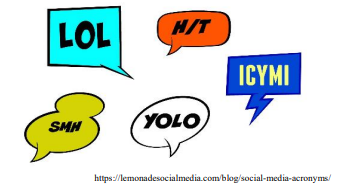
The Internet has changed people lives, speech styles, jobs, communication, and education. Modern cell phones, digital cameras, and other new devices have affected the way we use language. People communicate with each other through electronic mail, instant messaging, and texts. They might “chat” in different virtual rooms, join interesting online groups, comment on news websites, and write in blogs and “wikis.” These practices construct new forms of “discourse, identity, authorship, and language” (Kern, 2006, p.183). The English language is widely used on the Internet and is considered to be the most common Internet language. English language has many new expressions and abbreviations that appear on the Internet. These Internet expressions have grown in popularity. People use several terms to describe them, such as texting language, textese, Internet language, digital language, and chatting language. Such expressions build up a new variety of English that is very common among Internet users, bloggers, chatters, gamers, and teenagers in general. It is considered an informal written language, much like slang, which is an informal spoken variety of the language. This paper uses the term “texting language” (TL) to mean all these kinds of messages, expressions, and abbreviations.
http://www.universitypublications.net/ijas/0703/pdf/V4G323.pdf
If you like to share your opinion in comment threads or chat rooms politely, you should use the abbreviation
Provas
Questão presente nas seguintes provas
3084580
Ano: 2023
Disciplina: Inglês (Língua Inglesa)
Banca: Itame
Orgão: Pref. Novo Gama-GO
Disciplina: Inglês (Língua Inglesa)
Banca: Itame
Orgão: Pref. Novo Gama-GO
Provas:
Identity is intrinsically embedded in the social
hierarchy of our postmodern world particularly since
technological globalization has facilitated contact
between people, cultures, and languages, thus
shortening distances, removing boundaries, and fueling
the notion of the world as a global village (Bauman,
1999). Social relations have indeed become more
complex as identities tend to be less coherent and stable
entities. This is to say that the more diverse and
complex human encounters and relationships are, the
more multifaceted and plural the roles they assume in
individual and in social practices will be.
Yet identities may be the product of social, cultural, or
institution instantiation (Weedon,2004) and
subjectivities are constituted by the discourses
generated by institutional, social, and cultural practices
within historical contexts. Identities are always
relational and negotiable (Norton, 2000). Language,
seen as more than a linguistic system of signs with
regularities and applicability, is a social practice that
engages subjects into meaningful exchanges where
identities are negotiated and constructed. When social
practice is seen in relation to language use and
education, particularly in the case of foreign language
teachers, their lived experiences, beliefs, and
knowledge help them build their identity transforming
their practices.
Identity “reflects the social, historical and political
context of an individual’s lived experiences” (Hall,
2002, p. 31); it is not a sole identity, but identities,
related to different traditional demographic categories
such as ethnicity, race, nationality, migration, gender,
social class, and language.
https://www.redalyc.org/journal/3057/305762630004/html
For the foreign language teachers,
https://www.redalyc.org/journal/3057/305762630004/html
For the foreign language teachers,
Provas
Questão presente nas seguintes provas
3084579
Ano: 2023
Disciplina: Inglês (Língua Inglesa)
Banca: Itame
Orgão: Pref. Novo Gama-GO
Disciplina: Inglês (Língua Inglesa)
Banca: Itame
Orgão: Pref. Novo Gama-GO
Provas:

Reading the cartoon, we infer that
Provas
Questão presente nas seguintes provas
3084578
Ano: 2023
Disciplina: Inglês (Língua Inglesa)
Banca: Itame
Orgão: Pref. Novo Gama-GO
Disciplina: Inglês (Língua Inglesa)
Banca: Itame
Orgão: Pref. Novo Gama-GO
Provas:
From a more pedagogical standpoint, suggestions
have been made to use certain activities for activating
readers’ existing schema or at least providing learners
with crucial information about the topic they will be
reading (Ajideh, 2003; Brown, 2001; Chastain, 1988;
Chen & Graves, 1995; Grabe, 1991). The use of
reading activities can promote strategic reading
behaviors by students at pre-, while-, and postreading
(Alyousef, 2006; Ur, 1996) stages. In turn, reading
activities can promote interpretation of the text through
the interaction between the reader and the text
(Wallace, 1992) and thus play a vital role in schema
activation in order to comprehend and interpret the text
better (Chen & Graves, 1995; Grabe & Stoller, 2002).
Despite the fairly well-documented impact of background knowledge on reading comprehension and
a host of activities suggested, it still remains to be
explored whether, or to what extent, the lack of cultural
knowledge can be compensated through the use of
reading activities. Erten and Karakaş (2007) noted that
our knowledge on the value of these activities mainly
stems from pedagogical recommendations or personal
experiences and often lacks scientific scrutiny. Only a
handful of studies have investigated which is more
effective, using a particular activity on the same text
(e.g., Karakaş, 2005) or making use of different
activities on the same text with different groups of
students (e.g., Chen & Graves, 1995; Erten & Karakaş,
2007; Shen, 2004).
Erten & Razı: The effects of cultural familiarity on reading comprehension https://files.eric.ed.gov/fulltext/EJ838389.pdf
Regarding the suggestions for reading activities that require the student to use Skimming, rate T for true sentences and F for false sentences:
( ) Prepare a text for a treasure hunt, which must be enigmatic so that students highlight the key words and find clues to the treasure.
( ) Distribute short texts in English, with vocabulary already known to the students, and ask them to read for a few minutes. Afterwards, ask each student to tell you what their perception of the text was.
( ) Write short advertising texts and ask students to read and guess what type of advertising it is.
( ) Distribute texts in English of different genres to students, ask them to read them quickly and answer what the text is about.
Erten & Razı: The effects of cultural familiarity on reading comprehension https://files.eric.ed.gov/fulltext/EJ838389.pdf
Regarding the suggestions for reading activities that require the student to use Skimming, rate T for true sentences and F for false sentences:
( ) Prepare a text for a treasure hunt, which must be enigmatic so that students highlight the key words and find clues to the treasure.
( ) Distribute short texts in English, with vocabulary already known to the students, and ask them to read for a few minutes. Afterwards, ask each student to tell you what their perception of the text was.
( ) Write short advertising texts and ask students to read and guess what type of advertising it is.
( ) Distribute texts in English of different genres to students, ask them to read them quickly and answer what the text is about.
Provas
Questão presente nas seguintes provas
3084577
Ano: 2023
Disciplina: Inglês (Língua Inglesa)
Banca: Itame
Orgão: Pref. Novo Gama-GO
Disciplina: Inglês (Língua Inglesa)
Banca: Itame
Orgão: Pref. Novo Gama-GO
Provas:
According to Block (1992), there is now no more
debate on "whether reading is a bottom-up, languagebased process or a top-down, knowledge-based
process." It is also no more problematic to accept the
influence of background knowledge on both L1 and L2
readers. Research has gone even further to define the
control readers execute on their ability to understand a
text.
This control, Block (1992) has referred to as
This control, Block (1992) has referred to as
Provas
Questão presente nas seguintes provas
3084576
Ano: 2023
Disciplina: Inglês (Língua Inglesa)
Banca: Itame
Orgão: Pref. Novo Gama-GO
Disciplina: Inglês (Língua Inglesa)
Banca: Itame
Orgão: Pref. Novo Gama-GO
Provas:
2023 Theme
Green Skills for Youth: Towards a Sustainable
World
Today, the world is embarking on a green transition.
The shift towards an environmentally sustainable and
climate-friendly world is critical not only for
responding to the global climate crisis but also for
achieving the Sustainable Development Goals (SDGs).
A successful transition towards a greener world will
depend on the development of green skills in the
population. Green skills are “knowledge, abilities,
values and attitudes needed to live in, develop and
support a sustainable and resource-efficient society”.
These include technical knowledge and skills that
enable the effective use of green technologies and
processes in occupational settings, as well as
transversal skills that draw on a range of knowledge,
values and attitudes to facilitate environmentally
sustainable decisions in work and in life. Due to their
interdisciplinary nature, the essence of green skills is
sometimes expressed, partly if not wholly, through
other associated terms such as “skills for the future”
and “skills for green jobs”. While green skills are
relevant for people of all ages, they have heightened
importance for younger people, who can contribute to
the green transition for a longer period of time.
https://www.un.org/en/observances/youth-day
Provas
Questão presente nas seguintes provas
3084575
Ano: 2023
Disciplina: Inglês (Língua Inglesa)
Banca: Itame
Orgão: Pref. Novo Gama-GO
Disciplina: Inglês (Língua Inglesa)
Banca: Itame
Orgão: Pref. Novo Gama-GO
Provas:
- Gramática - Língua InglesaAdjetivos | Adjectives
- Gramática - Língua InglesaVerbos | Verbs
- Gramática - Língua InglesaSubstantivos e compostos | Nouns and compounds
2023 Theme
Green Skills for Youth: Towards a Sustainable
World
Today, the world is embarking on a green transition.
The shift towards an environmentally sustainable and
climate-friendly world is critical not only for
responding to the global climate crisis but also for
achieving the Sustainable Development Goals (SDGs).
A successful transition towards a greener world will
depend on the development of green skills in the
population. Green skills are “knowledge, abilities,
values and attitudes needed to live in, develop and
support a sustainable and resource-efficient society”.
These include technical knowledge and skills that
enable the effective use of green technologies and
processes in occupational settings, as well as
transversal skills that draw on a range of knowledge,
values and attitudes to facilitate environmentally
sustainable decisions in work and in life. Due to their
interdisciplinary nature, the essence of green skills is
sometimes expressed, partly if not wholly, through
other associated terms such as “skills for the future”
and “skills for green jobs”. While green skills are
relevant for people of all ages, they have heightened
importance for younger people, who can contribute to
the green transition for a longer period of time.
https://www.un.org/en/observances/youth-day
Provas
Questão presente nas seguintes provas
Cadernos
Caderno Container