Foram encontradas 550 questões.
Em uma planilha do Excel 2003, na coluna A estão os nomes dos fabricantes de motos; na coluna B, as cores das motos; na coluna C, os valores das motos; na coluna D, o valor de venda das motos; na coluna E, o valor de venda com desconto. Nesta planilha, o conteúdo da célula A2 é HONDA; da célula B2 é verde; da célula C2 é 12000; da célula F1 é 10%; da célula F2 é 20%. Se a célula D2 possuir a fórmula =SE(A2="HONDA"; C2 + C2*F1;C2 + 3000) e a célula E2 possuir a fórmula =SE(B2="preto";D2-D2*F2;D2), o valor de E2 será
Provas

Ao imprimir um documento no WordPad é possível escolher entre tipos de orientação para a impressão. Qual das opções abaixo apresenta dois tipos de orientação?
Provas
Analise a figura.
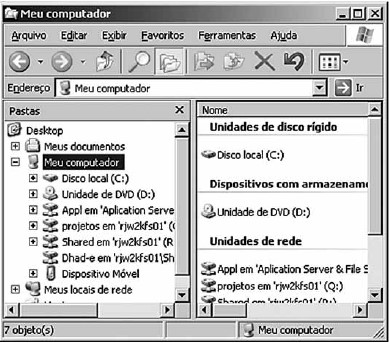
Com base na figura, retirada de um computador com Windows XP em sua instalação padrão, é correto afirmar que
Provas
Text 2
The TEM (Threat and Error Management) framework can be used in several ways. As a safety analysis tool, the framework can focus on a single event, as is the case with accident/incident analysis; or it can be used to understand systemic patterns within a large set of events, as is the case with operational audits. The TEM framework can be used to inform about licensing requirements, helping clarify human performance needs, strengths and vulnerabilities, thus allowing the definition of competencies from a broader safety management perspective. Subsequently the TEM framework can be a useful tool in On-the-Job Training (OJT). The TEM framework can be used as guidance to inform about training requirements, helping an organisation improve the effectiveness of its training interventions, and consequently of its organisational safeguards. The TEM framework can be used to provide training to quality assurance specialists who are responsible for evaluating facility operations as part of certification.
Originally developed for flight deck operations, the TEM framework can nonetheless be used at different levels and sectors within an organisation, and across different organisations within the aviation industry. It is therefore important, when applying TEM, to keep the user’s perspective in the forefront. Depending on “who” is using TEM (i.e. front-line personnel, middle management, senior management, flight operations, maintenance, air traffic control), slight adjustments to related definitions may be required.
Retrieved from: http://www.signalcharlie.net/Crew+Resource+Management
Check the only item in which the boldfaced item introduces a contrast.
Provas
Text 2
The TEM (Threat and Error Management) framework can be used in several ways. As a safety analysis tool, the framework can focus on a single event, as is the case with accident/incident analysis; or it can be used to understand systemic patterns within a large set of events, as is the case with operational audits. The TEM framework can be used to inform about licensing requirements, helping clarify human performance needs, strengths and vulnerabilities, thus allowing the definition of competencies from a broader safety management perspective. Subsequently the TEM framework can be a useful tool in On-the-Job Training (OJT). The TEM framework can be used as guidance to inform about training requirements, helping an organisation improve the effectiveness of its training interventions, and consequently of its organisational safeguards. The TEM framework can be used to provide training to quality assurance specialists who are responsible for evaluating facility operations as part of certification.
Originally developed for flight deck operations, the TEM framework can nonetheless be used at different levels and sectors within an organisation, and across different organisations within the aviation industry. It is therefore important, when applying TEM, to keep the user’s perspective in the forefront. Depending on “who” is using TEM (i.e. front-line personnel, middle management, senior management, flight operations, maintenance, air traffic control), slight adjustments to related definitions may be required.
Retrieved from: http://www.signalcharlie.net/Crew+Resource+Management
In “slight adjustments to related definitions may be required.”, the fragment “may be required” can be substituted by
Provas
Text 2
The TEM (Threat and Error Management) framework can be used in several ways. As a safety analysis tool, the framework can focus on a single event, as is the case with accident/incident analysis; or it can be used to understand systemic patterns within a large set of events, as is the case with operational audits. The TEM framework can be used to inform about licensing requirements, helping clarify human performance needs, strengths and vulnerabilities, thus allowing the definition of competencies from a broader safety management perspective. Subsequently the TEM framework can be a useful tool in On-the-Job Training (OJT). The TEM framework can be used as guidance to inform about training requirements, helping an organisation improve the effectiveness of its training interventions, and consequently of its organisational safeguards. The TEM framework can be used to provide training to quality assurance specialists who are responsible for evaluating facility operations as part of certification.
Originally developed for flight deck operations, the TEM framework can nonetheless be used at different levels and sectors within an organisation, and across different organisations within the aviation industry. It is therefore important, when applying TEM, to keep the user’s perspective in the forefront. Depending on “who” is using TEM (i.e. front-line personnel, middle management, senior management, flight operations, maintenance, air traffic control), slight adjustments to related definitions may be required.
Retrieved from: http://www.signalcharlie.net/Crew+Resource+Management
All the options below describe a link between TEM and professional training, EXCEPT
Provas
Text 2
The TEM (Threat and Error Management) framework can be used in several ways. As a safety analysis tool, the framework can focus on a single event, as is the case with accident/incident analysis; or it can be used to understand systemic patterns within a large set of events, as is the case with operational audits. The TEM framework can be used to inform about licensing requirements, helping clarify human performance needs, strengths and vulnerabilities, thus allowing the definition of competencies from a broader safety management perspective. Subsequently the TEM framework can be a useful tool in On-the-Job Training (OJT). The TEM framework can be used as guidance to inform about training requirements, helping an organisation improve the effectiveness of its training interventions, and consequently of its organisational safeguards. The TEM framework can be used to provide training to quality assurance specialists who are responsible for evaluating facility operations as part of certification.
Originally developed for flight deck operations, the TEM framework can nonetheless be used at different levels and sectors within an organisation, and across different organisations within the aviation industry. It is therefore important, when applying TEM, to keep the user’s perspective in the forefront. Depending on “who” is using TEM (i.e. front-line personnel, middle management, senior management, flight operations, maintenance, air traffic control), slight adjustments to related definitions may be required.
Retrieved from: http://www.signalcharlie.net/Crew+Resource+Management
According to Text 2, the main purpose of TEM is to
Provas
Text 1
Keynote Address
William R. Voss
Access to safe, affordable and sustainable air transportation, has changed and will continue to change the world. What we do connects the peoples and the markets of the world. When we do it well, it changes history. Aviation creates connections that lead to opportunities. Aviation creates familiarity between individuals that grows into trust, and trust that grows into peace.
That is a fact. Let’s talk about some other facts that have not changed in the last few months that represent a foundation we can build on today. When times are turbulent, it is easy to forget that economics is an indicator of human activity. It does not necessarily drive human activity. In July of this year, the chief economist of Goldman Sachs came out with a report that the middle class of the world will grow by 2 billion over the next 20 years. Right now 70 million join the ranks of the middle class every year. By 2027, that rate will accelerate to 90 million a year.
What is different about this new generation is how badly it needs aviation. My father was able to ride between cities on slow-moving freight trains. For the most part, the emerging middle class doesn’t even have that option. They live where transportation infrastructure is substandard or nonexistent. They need to be able to get goods to market, they need to move themselves to where the work is.
In addition, this new generation needs stability. Many of these young people live in countries whose borders include fragmented groups that have grown apart through centuries of isolation. The isolation must end if these countries are to survive and if peace is to become firmly established. Aviation can connect those people, and that connection must occur.
As these people achieve new wealth, their spending on transportation will increase dramatically. Since 1990, the share of income the average Chinese worker spends on transportation and communications has gone up more than 2,500 percent. Air transportation remains essential. Its growth is inevitable. It is up to us to keep it safe.
What must we do to achieve that?
I have been presented with many safety problems around the world, but I can think of few problems I have seen in aviation safety where the solutions were not already known. Aviation safety is limited not by our ability to understand, but our ability to act. Our ability to act is limited in turn by our ability to speak clearly to each other and to those that govern us about what we do, and what needs to be done.
I have discussed these problems directly with heads of state, and even they feel powerless to act. This is not the type of problem that inspires legislators or politicians. This is the type of problem that tends to wait for a concentration of tragedies, economic debacles or both.
Another issue that plagues all of us is our ability to collect and protect the data that keep the system safe. These are the data that warn us of simple errors before they become major tragedies. We know that the way to keep a system safe is not to focus solely on the one in- a million tragedies, but instead to pay careful attention to the hundreds of small mistakes that happen every day. Addressing these problems when they are small gives the public higher levels of safety and saves operators money. It is a win-win approach, but getting and keeping that information that feeds it is proving difficult.
I could list many more challenges but they all come to a similar point. We don’t have a lot of technical problems anymore. We have systemic problems that are sensitive and difficult to address. Perhaps today we could start by talking with each other about those difficult issues that lie below the surface.
FAA International Aviation Safety Forum December 2, 2008 Washington, DC Retrieved from: http://www.flightsafety.org/pdf/voss_faa_120208.pdf
“…those difficult issues that lie below the surface.” refers to
Provas
Text 1
Keynote Address
William R. Voss
Access to safe, affordable and sustainable air transportation, has changed and will continue to change the world. What we do connects the peoples and the markets of the world. When we do it well, it changes history. Aviation creates connections that lead to opportunities. Aviation creates familiarity between individuals that grows into trust, and trust that grows into peace.
That is a fact. Let’s talk about some other facts that have not changed in the last few months that represent a foundation we can build on today. When times are turbulent, it is easy to forget that economics is an indicator of human activity. It does not necessarily drive human activity. In July of this year, the chief economist of Goldman Sachs came out with a report that the middle class of the world will grow by 2 billion over the next 20 years. Right now 70 million join the ranks of the middle class every year. By 2027, that rate will accelerate to 90 million a year.
What is different about this new generation is how badly it needs aviation. My father was able to ride between cities on slow-moving freight trains. For the most part, the emerging middle class doesn’t even have that option. They live where transportation infrastructure is substandard or nonexistent. They need to be able to get goods to market, they need to move themselves to where the work is.
In addition, this new generation needs stability. Many of these young people live in countries whose borders include fragmented groups that have grown apart through centuries of isolation. The isolation must end if these countries are to survive and if peace is to become firmly established. Aviation can connect those people, and that connection must occur.
As these people achieve new wealth, their spending on transportation will increase dramatically. Since 1990, the share of income the average Chinese worker spends on transportation and communications has gone up more than 2,500 percent. Air transportation remains essential. Its growth is inevitable. It is up to us to keep it safe.
What must we do to achieve that?
I have been presented with many safety problems around the world, but I can think of few problems I have seen in aviation safety where the solutions were not already known. Aviation safety is limited not by our ability to understand, but our ability to act. Our ability to act is limited in turn by our ability to speak clearly to each other and to those that govern us about what we do, and what needs to be done.
I have discussed these problems directly with heads of state, and even they feel powerless to act. This is not the type of problem that inspires legislators or politicians. This is the type of problem that tends to wait for a concentration of tragedies, economic debacles or both.
Another issue that plagues all of us is our ability to collect and protect the data that keep the system safe. These are the data that warn us of simple errors before they become major tragedies. We know that the way to keep a system safe is not to focus solely on the one in- a million tragedies, but instead to pay careful attention to the hundreds of small mistakes that happen every day. Addressing these problems when they are small gives the public higher levels of safety and saves operators money. It is a win-win approach, but getting and keeping that information that feeds it is proving difficult.
I could list many more challenges but they all come to a similar point. We don’t have a lot of technical problems anymore. We have systemic problems that are sensitive and difficult to address. Perhaps today we could start by talking with each other about those difficult issues that lie below the surface.
FAA International Aviation Safety Forum December 2, 2008 Washington, DC Retrieved from: http://www.flightsafety.org/pdf/voss_faa_120208.pdf
Considering the fragment “...economics is an indicator of human activity. It does not necessarily drive human activity.”, it is correct to infer that
Provas
Text 1
Keynote Address
William R. Voss
Access to safe, affordable and sustainable air transportation, has changed and will continue to change the world. What we do connects the peoples and the markets of the world. When we do it well, it changes history. Aviation creates connections that lead to opportunities. Aviation creates familiarity between individuals that grows into trust, and trust that grows into peace.
That is a fact. Let’s talk about some other facts that have not changed in the last few months that represent a foundation we can build on today. When times are turbulent, it is easy to forget that economics is an indicator of human activity. It does not necessarily drive human activity. In July of this year, the chief economist of Goldman Sachs came out with a report that the middle class of the world will grow by 2 billion over the next 20 years. Right now 70 million join the ranks of the middle class every year. By 2027, that rate will accelerate to 90 million a year.
What is different about this new generation is how badly it needs aviation. My father was able to ride between cities on slow-moving freight trains. For the most part, the emerging middle class doesn’t even have that option. They live where transportation infrastructure is substandard or nonexistent. They need to be able to get goods to market, they need to move themselves to where the work is.
In addition, this new generation needs stability. Many of these young people live in countries whose borders include fragmented groups that have grown apart through centuries of isolation. The isolation must end if these countries are to survive and if peace is to become firmly established. Aviation can connect those people, and that connection must occur.
As these people achieve new wealth, their spending on transportation will increase dramatically. Since 1990, the share of income the average Chinese worker spends on transportation and communications has gone up more than 2,500 percent. Air transportation remains essential. Its growth is inevitable. It is up to us to keep it safe.
What must we do to achieve that?
I have been presented with many safety problems around the world, but I can think of few problems I have seen in aviation safety where the solutions were not already known. Aviation safety is limited not by our ability to understand, but our ability to act. Our ability to act is limited in turn by our ability to speak clearly to each other and to those that govern us about what we do, and what needs to be done.
I have discussed these problems directly with heads of state, and even they feel powerless to act. This is not the type of problem that inspires legislators or politicians. This is the type of problem that tends to wait for a concentration of tragedies, economic debacles or both.
Another issue that plagues all of us is our ability to collect and protect the data that keep the system safe. These are the data that warn us of simple errors before they become major tragedies. We know that the way to keep a system safe is not to focus solely on the one in- a million tragedies, but instead to pay careful attention to the hundreds of small mistakes that happen every day. Addressing these problems when they are small gives the public higher levels of safety and saves operators money. It is a win-win approach, but getting and keeping that information that feeds it is proving difficult.
I could list many more challenges but they all come to a similar point. We don’t have a lot of technical problems anymore. We have systemic problems that are sensitive and difficult to address. Perhaps today we could start by talking with each other about those difficult issues that lie below the surface.
FAA International Aviation Safety Forum December 2, 2008 Washington, DC Retrieved from: http://www.flightsafety.org/pdf/voss_faa_120208.pdf
Mark the correct pair of synonyms, according to their use in the text.
Provas
Caderno Container