Foram encontradas 50 questões.
A Resolução CONAMA 279 de 27 de junho de 2001 estabelece procedimento simplificado de licenciamento ambiental para empreendimentos energéticos de baixo impacto ambiental. Entre os empreendimentos abaixo, qual NÃO é contemplado por esta resolução?
Provas

Incluir um empreendimento do setor elétrico no contexto da Avaliação Ambiental Estratégica significa:
Provas
Durante a II Conferência Nacional do Meio Ambiente, realizada em dezembro de 2005, foram estabelecidas algumas diretrizes e sugestões que podem afetar diretamente o planejamento do setor energético brasileiro, EXCETO pelo(a):
Provas
Entre as diretrizes contempladas no planejamento de longo e médio prazos do setor energético brasileiro estão mudanças na matriz energética do País. Entre os argumentos que pesam para estas mudanças está o fato de que:
Provas
Observe o gráfico abaixo.
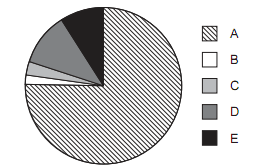
O gráfico ilustra a oferta de energia elétrica no Brasil em 2003. As fatias que representam a oferta originária de fontes hídricas são:
Provas
Um problema ambiental relacionado com a implantação de grandes empreendimentos elétricos é a possível interferência no fluxo migratório de animais. Entre as espécies que poderiam ter sua migração interrompida devido à implantação de uma usina hidrelétrica de grande porte na bacia amazônica está a(o):
Provas
Provas
A Resolução CONAMA 303 estabelece como Área de Proteção Permanente algumas faixas de determinadas formações fitogeográficas brasileiras. Com base neste critério, será mais fácil obter-se uma licença para implantação de uma usina solar em trecho de:
Provas
Considere a instalação e a operação de uma usina eletroeólica composta por vinte aerogeradores, instalados sobre torres de 50 m de altura cada. Entre os itens abaixo, aquele que NÃO representa um impacto ambiental significativo associado a este empreendimento é o(a):
Provas
Books are being scanned to make them searchable
on the Internet. Television broadcasts are being recorded
and archived for online posterity. Radio shows, too, are
getting their digital conversion — to podcasts. With a
few keystrokes, we’ll soon be able to make good use of
much of the world’s knowledge. And we’ll do it from nearly
anywhere — already, newer iPods can carry all your
music, digital photos and TV classics along with more
contemporary prime-time fare.
Will all this instantly accessible information make
us much smarter, or simply more stressed? When can
we stop to think, absorb and evaluate all this data?
“People are already struggling and feeling like they need
to keep up with the variety of information sources they
already have,” said David Greenfield, a psychologist who
wrote Virtual Addiction. “There are upper limits to how
much we can manage.”
It may take better technology to cope with the
problems better technology creates. Of course, if used
properly, the new resources have vast potential to shape
how we live, study and think. Consider books. Nicole
Quaranta, 22, is a typical youth. The New York University
grad student in education does most of her research
online. She’ll check databases for academic journals
and newspaper articles — but rarely books, even though
she admits that an author who spent years on a 300-
page book might have a unique perspective. “The library
is intimidating because I have to go there and everything
is organized by academic area,” Quaranta said. “I don’t
even know where to begin.” Were books as easily
searchable as Web pages, she would reconsider.
Otherwise, they might as well not exist.
With a generation growing up expecting everything
on the Internet, libraries, non-profit organizations and
leading search companies like Yahoo and Microsoft are
committing hundreds of millions of dollars collectively
to scan books and other printed materials so they can
be indexed and retrieved online. […]
Meanwhile, television shows formerly locked up in
network or studio vaults are starting to emerge online.
“Before, once it has been broadcast, it’s gone, and it doesn’t
really contribute to our knowledge space,” said Jakob
Nielsen, a Web design expert with Nielsen Norman Group.
For the past year, Google has been digitally recording
news and other programs from several TV stations in
the San Francisco area. Early next year, America Online
and Warner Bros. will offer free access to dozens of old
television shows, and Apple Computer recently started
selling episodes of shows old and new from ABC and
NBC Universal for .99 each — viewable on computers
and its newer iPods.
In audio, National Public Radio has been producing
free podcasts featuring clips or entire programs. Anyone
with a music player can listen anytime, anywhere.
And then there are materials born digital: Photos
from digital cameras can now be easily shared, even
among strangers, at sites like Yahoo’s Flickr.
Steve Jones, a professor of communications at the
University of Illinois at Chicago, says centralization and
easy access could make people smarter: Instead of
wasting time finding information, they can focus more
on assessing its worth. But there’s the danger, he says,
that people will simply take information for granted:
Assuming that whatever pops up first is the best. Worse,
people may simply tune out.
The key may lie in technologies that push to the
top items you seek. Search analyst Danny Sullivan
describes such a tool as “some sort of metal detector
or magnet to pull all the good stuff out of the haystack.”
Virtual communities may contribute to that end. […]
“Social networks, search engines and things yet
invented are critical as we bring millions of movies, books
and musical recordings online,” said Brewster Kahle, a
search pioneer who created the Internet Archive, a non-
profit preservation group.
Even more important will be good research skills
— infoliteracy, if you will. That means knowing where
and how to look, and evaluating what you get back. […]
By Anick Jesdanun, Associated Press. Dec. 25, 20
There are several ways to avoid the stress caused by instantly accessible information online (lines 58-78), EXCEPT to:
Provas
Caderno Container