Foram encontradas 1.600 questões.
Considere as seguintes afirmações sobre acesso ao PostgreSQL em PHP:
I. A forma nativa de estabelecer uma conexão do PHP com bancos de dados PostgreSQL é através da função pg_connect().
II. O uso da função pg_close() no final do programa, sempre que estiver aberta uma conexão com pg_connect() é obrigatório.
III. O uso da função pg_close() no final do programa, sempre que estiver aberta uma conexão com pg_connect() não é obrigatório.
Estão INCORRETAS as afirmações:
Provas
Questão presente nas seguintes provas

O padrão de rede 802.11, utilizado em redes wireless, apresenta variações de desempenho e alcance.
Os padrões 802.11a, 802.11b e 802.11g possuem as seguintes velocidades e frequências definidas pelo IEEE, respectivamente
Provas
Questão presente nas seguintes provas
Laminado de fibra de vidro agregado por resina, utilizado freqüentemente como substrato de placas de circuito impresso:
Provas
Questão presente nas seguintes provas
Sejam !$ U \, = \, ( 1, 1, 0 ), !$ !$ V \, = \, ( 2, 0, 1 ), !$ !$ W_1 \, = \, 3u \, - \, 2v, !$ !$ W_2 \, = \, u \, + \, 3v !$ e !$ W_3 \, = \, ( 1,1,-2 ) !$ vetores pertencentes ao espaço !$ IR^3 !$. Então o volume do paralelepípedo definido por !$ W_1, \, W_2, \, e \, W_3 !$ é
Provas
Questão presente nas seguintes provas
Analise as três situações descritas abaixo.
I. Após algum tempo (1 hora ou mais) de permanência dentro de um salão, durante um baile, você sai para a rua, dirigindo-se para a sua casa, notando que seus ouvidos “latejam”.
II. Uma cantora lírica consegue, com sua voz, quebrar uma taça de cristal.
III. Você consegue distinguir a nota “Lá central” de um piano da mesma nota em um violino.
Esses fenômenos estão principalmente relacionados, respectivamente,
Provas
Questão presente nas seguintes provas
1382401
Ano: 2010
Disciplina: TI - Organização e Arquitetura dos Computadores
Banca: IF-SUL
Orgão: IF-SUL
Disciplina: TI - Organização e Arquitetura dos Computadores
Banca: IF-SUL
Orgão: IF-SUL
Provas:
A sigla do barramento de dados conhecido como PCI significa
Provas
Questão presente nas seguintes provas
Leia-se a planinha abaixo:
| Linha | Rumo | Comprimento | Seno do rumo | Co-seno do rumo |
| 1 - 2 | S 75º 20' W | 58,08 | 0,96742 | 0,25320 |
| 2 - 3 | S 49 º 50' W | 51,54 | 0,76417 | 0,64501 |
De acordo com a planilha representada parcialmente de um levantamento topográfico, qual o resultado das coordenadas parciais dos pontos 1-2 e 2-3?
Provas
Questão presente nas seguintes provas
Observe o desenho a baixo:

Duas chapas metálicas com espessura de 12,5mm estão fixadas com 6 parafusos e são submetidas a uma força de tração, conforme o desenho acima. Determinar as tensões de cisalhamento e de tração a que estão submetidos os parafusos e as chapas, respectivamente, considerando o valor de !$ \pi !$ = 3,14 e sabendo que os diâmetros dos furos e dos parafusos são de 20 mm.
Provas
Questão presente nas seguintes provas
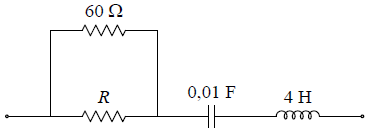
Para o circuito ao lado, o valor de R necessário, para uma resposta com amortecimento crítico, é
Provas
Questão presente nas seguintes provas
The giant neighbours are more rivals than partners
Feb 4th 2010
China and India: Prospects for Peace. By Jonathan Holslag. Columbia University Press
For a book about two countries whose most recent war was five decades ago, “Prospects for Peace” seems a quirky subtitle. Jonathan Holslag, a Brussels-based think-tanker, argues that, since China’s swift and bloody humiliation of India in 1962, the neighbours have “tottered at least five times on the verge of war”. But the last time troops massed on the border was in 1986. Bilateral trade has boomed, and hundreds of thousands of Indians and Chinese now visit the other country each year, including a succession of senior politicians toasting a beautiful friendship.
As Mr. Holslag explains, however, the relationship is still marked as much by unremitting strategic mistrust as by burgeoning co-operation. His contribution to a recent flurry of India-China books attempts to reconcile these contradictory trends. His conclusions are rather unsettling.
Most of the other books on the area concentrate inevitably on the implications of the two countries’ economic rise. The simultaneous emergence into the global economy of two countries containing nearly two-fifths of the world’s people is after all an unprecedented phenomenon. Moreover, China’s dominance of global manufacturing seems matched by India’s arrival as an important provider of information-technology and other services. Mr. Holslag quotes Zhu Rongji, a former Chinese prime minister: “You are number one in software. We are number one in hardware…Together we are the world’s number one.” That is India’s misfortune. Hundreds of thousands of Indians work in IT* services whereas manufacturing for export provides China with tens of millions of jobs. Mr. Holslag predicts that India will challenge China’s role as the world’s manufacturer, but that seems far-fetched.
This complementarity has been accompanied by a number of alliances of convenience, most notably in resisting pressure from the rich world to agree to fixed targets for limiting carbon emissions. There was even an agreement in 2006 to work together to avoid bidding up the prices of energy resources in third countries.
The limited effect of that pact, however, is one reason to believe Mr.
Holslag’s prognosis of a “fiercer economic rivalry and more aggressive regional diplomacy”. Another is what Lalit Mansingh, a former Indian diplomat, calls “the ghost at the banquet”: China’s increasing diplomatic and military influence in Asia—and India’s fear of it.
As Mr. Holslag notes, the defeat in 1962 has left a deep suspicion of China in India’s political, academic and diplomatic circles, which is reflected in public opinion. India claims an area of Chinese-held territory in Kashmir the size of Switzerland, while China claims an area three times larger in what is now Indian Arunachal Pradesh. The border dispute remains unresolved. What had lazily been assumed to be the obvious solution—the status quo, in which each country keeps large swathes of territory claimed by the other—seems, if anything, further away than ever. The political difficulties of selling such a deal in India have long been obvious. But China’s renewed harping on its claim in recent years suggests that it in fact does want more than it already has.
* IT – Information Technology.
According to this book review, the author of China and India: Prospects for Peace
Provas
Questão presente nas seguintes provas
Cadernos
Caderno Container