Foram encontradas 704 questões.
Quando um processo específico de fabricação é exigido para o estado final de superfície, utiliza-se o símbolo
Provas
Questão presente nas seguintes provas

Na orquestra sinfônica moderna separamos os instrumentos por naipes. Assim sendo, o naipe de cordas é formado por
I. violino – cavaquinho – violão.
II. violino – viola – violoncelo.
III. contrabaixo – violino – viola.
Está(ão) correta(s) a(s) apenas a(s) resposta s)
Provas
Questão presente nas seguintes provas
Observe a viga abaixo, originalmente dimensionada com a seção cheia (30x50 cm).
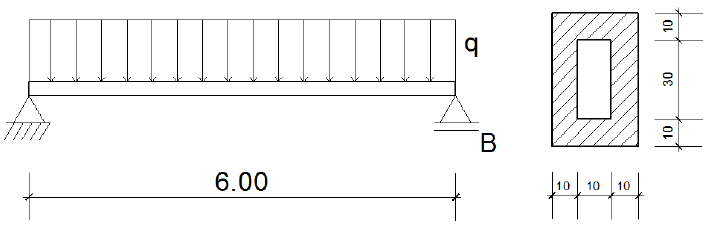
Considerando que a tensão de tração deva ser mantida, se a seção for vazada por um furo de 10x30cm, conforme mostrado, o vão precisará ser encurtado em
Provas
Questão presente nas seguintes provas
As pipetas são de fundamental importância em um laboratório, como instrumento de medição de volumes de líquidos.
Em relação às pipetas graduadas e volumétricas é afirma-se que
Provas
Questão presente nas seguintes provas
Duas chapas estão unidas por 4 parafusos com diâmetro de 10 mm e uma placa intermediária, conforme mostrado abaixo, sendo submetidas a uma carga P. A largura das chapas é de 10 cm.
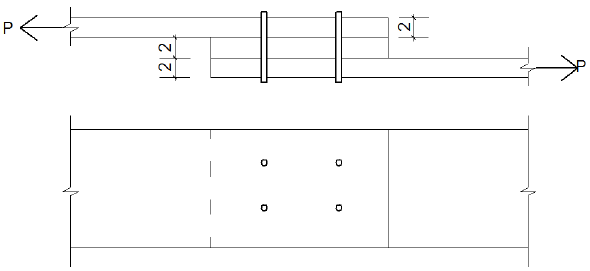
Para o desenho mostrado e considerando que a tensão de cisalhamento dos parafusos é de 100 MPa e a tensão de tração da chapa é de 12 MPa, o valor máximo de P será
Provas
Questão presente nas seguintes provas
Considere a seção transversal de uma viga, dada ao lado.
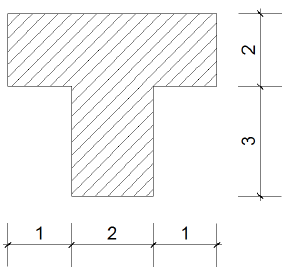
Sendo X um eixo horizontal, passando pelo centroide da área, o valor do raio de giração igx é:
Provas
Questão presente nas seguintes provas
Em relação ao tratamento de exceções na Linguagem de Programação Java, são feitas as seguintes afirmações:
I. Uma exceção não capturada (sem um bloco catch correspondente) sempre interromperá a execução do programa, mesmo quando implementado um programa Multithreading e a exceção tenha ocorrido em uma determinada Thread.
II. Ao implementar um bloco try-catch, é possível utilizar um bloco finally. Como esse bloco será executado tendo ocorrido ou não uma exceção, é comum sua utilização para que seja realizada a liberação de recursos.
III. Java permite capturar exceções e, além disso, permite que o desenvolvedor possa criar e lançar exceções. Para isso, deve ser criada uma nova exceção e lançá-la utilizando a instrução throw.
Estão corretas as afirmativas
Provas
Questão presente nas seguintes provas
Technology in education: if students aren't worried, why are teachers?
As a new episode of My Teacher is an App airs on BBC Radio 4, Edward Lawless urges teachers to embrace digital technology in the classroom – however frightening it seems
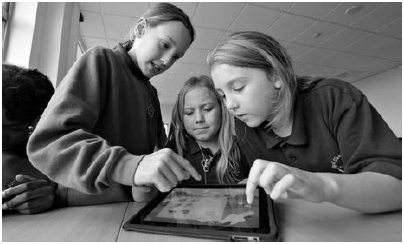
"As teachers, our role must change to one that embraces digital technology as a fundamental part of student learning," says Edward Lawless. Photograph: Athena
The third episode of the BBC Radio 4 series, My Teacher is an App, offered a provocative glimpse into the ways that technology is now being used to meet current educational needs. I attended the debate at The Great Hall of King's College London, where a respected panel and an energetic audience discussed the future of online technology and education.
While students in the audience didn't think it was a big deal, not all of the educators saw technology and education flowing together so smoothly. There was some anxiety in the room about what would happen to "authentic teaching", whether online learning could really offer "meaningful activity" and "true engagement", and if social media could provide "real interaction". Then, of course, there was concern about what would become of "the human element" in a virtual classroom.
These are all valid concerns, but they represent the dangerous assumption that a "different" learning environment can't preserve cherished educational priorities. I have seen online courses that are committed to promoting authentic teaching and learning, and worked with "virtual" teachers who regularly offer meaningful engagement, bringing the "human element" to their students around the world.
On the other hand, I have also seen traditional secondary and university classrooms that disregard these same priorities, with "live" teachers and lecturers capable of automating instruction, objectifying and isolating students, and reducing education to the mere transfer of content.
No matter what the conditions may be – online or face-to-face – the quality of the educational experience depends on the integrity of the curriculum, the teacher and the learning community.
That said, it's normal that teachers and leaders find the integration of online technology in education frightening. First of all, our generation of "digital immigrant" teachers must shift out of our comfort zone and into the world of our "digital-native" students. Second, it requires bricks-and-mortar schools to take a leap of faith into a medium that's essentially an unknown world. They have to let go of the familiar model that we hold dear – not necessarily because it works so well, but because it's what we know so well – to embrace an educational medium that many of us don't use, don't understand and don't trust. Third, and most importantly, it requires us to shift the power of learning from the teacher to the student; to become the facilitator for learning rather than the deliverer of knowledge and in so doing, to let students lead their own learning. That is a very disturbing prospect for many educators – and parents – because it's all about relinquishing control and taking risks.
But the internet is a natural part of students' lives and for many of them it has been that way since before they could walk. It's their natural environment for watching movies and TV programmes, accessing music, communicating with friends and organising their daily lives. It's not surprising that these digital natives don't consider online learning as such a risky venture. The internet already empowers our students with unprecedented educational access in ways that we could never have foreseen as teachers in training. The question is – how are we teaching them to use that power?
At the close of the Radio 4 debate evening, one audience member remarked to the panel that we need to proceed with caution – our students could suffer if we are too bold in adopting online learning technologies. One panellist quietly responded that our students and our future will more likely suffer because we are too timid rather than too bold.
I couldn't agree more. As teachers, our role must change to one that enables, guides, personalises and embraces digital technology as a fundamental part of student learning. The most dangerous thing we can do to our students is to keep doing what our teachers and professors did to us:
!$ \bullet !$ Remain centre stage in a face-to-face classroom.
!$ \bullet !$ Ensure that every lesson goes according to our educational script.
!$ \bullet !$ Focus upon what we want all students to cover during a scheduled lesson rather than what each student needs to learn, when they need to learn it.
!$ \bullet !$ Keep overestimating our own importance in the teaching-learning dynamic and underestimating the potential of students to learn independently and collaboratively.
!$ \bullet !$ Maintain our roles as mediators of content rather than developing our students' capacities as discriminating, self-regulated learners in an open-source world.
It was good enough for us. Right?
Edward Lawless is the principal of Pamoja Education, an online provider of the International Baccalaureate Diploma Programme
Available at: <http://www.theguardian.com/teacher-network/teacher-blog/2014/mar/10/
technology-education-students-teachers-worried> Consulted on Mar. 26th, 2014.
From the title and the information in the text it is correct to infer that
Provas
Questão presente nas seguintes provas
A respeito de usabilidade de sistemas, analise as seguintes afirmações.
I. É um atributo de qualidade relacionado à facilidade do uso de algo.
II. Refere-se à rapidez com que os usuários podem aprender a usar alguma coisa.
III. Refere-se à eficiência e grau de propensão a erros do usuário ao utilizar alguma coisa.
Estão corretas as afirmativas
Provas
Questão presente nas seguintes provas
Na montagem de um eixo sobre um mancal de deslizamento (bucha), o tipo de ajuste recomendado para que a tolerância permita a intercambialidade necessária ao conjunto é o ajuste
Provas
Questão presente nas seguintes provas
Cadernos
Caderno Container